Are slow, inaccurate, or unreliable movements reducing the productivity and service life of your automated equipment?
A linear actuator converts energy into straight-line motion to push, pull, lift, lower, or position a load. Electric models typically use a motor to rotate a ball screw, lead screw, belt, or gear mechanism. The transmission moves a rod or carriage, while sensors and controls can regulate position, speed, force, and direction.
This guide explains actuator operation, major types, applications, selection criteria, maintenance, and future technology trends.
What Is a Linear Actuator and How Does It Work?
If your question is what is a linear actuator and how does it work, the simplest answer is that it converts an energy source into controlled movement along a straight path. Unlike a rotary motor, which produces rotation at its shaft, a linear actuator moves a rod, carriage, table, or other load forward and backward.
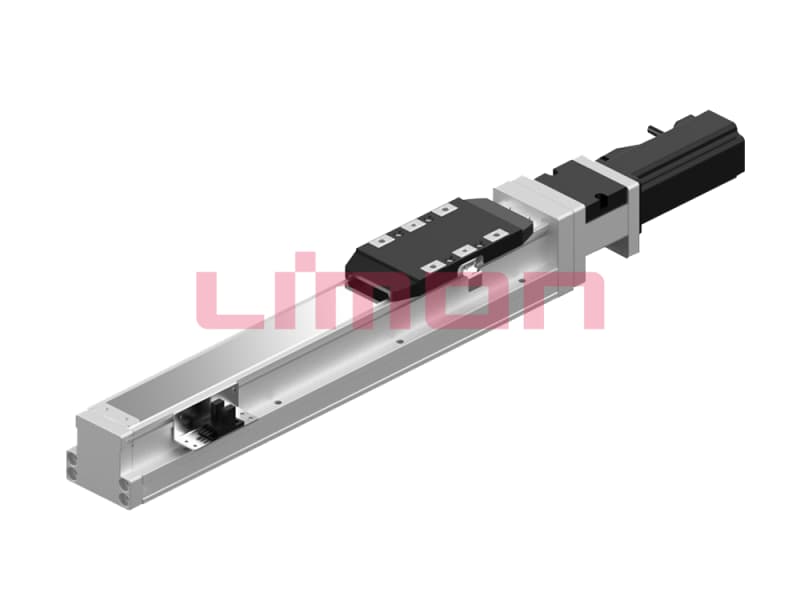
In a typical electric rod actuator, the motor turns a gearbox or directly rotates a screw. A matching nut travels along the rotating screw and moves an extension tube. Reversing the motor changes the direction of movement. Thomson identifies the motor, gearing, screw assembly, and extension tube as the principal components of a conventional electromechanical actuator.
Rodless actuators work differently: a carriage travels along the actuator body while a linear guide supports the external load. More advanced systems may include encoders, limit switches, brakes, load sensors, and network communication for closed-loop position, speed, or force control.
What Are the Main Types of Linear Actuators?
Electric linear actuators use motors and mechanical transmissions to create straight-line movement. Ball screw actuators provide high efficiency, rigidity, and positioning capability, making them suitable for industrial automation and precision machinery. Lead screw actuators can offer a compact, economical solution for moderate speeds and loads. Belt-driven actuators support long strokes and high travel speeds, while roller screw actuators are considered for high-force, high-duty applications.
Hydraulic actuators use pressurized fluid and provide excellent force density. They are common in construction machinery, heavy presses, and other demanding equipment. Their supporting systems may require pumps, reservoirs, valves, filters, hoses, and maintenance against leakage.
Pneumatic actuators use compressed air. They are simple and fast for repetitive end-to-end movement, although air compressibility can make precise intermediate positioning more difficult.
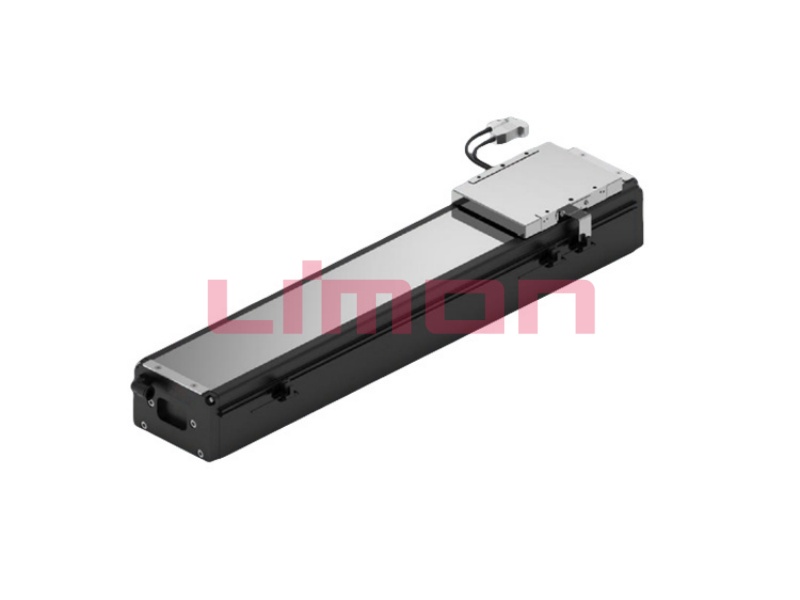
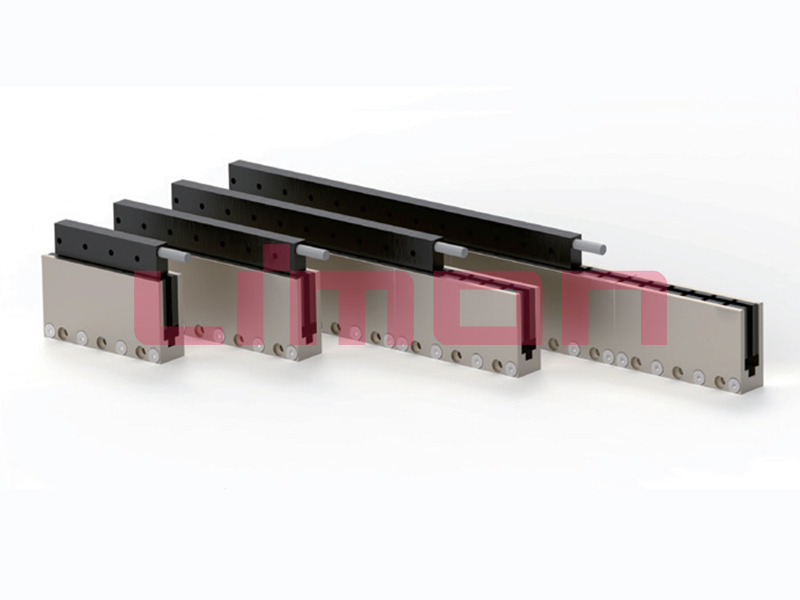
Direct-drive linear motors produce force electromagnetically without a screw or belt. They can deliver exceptional speed and responsiveness but generally require specialized feedback, control, and guidance.
The best technology depends on load, speed, stroke, precision, duty cycle, environment, maintenance, and total ownership cost—not actuator type alone.
Where Are Linear Actuators Used in Industrial Automation?
Linear actuators are widely used in packaging, assembly, inspection, printing, electronics manufacturing, semiconductor equipment, food processing, pharmaceutical production, and warehouse automation. They may position a workpiece, adjust a machine format, move a camera, operate a gate, lift a platform, or transfer a product between stations.
Servo-driven ball screw actuators are valuable where a machine needs accurate, repeatable positioning and rapid acceleration. Stepper-driven systems can provide economical incremental motion for predictable loads. Belt actuators suit longer strokes and fast transfer, while rod-style actuators can replace selected pneumatic or hydraulic cylinders.
Actuator performance depends on more than the drive mechanism. External linear guides should support the payload, side forces, and overturning moments so the screw or actuator rod primarily transmits axial force. Misalignment can increase friction, motor current, vibration, and wear.
Limon manufactures linear guides, ball screws, linear bearings, and linear actuators, allowing customers to source compatible guidance and transmission components from one direct manufacturing partner. This coordinated approach supports more stable movement and simpler system integration.
Which Other Industries Use Linear Actuators?
Medical and laboratory equipment uses linear actuators to adjust beds and chairs, position diagnostic components, operate pumps, move samples, and support rehabilitation devices. These applications may prioritize compact dimensions, smooth movement, low noise, repeatability, and feedback.
Agricultural machinery uses actuators to adjust steering, hoods, feeders, ventilation, spraying equipment, and harvesting mechanisms. Mobile applications often require DC power, environmental sealing, resistance to vibration, and reliable load holding.
Material-handling systems use actuators in lifts, diverters, sorters, clamps, transfer stations, and automated storage equipment. Solar installations may use actuators to change panel orientation, while building systems use them for windows, doors, louvers, and access mechanisms.
Automotive production, aerospace tooling, entertainment equipment, and renewable-energy systems also rely on controlled linear movement. Each market creates a different performance balance. A medical device may value quiet motion, while heavy industrial machinery prioritizes thrust and shock resistance.
Electric actuators are commonly used in medical devices, agricultural equipment, material handling, and factory automation, as summarized in Thomson’s actuator guide.
How Do You Select the Right Linear Actuator?
Start by defining the complete motion profile. Specify payload, external process force, stroke, maximum speed, acceleration, deceleration, move time, cycle rate, duty cycle, accuracy, repeatability, and expected service life. Include mounting orientation because gravity changes the force required on vertical and inclined axes.
Next, examine the transmission. Ball screw diameter, lead, efficiency, preload, critical speed, and buckling capacity affect load, speed, and accuracy. A larger lead creates more linear travel per revolution but reduces mechanical advantage. A long screw may experience vibration or screw whip if rotational speed becomes excessive.
Environmental factors include temperature, moisture, dust, corrosion, washdown, vacuum, noise, and cleanroom requirements. Designers should also specify voltage, motor type, feedback, brakes, limit switches, communication, cable routing, and power-loss behavior.
Tolomatic identifies orientation, travel distance, load, force, move time, cycle rate, and environment as basic actuator-selection inputs.
Limon’s technical team can review these requirements and help customers identify an appropriate actuator, ball screw, linear guide, or bearing configuration without unnecessary oversizing.
How Can You Improve Reliability and Service Life?
Correct installation is essential. Mounting surfaces should be flat, clean, rigid, and accurately aligned. Side loading can damage a rod-style actuator, while poor parallelism between an actuator and external guides may cause binding. The mounting structure must also resist deflection under acceleration and process forces.
Lubrication should match the transmission, speed, load, temperature, and environment. Insufficient lubrication increases friction and wear, while unsuitable lubricant can affect torque, heat, seals, or contamination requirements. Follow the defined replenishment interval rather than waiting for noise or positioning problems to appear.
Duty cycle deserves special attention because it affects motor temperature and mechanical life. Tolomatic notes that underestimating duty cycle can cause overheating and premature failure, while overestimating it may lead to unnecessarily expensive oversizing.
Maintenance teams should monitor noise, vibration, temperature, motor current, lubrication condition, backlash, and positioning error. Gradual changes can reveal contamination, misalignment, excessive preload, or wear before the actuator suffers an unexpected breakdown.
What Trends Will Shape Future Linear Actuator Applications?
Future linear actuators will become more integrated, connected, modular, and energy-conscious. Motors, drives, encoders, sensors, and communication electronics will increasingly be combined with the mechanical axis, reducing wiring and commissioning work.
Position, temperature, vibration, current, and force data can help machines detect abnormal operating conditions. Predictive maintenance will allow users to service equipment based on actual condition instead of relying only on fixed schedules. Bosch Rexroth’s Smart MechatroniX platform reflects this trend by combining linear motion technology with electronics and software for factory automation.
Electric actuators will also replace additional pneumatic and hydraulic systems where programmable motion, cleanliness, energy efficiency, and process data justify the change. However, intelligent control cannot correct poor screw accuracy, weak guidance, incorrect lubrication, or unsuitable installation.
Limon’s fully integrated production line covers linear guides, ball screws, linear bearings, and linear actuators. This manufacturing control supports consistent quality, while our direct-sales model provides competitive pricing, customization support, and efficient access to experienced technical personnel.
Conclusion:
Linear actuators transform energy into useful straight-line movement across automation, medical, agricultural, material-handling, and industrial equipment. Selecting the right solution requires balancing load, speed, stroke, accuracy, duty cycle, environment, and service life. Limon delivers reliable, high-performance linear motion solutions through integrated manufacturing, high-quality components, direct sales, and professional technical support.
Ready to design or upgrade your linear motion system? Visit the Limon independent website to explore our linear actuators, ball screws, linear guides, and linear bearings. Contact the Limon technical team with your load, stroke, speed, accuracy, duty cycle, mounting, and environmental requirements for product-selection or customization support.