Are incorrect bearings causing friction, noise, positioning errors, premature wear, or costly downtime in your industrial equipment?
What are the 4 types of bearings? The four broad families are ball bearings, roller bearings, plain bearings, and fluid bearings. Ball and roller bearings use rolling elements, plain bearings use sliding contact, and fluid bearings separate surfaces with a liquid or gas film. Application-specific products include linear, radial, and thrust bearings.
Below, we compare their operation, applications, selection criteria, maintenance needs, and future development.
What Are the 4 Types of Bearings?
When engineers ask what are the 4 types of bearings, the most practical broad classification is ball bearings, roller bearings, plain bearings, and fluid bearings. Ball and roller bearings belong to the rolling-bearing category, while plain and fluid bearings support motion through sliding surfaces or a pressurized film.
Bearings can also be classified by other criteria. Radial bearings primarily carry loads perpendicular to a shaft, while thrust bearings support axial loads. Rotary bearings guide angular motion, whereas linear bearings guide movement along a straight path. Therefore, a linear bearing is not necessarily a completely separate operating principle: it may use recirculating balls, rollers, or sliding elements.
According to SKF’s bearing fundamentals, balls make point contact with raceways, which supports low friction and higher speeds, while rollers create line contact that generally provides greater load capacity at lower comparable speeds. SKF’s rolling-bearing guide also identifies ball and roller bearings as the two basic rolling-element types.
Understanding these classifications helps engineers compare products more accurately instead of choosing a bearing by appearance or dimensions alone.
What Are Ball Bearings Best Used For?
Ball bearings use spherical rolling elements positioned between inner and outer raceways. Because each ball contacts the raceway over a relatively small area, ball bearings usually generate low rolling friction and can operate efficiently at high rotational speeds. They are widely used in electric motors, pumps, fans, gearboxes, conveyors, machine tools, household equipment, and industrial automation.
Deep-groove ball bearings are among the most versatile designs. They can support radial loads and moderate axial loads in both directions. Angular-contact ball bearings are designed for combined radial and axial loading and are often installed in matched arrangements for greater rigidity. Self-aligning ball bearings accommodate a limited degree of shaft or housing misalignment, while thrust ball bearings are intended primarily for axial loads.
Linear ball bearings apply the same low-friction rolling principle to straight-line motion. They circulate balls between a shaft and bearing raceways, enabling smooth travel in automation, packaging, inspection, and handling equipment.
Ball bearings are attractive where speed, low friction, compact dimensions, and economical operation matter. However, correct load capacity, internal clearance, sealing, lubrication, and mounting fit remain essential for dependable service.
When Should You Choose Roller Bearings?
Roller bearings use cylindrical, tapered, spherical, or needle-shaped rolling elements. Their line-contact geometry distributes load across a larger area than the point contact of a ball bearing. As a result, roller bearings are generally suitable for heavier loads and greater rigidity, although comparable ball bearings may support higher speeds with lower friction.
Cylindrical roller bearings provide high radial load capacity and are used in gearboxes, electric motors, machine tools, and industrial machinery. Tapered roller bearings can support combined radial and axial loads, making them valuable in vehicle hubs, transmissions, and heavy equipment. Spherical roller bearings accommodate heavy loads and some misalignment between the shaft and housing. Needle roller bearings provide useful load capacity where radial installation space is limited.
Linear roller guides use rows of rollers to support straight-line movement. Their high rigidity makes them suitable for machine tools, heavy automation, precision manufacturing, and applications exposed to substantial moment loads.
Roller-bearing selection must consider load direction, rotational or linear speed, shock, misalignment, stiffness, lubrication, and available space. More capacity is not automatically better: unnecessary preload or an oversized bearing can increase friction, heat, cost, and drive requirements.
How Do Plain Bearings Work?
Plain bearings support motion through direct sliding contact rather than balls or rollers. Common configurations include bushings, sleeve bearings, journal bearings, wear plates, and spherical plain bearings. Their sliding surfaces may be metal, polymer, composite material, or a layered structure designed to reduce friction and resist wear.
Plain bearings offer simple construction, compact dimensions, quiet operation, and good resistance to shock. Some designs can operate with limited maintenance or without external lubrication because their bearing material contains solid lubricants. This makes them useful in hinges, construction machinery, agricultural equipment, food-processing systems, and applications involving slow, oscillating, or intermittent movement.
Linear plain bearings slide along a shaft or rail and may perform well in dirty, wet, or vibration-prone environments where recirculating rolling elements would require additional protection. Their tradeoffs can include higher starting friction, greater wear, and less positioning precision than an appropriately selected rolling-element guide.
Engineers should evaluate surface pressure, sliding velocity, temperature, shaft hardness, finish, contamination, and lubrication. The product of pressure and velocity—often expressed as a PV limit—is particularly important for managing heat and wear in sliding-bearing applications.
Where Are Fluid Bearings Used?
Fluid bearings support a moving surface on a thin film of liquid or gas. Because the operating surfaces are separated during normal motion, these bearings can provide extremely low friction, quiet operation, high precision, and minimal mechanical wear.
Hydrodynamic bearings generate their supporting film through the relative movement of the shaft and lubricant. They are used in turbines, compressors, engines, pumps, and other continuously rotating machinery. Hydrostatic bearings use an external pump to pressurize the fluid, allowing them to support a load even when movement has not started. Air bearings use a gas film and are common in precision metrology, semiconductor manufacturing, optical equipment, and high-speed spindles.
Fluid bearings can deliver exceptional performance, but they require carefully controlled clearances, clean fluid or air, stable pressure, and precise manufacturing. Some systems also need pumps, filters, coolers, and monitoring devices, increasing system complexity.
For most conventional factory-automation and linear-motion applications, ball, roller, or plain bearings are more practical. Fluid bearings become attractive when exceptionally low friction, contamination-free operation, high rotational speed, or nanometer-level positioning stability justifies their additional infrastructure.
How Do You Select a Bearing for Linear Motion?
Begin by defining the motion. Determine whether the bearing will guide rotary, oscillating, or linear movement. Then calculate radial, axial, and moment loads, including payload, acceleration forces, process forces, impacts, and emergency-stop conditions. A bearing selected only from its static load capacity may not achieve the required fatigue life or positioning performance.
Speed, stroke, duty cycle, acceleration, accuracy, rigidity, and friction should be evaluated together. For linear systems, engineers must also consider rail parallelism, mounting-surface accuracy, carriage spacing, lubrication access, contamination, temperature, and expected travel life.
Recirculating linear ball bearings and profile rail guides provide low friction and accurate movement for automation. Linear roller guides offer higher rigidity for heavy-duty equipment. Plain linear bearings may be preferable in contaminated, wet, or slow-moving applications. Suitable seals, covers, or bellows can protect the bearing from dust and process debris.
Lubricant type and replenishment interval affect heat, wear, and service life. Timken’s engineering resources similarly treat load, speed, lubrication, fit, and application validation as interconnected selection factors. Timken Engineering provides separate tools for bearing selection, speed ratings, fitting, and relubrication—reinforcing why no single specification should determine the final choice.
How Are Bearing Technology and Limon Solutions Evolving?
Bearing development is moving toward lower friction, longer maintenance intervals, advanced materials, better sealing, and condition-based maintenance. Sensors can monitor vibration, temperature, noise, torque, and operating cycles, allowing maintenance teams to identify developing problems before they cause an unexpected shutdown. NSK’s current condition-monitoring solutions, for example, combine vibration data and diagnostic analysis to support predictive maintenance and improve equipment uptime. NSK Condition Monitoring
In linear motion, customers increasingly expect compact products that can handle higher speeds, greater loads, and more demanding duty cycles. Manufacturers must control raceway geometry, surface finish, hardness, preload, ball or roller consistency, sealing, and lubrication more precisely. Digital selection tools and system-level simulation will also help engineers predict bearing life and optimize machine performance earlier in the design process.
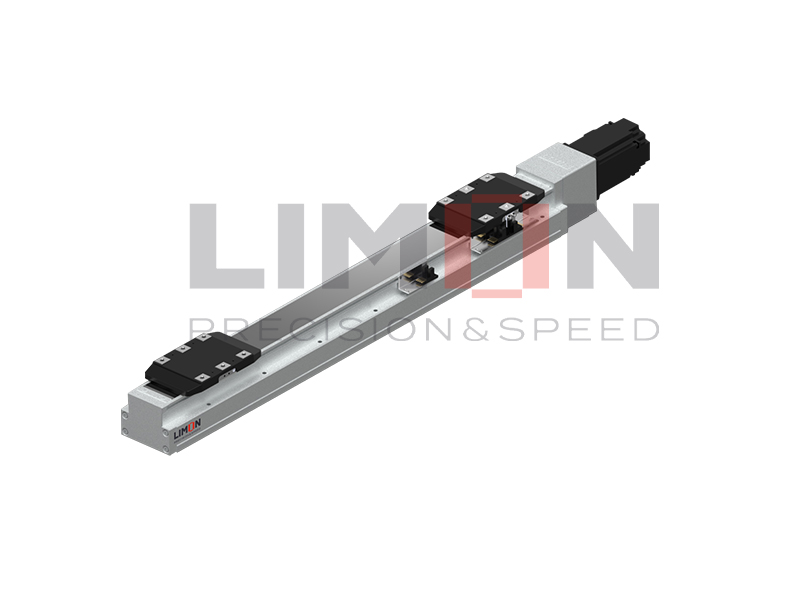
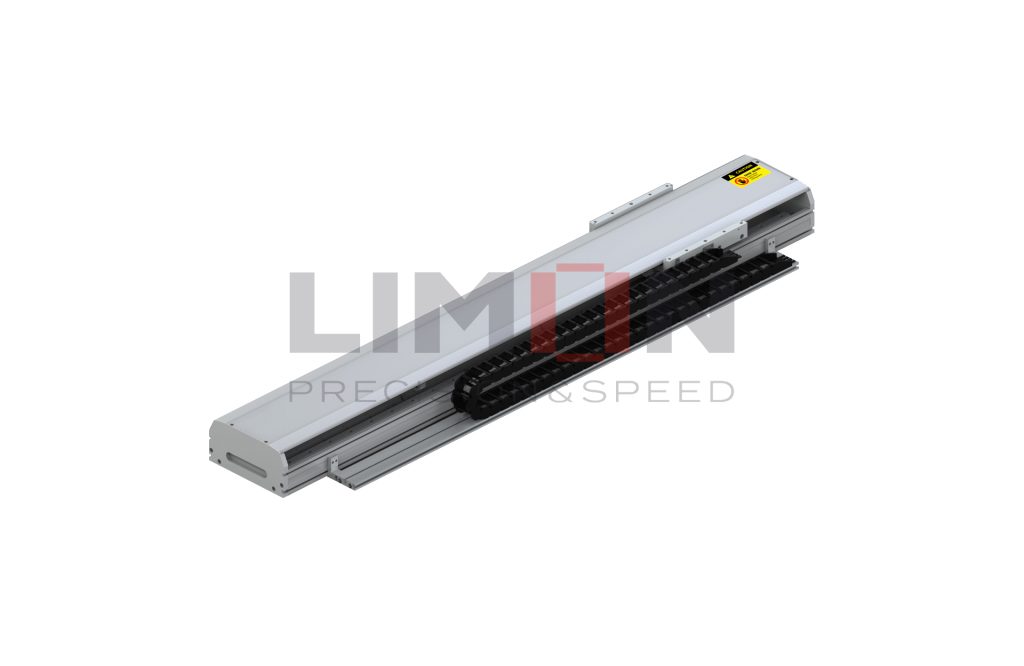
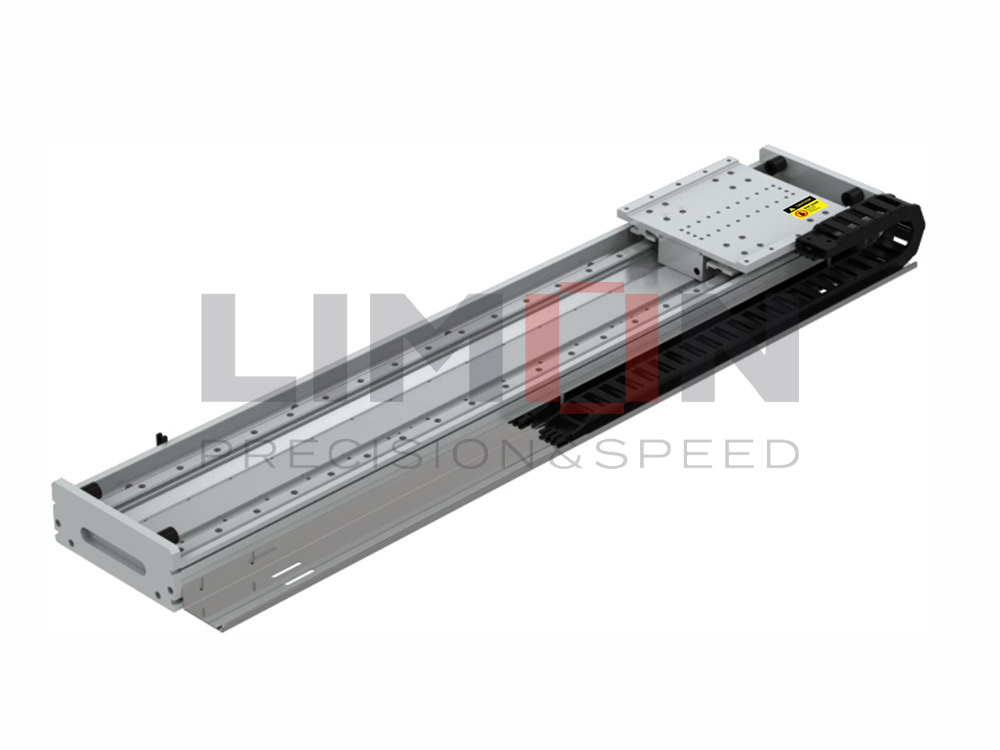
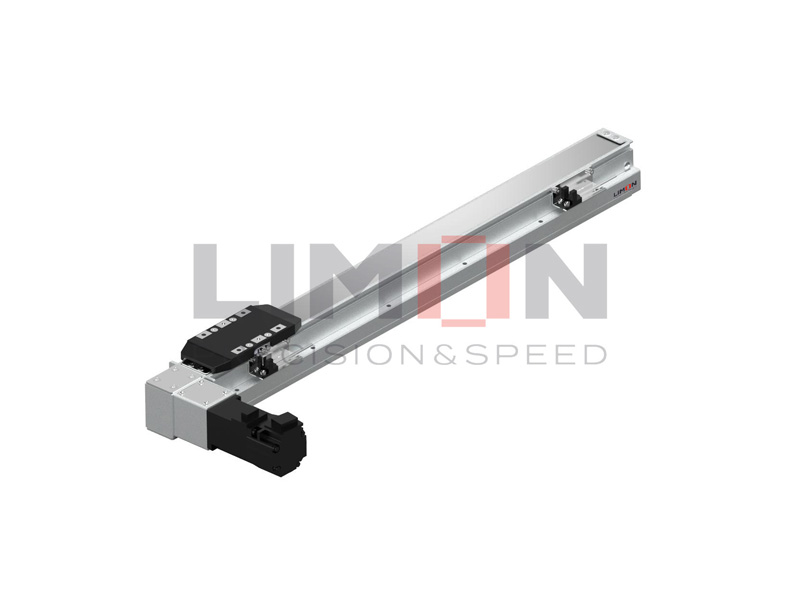
Limon supports these requirements with a fully integrated production line for linear guides, ball screws, linear bearings, and linear actuators. By controlling critical manufacturing, assembly, and inspection processes, we can deliver consistent, high-quality products. Our direct-sales model also provides efficient communication, competitive manufacturer pricing, customization opportunities, and accessible technical support.
Conclusion:
Understanding the four broad bearing types helps engineers balance load, speed, friction, accuracy, environment, and maintenance. For industrial linear motion, Limon provides reliable, high-performance solutions backed by integrated manufacturing, consistent quality, and experienced technical support.
Ready to improve the accuracy, reliability, or service life of your equipment? Visit the Limon independent website to explore our linear bearings, linear guides, ball screws, and linear actuators, or contact our technical team with your load, speed, stroke, accuracy, and operating-environment requirements for product-selection support.