LIMON offers belt, ball-screw, rack-and-pinion and linear-motor axes. Which one belongs in your machine? If you are comparing companies for a configurable multi-axis linear motion system in robotics, factory automation or material handling, start with the job each axis must do. A beam carrying parts across a line, a vertical pick head and a small inspection table can call for three different drives—even inside one machine.
Here is the quick answer. Look at a belt for longer point-to-point transfers; a ball screw for compact travel where thrust and controlled positioning matter; rack and pinion for a long, supported structural axis; and a linear motor for a short or fast precision move that needs direct drive. Then test that first choice against the real load, move time, mounting position and surroundings. The drive type gets you to a shortlist. It cannot finish the sizing for you.
Still deciding whom to ask? Our configurable multi-axis system company shortlist groups suppliers by Cartesian, precision and handling projects. This guide helps you send those suppliers a sharper technical question.
Linear Axis Drive Selection for a Configurable Multi-Axis System: The Six-Factor Matrix
Use this matrix to narrow your options before asking for a quote: the answer changes with the selected axis, motor, guides and machine frame. Our linear-axis range includes all four drive families, and our multi-axis systems combine axes around a project brief.
| Decision factor | Belt | Ball screw | Rack and pinion | Linear motor |
| Usable stroke | Good candidate when the carriage has a long distance to cover. Ask how much travel is actually available after end clearances. | A longer screw may reach a vibration or support limit. Check the chosen length, not just the series name. | Worth screening for a long, well-supported machine axis. Ask how rack sections are joined and aligned. | Check the installed length of the motor track, guide and cables; the travel number alone may hide a larger footprint. |
| Dynamic load | Count the bridge, gripper and cables as moving weight. Check loads that pull or twist the carriage. | Check the force needed to lift or accelerate the load and whether the guides can carry an off-center tool. | Size the gearbox and pinion for the hardest acceleration, including an off-center payload. | Check both the brief force needed to speed up and the force the motor can sustain over many cycles. |
| Speed and cycle | Often a sensible first look for fast transfers. Ask for the time of a loaded move, including the stop. | Screw lead changes travel per motor revolution. Ask whether the selected lead meets both move time and force needs. | Test the proposed gear ratio over the full travel and cycle, not just its top speed. | Ask how quickly the tool settles after a move and whether heat changes that result over a shift. |
| Precision terms | Ask how closely it returns to a point and how close that point is to the target across the full travel. | Ask about repeatability, full-travel error and where position is measured. | Ask whether play in the gears or joints affects the position you care about. | No belt or screw backlash, but sensors, heat, frame and controls still affect the final position. |
| Installation orientation | For vertical travel, agree on what holds the load when power goes off. | Check the vertical load figure and the power-off holding plan; a horizontal rating will not do. | A vertical build needs its own gravity and holding review. | A vertical build needs a defined holding or counterbalance system as well as machine safety review. |
| Environment | Tell the supplier about dust, oil, cleaning and access for belt service. | Check protection from contamination and how the screw will be lubricated. | Plan access to rack teeth, pinion and guides for cleaning and maintenance. | Check particle, cable and heat-control needs on the exact assembly. |
A sound linear axis drive selection starts with the hardest moment in the job, not the largest number on a product page. For a gantry, that might be the bridge at full reach with the Z tool lowered. For an inspection table, it might be the first instant after a fast move, when the camera needs the part to stop shaking.
1.Stroke is usable travel, not extrusion length
Mark the two furthest points the tool must reach. Then leave room for the carriage, travel stops, bending cables and service access. A 2 m usable X stroke does not mean the complete axis fits in 2 m. On a long-stroke Cartesian gantry, the bridge and the moving cables can also change how the axis behaves.
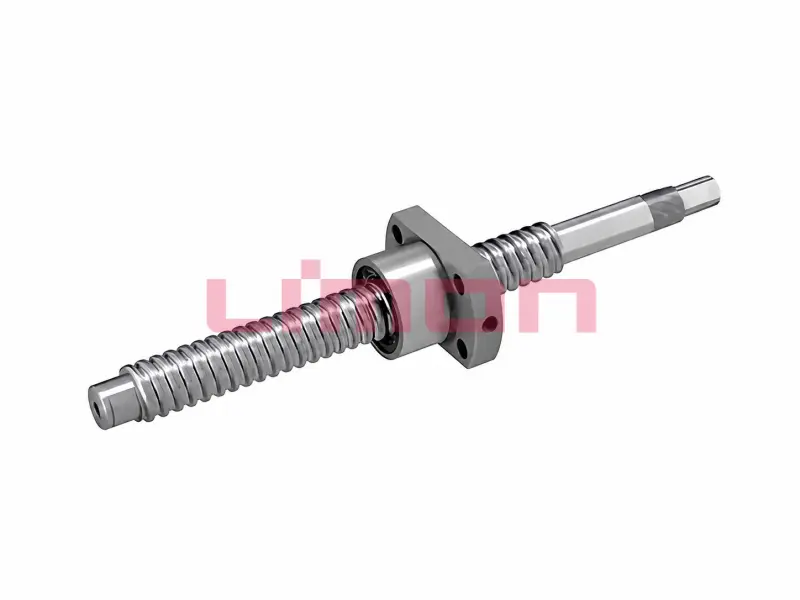
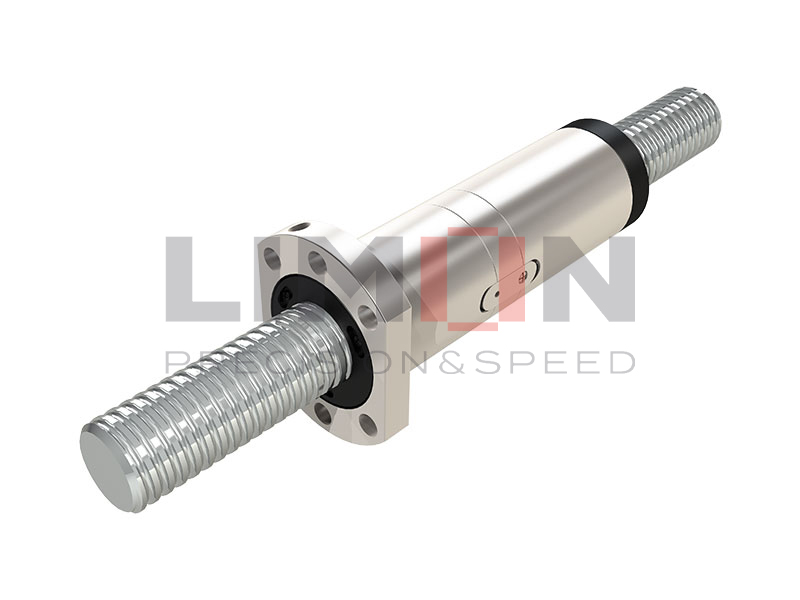
A longer screw is more than a longer part number. How it is supported affects the load it can carry and the speed at which it can run without unwanted vibration. Our ball-screw pitch guide explains the travel-per-revolution trade-off; the proposed model and mounting still need a length check. If the required travel is far beyond a compact screw design, screen a belt or rack axis instead of assuming the same screw will scale.
2.Use the moving load and the full cycle
The part is only one item on the moving side. The dynamic load on a linear actuator also includes the gripper, brackets, sensors, cable carrier and, in a stacked system, the next axis. An off-center tool pulls on the guides as it accelerates. A vertical axis must lift against gravity as well. Give us the tool drawing and its center of gravity, not only the part’s weight.
Then describe one complete move: how quickly it starts, how far it travels, when it stops, how long it waits and how often it repeats. This matters in linear axis drive selection, especially for a direct-drive axis. Its short burst of force may be higher than the force it can keep delivering through a full shift. The right question is simple: can this exact motor, guide and cooling arrangement repeat your move and still meet the position target?
3.Put the precision terms on one line
“Precise” is not a test result. Positioning accuracy vs repeatability is the difference between landing near the intended coordinate and returning to the same coordinate again and again. An axis can do the second well while missing the first. For an XY platform, also ask whether the axes stay square, whether the tool wobbles and how long it takes to settle. A fine encoder number alone cannot answer those questions. NIST’s measurement terminology likewise treats accuracy and repeatability as different concepts.
Tell the supplier the travel, load, speed and room temperature at which you want the result checked. Ask where the measurement is taken: at the motor, the carriage or the tool. That turns a loose “high precision” request into a fair comparison between belt, screw and direct-drive options.
4.Orientation and environment can veto a promising drive
A vertical Z pick head does not behave like a horizontal axis turned sideways. What holds the tool when power goes off? How will people be protected when they enter the cell? A motor brake may help hold position, but it should not be treated as the entire safety design. Put the power-off holding method and the machine builder’s safety responsibility in the project brief.
Describe the surroundings plainly: dust, abrasive grit, oil mist, washdown or a controlled cleanroom. Then ask what is actually protected on the proposed assembly. A family-page label does not automatically describe every motor, cable and joint in the installed machine. This is where linear axis drive selection becomes a whole-machine question.
What the Choice Looks Like in Three LIMON Builds
These are selection examples, not customer case studies or promises that every catalog limit can be reached at once. They show why “I need XY or XYZ motion” is only the beginning of a useful conversation. The models below serve three different jobs. Ask for the current model sheet and drawing before committing to any one of them.
Example 1: A belt-driven XYZ system for moving parts across a line
Picture a small gripper moving a part from one station to another, then lowering it into place. Our Ixyz60 layout uses ITO60 belt axes for X and Y and an ITZ60 belt axis for Z. The catalog lists individual stroke limits for each axis and a 5 kg maximum transport-load entry. That makes this layout worth evaluating for a light handling task. It does not mean one machine can move 5 kg at every maximum stroke and speed simultaneously. The I-series product page shows the horizontal belt families and the Z-oriented ITZ family.
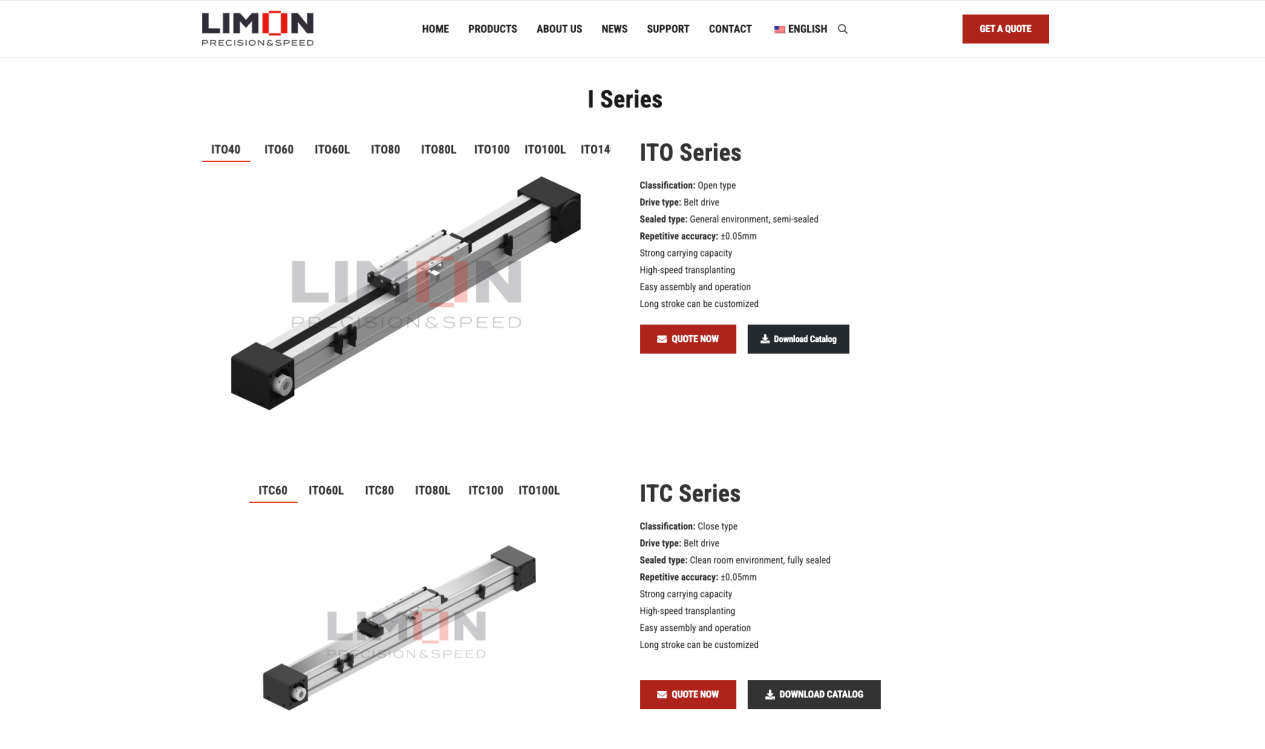
For this route, send the actual part and gripper weights, how far the gripper sits from the carriage, the required move time and what must hold Z when power is off. We can then check the bridge and the load carried by each axis. If the task is mainly station-to-station transfer, tell us how consistently it must return to each station. If it must reach an exact coordinate anywhere along the span, state that separately.
Example 2: A compact screw axis for a vertical tool
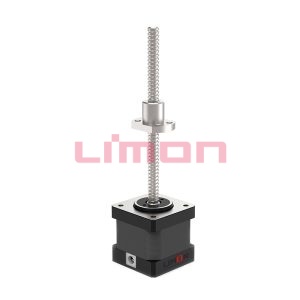
Now imagine a tool that lifts a short distance, pauses and positions a part. GSC50 is a ball-screw model to examine. In its 5 mm lead column, our table lists 250 mm/s maximum speed and 10 kg maximum vertical payload; standard strokes run from 50 to 800 mm. Those are separate catalog limits, even though they appear under the same lead. They do not prove that a 10 kg tool can travel at 250 mm/s at every stroke length and cycle rate. We still need to check the motor, the off-center load and what keeps the tool from dropping when power is off.
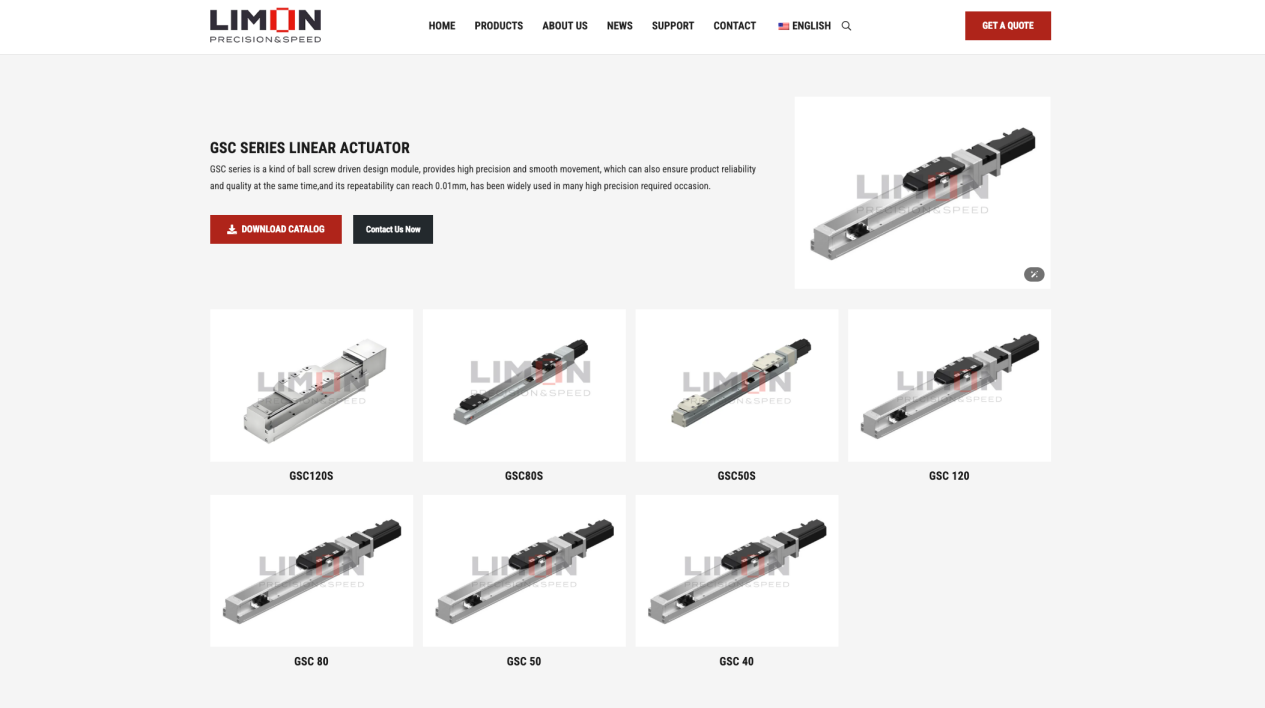
The screw route can suit a compact guided move with a clear force and position target. It is not automatically the right drive for a long transfer beam. In this example, good linear axis drive selection begins with the vertical tool’s actual mass, move time and holding method.
Example 3: A direct-drive XY table for inspection
Now imagine a tool that lifts a short distance, pauses and positions a part. GSC50 is a ball-screw model to examine. In its 5 mm lead column, our table lists 250 mm/s maximum speed and 10 kg maximum vertical payload; standard strokes run from 50 to 800 mm. Those are separate catalog limits, even though they appear under the same lead. They do not prove that a 10 kg tool can travel at 250 mm/s at every stroke length and cycle rate. We still need to check the motor, the off-center load and what keeps the tool from dropping when power is off.
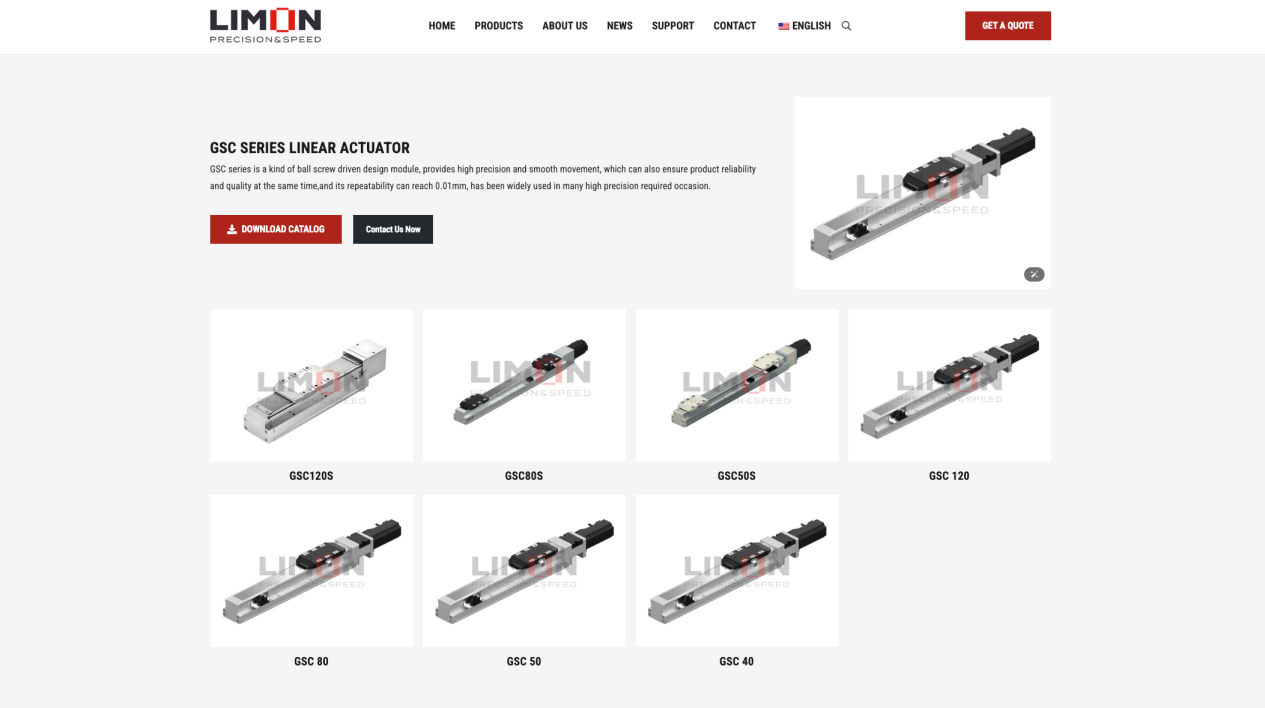
The screw route can suit a compact guided move with a clear force and position target. It is not automatically the right drive for a long transfer beam. In this example, good linear axis drive selection begins with the vertical tool’s actual mass, move time and holding method.
Example 3: A direct-drive XY table for inspection
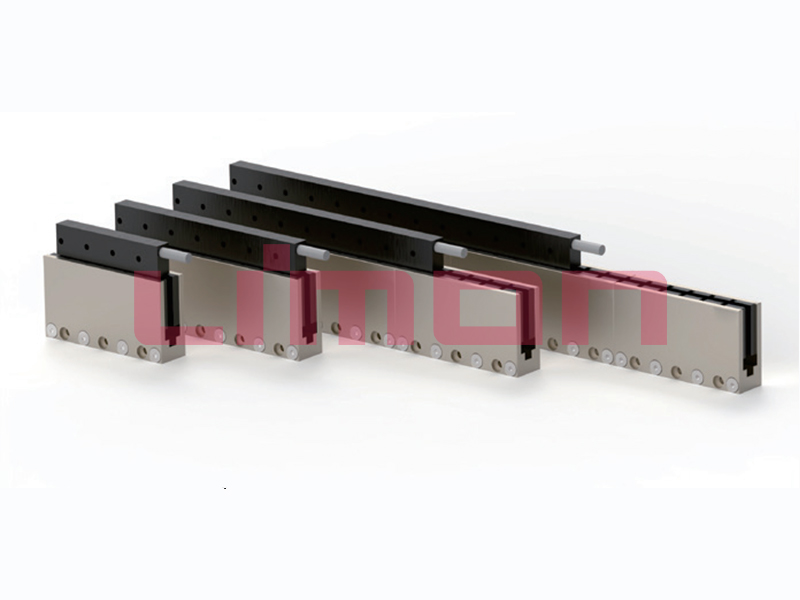
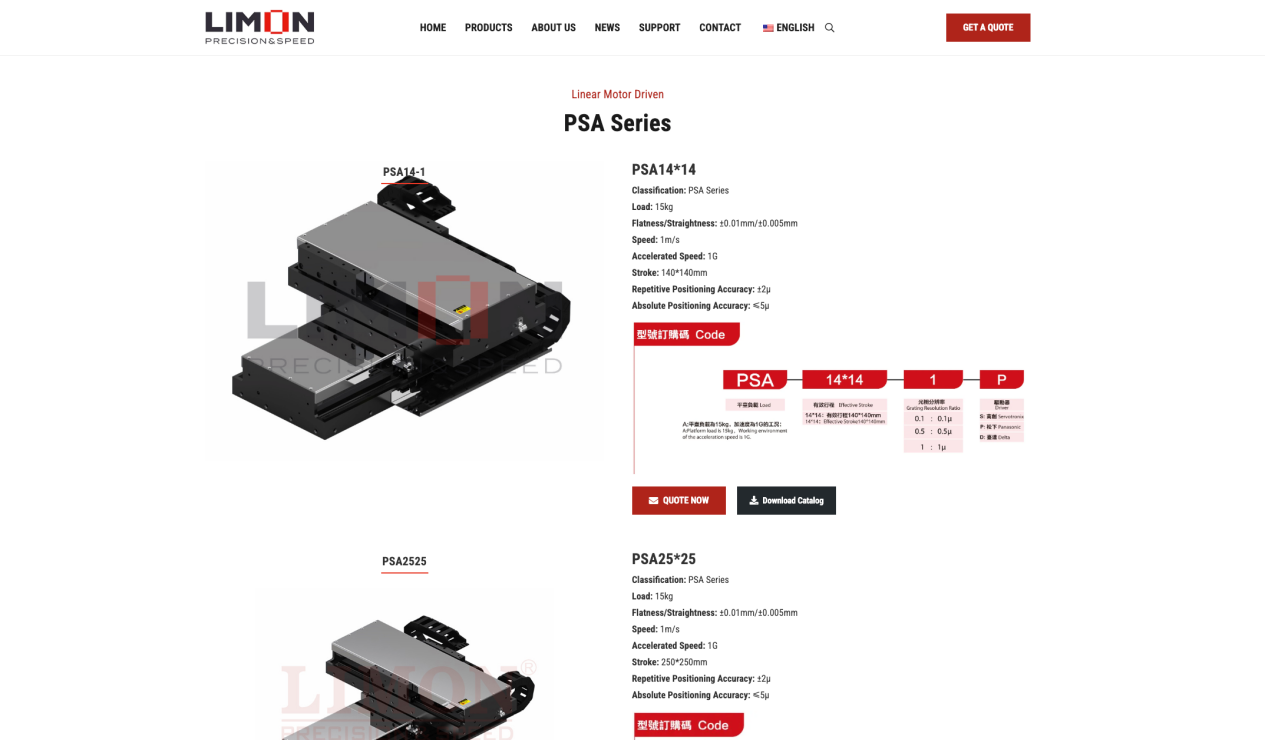
For a camera inspecting a small part, travel may be short while settling and repeat position matter a great deal. PSA-X120Y120 is a two-axis linear-motor table in our precision range. Its catalog lists 120 mm travel on X and Y, a 2 kg load entry and ±1 µm repeatability. The lower X axis is LC100-C2; the upper Y axis is LC75-C1. These figures belong to this XY assembly. They should not be carried over to a different GLC direct-drive axis or assumed to hold under every payload, temperature and move profile.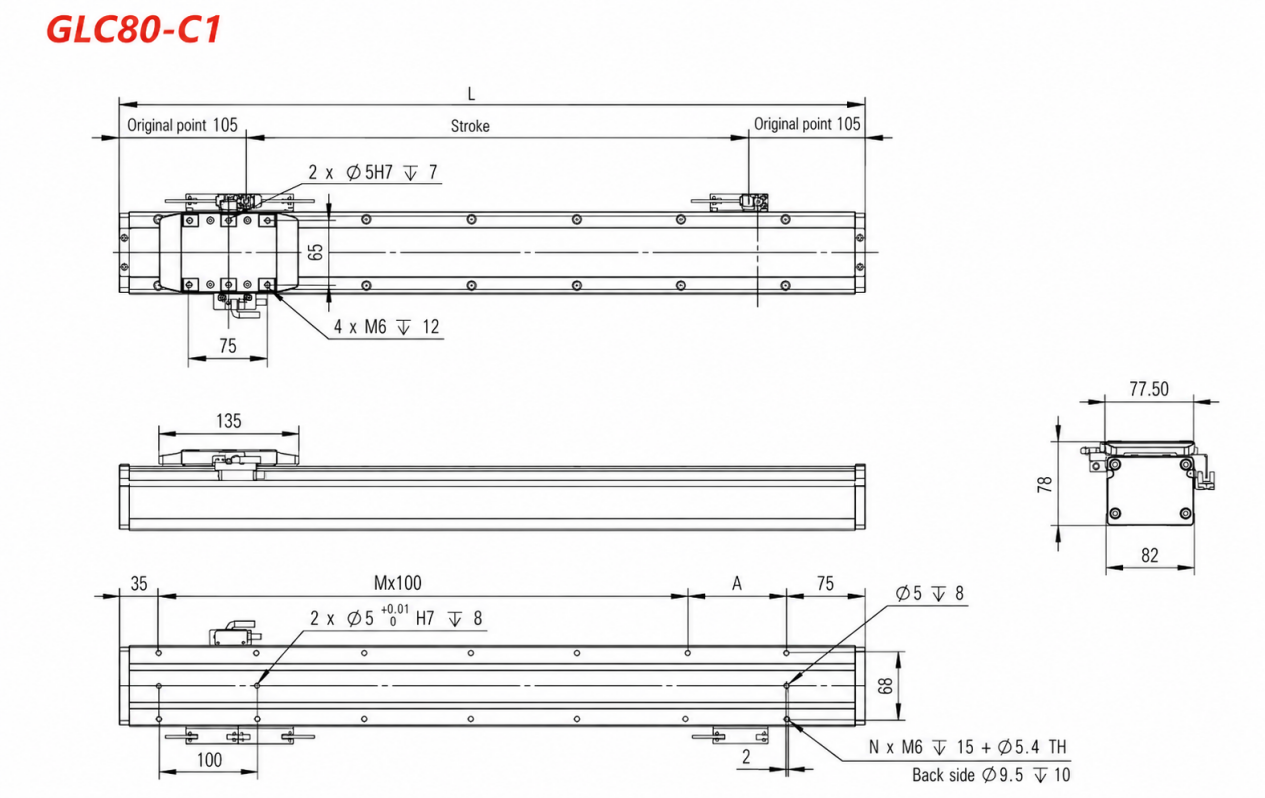
The reason to ask about this platform is its short XY workspace and the need to know where the part ends up. It is not proof that a linear motor will beat every screw stage. Specify where the load sits, how soon after a move the camera takes its reading and how the final position will be measured. Our public PSA family page introduces the platform type; request the current drawing and quote for this exact model and the drives included.
Where does rack and pinion fit? Our YRO170 rack axis is worth screening when a long structural X travel stretches beyond the sensible range of a compact screw. Ask how the gears, rack sections and guides will be sized and maintained. Changing from an installed Bosch module is a different project, with its own mounting and interface checks; our Bosch Rexroth linear module alternatives guide covers that decision.
How to Turn the Matrix Into a Supplier Decision
If you are looking for the best company for a configurable multi-axis linear motion system, give each supplier the same job. That makes linear axis drive selection a fair comparison. “What is your fastest axis?” rarely helps. “Can your proposed XY system move this tool this far, this often, and stop within this tolerance?” will get you much closer to an answer.
Send a simple motion brief: usable X/Y/Z travel; the part, tool and moving-axis weights; where that weight sits; how the axis is mounted; one complete move and its hourly repeat rate; the position you need at the tool; and the site’s dust, oil, temperature or cleaning requirements. Mark what is fixed and what is negotiable. Ask each supplier for a named axis combination, a drawing, the motor and drive included, the loads and moments checked, and any condition they cannot meet. For vertical motion, ask who specifies the power-off hold and who owns the machine safety design. If the system is headed to Spain or another export market, include the destination, document language and electrical interface.
LIMON can help select and configure the motion hardware and, where agreed, build a multi-axis or precision platform around the task. A standard axis order does not automatically include whole-machine PLC programming, safety design or on-site commissioning. A custom project may include more, but the quote should say so. Check the list of motors, drives, cables, controls, drawings, tests and installation support before comparing prices.
That is the point of linear axis drive selection: turning “belt or screw?” into a specific, testable part of an OEM linear motion system. Without the mounting position and a full move cycle, we can discuss candidates, but no one can fairly promise a winner.
FAQs
Is a linear motor always better than a ball screw for precision?
No. A linear motor avoids play from a belt or screw transmission, but its final position still depends on its position sensor, frame, temperature and controls. A well-sized screw may do the job with less complexity. In a linear motor vs ball screw stage comparison, test the part at the same position and under the same load.
When does a rack-and-pinion linear axis deserve a look?
When the axis needs long, supported travel and a compact screw looks strained, add a named rack model to the quote. Ask how its rack sections join, how the gears are lubricated and how the final position is measured. A rack-and-pinion linear axis changes the mechanical layout; it is not simply a longer screw.
Can a belt drive be used on a vertical Z axis?
Yes. LIMON’s ITZ family is designed for Z-axis use. But the vertical linear axis holding brake question still needs a project-specific answer: what stops the load from falling when power is lost, and what protects people during access? Review the axis and the machine safety plan together.
Which is faster, a belt or a ball screw linear actuator?
There is no useful winner without travel, load and a move time. A belt is often the first option to examine for a quick long transfer; a screw may suit shorter travel where controlled thrust matters. For a belt vs ball screw linear actuator decision, compare the time and stopping behaviour of a loaded move on two named models.
What should I send before asking for multi-axis gantry drive selection?
Send a drawing of the available space, usable travel, the weights of the part and tooling, where those weights sit, mounting direction, move time, required position, site conditions and controller connection. If something is unknown, say so. A useful multi-axis gantry drive selection can start with assumptions, as long as they are visible.
Conclusion
The best company for your configurable multi-axis system is the one that can show why its specific drive, drawing and delivery scope fit your hardest move. Belt, ball screw, rack and pinion, and linear motor all have a place in LIMON’s range. None wins every job. Use this linear axis drive selection matrix to narrow the choice, then ask for model-level sizing and a clear way to check the result.
Planning an XY/XYZ assembly or precision platform? Send LIMON your motion brief. We can start with the job you need done, then work back to the drive and axis models that fit it.