Is your linear motion system struggling with positioning accuracy, speed, or efficiency because the ball screw specification is poorly matched?
Ball screw pitch is the axial distance between corresponding points on adjacent screw threads. It affects linear travel per revolution, speed, positioning resolution, and torque requirements. Selecting the right pitch helps balance precision, speed, load capacity, and efficiency for CNC machines, automation equipment, and precision linear motion systems.
Understanding pitch is the first step toward selecting the right ball screw for your application.
What Is a Ball Screw and How Does It Work?
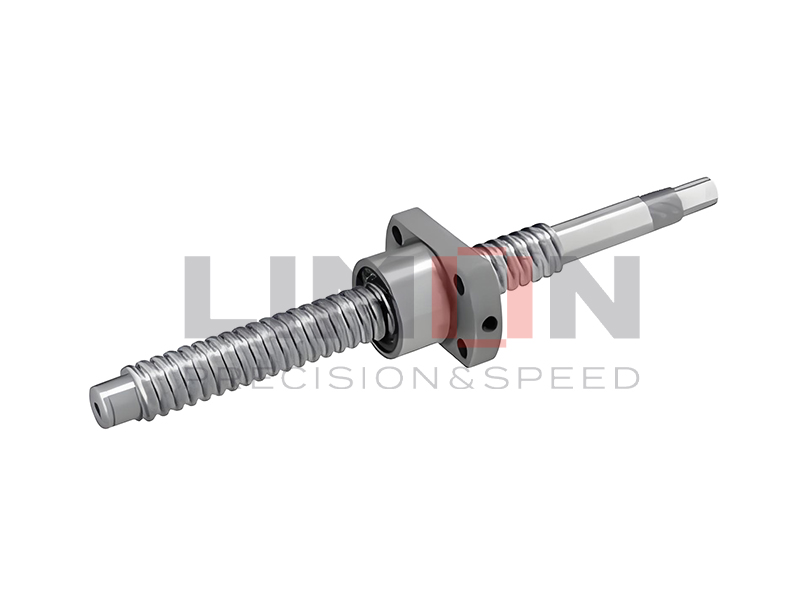
A ball screw converts rotary motion into precise linear motion through a screw shaft, ball nut, and recirculating balls. When the screw rotates, the balls roll between the screw’s raceways and the nut, allowing the nut to travel along the shaft with very low friction.
Compared with conventional sliding screws, ball screws can provide higher mechanical efficiency, lower friction, and excellent positioning performance. This makes them widely used in CNC machine tools, robotics, semiconductor equipment, automated production systems, and precision positioning stages.
The screw shaft provides the helical raceway that guides the rolling balls, while the ball nut transfers the rotational motion into linear displacement. Because the rolling elements continuously circulate through the nut, the system can achieve smooth movement while supporting significant axial loads.
However, ball screw performance is determined by more than the shaft diameter. Pitch, lead, preload, accuracy grade, rotational speed, load, lubrication, and mounting conditions all influence the final performance.
Limon manufactures linear motion components through a fully integrated production line, giving customers access to controlled manufacturing quality and direct technical support when selecting a ball screw for a specific application.
What Is Ball Screw Pitch and Why Does It Matter?
Ball screw pitch describes the distance between corresponding points on adjacent threads. In many single-start ball screws, pitch and lead have the same numerical value, meaning the nut advances by one pitch distance during one complete revolution of the screw.
For example, if a ball screw has a 10 mm lead, one revolution theoretically moves the nut 10 mm. A higher lead therefore allows greater linear travel per revolution, which can help achieve higher linear speeds without increasing motor speed proportionally.
A smaller pitch or lead, however, can provide finer movement resolution. This can be useful in precision positioning applications where controlled, small movements are more important than maximum speed.
The correct value depends on the application. A CNC axis designed for rapid movement may require a relatively high lead, while a precision positioning mechanism may prioritize resolution and positioning control.
Pitch also interacts with motor torque. Increasing the lead can increase linear travel per revolution but may require different torque characteristics from the drive motor.
Limon helps customers evaluate these relationships when selecting ball screws. With integrated manufacturing and direct manufacturer support, customers can consider pitch together with load, speed, stroke, accuracy, and motor requirements rather than selecting a specification in isolation.
How Do Screw Shafts Differ in Ball Screw Applications?
The screw shafts used in ball screw assemblies are precision-engineered components rather than ordinary threaded rods. Their raceway geometry, diameter, straightness, surface finish, and accuracy directly affect how the rolling balls interact with the nut.
A conventional threaded shaft primarily relies on sliding contact between the screw and nut. A ball screw shaft, by contrast, contains precision raceways designed to accommodate recirculating balls. This allows rolling contact and significantly reduces friction.
Screw shaft diameter is also important because it influences load capacity, rigidity, critical speed, and resistance to deflection. A long shaft with a small diameter may experience greater deflection or rotational limitations, even when the nominal load appears acceptable.
For this reason, selecting a ball screw should involve more than matching the nut to a shaft diameter. Engineers should evaluate the complete screw assembly, including shaft length, pitch, lead, support configuration, rotational speed, preload, and expected operating cycle.
Limon’s integrated production capabilities help maintain consistency in key manufacturing processes. This is especially valuable for applications requiring reliable positioning and repeatable motion. Customers can also purchase directly from Limon and receive technical guidance when determining the appropriate screw configuration.
How Should You Choose the Right Ball Screw Pitch?
Choosing the appropriate pitch starts with identifying the application’s required speed and resolution.
If high linear speed is the priority, a higher lead can allow the nut to travel farther during each revolution. This can reduce the motor speed required to achieve a given linear velocity.
If fine positioning is more important, a smaller lead may provide better control over linear displacement per revolution. However, the final positioning resolution also depends on the motor, encoder, control system, mechanical stiffness, and transmission configuration.
Load must also be considered. The ball screw needs sufficient capacity to handle the expected axial force without excessive wear or deflection.
Stroke length matters as well. Longer screw shafts may require additional attention to critical speed, support methods, and overall rigidity.
For practical selection, consider:
- Required linear speed
- Desired positioning resolution
- Axial load
- Stroke length
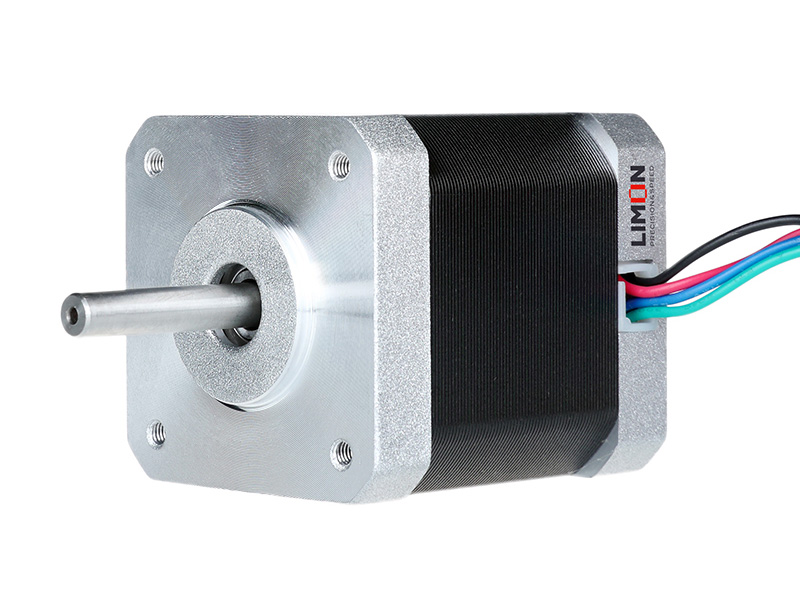
- Motor speed and torque
- Screw diameter
- Accuracy requirement
- Preload
- Operating cycle
- Installation environment
Limon’s technical support can help customers evaluate these factors together. This manufacturer-direct approach is particularly useful for OEMs and industrial buyers who need a complete linear motion solution rather than a generic catalog component.
What Is the Relationship Between Pitch, Lead, and Linear Speed?
Pitch, lead, and linear speed are closely related, but they should not be treated as identical concepts in every ball screw configuration.
For a single-start screw, the lead is generally equal to the pitch. For a multi-start screw, however, the lead is the axial distance traveled by the nut during one complete revolution, while pitch refers to the distance between adjacent threads. In simplified terms:
Lead = Pitch × Number of Starts
This relationship directly affects linear velocity:
Linear Speed = Lead × Rotational Speed
For example, a screw with a 5 mm lead rotating at 1,000 rpm would theoretically provide 5,000 mm/min of linear travel, before considering practical factors such as acceleration, load, efficiency, and control limitations.
This is why simply selecting a larger or smaller pitch does not automatically produce better performance. The screw must be matched to the motor and application.
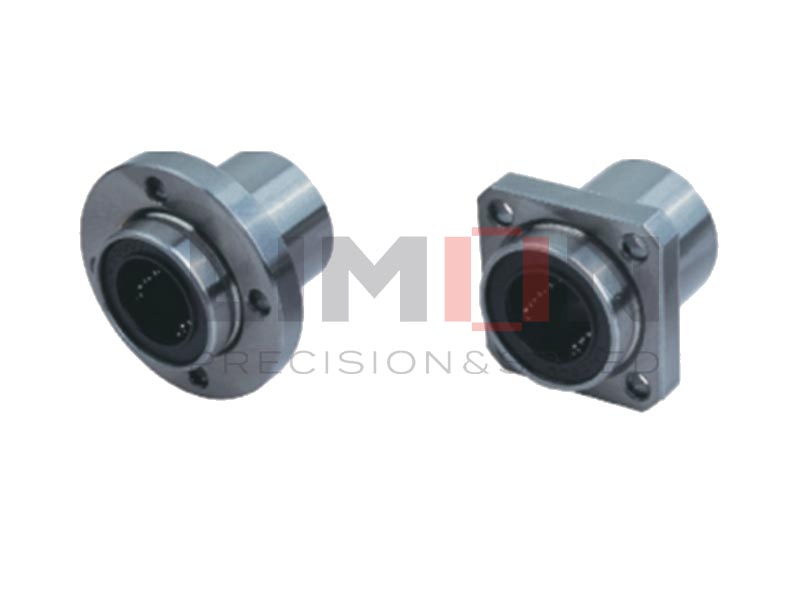
Limon considers the entire motion chain when supplying ball screw solutions. By combining ball screws with compatible linear guides, bearings, actuators, and other motion components, Limon helps customers build systems where the transmission and guiding elements work together efficiently.
What Causes Ball Screw Performance to Decline?
Even a high-quality ball screw can experience reduced performance when it is incorrectly installed or operated outside its intended conditions.
Misalignment can introduce additional forces between the screw and nut, increasing friction and wear. Insufficient lubrication can increase contact stress and temperature, while contamination can damage the raceways and rolling elements.
Excessive preload may also increase friction and heat generation. On the other hand, insufficient preload can allow unwanted axial movement and reduce system rigidity.
High rotational speeds require careful consideration of critical speed and shaft stability, particularly for long screw shafts. Excessive speed can cause vibration and negatively affect service life.
Mounting is equally important. Proper support bearings, alignment, and structural rigidity help the ball screw operate as intended.
Limon’s integrated manufacturing approach provides control over key production processes, while its direct-sales model allows customers to communicate with the manufacturer about application conditions. This combination helps customers avoid treating the ball screw as an isolated component and instead evaluate it as part of the complete linear motion system.
Why Choose Limon for Ball Screw Solutions?
A ball screw is a precision transmission component, so manufacturing consistency and application support matter just as much as basic specifications.
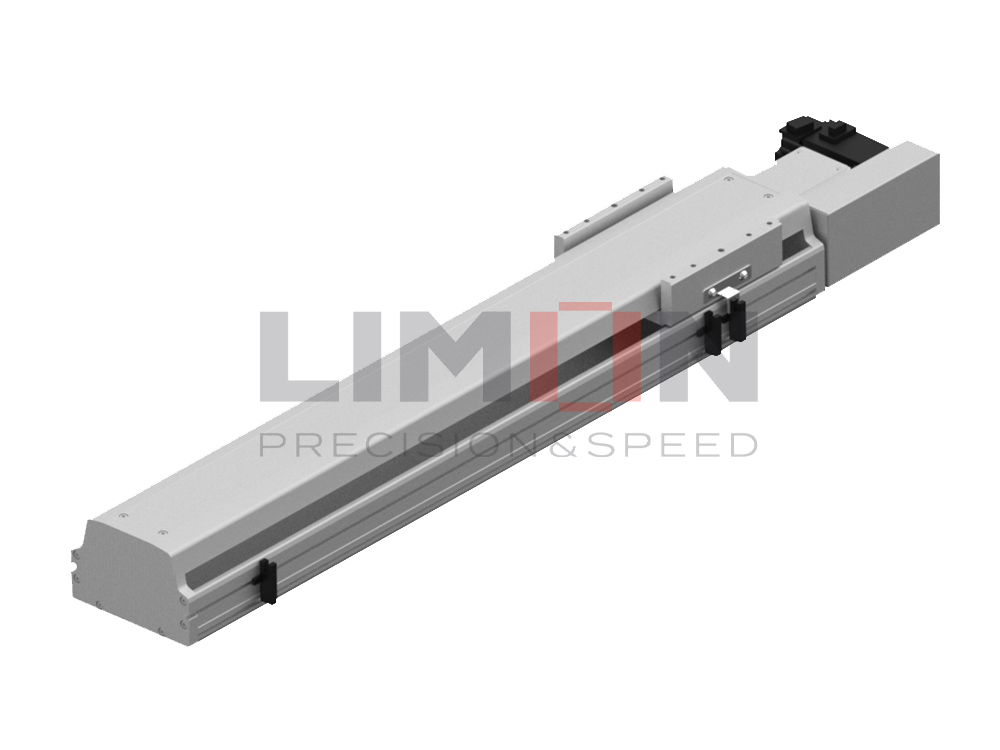
Limon operates a fully integrated production line, enabling tighter control over manufacturing processes and product quality. Its linear motion product range includes ball screws, linear guide rails, linear bearings, and linear actuators, allowing customers to source compatible components from one manufacturer.
Limon also sells directly through its independent website. This direct relationship allows customers to communicate their actual requirements, including load, speed, stroke, accuracy, and installation conditions, and receive technical support before making a purchase.
For OEM projects, automation equipment, CNC machinery, and customized industrial systems, this approach can simplify sourcing while helping customers select components based on actual operating requirements.
Conclusion
Ball screw pitch has a direct influence on linear speed, positioning resolution, motor requirements, and overall motion performance. The ideal specification depends on the complete application—not pitch alone.
By combining integrated manufacturing, direct sales, high-quality components, and technical support, Limon provides reliable, high-performance ball screw and linear motion solutions for demanding industrial applications.
Limon — Precision Motion. Reliable Performance.