Need controlled linear movement but unsure which actuator fits your machine, load, speed, and stroke requirements?
Featured Snippet: A linear actuator converts energy into controlled linear motion, allowing a mechanism to push, pull, lift, position, or adjust a load. Linear actuators are widely used in automation, robotics, CNC equipment, medical systems, furniture, agriculture, and industrial machinery where precise straight-line movement is required.
Let’s explore how linear actuators work, where they are used, and how to select the right type.
How Does a Linear Actuator Work?
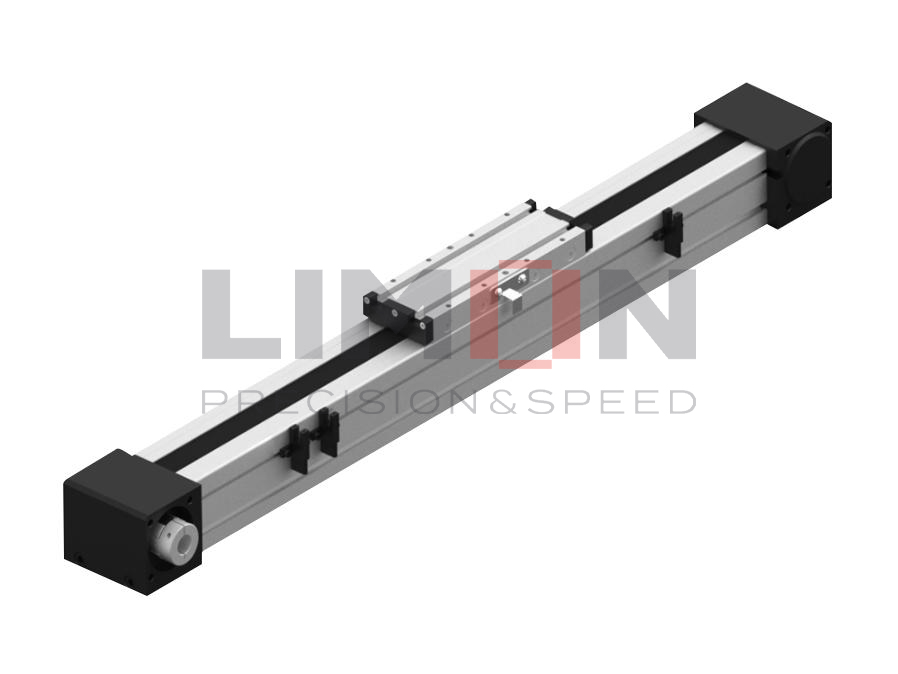
Understanding linear actuator how does it work begins with one simple principle: rotational or electrical energy is converted into controlled straight-line movement. Depending on the design, an actuator may use a lead screw, ball screw, belt, or another mechanical transmission mechanism to generate linear travel.
In a screw-driven actuator, a motor rotates a screw while a nut moves along its axis. The nut is connected to the moving element, transforming motor rotation into linear displacement. Ball screw designs use recirculating balls between the screw and nut to reduce friction and improve efficiency, making them suitable for applications requiring precision, speed, and repeatability.
The actuator can also be integrated with sensors, limit switches, controllers, and feedback systems. This allows the system to control position, speed, acceleration, and travel direction. Limon designs linear motion solutions with the complete application in mind, combining reliable manufacturing with technical support to help customers select suitable components for their equipment.
What Are Linear Actuators Used For?
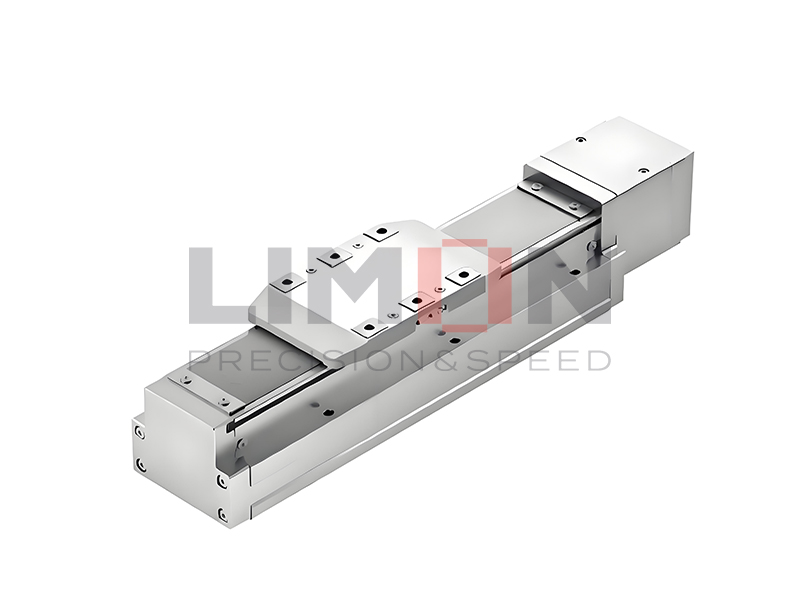
Linear actuators are used whenever equipment needs controlled movement along a straight path. Typical functions include lifting, pushing, pulling, positioning, clamping, adjusting, opening, closing, and feeding. Because the actuator can provide repeatable movement, it is an important component in both automated production equipment and everyday electromechanical products.
In industrial automation, actuators can move tooling, sensors, workpieces, inspection equipment, and machine components. In CNC and precision equipment, they can provide controlled positioning along one or more axes. In robotics, actuators help create programmable movements, while in packaging machinery they can support feeding, sorting, and positioning operations.
Other applications include adjustable workstations, medical equipment, agricultural machinery, solar tracking systems, automated doors, and smart furniture. The required actuator depends on factors such as load, stroke, speed, accuracy, duty cycle, installation orientation, and operating environment. Limon’s product range allows customers to select linear motion components according to actual application requirements rather than relying on a one-size-fits-all solution.
Which Types of Linear Actuators Are Commonly Used?
There is no single actuator design that works best for every application. Electric linear actuators are among the most versatile because they can be integrated with motors and control systems for programmable movement. Screw-driven actuators are often selected for applications requiring high thrust and controlled positioning, while belt-driven designs can be advantageous when long travel and high speed are priorities.
Ball screw actuators are particularly suitable for applications where efficiency, precision, and repeatability are important. Lead screw systems can offer a practical solution for lower-speed positioning and applications where self-locking characteristics may be beneficial. Linear motor systems provide direct linear motion without the mechanical screw or belt transmission found in conventional actuator designs.
When selecting among these types, engineers should consider the complete motion profile instead of focusing only on maximum force. Limon supports customers in evaluating stroke, speed, load, accuracy, installation space, and operating conditions. With an integrated manufacturing system, Limon can provide coordinated linear motion products for applications requiring reliable and high-performance movement.
How Do Stroke, Load, Speed, and Accuracy Affect Selection?
Four specifications are particularly important when choosing a linear actuator: stroke, load, speed, and accuracy. Stroke describes the distance the actuator needs to travel. A longer stroke may require a different mechanical configuration than a compact short-stroke actuator. Load determines the required thrust or lifting capability and must account for the direction of movement and installation orientation.
Speed determines how quickly the actuator must complete its movement. However, maximum speed should always be considered together with load, acceleration, duty cycle, and mechanical stability. Increasing speed without considering these factors can reduce service life or compromise positioning performance.
Accuracy and repeatability become critical in applications such as CNC equipment, inspection systems, semiconductor machinery, and automated assembly. The actuator should also be matched with appropriate linear guides, bearings, screws, motors, and control systems. Limon’s technical team can help customers evaluate these parameters together, reducing the risk of selecting an actuator that is technically compatible but poorly matched to the actual application.
What Applications Benefit Most from Precision Linear Actuators?
Precision linear actuators are especially valuable when movement must be repeatable and accurately controlled. Automated assembly machines may use actuators to position components before fastening or inspection. In laboratory and medical equipment, controlled linear movement can help position instruments, trays, or mechanisms with consistent travel. In CNC and other machine tools, linear motion systems must maintain stable movement while handling continuous mechanical loads.
Robotics is another important application. Multi-axis robotic systems often combine several linear or rotary motion elements, requiring accurate synchronization between axes. Linear actuators can also be used in automated inspection equipment, where sensors or cameras need to move to predetermined positions repeatedly.
For these applications, the actuator should not be evaluated independently. Mechanical rigidity, guide accuracy, motor selection, feedback, lubrication, and mounting precision all influence final system performance. Limon’s vertically integrated manufacturing capabilities allow us to approach the actuator as part of a complete linear motion solution, supported by direct communication and application-focused technical assistance.
How Can You Choose the Right Linear Actuator?
A practical selection process should begin with the application’s actual motion requirements. Before choosing a product, define:
- Required stroke: How far must the actuator travel?
- Load: What mass or axial force must it move?
- Speed: How quickly must the movement occur?
- Accuracy: How precise and repeatable must positioning be?
- Duty cycle: How frequently will the actuator operate?
- Installation: Is the actuator mounted horizontally, vertically, or at an angle?
- Environment: Will it encounter dust, moisture, vibration, or temperature changes?
- Control: Does the application require simple positioning or closed-loop control?
For example, a compact automation device may prioritize small dimensions and low power consumption, while a machine tool may require higher stiffness, precision, and continuous-duty performance. A vertical lifting application may place greater emphasis on thrust capacity and load retention.
Limon provides direct manufacturer support throughout this process. Instead of simply supplying a standard actuator, we can help customers match the actuator with linear guides, ball screws, bearings, and other motion components. Our integrated production line also helps maintain consistent quality across the products used in the overall system.
Why Choose Limon for Linear Motion Applications?
Successful linear motion design depends on more than selecting a component with the correct dimensions. The actuator, guide system, transmission components, motor, and controller must work together as one mechanical system. This is particularly important for industrial equipment where inconsistent motion can lead to reduced productivity, increased maintenance, or product quality problems.
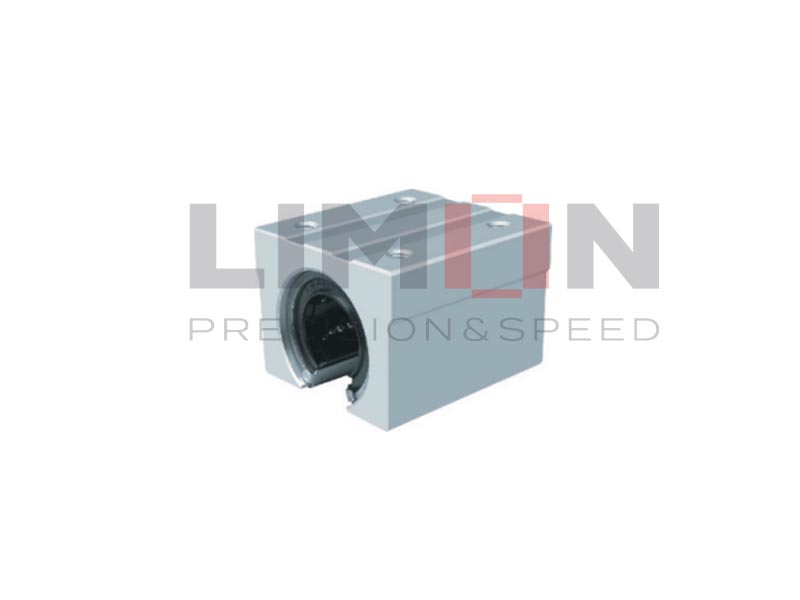
Limon focuses on reliable, high-performance linear motion solutions, including linear actuators, linear guide rails, ball screws, and linear bearings. Our fully integrated production line gives us greater control over manufacturing processes and quality, while our direct-sales model allows customers to communicate with the manufacturer without unnecessary intermediaries.
Whether you are developing automation equipment, upgrading an existing machine, or sourcing components for an OEM project, Limon can provide product selection assistance and technical support based on your actual operating requirements. The goal is simple: make linear motion more reliable, precise, and practical for real-world applications.
In summary, linear actuators provide controlled straight-line movement for countless industrial and commercial applications. Understanding the working principle, application requirements, and key specifications is essential for choosing the right solution. With an integrated production line, direct manufacturer support, high-quality linear motion products, and application-focused technical assistance, Limon delivers reliable, high-performance solutions designed around your motion requirements.