In real-world automation—not theory—linear actuators are everywhere. They position cutting tools in CNC machines, move gantries in warehouse systems, and control robotic arms on production lines.
But most explanations of the working of linear actuator stop at textbook definitions.
If you’re an engineer, buyer, or system integrator, what you really need to understand is this:
How does a linear actuator actually perform under load, at speed, and over time?
At Limon, we manufacture ball screws, linear guides, and actuator systems used in demanding industrial environments. In this guide, we’ll go beyond theory and break down the working principle of linear actuator with real applications, practical insights, and selection advice.
What Does “Working of Linear Actuator” Really Mean in Practice?
At its core, the working of linear actuator is about converting energy into controlled, repeatable linear motion.
But in real systems, that motion must meet strict requirements:
- Position accuracy within ±0.01 mm (typical CNC requirement)
- Continuous operation (often 24/7 in U.S. factories)
- Stable performance under varying loads
So when engineers ask how a linear actuator works, they’re not asking about theory—they’re asking:
- Will it maintain accuracy over time?
- Can it handle my load and speed?
- How does it behave under real production conditions?
Working Principle of Linear Actuator (With Real Engineering Context)
The working principle of linear actuator is simple in concept but complex in execution.
Core Process:
- A motor generates rotational energy
- A transmission mechanism converts rotation into linear motion
- A guided system ensures stability and accuracy
In a real machine, this process must also manage:
- Friction
- Heat buildup
- Vibration
- Load variation
That’s why the linear actuator working principle is not just about motion—it’s about controlled, repeatable performance.
How a Linear Actuator Works in a CNC Machine (Real Case)
Let’s look at a real-world example to understand how a linear actuator works.
Case: CNC Milling Machine (U.S. Midwest Manufacturer)
A typical CNC axis uses:
- Servo motor
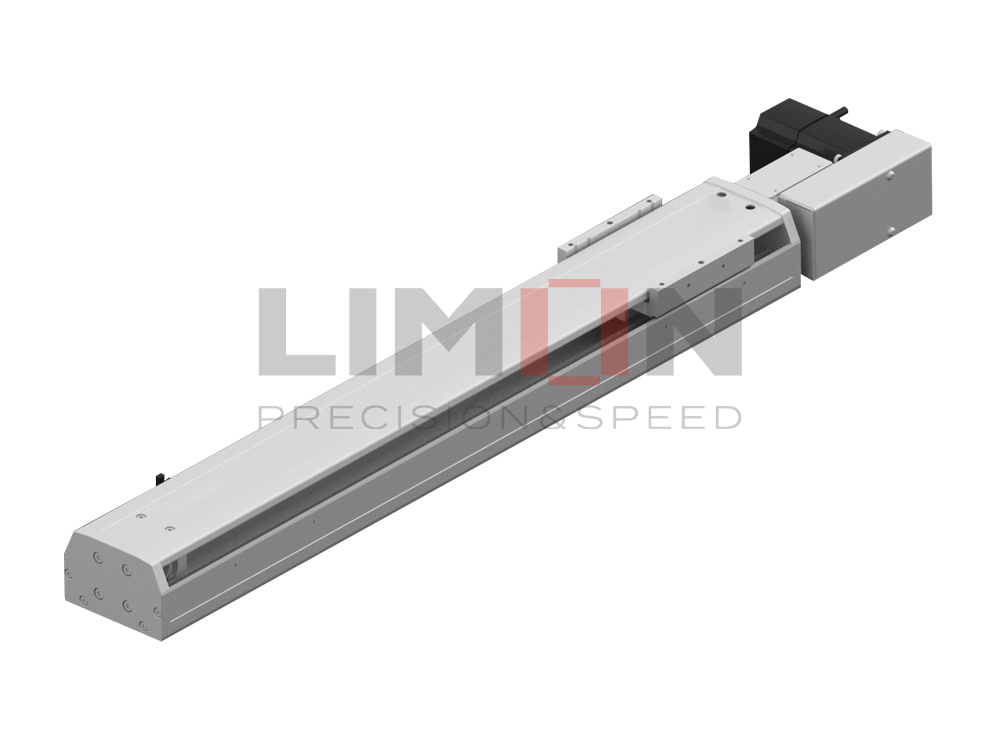
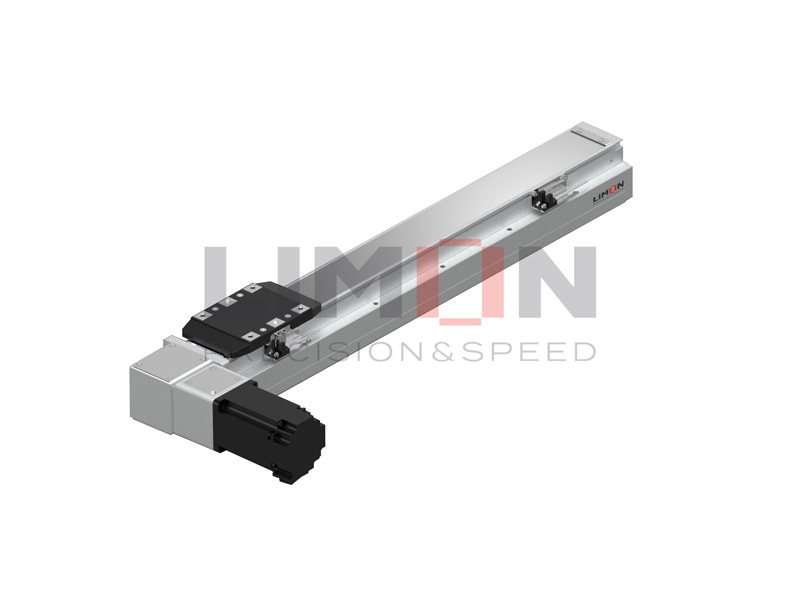
- Ball screw actuator
- Linear guide rails
What Happens During Operation:
- The motor rotates at high speed (e.g., 3000 RPM)
- The ball screw converts this into linear motion
- The table moves at precise increments (as small as 0.001 inch)
- Linear guides prevent deflection under cutting forces
Real Performance Requirements:
- Repeatability: ±0.005 mm
- Load: 500–2000 N
- Duty cycle: Continuous operation
This is the linear actuator how it works in a real production environment—not just theory, but performance under pressure.
Comparing Different Working Mechanisms (With Practical Trade-Offs)
Different actuator types follow the same working principle of linear actuator, but their real-world performance varies significantly.
Ball Screw Actuator (Precision-Focused)
Working Principle:
Recirculating ball bearings reduce friction and convert rotation into linear motion.
Real Advantage:
- Efficiency up to 90%
- Minimal backlash (critical for CNC and automation)
Typical Use Case:
- CNC machines
- Semiconductor equipment
Limitation:
- Higher cost than belt systems
Belt-Driven Actuator (Speed-Focused)
Working Principle:
A motor drives a belt to move a carriage.
Real Advantage:
- Speeds up to 5 m/s
- Long stroke (over 3 meters common)
Typical Use Case:
- Amazon-style warehouse systems
- Packaging lines
Limitation:
- Lower precision compared to ball screws
Rack and Pinion Actuator (Heavy-Duty)
Working Principle:
Gear engagement converts rotation into linear motion.
Real Advantage:
- Handles large loads and long travel
Typical Use Case:
- Gantry systems
- Large-format machining
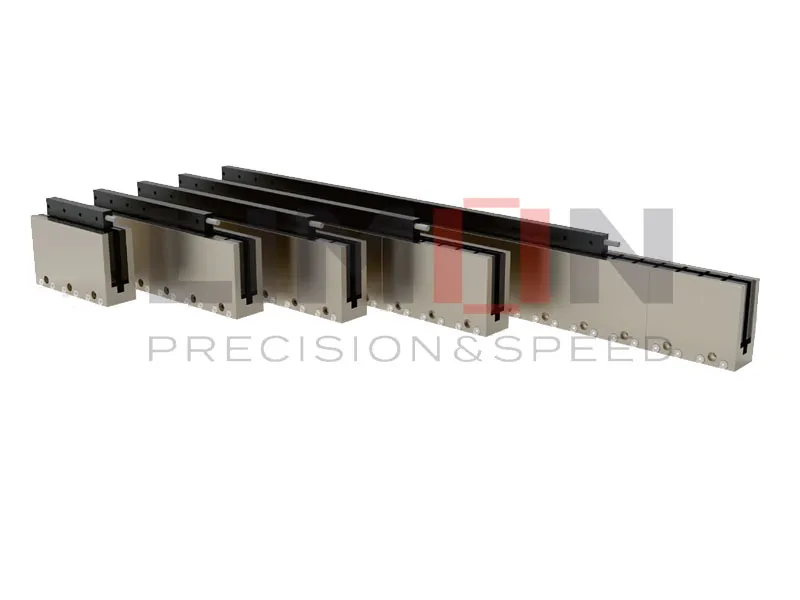
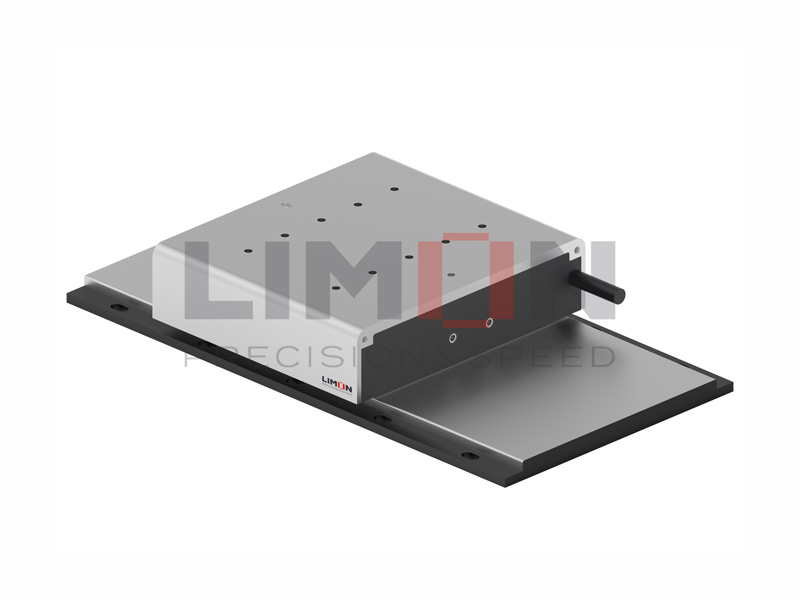
Linear Motor Actuator (High-End Precision)
Working Principle:
Direct electromagnetic force creates motion.
Real Advantage:
- No mechanical wear
- Acceleration > 5G in some systems
Limitation:
- High cost
- Requires advanced control systems
Why the Working of Linear Actuator Impacts Your System Performance
In real projects, misunderstanding how a linear actuator works leads to costly issues:
Common Mistakes We See:
- Choosing a belt actuator for precision applications
- Undersizing load capacity → early failure
- Ignoring guide rail rigidity → vibration issues
Real Impact:
- Increased downtime
- Poor product quality
- Higher maintenance costs
Understanding the working of linear actuator helps avoid these problems.
Integration Matters: Actuator + Guide + Screw
A linear actuator doesn’t work alone.
Its real performance depends on system integration:
- Ball screw → determines positioning accuracy
- Linear guide → determines stability and rigidity
- Motor + driver → determines speed and control
At Limon, we often see performance improvements of:
- 30–40% reduction in vibration
- 20% increase in positioning accuracy
when customers switch to matched component systems instead of mixed suppliers.
This is where the true value of understanding the linear actuator working principle comes in.
How to Choose the Right Linear Actuator (Engineer’s Checklist)
When selecting based on linear actuator how it works, focus on real parameters:
- Load (N or kg)
Always include dynamic load—not just static weight.
- Speed (mm/s or m/s)
High speed often reduces precision—balance is key.
- Duty Cycle
Is it running 8 hours/day or 24/7?
- Accuracy Requirement
CNC ≠ packaging line.
- Environment
Dust, temperature, and humidity directly affect lifespan.
Why U.S. Manufacturers Choose Integrated Solutions
In the U.S., manufacturers increasingly prefer integrated actuator systems because:
- Labor costs demand higher reliability
- Downtime is extremely expensive
- Precision requirements are rising
This trend is driving demand for complete systems—not just components.
Why Limon Linear Actuators Perform in Real Conditions
At Limon, we don’t just design for specs—we design for real-world performance.
What Makes the Difference:
- Fully integrated production (no tolerance stacking issues)
- Precision-ground ball screws
- Matched linear guide systems
- Strict quality control for long-term durability
Our customers typically report:
- Longer service life
- More stable motion under load
- Reduced maintenance frequency
Conclusion: Understanding the Working of Linear Actuator = Better Engineering Decisions
The working of linear actuator is not just about motion—it’s about performance, reliability, and system efficiency.
Understanding the working principle of linear actuator and how a linear actuator works in real conditions allows you to:
- Choose the right technology
- Avoid costly design mistakes
- Improve system performance
Whether you’re designing CNC equipment, automation systems, or robotics, the right actuator solution makes a measurable difference.
At Limon, we provide the precision components that turn motion into performance.