Are unstable motion, misalignment, or premature wear in your linear system caused by the wrong bearing block or poor mounting design?
A bearing block is a support housing that holds and guides bearings along a shaft or rail system, ensuring smooth linear motion, alignment, and load distribution. It is commonly used with linear motion systems such as linear rails and bearing blocks assemblies. Proper bearing mounting improves accuracy, reduces friction, and extends system lifespan in industrial automation.
Next, we explore structure, applications, selection methods, and how Limon optimizes bearing block systems.
What Is a Bearing Block and Why Is It Critical in Linear Motion Systems?
A bearing block is a core mechanical component used to support, guide, and stabilize motion along a linear shaft or rail. In modern automation systems, it works directly with linear rails and bearing blocks assemblies to ensure precise, low-friction movement. Without proper support, even high-quality linear motion components will suffer from misalignment, vibration, and premature wear. The bearing block acts as both a structural and functional interface, distributing load evenly and maintaining alignment under dynamic operating conditions.
In industrial environments, correct bearing mounting is essential because it directly affects system rigidity and accuracy. Poor mounting can lead to deflection, noise, and energy loss. At Limon, bearing blocks are designed with high-precision machining tolerances and integrated into a full production system to ensure consistent performance across applications such as CNC machinery, automation lines, and robotics. This integration guarantees long-term stability even under heavy loads and continuous operation.
How Does Bearing Mounting Affect System Accuracy and Lifespan?
Proper bearing mounting is one of the most important factors determining the performance of a linear motion system. If mounting surfaces are not aligned or if torque is unevenly distributed, the bearing block will experience uneven stress. This leads to increased friction, heat buildup, and eventually failure. In contrast, precision mounting ensures smooth motion, reduced wear, and improved system lifespan.
In systems using ball bearing mounts, correct installation is even more critical because ball bearings rely on smooth rolling contact to minimize resistance. Misalignment can disrupt this rolling motion and significantly reduce efficiency. Industrial users often overlook this detail, but it is one of the most common causes of performance degradation in automated equipment. Limon provides engineering-level guidance and pre-aligned component design to reduce installation errors and improve long-term reliability in real-world applications.
Why Are Linear Rails and Bearing Blocks Used Together in Automation Systems?
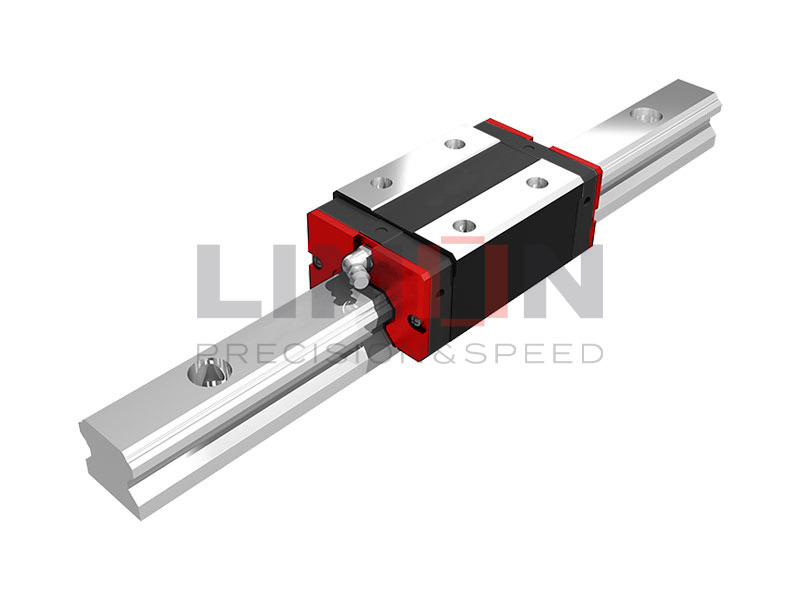
The combination of linear rails and bearing blocks is widely used in industrial automation because it delivers both structural rigidity and smooth motion. Linear rails provide a stable guiding surface, while bearing blocks ensure controlled movement with minimal friction. Together, they form a highly efficient motion system capable of handling both high speed and heavy loads.
In manufacturing environments such as CNC machining, packaging equipment, and robotic arms, this pairing ensures repeatability and accuracy across thousands of cycles. The design also allows easy scalability, making it suitable for both compact devices and large industrial machines. At Limon, these systems are produced using a fully integrated production line, ensuring consistency between rails and blocks for optimal performance matching and reduced maintenance requirements.
What Are Ball Bearing Mounts and How Do They Improve Motion Efficiency?
Ball bearing mounts are specialized structures designed to hold ball bearings in a fixed position while allowing smooth rotational or linear movement. Their main advantage is extremely low friction, which translates into higher efficiency and reduced energy consumption in motion systems. Compared to plain bushings, ball bearing mounts significantly improve precision and speed stability.
However, performance depends heavily on quality and alignment. Poorly manufactured mounts can introduce vibration and reduce system accuracy. High-quality solutions, like those produced by Limon, ensure tight tolerances and durable materials that maintain performance even under continuous industrial use. This makes them suitable for demanding applications such as automated assembly lines, precision positioning systems, and high-speed transport mechanisms.
How to Select the Right Bearing Block for Your Application
Selecting the right bearing block requires understanding load conditions, motion speed, environment, and system structure. For example, heavy-load systems require reinforced housings, while high-speed systems prioritize low-friction designs. Compatibility with linear rails and bearing blocks systems is also essential to ensure smooth integration.
Engineers must also evaluate mounting method, lubrication requirements, and expected maintenance cycles. Improper selection can lead to system inefficiency or premature failure. In many cases, users underestimate the importance of matching bearing blocks with correct shaft or rail specifications. Limon supports customers with technical selection guidance and provides integrated component systems that reduce compatibility risks and improve system reliability from the start.
Why Integrated Manufacturing Matters for Bearing Block Performance
In linear motion systems, consistency between components is just as important as individual part quality. A bearing block produced in isolation may not perform optimally unless it matches the rail system, mounting structure, and load profile. This is why integrated manufacturing plays a key role in ensuring performance stability.
At Limon, full in-house production ensures that every component—from raw material selection to final assembly—is tightly controlled. This eliminates dimensional inconsistencies and improves system compatibility across all product lines. Whether used in automation equipment, industrial robotics, or precision machinery, integrated design reduces failure risk and improves long-term operational efficiency.
Conclusion
A bearing block is a foundational element in any linear motion system, directly influencing accuracy, stability, and lifespan. When properly matched with linear rails and bearing blocks systems and installed with correct bearing mounting practices, performance improves dramatically. High-quality ball bearing mounts further enhance efficiency and smooth motion.
With full in-house manufacturing, engineering expertise, and direct-to-customer supply, Limon delivers reliable, high-performance linear motion solutions designed for demanding industrial applications.