Unstable motion, friction, and rapid wear often undermine machine accuracy and efficiency. Left unresolved, these issues cause downtime, defects, and rising maintenance costs. A linear bearing offers a proven solution by enabling smooth, precise, and repeatable linear motion.
A linear bearing is a mechanical component designed to guide and support motion along a straight path with minimal friction. By using rolling or sliding contact, it improves accuracy, load handling, and service life in countless industrial systems.
To truly understand why linear bearings are essential, it helps to explore what they are, how they work, and how their design supports a wide range of industrial applications.
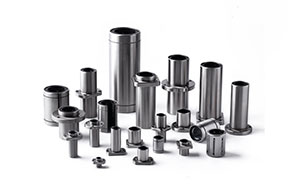
What Is a Linear Bearing?
A linear bearing is a type of bearing that allows motion in one direction—along a straight line—while restricting movement in other directions. Unlike rotary bearings, which support rotational motion, a linear bearing supports translational movement with controlled guidance. It is commonly paired with a shaft, rail, or guideway that defines the direction of travel.
The primary purpose of a linear bearing is to reduce friction while maintaining alignment under load. This is achieved either through rolling elements, such as balls or rollers, or through low-friction sliding materials. In both cases, the bearing distributes loads evenly across contact surfaces, preventing metal-to-metal contact and minimizing wear.
Linear bearing systems are fundamental components in automation equipment, CNC machines, packaging lines, medical devices, and robotics. Their ability to provide predictable, repeatable motion makes them indispensable wherever precision and reliability are required. By combining guidance, load support, and friction reduction in a compact form, the linear bearing becomes a cornerstone of modern motion control systems.
How Does a Linear Bearing Work?
A linear bearing works by supporting a moving load while allowing it to travel smoothly along a defined linear path. The bearing is installed between a stationary structure and a moving component, with a shaft or rail acting as the reference surface for motion.
In rolling-type linear bearings, hardened steel balls or rollers circulate within internal raceways. As the load moves, these rolling elements continuously rotate and recirculate, dramatically reducing friction compared to sliding contact. This rolling action allows the linear bearing to achieve high efficiency, low heat generation, and excellent repeatability.
In plain or sliding linear bearings, motion occurs through direct contact between the bearing liner and the shaft. Advanced polymer or composite materials are often used to reduce friction and provide self-lubricating properties. While friction is higher than in rolling designs, sliding linear bearings excel in harsh environments where contamination, vibration, or maintenance constraints are present.
Regardless of type, the linear bearing works by maintaining consistent contact geometry, distributing loads evenly, and ensuring that motion remains constrained to a single axis.
How Does a Linear Bearing Work in Terms of Design?
The design of a linear bearing directly determines its performance, accuracy, and lifespan. At its core, the design focuses on controlling motion, managing loads, and minimizing friction. Precision machining of internal surfaces ensures consistent contact between the bearing and the shaft or rail.
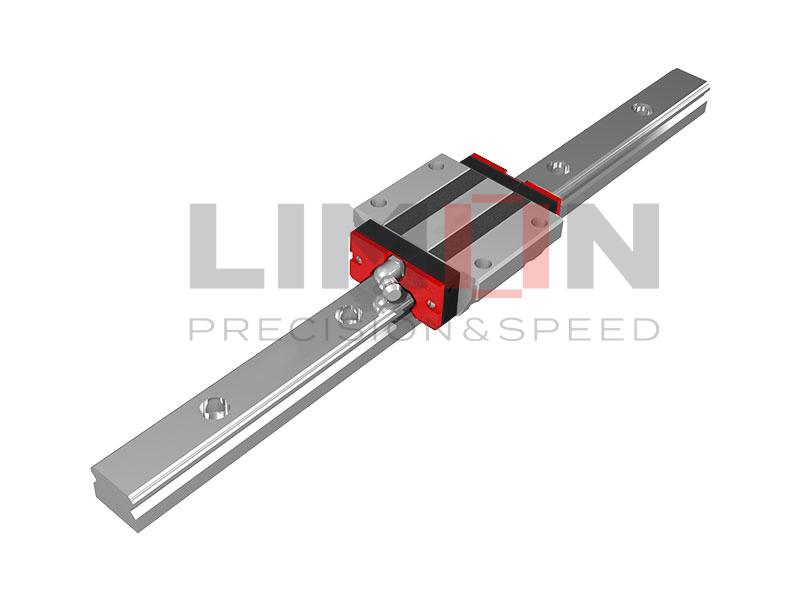
Rolling linear bearing designs typically include an outer housing, ball or roller circuits, retainers, and seals. The raceways are hardened and ground to tight tolerances, ensuring smooth rolling motion. Recirculation paths allow rolling elements to return to the load zone, enabling continuous travel over long distances.
Preload is another critical design feature. By applying preload, internal clearance is eliminated, increasing stiffness and improving positioning accuracy. This is especially important in high-precision systems where even microscopic play can affect performance.
Seals and lubrication channels are also integral to the design. They protect the bearing from contaminants and ensure consistent lubrication, which reduces wear and extends service life. Through careful engineering, the linear bearing design balances precision, durability, and efficiency.
How Does a Linear Bearing Work Across Industrial Applications?
Linear bearings function reliably across a wide range of industrial applications by adapting their design to specific operating conditions. In high-speed automation and CNC machinery, rolling linear bearings enable rapid acceleration and deceleration while maintaining tight positional accuracy.
In medical and laboratory equipment, linear bearings provide smooth, quiet motion with minimal vibration, which is critical for sensitive instruments. Their predictable performance supports repeatable results and user safety. In semiconductor manufacturing, linear bearings help achieve ultra-clean, high-precision motion under controlled environments.
Heavy-duty industries such as material handling and woodworking machinery rely on linear bearings to support high loads and repetitive cycles. Here, robust designs with enhanced load ratings and reinforced raceways ensure long-term reliability.
In harsh environments, such as food processing or outdoor equipment, linear bearings made from corrosion-resistant materials or self-lubricating polymers maintain performance despite moisture, dust, or chemicals. This versatility demonstrates how the linear bearing works not only as a component, but as a flexible solution across diverse industrial needs.
Linear Bearing Types
There are several main types of linear bearings, each designed to meet specific performance and environmental requirements. Ball linear bearings are among the most common, offering low friction, high speed capability, and good accuracy. They are ideal for applications requiring smooth, precise motion.
Roller linear bearings use cylindrical rollers instead of balls, providing higher load capacity and greater stiffness. These are often chosen for heavy-duty or high-precision systems where rigidity is critical.
Plain linear bearings, also known as linear bushings, rely on sliding contact rather than rolling elements. They are simple, compact, and often maintenance-free, making them suitable for dirty or vibration-prone environments.
Linear guide bearings combine rails and carriages into an integrated system, offering excellent accuracy, load handling, and ease of installation. Each type of linear bearing works on the same fundamental principle—guiding linear motion—while optimizing performance for different applications.
Conclusion
A linear bearing works by guiding straight-line motion with low friction and high stability, making it essential for accurate, reliable, and efficient modern machinery.For further questions please contact [email protected]