Are inaccurate positioning, unstable speed, or excessive motor heating limiting the performance of your automation equipment?
Servo motor drivers control a servo motor by regulating its speed, torque, and position according to commands from a control system. In a linear motion actuator system, they help convert precise motor rotation into controlled linear movement, improving positioning accuracy, acceleration, repeatability, and overall machine performance.
A well-matched driver and motor are essential for reliable motion performance.
What Is a Servo Motor Driver and How Does It Work?
A servo motor driver is the electronic interface between a controller and a servo motor. Its primary job is to receive motion commands, regulate electrical power supplied to the motor, and continuously adjust motor operation according to feedback from an encoder or other position-sensing device.
Unlike a simple motor controller that may operate primarily through predefined voltage or speed commands, a servo system can continuously compare the commanded position or speed with the actual motor condition. When a difference is detected, the driver adjusts the motor’s current, speed, or torque to reduce the error.
This closed-loop control is particularly valuable in applications where precise movement matters. For example, when a rotary servo motor is connected to a ball screw, the resulting linear movement depends on motor rotation, screw pitch, acceleration, and load conditions. The servo motor driver helps coordinate these factors so the actuator can move accurately and respond quickly to changing operating conditions.
Modern servo motor drivers may support position, velocity, and torque control modes. Depending on the application, they can also provide functions such as acceleration and deceleration control, electronic gearing, overload protection, fault monitoring, and communication with industrial controllers.
For manufacturers building a complete motion solution, choosing the driver should therefore be considered part of the entire motion system rather than as an isolated electrical component.
How Do Servo Motor Drivers Control a Linear Motion Actuator System?
In a linear motion actuator system, the servo driver plays an important role in determining how effectively rotary motor power becomes controlled linear movement.
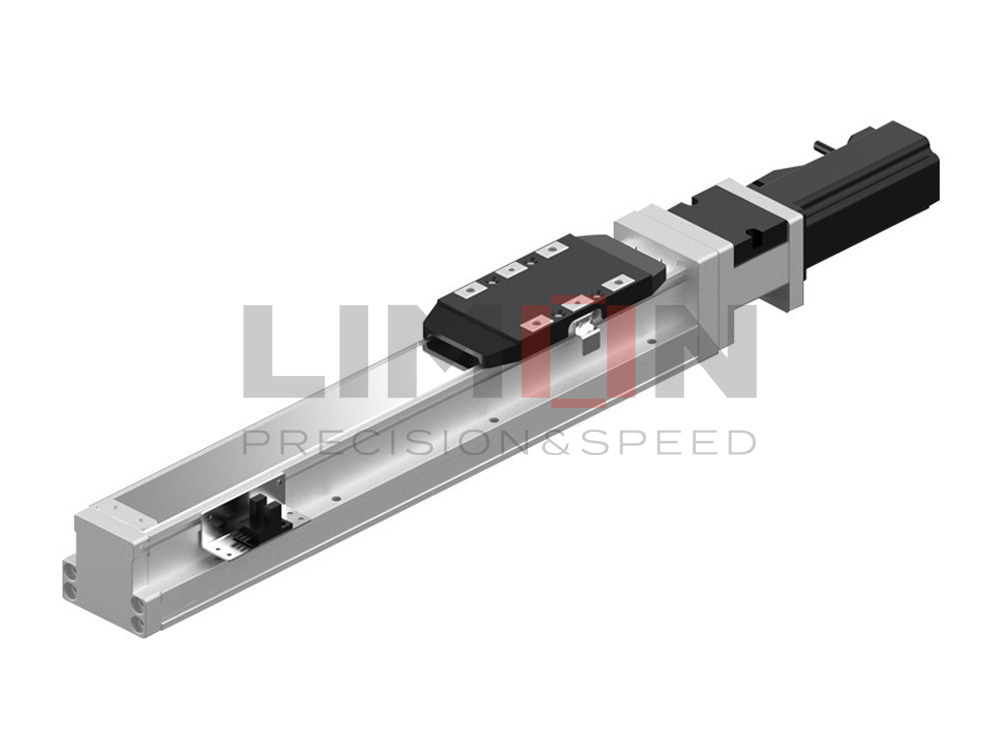
A typical system may include a servo motor, servo motor driver, controller, coupling, ball screw or another mechanical transmission component, and a linear guide. The controller sends a target position or movement command to the driver. The driver then supplies controlled electrical power to the servo motor. The motor rotates, while the mechanical transmission converts that rotation into linear displacement.
Feedback allows the driver to monitor actual motor movement and correct deviations. This is especially important when the actuator experiences changing loads, rapid acceleration, or frequent starts and stops.
For example, consider a ball screw driven actuator used for automated positioning. If the machine requires the actuator to move to several precise positions during each production cycle, the servo driver can regulate motor acceleration, velocity, and stopping behavior. This helps reduce positioning errors and unnecessary vibration.
The mechanical components are equally important. A high-performance servo driver cannot compensate indefinitely for poor alignment, excessive mechanical clearance, inadequate lubrication, or an incorrectly selected ball screw. The motor, driver, transmission, and linear guide must work together.
Limon approaches linear motion from this system-level perspective. With an integrated production line covering products such as ball screws, linear guide rails, linear bearings, and linear actuators, Limon can provide coordinated mechanical motion solutions rather than treating each component as an unrelated part.
What Are the Main Benefits of Using Servo Motor Drivers?
The biggest advantage of servo motor drivers is their ability to provide controlled and responsive motor performance. This becomes particularly valuable when an application demands accurate positioning, fast movement, repeatable cycles, or dynamic load control.
Higher Positioning Accuracy
Closed-loop feedback allows the system to compare commanded and actual movement. When the motor does not reach the expected position, the driver can make corrections. This makes servo systems suitable for applications where repeatability is more important than simply achieving basic movement.
Better Speed Control
Servo motor drivers can regulate motor speed across different operating conditions. They can manage acceleration and deceleration profiles, helping prevent sudden mechanical shocks and improving the smoothness of linear movement.
Strong Dynamic Performance
When an actuator needs to accelerate quickly, stop precisely, or change direction frequently, the driver can adjust motor torque according to real-time requirements. This is useful for robotics, CNC equipment, automated inspection, packaging machinery, and other high-cycle systems.
Improved System Protection
Many drivers monitor operating conditions such as current, temperature, overload, and position errors. These functions can help identify abnormal conditions before they result in significant equipment damage.
However, performance depends on proper system matching. Motor power, driver capacity, actuator load, screw characteristics, guide selection, duty cycle, and operating environment should all be considered together.
For customers sourcing motion components directly, Limon’s direct-sales model makes it easier to discuss these requirements with a manufacturer instead of coordinating multiple unrelated suppliers.
How Should You Choose Servo Motor Drivers for Linear Motion Applications?
Selecting servo motor drivers should begin with the mechanical requirements of the actuator rather than the driver alone.
First, determine the required load and thrust. The driver must support the motor’s torque requirements under both normal and peak operating conditions. Starting torque, acceleration torque, friction, and external forces should be considered.
Next, evaluate the required speed and acceleration. A high-speed actuator may require substantially different motor and driver characteristics from a slow positioning mechanism. The driver must be capable of supplying the current and control response needed during rapid acceleration and deceleration.
Positioning accuracy and repeatability are also important. If the application requires highly repeatable positioning, encoder feedback and an appropriate servo control mode become essential.
The mechanical transmission should then be considered. When a servo motor drives a ball screw, screw pitch affects the relationship between motor rotation and linear travel. A smaller pitch can provide higher mechanical advantage and finer displacement per revolution, while a larger pitch can provide greater linear travel per revolution.
Finally, consider the operating environment. Temperature, dust, vibration, continuous duty, installation space, and maintenance requirements can all influence the appropriate motor and driver combination.
A practical selection process should therefore look at the complete actuator assembly:
- Required load and thrust
- Linear travel
- Maximum linear speed
- Acceleration and deceleration
- Positioning accuracy
- Duty cycle
- Motor torque
- Screw pitch
- Guide system
- Encoder and feedback requirements
- Controller and communication compatibility
This approach reduces the risk of selecting a driver that appears suitable based only on rated motor power but performs poorly in the actual machine.
Servo Motor Drivers vs. Other Motor Control Solutions: Which Is Better?
Servo motor drivers are not automatically the best choice for every linear motion application. The right solution depends on the required performance, budget, control complexity, and operating conditions.
Stepper motor systems can be attractive for applications requiring relatively simple positioning at moderate speeds and loads. They are often valued for their straightforward control and lower system cost. However, a conventional stepper system may not provide the same closed-loop performance or dynamic response as a servo system.
Servo systems are generally more suitable when an application requires high speed, rapid acceleration, precise positioning, or continuous feedback. They can maintain better control when operating conditions change, provided the motor, driver, feedback device, and mechanical transmission are properly matched.
For linear actuators, another important consideration is the mechanical drive method. A belt-driven actuator can provide high linear speed over long travel distances, while a ball screw actuator can offer high precision and strong thrust capability. Linear guides support and constrain the moving load, while the actuator provides the driving force.
This means that choosing between motion technologies should not be based on one specification alone. A high-speed application with a lightweight load may have very different requirements from a precision machine carrying a heavy payload.
Limon supports this broader approach by manufacturing multiple core linear motion components under an integrated production system. Customers can source linear guide rails, ball screws, linear bearings, and linear actuators directly while receiving technical support for application requirements.
How Can Servo Motor Drivers Improve Long-Term System Reliability?
Reliability is not determined only by the quality of the servo motor driver. It depends on how effectively the complete motion system is designed, manufactured, installed, and maintained.
An incorrectly sized driver may operate close to its limits, while an oversized system can increase unnecessary cost. Similarly, a high-quality motor cannot deliver reliable linear movement if the ball screw is improperly aligned or the linear guide is incorrectly installed.
Thermal management is another important factor. Servo motors and drivers generate heat during operation, particularly under high load or frequent acceleration. Proper sizing, ventilation, installation, and duty-cycle evaluation can help maintain stable operating conditions.
Mechanical alignment also deserves attention. Parallelism between linear guide rails, correct coupling installation, suitable preload, proper lubrication, and appropriate mounting rigidity all influence actuator performance. Small mechanical errors can become significant problems when the machine operates at high speed or high accuracy.
Regular monitoring can further improve reliability. Abnormal vibration, unusual noise, temperature increases, positioning errors, or changes in motor current may indicate developing mechanical or electrical problems.
Limon’s integrated manufacturing capability provides an additional advantage during product selection. Because key linear motion components are produced within one manufacturing system, product consistency and component compatibility can be considered from a broader perspective. Combined with direct sales and technical support, this gives customers a more efficient path from component selection to complete linear motion implementation.
Why Should You Consider Limon for Servo-Driven Linear Motion Solutions?
A servo-driven motion system performs best when its electrical and mechanical components are selected as a coordinated solution. The servo motor driver provides intelligent control, but the actuator, ball screw, linear guide, bearing system, coupling, and control architecture all contribute to the final result.
This is where choosing the right manufacturer becomes important.
Limon specializes in linear motion products, including linear guide rails, ball screws, linear bearings, and linear actuators. Its integrated production line provides greater control over manufacturing processes and product consistency. Instead of purchasing individual components through disconnected channels, customers can work directly with a manufacturer focused specifically on linear motion.
Limon also sells directly through its website, helping customers communicate application requirements without unnecessary distribution layers. For projects involving servo-driven actuators, important parameters such as load, travel, speed, accuracy, duty cycle, screw configuration, and installation conditions can be evaluated before selecting the appropriate components.
High-quality manufacturing is only one part of the value. Technical support is equally important when integrating a servo motor with a linear actuator. Proper matching can improve motion performance, reduce commissioning issues, and help customers achieve a more reliable machine.
Whether you are developing a new automation system or replacing existing motion components, Limon provides a practical combination of integrated manufacturing, direct sales, quality-focused production, and technical support.
Conclusion
Servo motor drivers provide the control intelligence needed to achieve accurate, responsive, and repeatable motion in demanding automation systems. When combined with properly selected motors, ball screws, linear guides, and actuators, they can significantly improve the performance of a complete linear motion actuator system.
The key is to select the driver as part of the entire motion system rather than as an independent component.
With an integrated production line, direct sales model, high-quality linear motion products, and technical support, Limon delivers reliable, high-performance linear motion solutions for a wide range of industrial applications.