In today’s rapidly evolving automation and industrial manufacturing landscape, accuracy, efficiency, and reliability are no longer optional—they are essential. One of the most critical technologies enabling precise linear motion is the ball screw drive.
As a fully integrated linear motion manufacturer, Limon designs and produces high-performance ball screws and complete drive solutions engineered for demanding industrial environments.
1.What Is a Ball Screw Drive?
A ball screw drive is a mechanical system that converts rotary motion into highly efficient linear motion using recirculating ball bearings between a threaded screw shaft and a nut.
Unlike traditional lead screws that rely on sliding friction, a ball screw drive uses rolling contact, dramatically reducing friction and energy loss while increasing precision and service life.
Basic Principle of a Ball Screw Drive
- A motor rotates the screw shaft
- Hardened steel balls roll between the screw and nut threads
- The nut travels linearly along the screw axis
- Balls recirculate through internal return paths
This rolling motion allows the system to achieve high speed, high accuracy, and excellent repeatability.
2.Key Components of a Linear Ball Screw Drive System
A complete linear ball screw drive typically consists of:
Ball Screw Shaft
- Precision-ground or rolled threads
- Manufactured from hardened alloy steel
- Designed for high load capacity and stiffness
Ball Nut
- Contains recirculating ball bearings
- Available in single-nut or double-nut (preloaded) designs
- Determines backlash and positioning accuracy
Ball Bearings & Return System
- Enable smooth rolling motion
- Minimize friction and wear
Drive Motor & Coupling
- Servo or stepper motor
- Transfers torque to the screw
At Limon, every ball screw drive component is manufactured under strict quality control to ensure consistent performance and long-term reliability.
3.Why Ball Screw Drives Are So Efficient
One of the defining advantages of a ball screw drive is its efficiency—often exceeding 90%.
Efficiency Explained
- Rolling friction replaces sliding friction
- Less heat generation
- Lower motor torque required
- Reduced energy consumption
This efficiency makes ball screw driven systems ideal for high-duty-cycle industrial applications where performance and operating cost matter.
4.Advantages of Ball Screw Driven Linear Motion
Understanding why engineers choose ball screw driven solutions helps clarify their value in modern machinery.
- High Precision & Repeatability
Ball screw drives can achieve micron-level positioning accuracy, making them ideal for CNC machines and automation systems.
- High Load Capacity
Ball bearings distribute load evenly, enabling heavy-duty linear motion without sacrificing performance.
- Long Service Life
Reduced friction means less wear and longer operational life compared to sliding systems.
- High-Speed Capability
Ball screw drives support rapid acceleration and high travel speeds without excessive heat buildup.
- What Are Linear Ball Screw Actuators?
Linear ball screw actuators integrate a ball screw drive into a compact, ready-to-install linear motion unit.
Typical Structure of Linear Ball Screw Actuators
- Ball screw drive
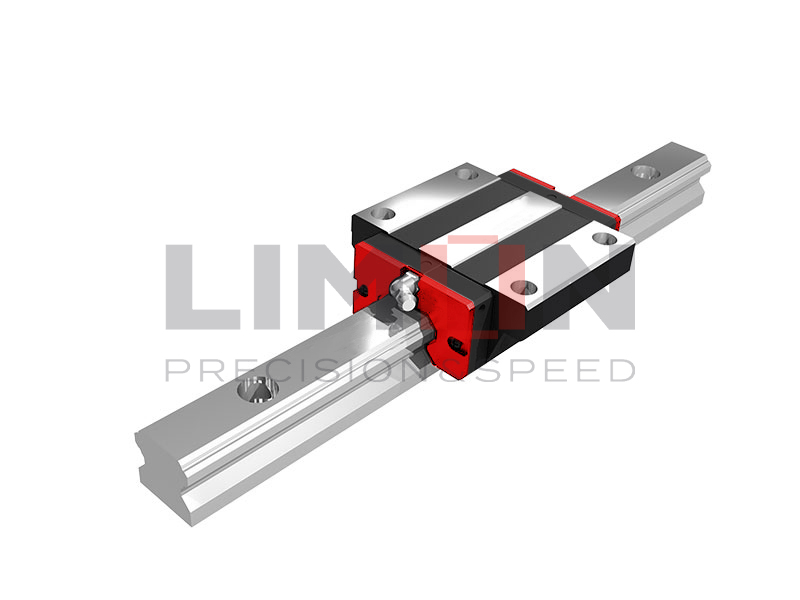
- Linear guide system
- Actuator housing
- Motor mount and end supports
These actuators provide precise, repeatable motion in a compact footprint, simplifying system design and reducing installation time.
Benefits of Linear Ball Screw Actuators
- Plug-and-play integration
- Reduced alignment complexity
- Consistent performance
- Ideal for automation and OEM equipment
Limon’s linear ball screw actuators are designed for industrial reliability, offering both standard and customized configurations.
5.Common Applications of Ball Screw Drive Systems
Ball screw drives are widely used across industries where precision and efficiency are critical:
- CNC machine tools
- Industrial automation & robotics
- Semiconductor manufacturing equipment
- Packaging and assembly lines
- Medical and laboratory devices
- Pick-and-place systems
In these applications, linear ball screw drive systems provide the accuracy and durability needed for continuous operation.
6.Ball Screw Drive vs Lead Screw Drive
Understanding the difference between ball screw and lead screw solutions is essential for proper selection.
| Feature | Ball Screw Drive | Lead Screw Drive |
| Friction Type | Rolling | Sliding |
| Efficiency | Very high (90%+) | Low to medium |
| Speed | High | Low to medium |
| Precision | Very high | Medium |
| Load Capacity | High | Moderate |
| Self-locking | No | Yes |
While lead screws are cost-effective for simpler applications, ball screw driven systems excel in high-performance industrial environments.
7.How to Choose the Right Ball Screw Drive
When selecting a ball screw drive, consider:
- Load requirements
- Travel speed and acceleration
- Positioning accuracy
- Duty cycle
- Environmental conditions
As a direct manufacturer, Limon provides engineering support to help customers choose the optimal ball screw drive or linear actuator for their specific application.
8.Why Choose Limon for Ball Screw Drive Solutions?
Limon is not just a component supplier—we are a full-service linear motion partner.
Our Advantages
- Fully integrated production line
- Industrial-grade quality standards
- Custom and standard ball screw drive solutions
- Competitive direct-to-customer pricing
- Fast response and technical support
Whether you need a standalone ball screw, a complete linear ball screw drive, or integrated linear ball screw actuators, Limon delivers performance you can rely on.
Conclusion: Ball Screw Drive Technology Powers Precision Manufacturing
A ball screw drive is the foundation of modern precision linear motion. Its unmatched efficiency, accuracy, and durability make it indispensable in today’s automated and high-performance machinery.
By choosing ball screw driven solutions from Limon, you gain not only a high-quality product but also a trusted partner committed to your long-term success.