In today’s fast-evolving manufacturing landscape, precision, efficiency, and reliability are no longer optional—they are essential. From advanced robotics and CNC machining to semiconductor equipment and automated warehouses, modern machinery relies on motion systems that can deliver smooth, accurate, and repeatable movement.
At the heart of many of these systems is the linear guideway bearing. This critical component enables equipment to move with exceptional stability while handling heavy loads and maintaining micron-level precision.
In this guide, we’ll explore what a linear guideway bearing is, how linear guide rail bearings work, why the linear guide bearing block is crucial to performance, and how choosing the right solution can dramatically improve your machine’s productivity.
What Is a Linear Guideway Bearing?
A linear guideway bearing is a precision mechanical component designed to enable smooth linear motion while supporting loads with minimal friction. Unlike traditional sliding systems, guideway bearings use rolling elements—usually balls or rollers—to reduce friction and increase accuracy.
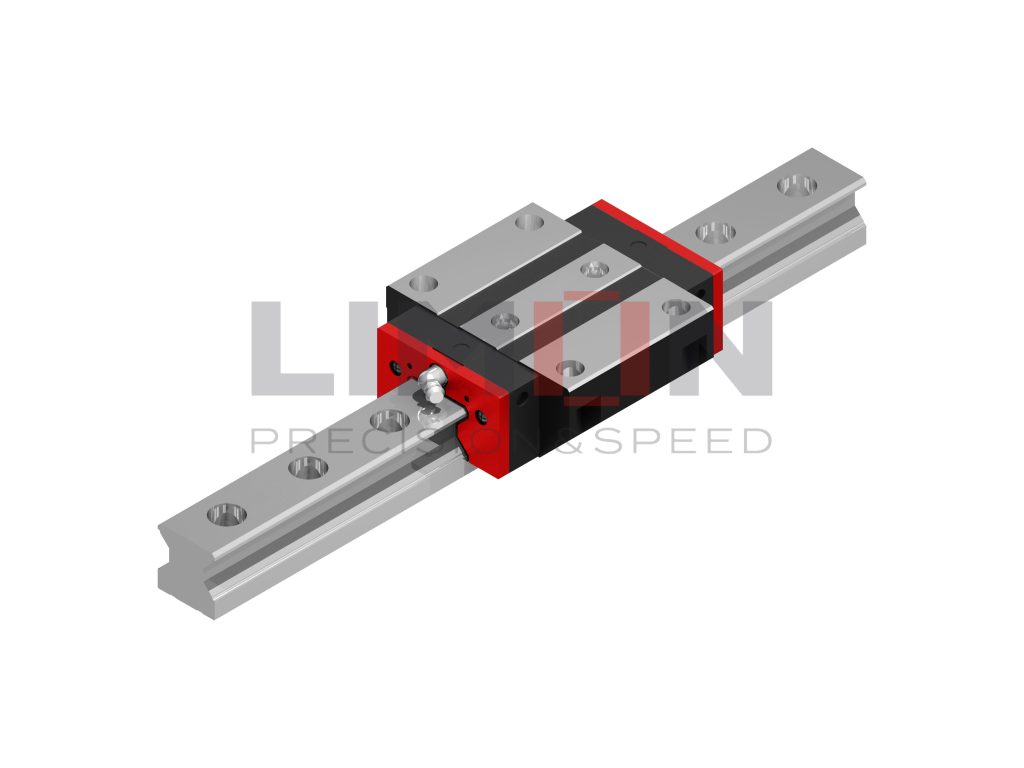
A typical system consists of three main parts:
- Linear guide rail
- Linear guide bearing block (or carriage)
- Rolling elements inside the block
Together, these components form a linear guide rail bearing system that allows a carriage to travel smoothly along a fixed rail while maintaining high rigidity and positioning accuracy.
Key Benefits of Linear Guideway Bearings
High-quality linear guideway bearings offer several advantages:
- High positioning accuracy
- Low friction and smooth motion
- Long service life
- High load capacity
- Excellent rigidity and stability
These characteristics make them ideal for applications requiring precise and repeatable movement.
How Linear Guide Rail Bearings Work
To understand why linear guide rail bearings are widely used in industrial machinery, it’s helpful to look at how they operate.
Inside a linear guide bearing block, hardened steel balls or rollers circulate through precision raceways. As the block moves along the rail, these rolling elements carry the load while minimizing contact friction.
This rolling motion offers several advantages over traditional sliding systems:
- Reduced Friction
Rolling contact significantly lowers friction compared to sliding surfaces. This improves energy efficiency and allows machines to operate at higher speeds.
- High Precision
Modern linear guide rail bearings are manufactured with extremely tight tolerances. This ensures consistent motion accuracy, which is essential in industries like CNC machining and semiconductor manufacturing.
- Load Distribution
The design of the bearing raceways distributes loads evenly across multiple rolling elements. This improves durability and allows the system to support heavy loads without sacrificing precision.
Understanding the Linear Guide Bearing Block
The linear guide bearing block is the moving component that travels along the rail. It houses the rolling elements and supports the load attached to the machine structure.
Core Components of a Linear Guide Bearing Block
A high-quality linear guide bearing block typically includes:
- Hardened steel housing
- Precision ground raceways
- Recirculating ball or roller system
- Lubrication channels
- End seals to protect against contaminants
The block is mounted to the moving part of a machine—such as a CNC table, robotic arm, or automation platform—while the rail is fixed to the machine frame.
Why the Bearing Block Matters
The performance of the entire linear guideway bearing system often depends on the quality of the linear guide bearing block. A well-engineered block ensures:
- Smooth movement
- Accurate positioning
- Resistance to vibration
- Long service life
Applications of Linear Guideway Bearings
Across the United States and global manufacturing industries, linear guideway bearings are used in a wide range of applications.
- CNC Machine Tools
Precision machining centers depend on linear guide rail bearings to maintain tight tolerances and ensure smooth tool movement.
- Industrial Automation
Automated production lines use linear guideway bearing systems to move components, sensors, and robotic arms with repeatable accuracy.
- Semiconductor Manufacturing
Chip fabrication requires ultra-precise motion control. High-precision linear guide bearing blocks help maintain micron-level positioning accuracy.
- Medical Equipment
Advanced imaging systems and laboratory automation rely on smooth, vibration-free motion enabled by linear guide rail bearings.
- Robotics
Industrial robots require lightweight yet rigid motion systems. Linear guideways provide the accuracy needed for high-speed robotic operations.
Key Factors When Choosing a Linear Guideway Bearing
Selecting the right linear guideway bearing is critical for ensuring optimal performance and durability.
Load Capacity
Evaluate the static and dynamic loads your machine will experience. Properly rated linear guide rail bearings ensure safe and reliable operation.
Precision Requirements
High-precision applications such as CNC machining or semiconductor production require guideways with tight manufacturing tolerances.
Operating Environment
Dust, moisture, and temperature variations can impact performance. High-quality seals and lubrication systems help protect the linear guide bearing block.
Speed and Acceleration
High-speed automation systems require guideways that minimize friction while maintaining stability.
Why High-Quality Linear Guide Rail Bearings Matter
In many industrial systems, the motion platform directly affects productivity and product quality. Inferior components can lead to:
- Vibration and noise
- Reduced machining accuracy
- Increased maintenance costs
- Premature system failure
Investing in reliable linear guideway bearings ensures that machines operate smoothly and maintain consistent performance over time.
Why Choose Limon Linear Guideway Bearings?
At Limon, we specialize in delivering high-performance linear motion solutions for modern industrial applications. With a fully integrated manufacturing process, we maintain strict control over every stage of production—from material selection to precision grinding and quality inspection.
Our linear guide rail bearings are designed to provide:
- Exceptional precision and rigidity
- Long-term durability
- Smooth, low-friction motion
- High load capacity
- Reliable performance in demanding environments
Whether your application requires compact automation components or heavy-duty industrial motion systems, Limon offers linear guideway bearing solutions engineered for performance.
Our product range includes various linear guide bearing block configurations and rail sizes, allowing engineers and equipment manufacturers to select the ideal solution for their specific motion system.
The Future of Linear Motion Technology
As manufacturing continues to evolve toward smart factories and advanced automation, the demand for high-precision motion systems will continue to grow.
Key industry trends include:
- Increased adoption of robotics
- High-speed automated production lines
- Precision manufacturing technologies
- Smart factory integration
In all these areas, linear guideway bearings will remain essential components that enable smooth, accurate, and reliable machine motion.
Companies that invest in high-quality linear guide rail bearings today will be better positioned to meet the performance demands of tomorrow’s industrial systems.
Final Thoughts
A well-designed linear guideway bearing system can dramatically improve machine precision, stability, and reliability. By combining precision linear guide rail bearings with durable linear guide bearing blocks, manufacturers can achieve smoother motion, higher productivity, and longer equipment life.
For engineers, machine builders, and automation specialists seeking dependable linear motion solutions, choosing the right supplier is just as important as choosing the right product.
Limon is committed to providing advanced linear guideway bearing technology that helps modern industries move with greater precision and confidence.