Are incorrect thread lead choices causing slow movement, positioning errors, or poor efficiency in your linear motion system?
Thread lead is the linear distance a screw nut travels along the screw axis during one complete screw revolution. Lead directly affects linear speed, mechanical advantage, and positioning resolution, making it a critical specification for ball screws and lead screws.
Thread lead determines how rotary motion is converted into linear movement. Let’s examine pitch, lead, applications, and selection.
What Is Thread Lead and Why Does It Matter?
Thread lead describes how far a nut moves axially along a screw during one complete revolution of the screw. In a linear motion system, this measurement is especially important because it determines how much linear travel is generated from a given amount of rotary motion.
For example, if a screw has a lead of 10 mm, one complete revolution moves the nut approximately 10 mm along the screw axis. If the screw rotates at 600 revolutions per minute, the theoretical linear speed is:
Linear speed = Lead × Rotational speed
In this example:
10 mm × 600 rpm = 6,000 mm/min
This simple relationship shows why thread lead has a direct influence on machine performance. A larger lead can produce greater linear travel per revolution, which is useful when high linear speed is required. A smaller lead generally provides finer movement and can be advantageous when precise positioning is more important than maximum speed.
Thread lead is commonly specified when selecting ball screws, lead screws, and screw-driven linear actuators. It should be considered together with load, speed, acceleration, positioning accuracy, motor characteristics, and the requirements of the complete mechanical system.
For applications using servo motors, understanding thread lead is particularly important because the motor and screw must be properly matched to achieve the desired combination of speed, torque, and positioning performance.
What Is a Screw Pitch and How Is It Different From Lead?
A common question from buyers and engineers is “what is a screw pitch?” Screw pitch is the axial distance between corresponding points on adjacent threads, measured parallel to the screw axis.
Pitch and lead are related, but they are not always the same.
For a single-start screw, one revolution advances the nut by one pitch, so the lead and pitch are equal. For a multi-start screw, however, the relationship changes because multiple thread starts are used.
The basic relationship is:
Lead = Pitch × Number of Starts
For example, consider a screw with a 5 mm pitch.
A single-start screw has:
5 mm pitch × 1 start = 5 mm lead
A two-start screw has:
5 mm pitch × 2 starts = 10 mm lead
A four-start screw has:
5 mm pitch × 4 starts = 20 mm lead
This distinction is essential when comparing lead vs pitch specifications. Pitch describes the spacing between adjacent threads, while lead describes the actual axial distance traveled during one complete revolution.
In practical linear motion applications, lead is often the more directly relevant specification because it determines the relationship between screw rotation and linear travel.
Understanding this difference helps engineers avoid incorrect component selection and makes it easier to compare different screw configurations from different suppliers.
How Does Thread Lead Affect Linear Motion Performance?
Thread lead influences several important characteristics of a screw-driven linear motion system, including speed, positioning resolution, torque requirements, and mechanical advantage.
A larger lead allows the nut to travel farther during every revolution. This makes high-lead screws suitable for applications requiring rapid linear movement. However, achieving the same linear force may require different motor torque and system parameters.
A smaller lead provides less linear travel per revolution. This can allow finer control of linear movement and may be useful in applications where positioning resolution is more important than travel speed.
The relationship can be expressed as:
Linear speed = Lead × Screw RPM
Therefore, if two screws operate at the same rotational speed, the screw with the larger lead will produce greater linear speed.
Thread lead also affects the relationship between motor torque and linear force. In simplified terms, increasing lead can increase linear travel per revolution but may reduce the mechanical advantage available from the screw.
This is why lead should never be selected based only on desired speed. The engineer must consider the complete system, including motor torque, load, acceleration, screw diameter, screw length, support bearings, lubrication, and operating cycle.
For precision equipment, the correct balance between speed and positioning requirements is particularly important.
How Do You Choose the Right Thread Lead?
Selecting the right thread lead starts with understanding what the machine needs to accomplish. There is no universally best lead because different applications prioritize different performance characteristics.
Required Linear Speed
Calculate the required linear speed first. A higher lead can achieve greater linear travel at the same screw RPM, which can reduce the rotational speed required for a particular application.
Positioning Requirements
If the machine requires fine positioning, a smaller lead may be beneficial because the screw produces less linear movement per revolution. However, final positioning performance also depends on encoder resolution, controller performance, screw accuracy, preload, and mechanical rigidity.
Load and Force
The required linear force must be considered together with the selected lead and motor torque. A screw configuration designed for high speed may not be the best choice for a high-force application.
Motor Compatibility
The motor must be capable of providing the required torque and rotational speed. Servo motors are frequently used in demanding applications because feedback-based control allows accurate management of position and speed.
Screw Length and Speed
Long screws may face additional limitations related to critical speed and vibration. Increasing lead does not automatically solve these problems. Screw diameter, length, support configuration, and operating speed must be evaluated together.
Application Duty Cycle
A machine that operates continuously at high speed has different requirements from one that performs occasional positioning movements. Duty cycle, acceleration, stopping frequency, and thermal conditions should all be considered.
For these reasons, professional technical support can be valuable when selecting a screw rather than choosing a specification based on one parameter alone.
Where Is Thread Lead Important in Linear Motion Applications?
Thread lead plays an important role in many applications that convert rotary motor movement into controlled linear movement.
In CNC machines, ball screws are commonly used to move machine axes with high positioning accuracy. The selected lead influences the relationship between motor speed and axis travel, making it an important design parameter.
Industrial automation equipment also relies on screw-driven systems for positioning, feeding, lifting, and material handling. The appropriate lead depends on whether the application prioritizes speed, force, precision, or a combination of these factors.
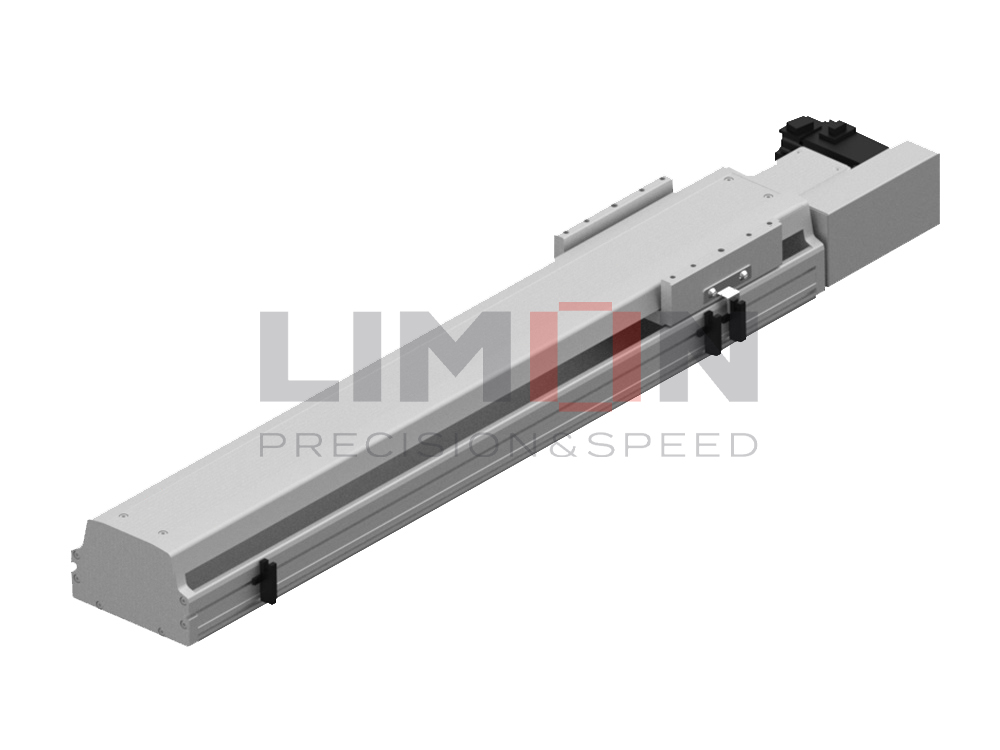
Linear actuators are another important application. A screw-driven linear actuator can combine a motor, screw mechanism, housing, and control components into a compact motion solution. Selecting the appropriate screw lead helps determine the actuator’s speed and force characteristics.
Servo-driven systems require particularly careful matching. If you are researching “servo what is,” the key point is that a servo system uses feedback to control motor position, speed, or torque. When a servo motor drives a screw, the thread lead becomes the mechanical link between motor rotation and linear movement.
This relationship allows engineers to design coordinated motion systems using servo motors, ball screws, linear guide rails, and other components.
What Is the Difference Between Thread Lead, Pitch, and Screw Speed?
Thread lead, pitch, and screw speed describe different aspects of screw motion, but they work together to determine system performance.
| Parameter | Meaning | Main Effect |
| Pitch | Distance between adjacent threads | Defines thread spacing |
| Lead | Axial travel per revolution | Determines linear travel per revolution |
| Screw Speed | Revolutions per minute | Determines how frequently the lead is applied |
| Number of Starts | Number of thread paths | Determines the relationship between pitch and lead |
For a single-start screw, pitch equals lead. For multi-start screws, lead becomes greater than pitch.
Consider a screw with a 5 mm pitch and four starts. Its lead is 20 mm. At 500 rpm, the theoretical linear speed is:
20 mm × 500 rpm = 10,000 mm/min
This example demonstrates why understanding lead vs pitch is important when calculating system speed.
However, theoretical speed is not the only consideration. Actual performance may be limited by screw critical speed, motor capability, load, acceleration, lubrication, bearing support, and system rigidity.
A properly designed linear motion system therefore considers thread lead as part of the complete mechanical and control architecture rather than treating it as an isolated specification.
Why Choose Limon for Screw-Driven Linear Motion Solutions?
Choosing the right thread lead is only one part of building a reliable linear motion system. The quality and compatibility of the complete system also have a major impact on machine performance.
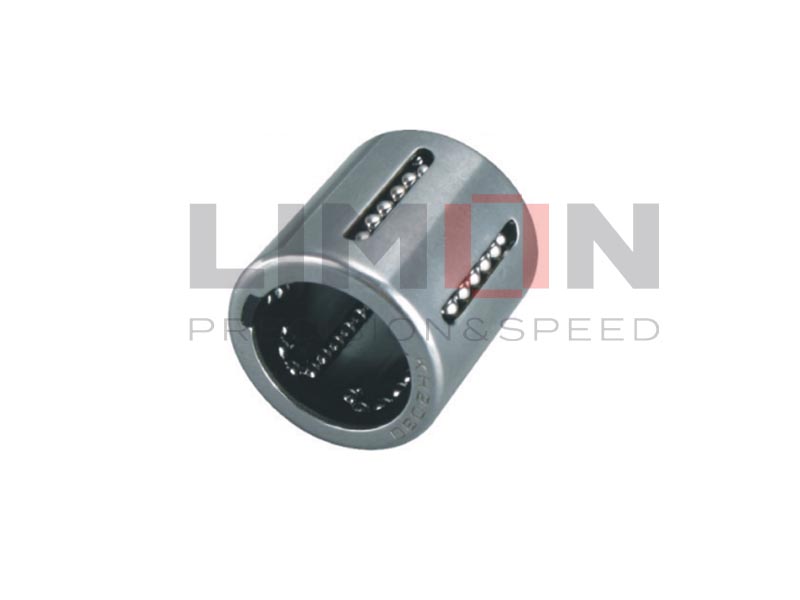
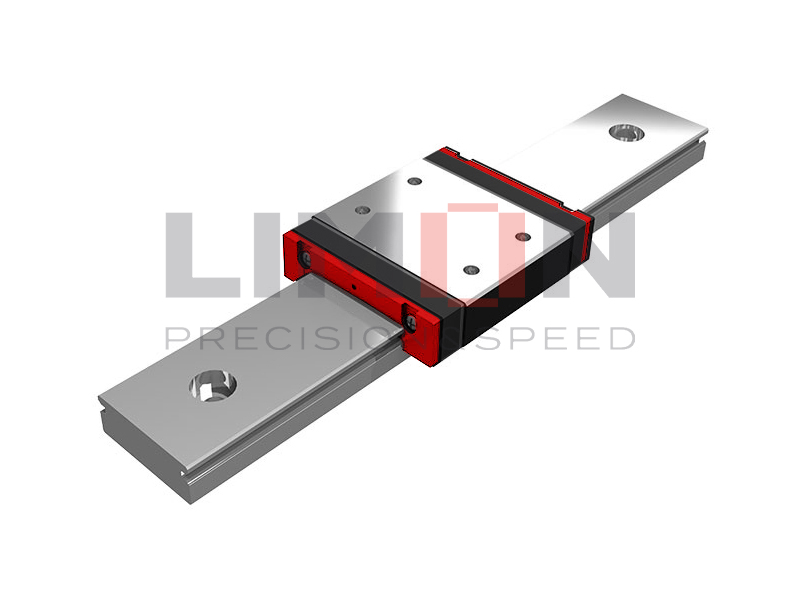
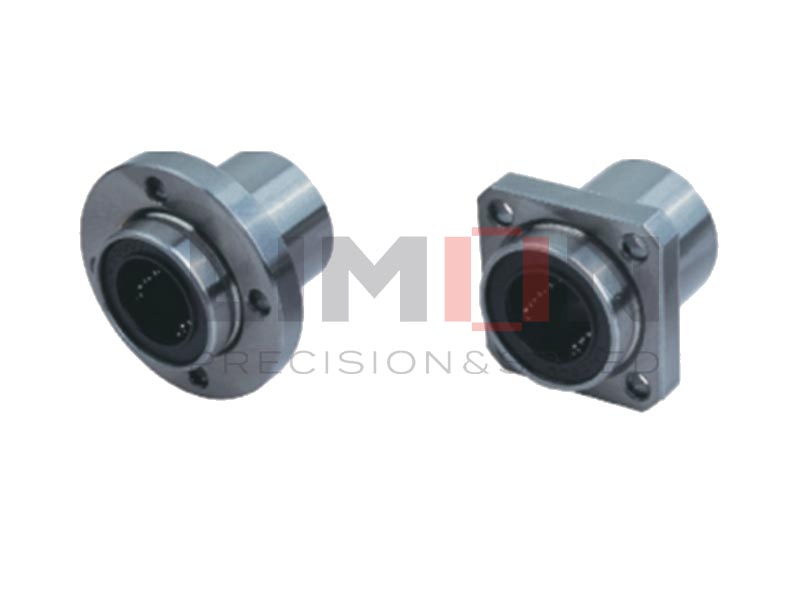
Limon specializes in linear motion products including ball screws, linear guide rails, linear bearings, and linear actuators. These components work together in many screw-driven and servo-driven applications.
With a fully integrated production line, Limon maintains control over key manufacturing processes and focuses on consistent product quality. This integrated approach helps support reliable components for industrial applications where smooth movement, positioning accuracy, and long-term performance matter.
Limon also sells directly through its independent website, giving customers a more direct purchasing channel. This can simplify communication when customers need to discuss specifications, application requirements, or component selection.
High-quality components are particularly important for screw-driven systems because problems such as excessive friction, poor alignment, inconsistent manufacturing, or unsuitable components can affect the performance of the entire machine.
Limon also provides technical support to help customers evaluate their linear motion requirements. Instead of looking at thread lead alone, customers can consider load, stroke, speed, accuracy, motor requirements, and component compatibility as part of a complete solution.
Whether you need a ball screw for CNC equipment, a linear guide rail for automation, or a screw-driven linear actuator for a custom machine, Limon aims to provide reliable, high-performance linear motion solutions for industrial applications.
Conclusion
Thread lead determines how far a screw-driven mechanism moves during one complete revolution and directly affects linear speed, positioning characteristics, and system design.
Understanding what is a screw pitch and the difference between lead vs pitch helps you select the right screw configuration. When combined with the appropriate motor, linear guide rail, bearing, and control system, the correct thread lead can contribute to smoother and more reliable machine performance.
Limon provides reliable, high-performance linear motion products backed by integrated manufacturing, direct sales, high-quality production, and professional technical support. For your next screw-driven motion project, Limon can help you build a dependable solution around the requirements of your application.