Is the wrong motor increasing energy use, maintenance, heat, and downtime in your linear motion system?
AC motors operate from alternating current and are widely used for durable continuous industrial service. DC motors operate from a DC supply and often provide convenient variable-speed control and strong low-speed response. The best choice depends on available power, torque, speed, duty cycle, control method, environment, maintenance, and total system cost.
This guide compares operation, control, performance, maintenance, applications, selection criteria, and future motor trends.
How Do AC and DC Motors Work?
To answer what is the difference between ac and dc electric motors, begin with how each technology creates torque. An AC motor receives alternating current whose direction and magnitude change periodically. In an induction motor, current supplied to the stator creates a rotating magnetic field that induces current in the rotor. Synchronous AC motors use a rotor that follows the stator’s rotating field at synchronous speed.
A conventional brushed DC motor receives direct current. Brushes and a mechanical commutator switch current through the rotating armature so that torque continues in one direction. Speed can often be adjusted by changing the applied voltage or using pulse-width modulation.
A brushless DC motor uses electronic commutation rather than mechanical brushes. Although it receives power from a DC source, its controller switches current through the motor phases in sequence. This distinction matters because brushed and brushless DC motors have different maintenance, control, cost, and service-life characteristics.
In both AC and DC systems, actual performance depends on the motor, drive, feedback, power supply, transmission, and mechanical load.
What Are the Main Differences Between AC and DC Motors?
AC and DC motors can both provide dependable power, but their typical characteristics differ.
| Comparison | AC Motor | DC Motor |
|---|---|---|
| Electrical supply | Alternating current | Direct current |
| Common designs | Induction and synchronous | Brushed and brushless |
| Speed control | Typically uses a VFD or dedicated drive | Voltage, PWM, or electronic controller |
| Maintenance | Low for induction motors | Brushes wear in brushed designs |
| Starting torque | Depends on motor and drive | Often strong and easy to control |
| Continuous operation | Excellent with correct sizing | Depends on motor and thermal design |
| Typical power source | Industrial mains | Battery, rectified supply, or DC bus |
| Common applications | Pumps, conveyors, machinery, compressors | Mobile equipment, compact actuators, robotics |
These are general tendencies rather than absolute limits. Modern variable-frequency drives can provide precise AC motor speed and torque control. Brushless DC motors can deliver high efficiency, fast response, and long service life, while brushed DC motors remain useful where simplicity and initial cost are priorities.
The correct comparison is therefore not merely AC versus DC. Engineers should evaluate the complete motor-and-drive package under the actual load, speed, and environmental conditions.
Which Motor Provides Better Speed and Torque Control?
Brushed DC motors have traditionally been selected where straightforward variable-speed operation is required. Motor speed is broadly related to the applied voltage, while torque is related to current. A controller can use PWM to regulate average voltage and manage acceleration, speed, and direction. Brushes provide mechanical commutation, so basic operation can be relatively simple.
Brushless DC motors require an electronic drive, but they offer controlled commutation, efficient operation, and a wide usable speed range. Hall sensors or encoders may provide feedback for improved regulation.
An AC induction motor connected directly to the mains normally operates near a speed determined by supply frequency, pole count, and slip. A variable-frequency drive changes the supplied frequency and voltage, enabling adjustable speed and controlled acceleration. ABB explains that a variable-speed drive converts incoming AC to DC and then produces variable AC output at the frequency and voltage required by the motor. ABB’s variable-speed drive overview
Advanced vector or direct-torque control can give AC systems strong dynamic performance. The best control technology depends on speed range, torque demand, response time, feedback, and budget.
How Do Efficiency, Maintenance, and Service Life Compare?
Standard AC induction motors are valued for robust construction and low routine maintenance. Without brushes or a mechanical commutator, there are fewer wear components inside the motor. Correct bearing lubrication, cooling, alignment, electrical supply, and environmental protection remain essential.
Brushed DC motors require periodic inspection because brushes and commutators wear. Brush life is affected by current, speed, vibration, temperature, humidity, duty cycle, and start-stop frequency. They may still be the right solution for intermittent or cost-sensitive applications where maintenance access is acceptable.
Brushless DC motors eliminate brush wear and are often selected for longer service life, higher speeds, compact equipment, and applications that must minimize maintenance. Maxon notes that brushless motors generally achieve longer service life than brushed DC motors because there are no brushes to wear.
Efficiency cannot be determined from AC or DC classification alone. Motor design, operating point, drive losses, load profile, gearing, cooling, and sizing all matter. An oversized motor operating far from its efficient range may waste energy, while an undersized motor may overheat and fail prematurely.
How Are AC and DC Motors Used in Linear Motion?
AC motors are commonly used in fixed industrial equipment with access to mains power. They may drive conveyors, lifting mechanisms, machine-tool auxiliary axes, packaging machines, and heavy material-handling systems. When paired with a VFD, an AC motor can provide controlled starting, stopping, and speed adjustment.
DC motors are common in mobile, battery-powered, compact, or low-voltage equipment. Examples include vehicle mechanisms, agricultural machinery, medical equipment, adjustable furniture, access systems, and compact rod-style linear actuators. A 12 V, 24 V, or 48 V motor can be integrated with relays, sensors, controllers, and limit switches.
Brushless DC and AC servo motors are used where linear axes require faster response, feedback, and precise positioning. The motor may rotate a ball screw, lead screw, belt, or gearbox to create linear travel.
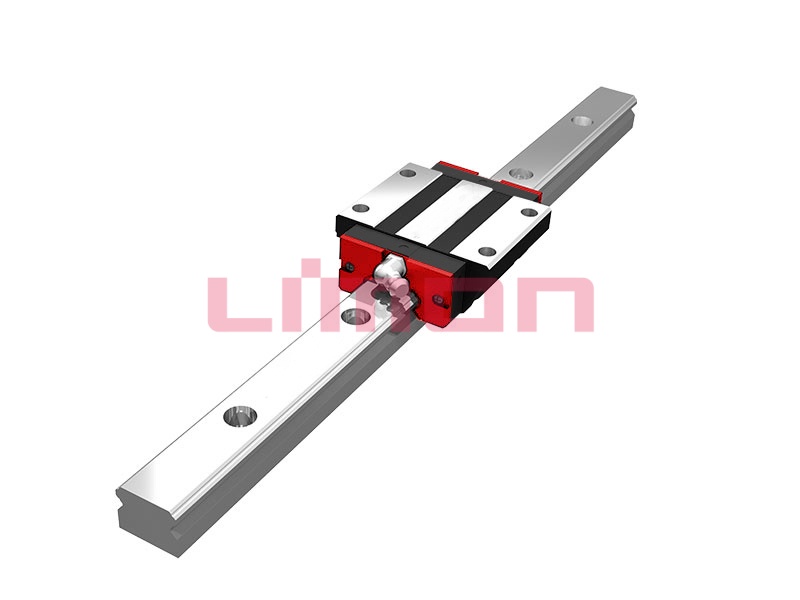
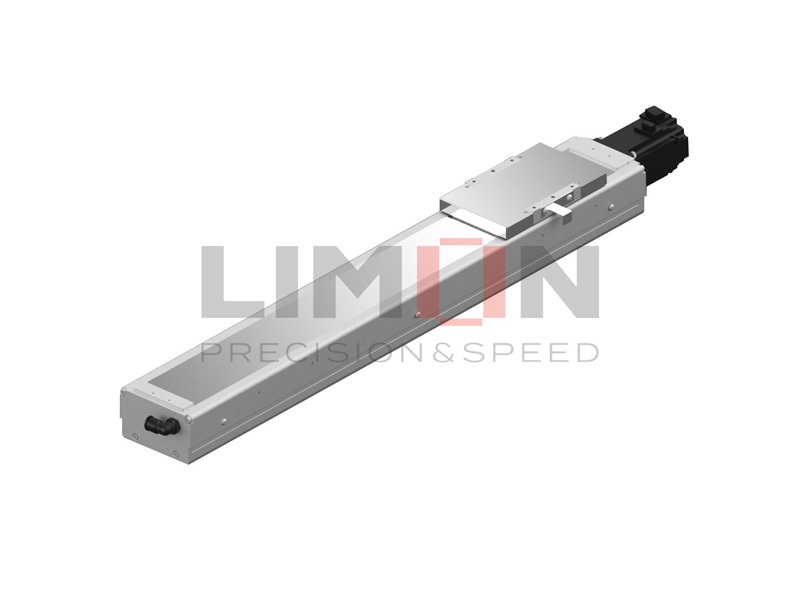
Motor performance is only one part of the axis. Ball screw lead determines linear movement per revolution, while linear guides support the payload and external moments. Limon supplies ball screws, linear guides, linear bearings, and linear actuators to help customers coordinate motor torque with efficient, stable mechanical motion.
How Should You Choose Between an AC and a DC Motor?
Start with the available power source. A stationary industrial machine already connected to three-phase AC may favor an AC motor. A mobile or battery-powered product usually favors a DC solution. If the equipment uses a shared DC bus, a brushless DC or servo configuration may integrate more naturally.
Next, document the mechanical requirements: load, thrust, speed, acceleration, stroke, duty cycle, positioning accuracy, and repeatability. For a screw-driven linear axis, calculate screw lead, transmission efficiency, preload, moving mass, guide friction, reflected inertia, critical speed, and buckling capacity.
Consider the operating environment. Dust, moisture, temperature, vibration, hazardous locations, cleaning processes, and available cooling can influence the motor enclosure and drive selection. Maintenance expectations also matter: a brushed motor may be economical but unsuitable when the equipment is difficult to access.
Finally, compare total cost rather than motor price alone. Include the drive, feedback device, power conversion, braking, gearbox, control hardware, installation, energy, downtime, and maintenance.
Limon’s technical team can review the linear side of the application and help customers select compatible ball screws, linear guides, bearings, and actuator configurations.
What Trends Will Shape AC and DC Motor-Driven Systems?
The traditional boundary between AC and DC systems is becoming less distinct as power electronics improve. Modern drives can give AC motors adjustable speed, torque control, communication, diagnostics, and regenerative braking. Brushless DC systems are also expanding into applications that demand compact construction, efficiency, and reduced maintenance.
Connected drives will increasingly monitor current, temperature, vibration, speed, torque, and operating cycles. This data can help identify friction changes, overload, misalignment, or lubrication problems before they cause unexpected downtime. Regenerative systems can also recover braking energy and return it to a common DC bus or electrical supply where system architecture supports it.
The future will focus on optimizing complete electromechanical systems rather than selecting motors in isolation. An intelligent drive cannot fully compensate for ball screw backlash, weak guide rigidity, poor alignment, or incorrect lubrication.
Limon’s fully integrated production line covers linear guides, ball screws, linear bearings, and linear actuators. This manufacturing control supports consistent quality, while our direct-sales model offers competitive manufacturer pricing, customization support, and efficient access to technical expertise.
Conclusion:
AC motors are often preferred for robust continuous industrial service, while DC motors offer attractive control and power-supply options for compact or mobile systems. The right decision depends on the complete application. Limon provides reliable, high-performance linear motion solutions backed by integrated manufacturing, quality control, direct sales, and professional support.
Designing or upgrading an AC- or DC-motor-driven linear axis? Visit the Limon independent website to explore our linear guides, ball screws, linear bearings, and linear actuators. Contact the Limon technical team with your load, stroke, speed, accuracy, duty cycle, motor, and operating-environment requirements for product-selection or customization support.