Inaccurate motion, vibration, and premature wear often plague mechanical systems, causing downtime and product defects. These issues escalate costs and reduce reliability. A linear motion guide solves these problems by delivering stable, precise, and repeatable linear movement.
A linear motion guide is a precision component that enables smooth, low-friction linear movement while maintaining high accuracy, rigidity, and load capacity. By controlling motion along a defined path, it significantly improves positioning accuracy and system stability in modern machinery.
To fully understand its value, it is important to explore how linear motion guides work, their advantages, and how to choose the right one for your application.
What Is a Linear Motion Guide and How Does It Improve System Accuracy?
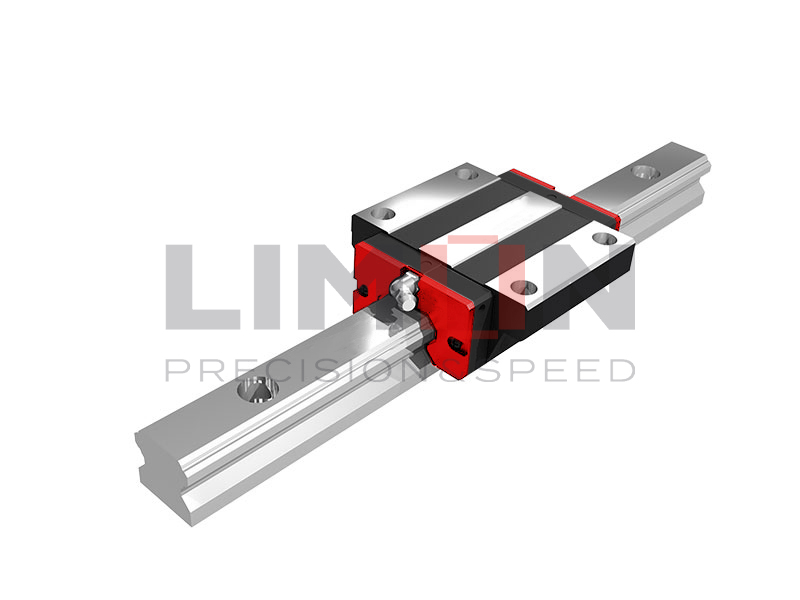
A linear motion guide is a mechanical system designed to support and guide moving components along a straight path with minimal friction and high precision. It typically consists of a guide rail and one or more carriages equipped with rolling elements such as balls or rollers. These rolling elements circulate within precisely machined raceways, allowing smooth motion under load.
System accuracy is improved because linear motion guides constrain movement to a single axis while resisting forces in multiple directions. This rigidity prevents unwanted deflection, twisting, or vibration during operation. Compared to plain bearings or improvised sliding mechanisms, linear motion guides maintain consistent alignment over long travel distances.
Additionally, preload options eliminate internal clearance, enhancing stiffness and repeatability. This is especially important in CNC machines, automation equipment, and precision assembly systems where micron-level accuracy is required. By reducing friction and ensuring predictable motion, a linear motion guide directly improves positioning accuracy, surface finish, and overall system performance.
This Design Offers Several Key Advantages
The design of a linear motion guide provides multiple advantages that contribute to higher accuracy and reliability. One major benefit is low and consistent friction. Rolling contact between balls or rollers and the raceway minimizes friction variation, allowing precise control of speed and position.
Another advantage is high load capacity relative to size. Linear motion guides can handle loads in multiple directions, including radial, axial, and moment loads. This makes them suitable for compact designs where space is limited but performance demands are high.
Durability is also a key strength. Hardened raceways and precision-ground components ensure long service life, even under continuous operation. Many linear motion guides include seals and lubrication paths that protect against contamination and reduce maintenance needs.
Finally, modularity simplifies system design. Linear motion guides are available in standardized sizes and configurations, allowing easy integration into various machines. This combination of precision, strength, and flexibility makes the linear motion guide a cornerstone of modern motion systems.
Why Linear Motion Guides Matter in Precision Systems
Precision systems rely on repeatable, predictable motion. Any deviation can result in positioning errors, poor product quality, or mechanical failure. Linear motion guides play a critical role in maintaining accuracy by providing controlled motion with minimal play.
In high-precision applications such as semiconductor manufacturing, medical equipment, and optical systems, even small vibrations or misalignments can have significant consequences. Linear motion guides offer high rigidity and damping characteristics that help absorb dynamic forces and maintain alignment.
They also improve control system performance. Because friction is low and consistent, motion controllers can operate more effectively, reducing overshoot and improving response time. This leads to smoother motion profiles and higher throughput.
Furthermore, linear motion guides support scalability. As machines become faster and more compact, maintaining accuracy becomes more challenging. The robust design of linear motion guides ensures that precision is preserved even as speeds, loads, and complexity increase.
Choosing the Right Linear Motion Guide
Selecting the right linear motion guide requires careful consideration of application requirements. Load conditions are a primary factor, including magnitude, direction, and moment loads. The guide must be sized to handle both static and dynamic forces with an adequate safety margin.
Accuracy requirements also influence selection. Different accuracy grades determine how precisely the rail and carriage are manufactured. Higher grades are essential for precision machining and metrology, while standard grades may be sufficient for material handling.
Environmental conditions should not be overlooked. Dust, moisture, temperature extremes, and corrosive substances can affect performance. In such cases, guides with special coatings, seals, or stainless-steel construction may be required.
Finally, installation and maintenance considerations matter. Proper mounting surface flatness and alignment are essential to achieve rated performance. Choosing a linear motion guide that matches both technical requirements and maintenance capabilities ensures optimal long-term results.
Conclusion
A linear motion guide enhances accuracy, stability, and reliability by delivering precise, low-friction motion, making it essential for modern high-performance mechanical systems.For further questions please contact [email protected]