Is backlash, heat, noise, or premature wear preventing your ball screw system from delivering accurate and reliable linear motion?
A ball nut is the load-carrying component that travels along a ball screw shaft. Recirculating balls roll between matching helical raceways, converting rotary motion into efficient linear movement. Ball nut selection depends on screw diameter, lead, load, speed, accuracy, preload, recirculation design, mounting space, lubrication, and required service life.
This guide explains ball nut operation, types, preload, selection, applications, maintenance, and future technology trends.
How Does a Ball Nut Work?
A ball nut contains precision-ground or rolled helical raceways that match the grooves on a ball screw shaft. Load-carrying balls roll between these raceways as the screw or nut rotates. After passing through the loaded zone, the balls enter a return mechanism and circulate back to the beginning of the circuit.
This continuous recirculation enables rotary motion to be converted into linear travel with substantially less sliding friction than a conventional lead screw. Depending on the machine design, the screw can rotate while the nut moves, or the nut can rotate while the screw remains stationary or moves linearly.
Engineers sometimes use the search term ballnuts, although “ball nuts” is the standard written form. Regardless of terminology, the nut and screw shaft should be treated as a matched mechanical assembly. Raceway geometry, ball diameter, lead accuracy, preload, lubrication, alignment, and support-bearing rigidity all affect positioning performance.
A high-quality motor cannot compensate for excessive ball nut clearance, damaged raceways, contamination, or incorrect installation. Reliable motion therefore begins with coordinated ball screw and ball nut manufacturing.
What Types of Ball Nuts Are Available?
Ball nuts are classified by their recirculation system, body shape, preload method, circuit count, and mounting configuration. Common recirculation designs include return-tube, deflector, return-piece, and end-cap systems.
Return-tube ball nuts guide the balls through an external tube before returning them to the loaded raceway. They are widely used and can support many general industrial applications. Deflector systems redirect balls internally across the screw shaft, enabling a compact nut outside diameter. End-cap systems route balls through internal return passages and are often used with large-lead screws for higher-speed movement.
THK classifies ball nuts into return-pipe, deflector, and end-cap types according to their circulation method. Its selection guide identifies deflector nuts as compact designs and end-cap nuts as suitable for fast feed. THK ball nut selection guide
Body configurations include cylindrical nuts, round flange nuts, square nuts, and double nuts. A flange simplifies attachment to the moving structure, while cylindrical designs may suit compact housings. The correct choice depends on load, available space, speed, mounting method, and maintenance access.
How Do Preload and Backlash Affect Performance?
Backlash is the lost axial motion that can occur when the direction of travel reverses. Excessive backlash reduces bidirectional positioning accuracy, repeatability, and rigidity. Preload applies an internal force between the balls and raceways to reduce or eliminate axial clearance.
Common methods include double-nut preload, offset-pitch preload, and oversized-ball preload. A double-nut system uses two nuts separated or adjusted to create opposing forces. Offset-pitch designs generate preload through a change in groove pitch within one nut, producing a more compact arrangement. Oversized balls can also create contact on opposing raceway surfaces.
Preload can improve axial rigidity and response, making it valuable for machine tools, inspection systems, and precision automation. However, excessive preload increases starting torque, friction, heat, wear, and motor demand. It can also shorten fatigue life.
THK notes that preload increases nut rigidity and minimizes displacement under axial load, but excessive preload can negatively affect heat generation and service life. THK preload guidance
The optimum value must therefore balance rigidity, accuracy, temperature, speed, and life rather than simply maximizing preload.
How Should You Select a Ball Nut?
Begin by defining the real operating load. Include payload, process forces, acceleration, gravity, friction, shock, and emergency-stop conditions. For variable cycles, calculate the equivalent average axial load rather than selecting only from the largest momentary value.
Next, specify screw diameter, lead, stroke, rotational speed, acceleration, positioning accuracy, repeatability, and required service life. A larger lead produces more linear travel per revolution and can support higher travel speed, but it reduces mechanical advantage. Long, slender screws must also be checked for critical speed and buckling.
Nut selection should consider dynamic and static load ratings, allowable speed, preload, axial clearance, rigidity, recirculation method, flange dimensions, circuit count, seals, and lubrication access. Available installation space may determine whether a compact deflector nut or a longer double-nut configuration is practical.
Preload must be included in life calculations because it creates internal loading before the external load is applied. THK’s service-life guidance states that mounting accuracy, lubrication, applied load, and preload influence calculated ball screw life. THK ball screw service-life guidance
Limon’s technical team can help evaluate these interacting parameters before recommending a configuration.
Where Are Ball Nuts Used?
Ball nuts are used wherever machines require efficient, controlled conversion between rotary and linear motion. Typical applications include CNC machine tools, industrial robots, packaging machines, semiconductor equipment, electronic assembly, automated inspection, laser processing, printing systems, medical equipment, laboratory automation, and material-handling machinery.
Machine tools often use preloaded ball nuts to achieve high rigidity and consistent reversal behavior. Packaging equipment may prioritize rapid acceleration and high cycle rates. Laboratory and medical systems may need compact dimensions, low noise, and smooth low-speed movement. Heavy industrial axes require sufficient dynamic capacity, reliable lubrication, and resistance to shock loads.
A ball nut should not support external side forces that belong on a linear guide. In a properly designed axis, the ball screw produces thrust while linear guides support the carriage, payload, radial forces, and overturning moments. Separating these functions improves alignment and protects the nut from unintended loading.
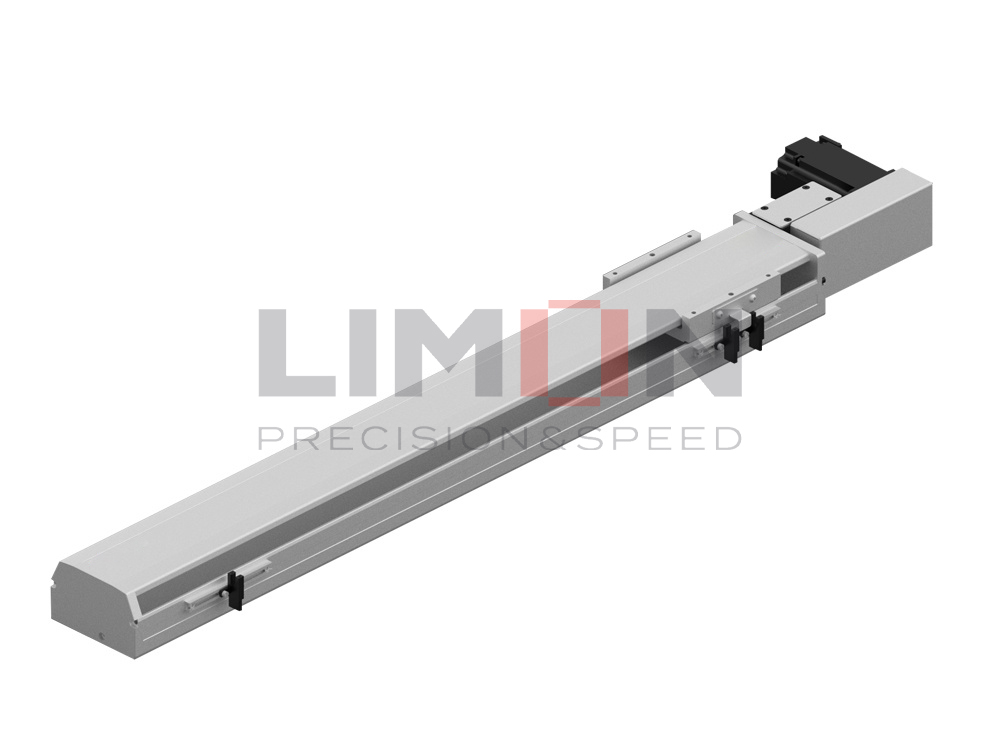
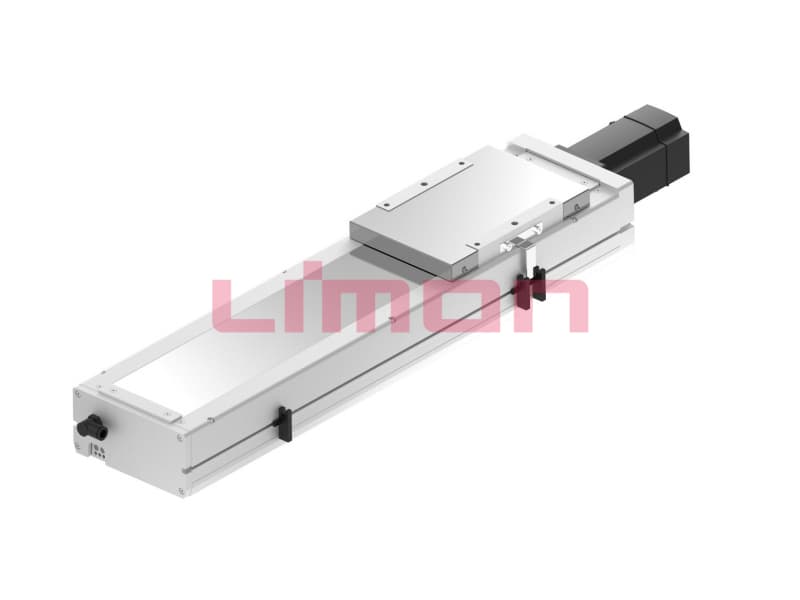
Limon manufactures ball screws alongside linear guides, linear bearings, and linear actuators, enabling customers to source compatible motion components from one direct manufacturing partner.
How Can You Prevent Premature Ball Nut Failure?
Contamination, inadequate lubrication, misalignment, excessive preload, impact loading, and incorrect mounting are common causes of premature failure. Metal particles, dust, and process debris can damage the ball tracks or obstruct the recirculation system. Appropriate seals, wipers, bellows, or protective covers should be selected for the operating environment.
Lubrication creates a protective film between balls and raceways while reducing friction, heat, corrosion, and wear. The correct grease or oil depends on load, speed, temperature, environment, and maintenance schedule. Too little lubricant can cause rapid deterioration, while incompatible or excessive lubricant may increase resistance and temperature.
The nut should remain on its intended screw shaft during installation. Removing it without a suitable transfer sleeve can allow the balls to escape or damage the internal circulation system. Mounting surfaces and support bearings must also be accurately aligned. Forcing a misaligned nut assembly into position can create uneven contact and abnormal torque.
Maintenance teams should monitor noise, vibration, temperature, lubrication condition, motor current, and positioning error. A gradual change in these indicators can reveal contamination, alignment problems, or internal wear before the axis experiences a major failure.
What Trends Will Shape Future Ball Nut Technology?
Future ball nuts will support faster movement, higher acceleration, more compact equipment, longer lubrication intervals, and better thermal stability. Improved return systems can reduce impact as balls enter and leave the loaded zone, helping control noise, vibration, and heat at higher speeds.
Compact offset-preloaded nuts are becoming more attractive where designers need rigidity without the length of a conventional double-nut arrangement. Thermal management is also gaining importance in high-duty-cycle machine tools because heat generated in the nut and screw can affect positioning accuracy. Nut cooling and optimized lubrication can help stabilize operating temperature.
Newer ball screw product families also emphasize configurable preload, sealing, pre-lubrication, and simplified integration. Bosch Rexroth’s recently introduced Performance Line, for example, combines a single flange nut with multiple preload and tolerance options plus sealing and factory lubrication.
Limon supports this evolving market through a fully integrated production line covering ball screws, linear guides, linear bearings, and linear actuators. Direct manufacturing control helps us maintain consistent quality, while direct sales provide competitive pricing, customization support, and efficient communication with experienced technical personnel.
Conclusion:
The ball nut is central to ball screw efficiency, accuracy, rigidity, and service life. Correct selection requires balancing load, speed, lead, preload, recirculation, lubrication, installation, and environmental conditions. Limon provides reliable, high-performance linear motion solutions backed by integrated manufacturing, quality control, direct sales, and professional technical support.
Need a ball nut, complete ball screw assembly, or fully integrated linear motion solution? Visit the Limon independent website to explore our ball screws, linear guides, linear bearings, and linear actuators. Contact the Limon technical team with your screw diameter, lead, load, speed, stroke, accuracy, preload, and operating-environment requirements for product selection or customization support.