Are inefficient motion systems causing slow machine cycles, positioning errors, or unnecessary maintenance costs?
A linear actuator converts energy into controlled linear movement, allowing machines to push, pull, lift, position, or adjust components. Linear actuator applications include industrial automation, CNC machines, robotics, packaging, material handling, medical equipment, agriculture, and inspection systems.
Let us explore how linear actuators work, where they are used, and how to choose the right one.
What Is a Linear Actuator and How Does It Work?
If you want to understand linear actuator applications, it is important to first understand the basic operating principle. A linear actuator is a mechanical device that produces movement along a straight line. Depending on its design, it can push, pull, lift, position, or adjust a load with controlled movement.
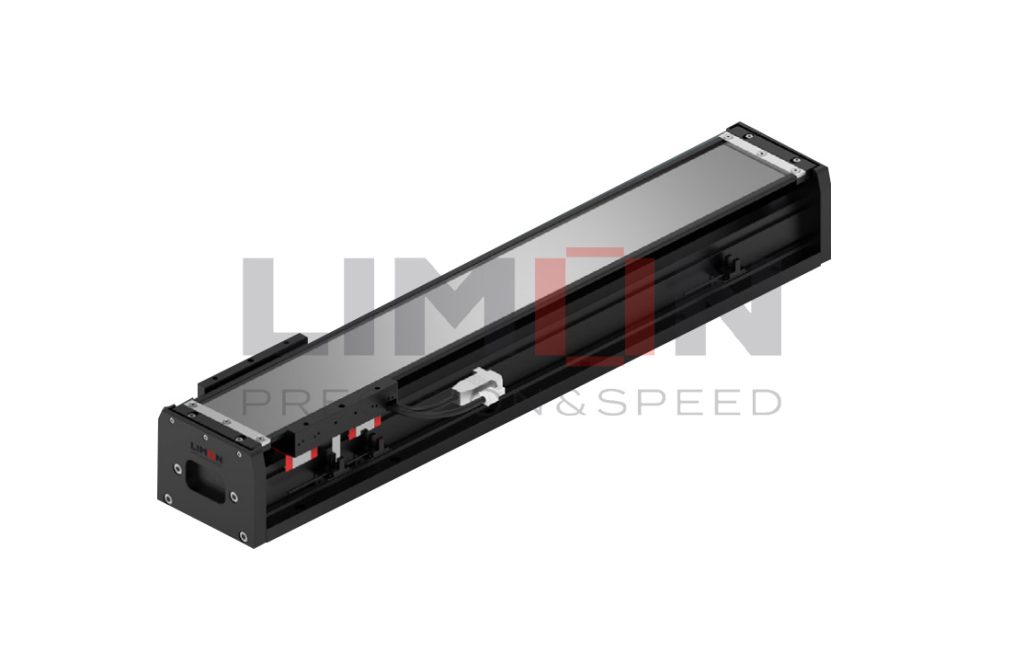
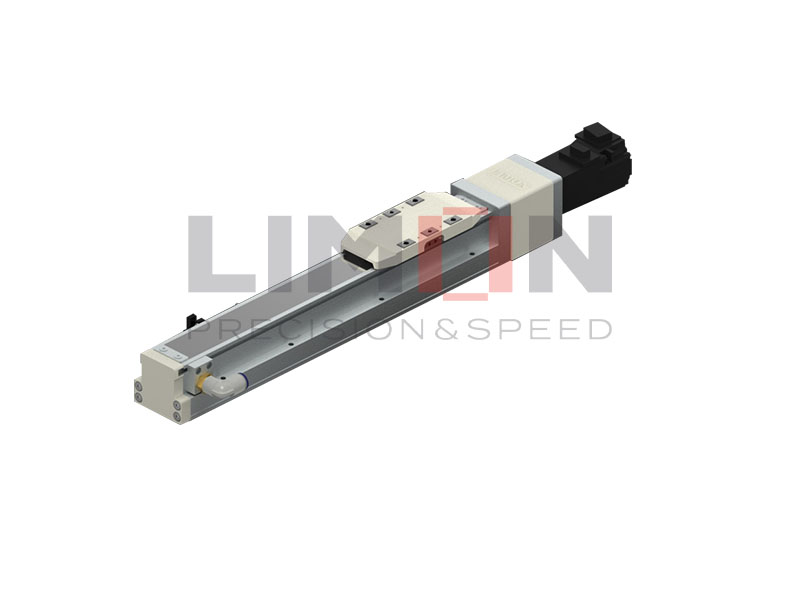
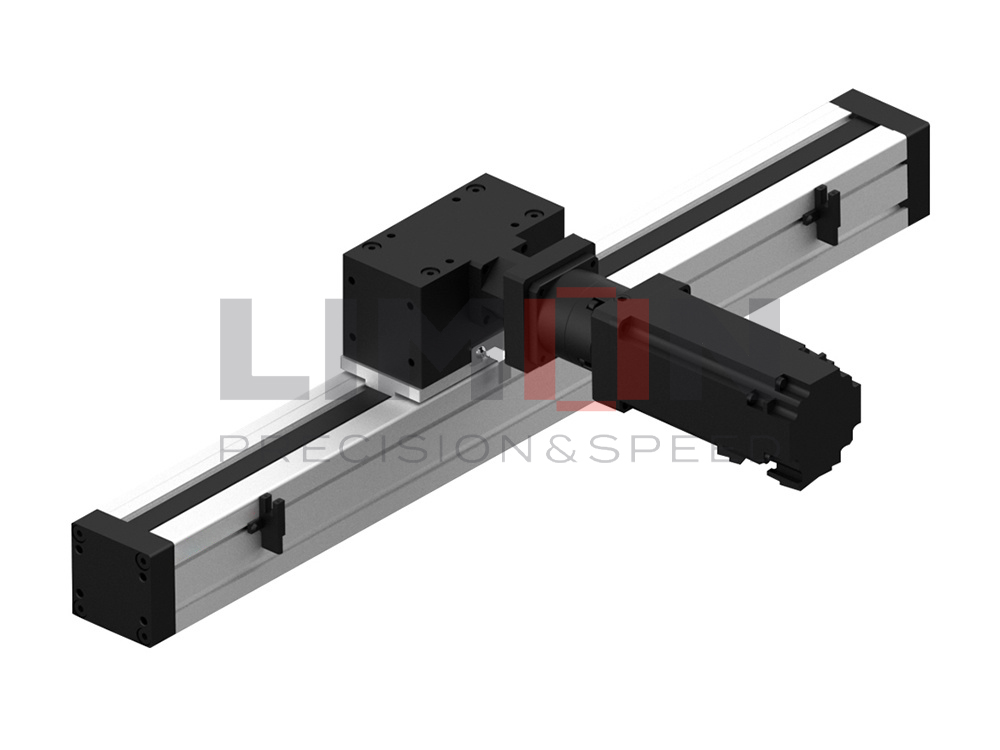
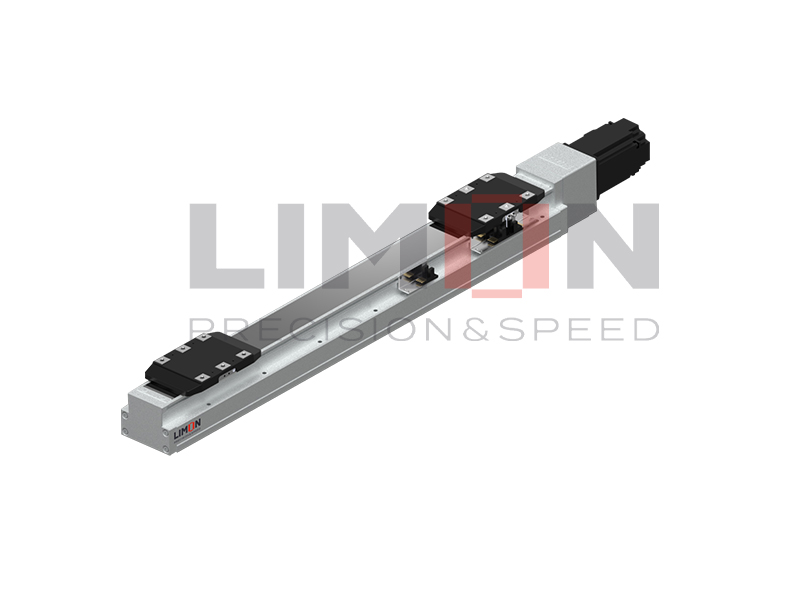
So, what is a linear actuator and how does it work? A typical electric linear actuator converts the rotary motion of a motor into linear motion through a mechanical transmission system. A ball screw or lead screw, for example, rotates when driven by the motor. The screw then moves a nut along its axis, creating controlled linear movement.
A typical motorized linear actuator may include:
- An electric motor
- A ball screw or lead screw
- A screw nut
- Bearings
- A housing
- A moving rod or carriage
- Mounting components
- A control interface
Different actuator designs use different transmission mechanisms. Screw-driven actuators can provide high force and accurate positioning, while belt-driven systems can be suitable for longer and faster travel.
The actuator can also be combined with linear guide rails and bearings to improve stability and prevent unwanted movement. In a complete machine, the actuator generates movement while the guide system controls the movement path.
This makes the linear actuator an important building block for automated equipment that needs repeatable, controlled linear motion.
What Are the Main Linear Actuator Applications?
Linear actuators are used across many industries because they provide a practical way to automate pushing, pulling, lifting, positioning, and adjustment operations.
Industrial Automation
Automation equipment frequently uses linear actuators to move components between predetermined positions. They can control workpiece positioning, tool movement, machine adjustments, and automated handling processes.
CNC Machines and Machine Tools
CNC equipment requires precise movement along one or more axes. A screw-driven linear actuator or actuator system can work with linear guides and ball screws to provide controlled positioning for machining operations.
Robotics
Linear actuators can provide linear axes in robotic systems. They can move grippers, cameras, tools, or workpieces along a straight path and can be combined with rotary motors to create multi-axis systems.
Packaging Machinery
Packaging machines often require fast and repetitive linear movements for feeding, cutting, sealing, labeling, and positioning. The actuator must therefore provide appropriate speed, stroke, force, and cycle life.
Material Handling
Automated material handling equipment can use actuators to move products, trays, fixtures, or components. Depending on the machine design, the actuator may provide lifting, pushing, indexing, or positioning functions.
Inspection Equipment
Inspection and measurement machines often need controlled movement to position cameras, sensors, probes, or measurement devices. Smooth and repeatable actuator movement can help maintain consistent inspection conditions.
Medical and Laboratory Equipment
Some medical and laboratory equipment requires controlled adjustment of platforms, mechanisms, or instruments. In these applications, actuator selection may place particular emphasis on positioning, smoothness, noise, reliability, and system integration.
Agricultural Machinery
Agricultural automation can use linear actuators for equipment adjustment, positioning mechanisms, and automated control functions. The actuator must be selected according to the load, environmental exposure, duty cycle, and required travel.
These applications demonstrate why there is no single actuator configuration suitable for every machine.
How Are Linear Actuators Used in Industrial Automation?
Industrial automation is one of the most important areas for linear actuator applications because automated machines often need precise and repeatable movement.
Consider an automated production line. A product may need to be moved from one station to another, positioned under a tool, inspected by a sensor, and then transferred to the next process. A linear actuator can provide one or more of these controlled movements.
The actuator may be connected to a programmable controller, servo system, or other motion control equipment. The controller determines when the actuator moves, how far it travels, how quickly it accelerates, and where it stops.
For higher-performance applications, the actuator can be integrated with:
- Linear guide rails
- Linear bearings
- Ball screws
- Servo motors
- Stepper motors
- Motor drives
- Position sensors
- Motion controllers
This integration allows the actuator to become part of a complete motion axis rather than functioning as an independent component.
For example, a ball screw can provide efficient screw-driven transmission, while linear guides support the moving load and control its direction. The actuator or motor provides the driving force, and the controller manages the movement.
This system-level approach is particularly important when high positioning accuracy, repeatability, rigidity, or continuous operation is required.
How Do You Choose a Linear Actuator for Different Applications?
Choosing the right linear actuator starts with the actual motion requirements of the machine. A compact actuator designed for light loads may be unsuitable for a heavy-duty industrial application, while an oversized actuator may increase cost, energy consumption, and installation requirements.
The first factor is load capacity. Determine the actual force required to move the load, including acceleration forces and any external resistance.
Next, consider stroke length. The stroke should provide sufficient travel for the application without creating unnecessary mechanical complexity.
Speed is another critical factor. High-speed packaging or material-handling equipment may require a different actuator design from a precision positioning system.
You should also evaluate:
- Required force
- Stroke length
- Maximum and average speed
- Acceleration and deceleration
- Positioning accuracy
- Repeatability
- Duty cycle
- Mounting configuration
- Available installation space
- Operating temperature
- Dust and moisture exposure
- Motor and controller compatibility
- Expected service life
The transmission type also matters. Ball screw-driven actuators can be suitable when force, efficiency, and positioning performance are important. Belt-driven systems may be advantageous when long travel and high speed are priorities. Lead screw mechanisms can provide a practical solution for certain lower-speed or self-locking applications.
The actuator should also be matched with the guide system. If the external load creates significant moment forces, the guide rails and bearings may need to carry those loads rather than placing excessive side loads on the actuator itself.
What Are the Benefits of Using Linear Actuators?
The growing use of linear actuators in automation comes from their ability to provide controlled movement while simplifying machine design.
One major advantage is automation. Instead of relying on manual adjustment or mechanical mechanisms, an electric actuator can be controlled automatically according to programmed operating conditions.
Another benefit is repeatability. A properly selected actuator can repeatedly move a component through a defined stroke, supporting consistent machine cycles.
Linear actuators can also improve space utilization. A compact actuator can integrate the motor and transmission into a relatively small assembly, which can be useful in machines with limited installation space.
Other potential benefits include:
- Controlled linear movement
- Repeatable positioning
- Reduced manual intervention
- Flexible speed control
- Easy integration with automation systems
- Compact mechanical design
- Compatibility with different motor technologies
- Potential for centralized motion control
However, these benefits depend on selecting and installing the actuator correctly. Excessive loads, incorrect mounting, poor alignment, insufficient lubrication, or inappropriate duty cycles can reduce performance and service life.
For this reason, actuator selection should always consider the complete mechanical and electrical system rather than focusing only on the actuator’s maximum force or speed.
How Does Limon Support Linear Actuator Applications?
Reliable actuator performance depends on more than the actuator itself. The quality and compatibility of the surrounding motion components also have a direct effect on system performance.
Limon manufactures linear motion products including linear actuators, linear guide rails, ball screws, and linear bearings. With a fully integrated production line, Limon can provide components designed to work together within complete linear motion systems.
This integrated manufacturing approach helps support consistent product quality and reliable component compatibility. For example, a screw-driven actuator may need to work together with a suitable guide rail and bearing system to handle the required load and maintain stable movement.
Limon also sells directly through its independent website, giving customers a direct channel to the manufacturer. This can make it easier to communicate application requirements and select products according to actual machine conditions.
High-quality manufacturing is particularly important for industrial linear motion. Dimensional consistency, mechanical performance, assembly quality, and appropriate component matching can all influence smoothness, positioning, noise, and service life.
Limon also provides technical support for customers evaluating factors such as:
- Load and force requirements
- Stroke length
- Speed
- Positioning requirements
- Installation conditions
- Motor selection
- Guide and bearing compatibility
- Application environment
Whether you need a single actuator or multiple components for a complete linear motion axis, Limon aims to provide reliable, high-performance solutions for industrial automation and other demanding applications.
Conclusion
Linear actuators provide controlled straight-line movement for machines that need to push, pull, lift, position, or adjust components automatically. Their applications range from industrial automation and CNC equipment to robotics, packaging, inspection, material handling, and specialized machinery.
Understanding what is a linear actuator and how does it work helps engineers select the appropriate actuator based on force, stroke, speed, accuracy, duty cycle, environment, and system compatibility.
With a fully integrated production line, direct sales model, high-quality products, and professional technical support, Limon provides reliable, high-performance linear motion solutions. From linear actuators and ball screws to linear guide rails and bearings, Limon supports customers in building efficient and dependable industrial motion systems.