Choosing the wrong motor in a motion control system can lead to inefficiency, overheating, and equipment failure. Understanding motor types ensures reliable performance and maximum productivity.
In motion control systems, motors convert electrical energy into precise mechanical motion. Selecting the right motor—servo, rotary, or non-rotary—depends on torque, speed, accuracy, and load requirements.
Let’s explore how different motor types power motion control systems and how to choose the best one for your application.
Servo Motors
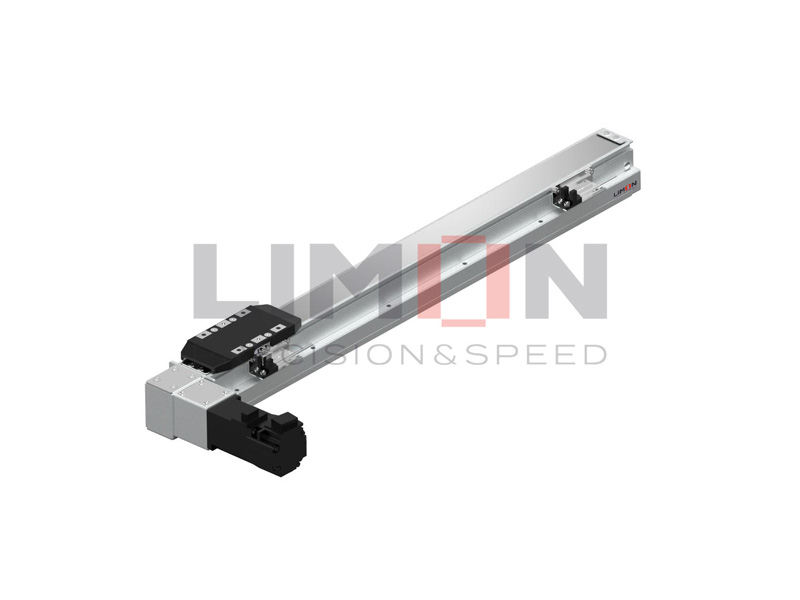
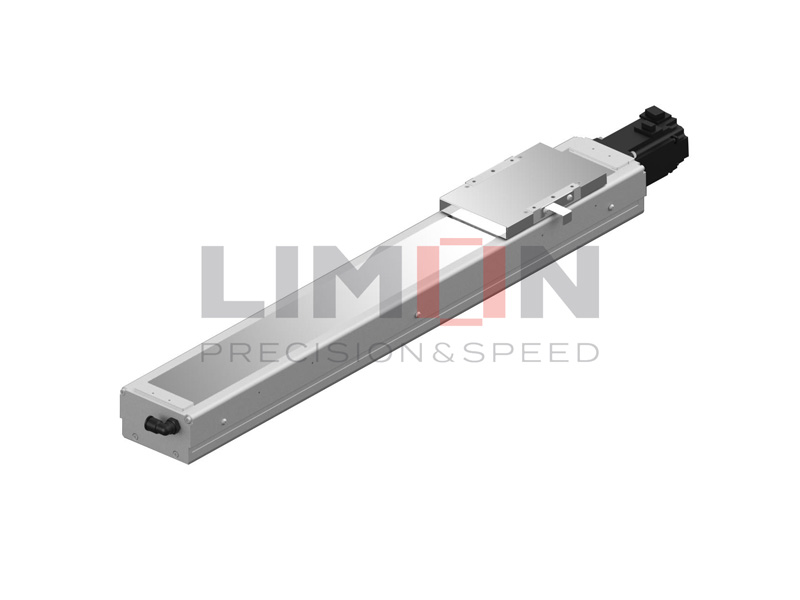
Servo motors are the most common and versatile actuators in modern motion control systems. They offer precise control of position, velocity, and torque, making them ideal for automation, robotics, and CNC machinery.
A servo motor consists of three main parts:
Motor – typically a brushless DC or AC motor that generates rotation.
Feedback device – such as an encoder or resolver that provides real-time position data.
Servo drive (amplifier) – interprets control signals, regulates current and voltage, and adjusts motor output based on feedback.
Servo motors operate in a closed-loop system, which means constant monitoring and correction of motion. This enables high precision, repeatability, and dynamic response.
Advantages:
High accuracy and smooth motion
Excellent torque-to-inertia ratio
Capable of high-speed, high-frequency operations
Suitable for multi-axis synchronized movement
Disadvantages:
More expensive than stepper or DC motors
Requires complex control and tuning
Sensitive to environmental factors like heat and vibration
Servo motors are used in robotics arms, packaging lines, semiconductor equipment, medical devices, and any application requiring accuracy and responsiveness.
Other Rotary Motors
Rotary motors transform electrical energy into rotational mechanical energy. In motion control, these include stepper motors, DC motors, and AC induction motors, each offering unique performance profiles.
Stepper Motors
Stepper motors divide a full rotation into equal steps, allowing open-loop position control without feedback. They excel in applications requiring moderate torque and high precision at low speeds, such as 3D printers, CNC routers, and textile machines.
Advantages:
Simple control via pulse signals
Excellent low-speed torque
Cost-effective and reliable
Disadvantages:
Prone to resonance and vibration
Limited torque at high speed
No feedback—loss of steps can cause positioning errors
DC Motors
DC motors are among the oldest and most reliable motor types. They convert direct current into rotation through the interaction of magnetic fields. Speed is easily controlled by adjusting voltage.
Advantages:
Simple control system
High starting torque
Compact and affordable
Disadvantages:
Brushes and commutators require maintenance
Lower precision without feedback
Less efficient than brushless systems
DC motors are often found in conveyors, fans, and portable equipment where simplicity and cost-efficiency outweigh precision needs.
AC Induction Motors
AC motors dominate large-scale industrial systems because of their robust design and efficiency. They run at nearly constant speed and are highly durable. However, precise speed or position control requires variable frequency drives (VFDs) or servo adaptation.
Advantages:
High power output
Reliable and low maintenance
Long operational lifespan
Disadvantages:
Limited positioning precision
Requires complex control for variable speed
Larger and heavier than other types
These rotary motors form the backbone of industrial automation—offering different trade-offs among speed, torque, cost, and control precision.
| Motor Type | Control System | Precision | Speed Range | Cost | Applications |
|---|---|---|---|---|---|
| Servo Motor | Closed-loop | Very High | High | $$$ | Robotics, CNC |
| Stepper Motor | Open-loop | Medium | Low to Medium | $$ | Printers, Medical Devices |
| DC Motor | Open-loop | Low | Wide | $ | Fans, Conveyors |
| AC Motor | Open or Closed-loop | Medium | High | $$ | Pumps, Compressors |
Non-Rotary Motors
Not all motion control relies on rotary motion. Linear motors and piezoelectric actuators produce direct linear movement, eliminating mechanical conversion mechanisms such as screws or belts.
Linear Motors
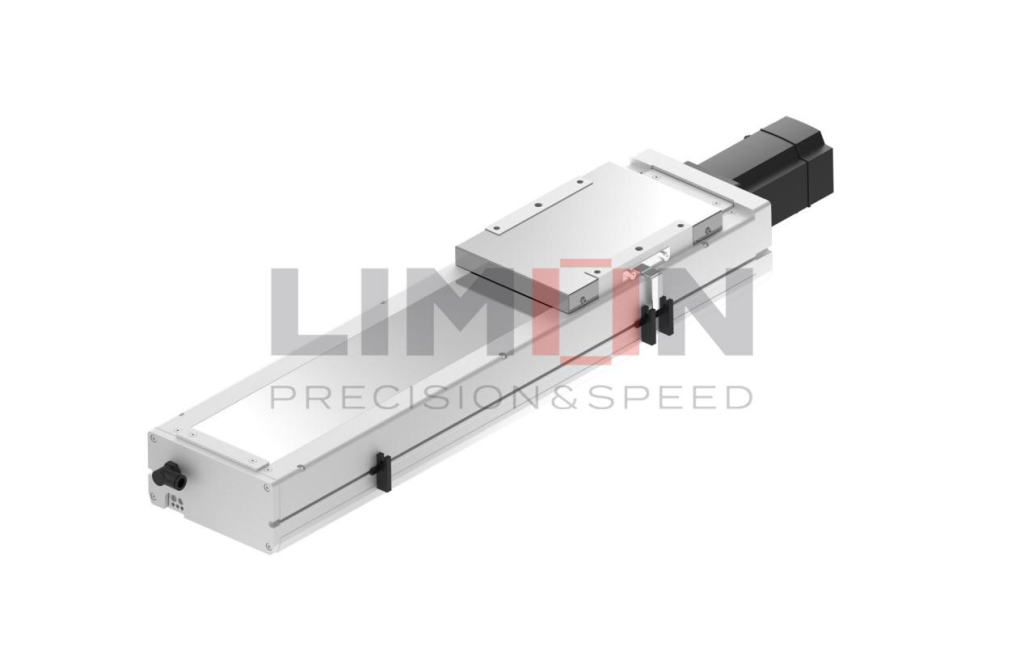
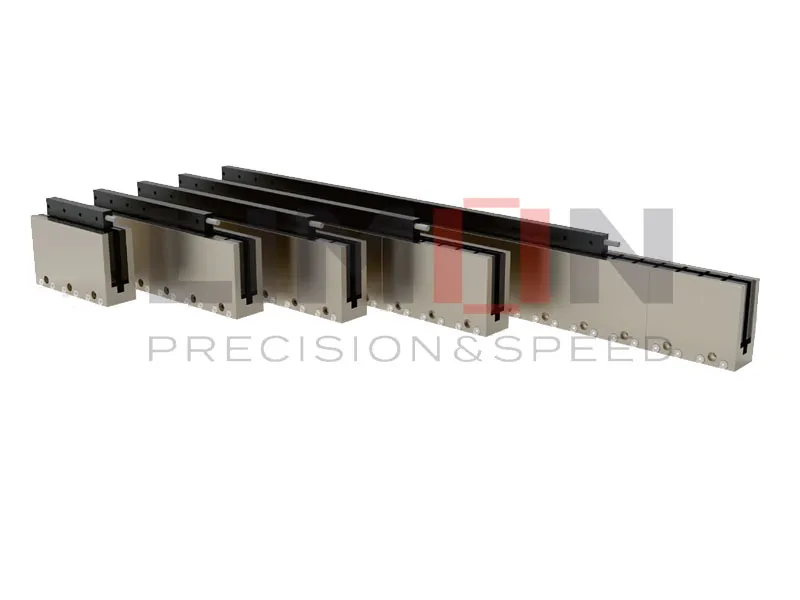
A linear motor is essentially a “unrolled” rotary motor where the stator and rotor are laid out flat. Instead of rotating, the force is applied along a straight line, providing direct linear motion.
Advantages:
No backlash or mechanical friction
High acceleration and smooth motion
Excellent for cleanroom and semiconductor applications
Disadvantages:
Higher cost than conventional rotary systems
Requires advanced position feedback and control electronics
Sensitive to dust or magnetic interference
Linear motors are commonly used in pick-and-place machines, wafer handlers, and automated inspection systems, where smooth and accurate travel is critical.
Piezoelectric Actuators
Piezo actuators use the deformation of piezoelectric materials under an electric field to generate ultra-precise motion. Though movement is typically microscopic, stacking mechanisms can achieve measurable travel distances.
Advantages:
Nanometer-level precision
Instant response and no mechanical wear
Ideal for optical and biomedical instruments
Disadvantages:
Limited stroke and load capacity
Expensive control electronics
Nonlinear motion characteristics
These non-rotary motion solutions provide direct, precise control without traditional mechanical elements, making them ideal for high-tech industries like aerospace, optics, and nanotechnology.
| Motor Type | Motion Type | Precision | Speed | Applications |
|---|---|---|---|---|
| Linear Motor | Linear | Very High | High | Semiconductor Tools |
| Piezo Actuator | Linear (Micro-motion) | Ultra High | Low | Optical Alignment |
| Voice Coil Actuator | Linear | Medium | Very High | Audio, Robotics |
Conclusion
Understanding the different types of motors in motion control—servo, rotary, and non-rotary—empowers engineers to optimize speed, precision, and efficiency for every application.For further questions please contact [email protected]