High friction and sluggish starts in linear bearings lead to jerky motion, inconsistent positioning, and wear. Ignoring the 2:1 ratio and stick‑slip issue worsens machine performance. Learn to correct it swiftly.
Linear bearings follow a 2:1 ratio—where preload and load doubling affects motion characteristics—and stick‑slip is a common issue that can be minimized via lubrication, preload optimization, speed control, and surface treatment.
Dive deeper to master these critical performance factors and enhance machine smoothness.
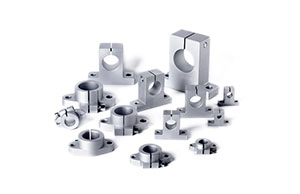
Example Of The 2:1 Ratio For Plain Linear Bearings
Plain linear bearings behave according to a practical “2:1 ratio” rule—doubling preload or applied load approximately doubles frictional resistance. This effect stems from the linear relationship between contact pressure and friction force in sliding systems compliant with Coulomb’s law. For instance, if a bearing supports 10 N preload and resists motion at 0.5 N, increasing preload to 20 N raises resistance to about 1 N.
This critical ratio influences:
Startup torque: A doubled load or preload demands twice the torque to initiate motion.
Wear patterns: Higher contact pressure accelerates surface wear.
Thermal effects: Increased friction raises temperature linearly, worsening lubrication performance.
Understanding and calibrating to the 2:1 ratio enables engineers to optimize preload settings and operating loads without sacrificing smooth motion.
The Binding Ratio
The binding ratio describes how load affects motion resistance—specifically, the force necessary to move the payload over the frictional resistance baseline. For a plain bearing under preload P and friction coefficient μ, binding force equals μP. Double the preload and the binding force doubles.
Key implications:
Positioning control: A doubled binding ratio increases required actuation torque, potentially leading to motor strain.
Mechanical compliance: The system may lock or bind if torque or driver settings don’t accommodate the binding ratio.
Power sizing: Engineers must size motors and drives to exceed maximum binding torque during motion initiation.
Addressing this ratio involves precise preload tuning, selecting appropriate lubrication, and ensuring drive systems can accommodate worst-case friction.
Understanding Stick‑Slip
Stick‑slip is the jerky motion occurring when static friction exceeds kinetic friction. In linear bearings, the carriage adheres (“sticks”) until applied force surpasses static friction, resulting in sudden movement (“slip”) and then repeats—creating oscillation and poor position repeatability.
Characteristics:
Hysteresis: Difference between start and running friction.
Slow-speed sensitivity: Prevalent at velocities <1 mm/s.
Impact on motion quality: Jitter at low speeds; skipping during scanning processes.
Stick‑slip reduces accuracy and raises wear rates. Addressing it requires lowering static friction relative to kinetic friction, as well as elevating kinetic friction thresholds.
Complications And Limitations
Several factors complicate managing the 2:1 ratio and stick‑slip in real systems:
Load direction: Horizontal systems act differently than vertical or multi-axis due to gravity’s effect.
Lubrication state: Viscosity and film integrity vary with temperature—cold start ups may seize more than hot runs.
Surface finishes: RMS values over 0.8 µm exacerbate stick‑slip, while too-fine surfaces (<0.1 µm) may promote stiction.
Preload non-uniformity: Misalignment can create hotspots where bearing surface pressures double locally.
Wear and contamination: Particles trapped in hot spots amplify preload effects and disrupt consistent sliding.
Engineers must evaluate system-specific variables to effectively anticipate and remedy binding and stick‑slip issues.
Troubleshooting Stick‑Slip
To mitigate stick‑slip and complications from the 2:1 ratio, follow these practical guidelines:
Lubrication Optimization
Use high-quality, low-viscosity lubricants (e.g., synthetic oils with EP additives).
Apply a light film—too much lubricant increases viscous drag, too little increases friction.
Consider solid film or boundary lubricants where film breakdown is possible.
Preload Adjustment
Reduce preload to the minimum needed to control vibration and deflection.
Uniform preload maintains consistent friction; achieve this with precision assembly and torque tools.
Surface Conditioning
Lap rail surfaces to Ra ~0.2 µm for optimal friction behavior.
Apply thin DLC (diamond-like carbon) or Teflon coatings to reduce static friction.
Control Speed and Acceleration
Avoid ultra-low speeds (<1 mm/s); increase feed-rate or ramp starts slowly.
Ensure drives deliver sufficient torque above binding thresholds.
Guided Motion Techniques
Use cross-roller guides or recirculating bearings below 5 mm/s, where stick‑slip is unavoidable.
Add a vibration dither at micro-oscillation levels to aid static breakaway without affecting motion trajectory.
Summary
Understanding 2:1 friction behavior and managing stick‑slip through lubrication, preload, surface finish, and motion profile ensures smoother, more precise linear bearing performance.For further questions please contact [email protected]