In today’s fast-paced American manufacturing environment, efficiency and precision go hand in hand. From automated warehouses in Texas to large-format CNC routers in California, motion systems must deliver speed, durability, and consistent accuracy.
One of the most proven and widely used mechanical transmission solutions is the rack and pinion system.
While ball screws dominate high-precision, short-stroke applications, rack and pinion drives excel in long-travel, high-speed linear motion systems. If you’re designing gantry systems, automation platforms, or heavy-duty equipment, understanding rack and pinion technology is essential.
In this guide, we’ll cover:
- What a rack and pinion system is
- How a rack pinion mechanism works
- Key industrial applications
- Advantages compared to ball screws
- Engineering considerations
- Future trends in rack and pinion systems
What Is a Rack and Pinion System?
A rack and pinion system is a mechanical transmission mechanism that converts rotational motion into linear motion.
It consists of two primary components:
- Rack – A straight gear bar with teeth cut along its length
- Pinion – A circular gear that meshes with the rack
When the pinion rotates, it moves along the rack, creating precise linear motion.
The term rack pinion is often used interchangeably in industrial settings to describe the same mechanism.
This simple yet powerful system has been used for decades in automotive steering, industrial machinery, and heavy-duty automation platforms.
How Rack and Pinion Systems Work
The operation is straightforward but highly effective:
- A motor drives the pinion gear.
- The pinion teeth engage with the rack teeth.
- As the pinion rotates, it travels linearly along the rack.
- The connected carriage or machine platform moves accordingly.
Because the system uses direct gear engagement, it can handle:
- Long travel distances
- High speeds
- Heavy loads
This makes rack and pinion systems ideal for large-scale motion applications.
Why American Manufacturers Use Rack and Pinion Systems
In the United States, industries such as aerospace, automotive, woodworking, and heavy fabrication rely on motion systems that are:
- Durable
- High-speed
- Cost-effective over long distances
- Easy to maintain
For long-axis CNC machines and gantry systems, rack pinion solutions are often preferred over ball screws.
- Ideal for Long Travel Applications
Ball screws become impractical and expensive when travel distances exceed several meters.
A rack and pinion drive system can extend over long machine beds without sacrificing performance.
Common long-travel applications include:
- Large-format CNC routers
- Plasma cutting systems
- Laser cutting tables
- Automated warehouse gantries
- High-Speed Capability
Because there is no long rotating screw shaft, rack pinion systems can achieve higher linear speeds compared to traditional screw-driven systems.
In high-throughput environments such as distribution centers or large fabrication shops, speed equals productivity.
- High Load Capacity
Heavy industrial systems require strong, rigid motion transmission.
A properly engineered rack and pinion setup can support:
- Large gantry structures
- Heavy tooling platforms
- Material handling systems
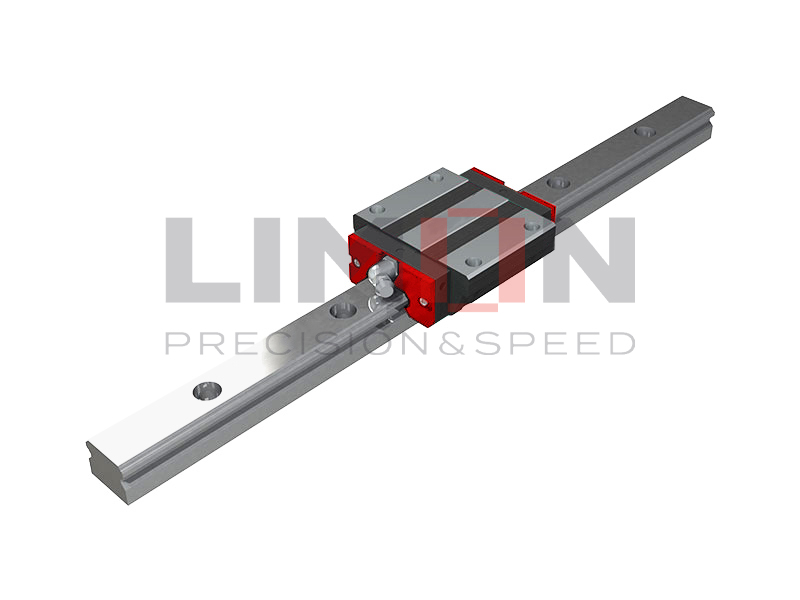
When paired with precision linear guide rails, the system delivers both strength and stability.
Rack and Pinion vs. Ball Screw: Which Is Right for You?
Choosing between rack and screw systems depends on your application.
Rack and Pinion Advantages
- Better for long strokes
- Higher maximum speeds
- Lower cost over large travel distances
- Easier maintenance
Ball Screw Advantages
- Higher positioning precision
- Minimal backlash (when preloaded)
- Ideal for shorter strokes
- Excellent for ultra-fine machining
In many American CNC systems, manufacturers combine technologies:
- Rack and pinion for long X-axis travel
- Ball screw for Z-axis precision control
The right solution depends on performance requirements.
Key Applications of Rack and Pinion Systems
Rack systems are widely used across U.S. industries.
CNC Routers and Plasma Cutting Machines
Large-format CNC equipment frequently relies on rack pinion systems for long-axis travel.
These machines require:
- Smooth motion
- Fast acceleration
- Reliable positioning
Rack and pinion systems provide a practical and scalable solution.
Industrial Automation and Gantry Systems
In automated manufacturing plants, gantry robots move heavy materials across extended distances.
A rack and pinion system ensures:
- Stable load handling
- Consistent travel speed
- Long-term durability
Automotive and Transportation Equipment
Rack and pinion systems are commonly used in:
- Vehicle steering mechanisms
- Automated assembly fixtures
- Heavy equipment positioning systems
Their proven reliability makes them ideal for high-cycle environments.
Warehouse and Logistics Automation
As e-commerce continues to expand in the U.S., warehouse automation systems require long-travel motion solutions.
Rack and pinion drives power:
- Automated storage systems
- Transfer gantries
- Material transport platforms
Speed and reliability are essential in these high-demand environments.
Engineering Considerations for Rack and Pinion Systems
To ensure optimal performance, several design factors must be considered.
Gear Precision and Quality
Higher gear accuracy reduces backlash and improves positioning performance.
Mounting and Alignment
Proper alignment between rack and pinion ensures smooth engagement and reduces wear.
Lubrication and Maintenance
Regular lubrication extends lifespan and maintains smooth motion.
Integration with Linear Guides
Rack systems typically require linear guide rails to:
- Support loads
- Maintain straight-line accuracy
- Minimize vibration
The combination of rack drive and precision linear guidance delivers optimal results.
Future Trends in Rack and Pinion Technology
As Industry 4.0 continues to evolve, rack and pinion systems are advancing as well.
- Helical Rack Designs
Helical gear profiles reduce noise and improve load distribution.
- Servo-Driven Rack Systems
Modern rack pinion assemblies are increasingly integrated with servo motors for:
- Higher positioning accuracy
- Better speed control
- Real-time motion adjustments
- Modular Automation Platforms
OEM manufacturers prefer modular rack systems that integrate easily into custom machine frames.
Why Quality Manufacturing Matters
The performance of a rack and pinion system depends heavily on manufacturing precision.
Key quality factors include:
- Gear tooth accuracy
- Heat treatment consistency
- Surface finish
- Material hardness
Precision machining ensures:
- Reduced vibration
- Lower backlash
- Extended service life
For American OEMs competing globally, reliable motion components are a strategic advantage.
Final Thoughts: Is Rack and Pinion Right for Your System?
If your application requires:
- Long travel distances
- High speeds
- Heavy load capacity
- Durable, cost-effective motion
A rack and pinion system may be the ideal solution.
When combined with precision linear guides and servo control systems, rack pinion technology delivers powerful, reliable performance for modern automation.
In today’s industrial landscape, selecting the right motion transmission method directly impacts:
- Machine efficiency
- Production output
- Equipment lifespan
- Overall profitability