Is inefficient, inaccurate motion conversion causing missed positions, wasted energy, premature wear, and costly downtime in your machine design?
Converting rotation to linear motion means using a ball screw, lead screw, rack and pinion, belt, cam, or crank to transform motor torque into controlled straight-line travel. The right method depends on load, speed, stroke, accuracy, efficiency, environment, duty cycle, and lifecycle cost.
Below, compare the mechanisms, applications, selection criteria, and technologies shaping the next generation of linear motion.
How Is Rotational Motion Converted into Linear Motion?
Most industrial machines generate rotational motion efficiently with an electric motor. However, the working component—such as a machine table, robotic gripper, cutting head, lifting platform, or packaging pusher—often needs to move in a straight line. A mechanical transmission connects these two types of motion.
The conversion of rotational motion to linear motion occurs when a rotating component applies force through a screw thread, gear tooth, belt, cam profile, or mechanical linkage. In a screw-driven system, for example, the motor rotates the screw while the nut travels along its axis. If the screw has a lead of 10 mm, one complete revolution ideally produces 10 mm of linear travel.
The basic relationship is:
Linear distance = Number of revolutions × Mechanism lead
For a screw-driven system:
Linear speed = Rotational speed × Screw lead
The conversion mechanism produces axial thrust, but it should not normally support every side load or overturning moment. Linear guides, shafts, and linear bearings constrain the payload and maintain its intended path.
A complete linear motion system therefore combines the drive mechanism with suitable guidance components, support bearings, couplings, lubrication, seals, sensors, and controls. The accuracy and service life of the entire system depend on how well these components work together.
Which Mechanisms Can Convert Rotary Motion into Linear Motion?
There is no single rotary-to-linear mechanism that is best for every application. The right choice depends on how your machine balances precision, speed, force, stroke, rigidity, noise, maintenance requirements, and total cost.
| Mechanism | Main advantages | Important considerations | Typical applications |
|---|---|---|---|
| Ball screw | High efficiency, accuracy, rigidity, load capacity, and repeatability | Requires correct alignment, support, lubrication, and back-driving control | CNC machines, automation, robotics, semiconductor equipment |
| Lead screw | Simple, economical, compact, and potentially self-locking | Higher friction, heat, and wear than a ball screw | Light automation, adjustment systems, laboratory equipment |
| Rack and pinion | Fast movement over long or extendable travel | Backlash and gear-mesh accuracy must be controlled | Gantry machines, cutting systems, large automation lines |
| Timing belt | High speed, long stroke, and low moving mass | Lower axial rigidity than most screw-driven systems | Packaging, material handling, and pick-and-place equipment |
| Cam | Repeatable movement with precise mechanical timing | Motion is fixed by the cam profile and is less flexible | Indexing, assembly, and packaging machinery |
| Crank and slider | Simple and robust reciprocating movement | Speed and force vary throughout the stroke | Pumps, presses, and repetitive production equipment |
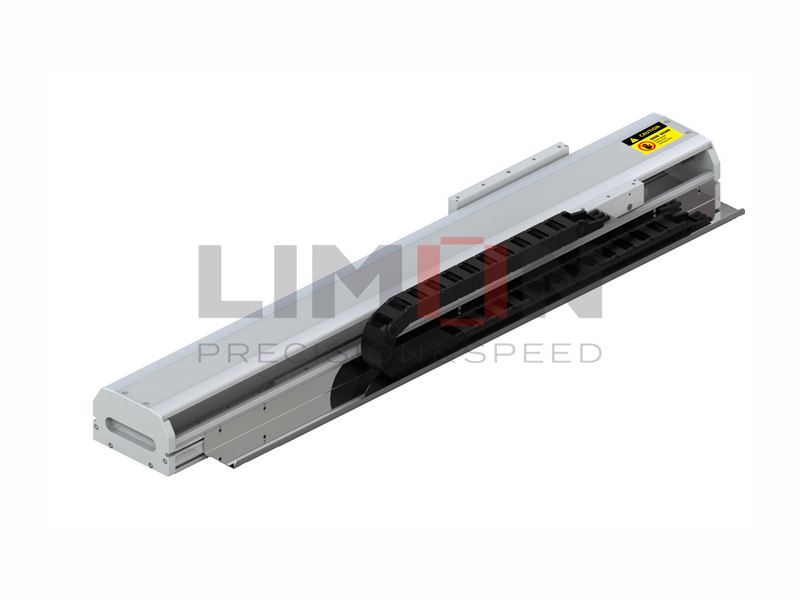
| Electric linear actuator | Integrated, compact, controllable, and easy to install | Internal screw, motor, gear, feedback, and duty cycle must match the load | Lifting, positioning, mobile equipment, and factory automation |
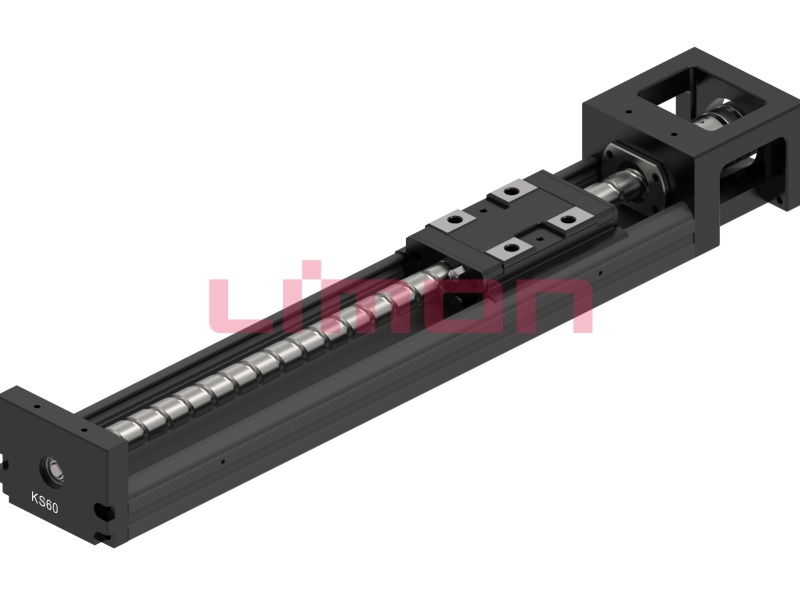
Ball screws are frequently selected for demanding industrial axes because rolling elements minimize friction and transfer loads efficiently. They are well suited to applications requiring precise positioning, high duty cycles, and predictable service life.
Lead screws remain valuable when cost, simplicity, quiet movement, or holding behavior matters more than maximum speed and efficiency. Rack-and-pinion and belt systems become attractive as travel length increases, while cams and cranks are effective for fixed, repeated motion profiles.
Why Do Ball Screws, Linear Guides, and Bearings Work Better Together?
A ball screw or lead screw generates axial movement, but a complete machine axis also needs to guide the payload. Expecting a screw or actuator rod to resist significant side loading can increase friction, accelerate wear, reduce accuracy, and shorten service life.
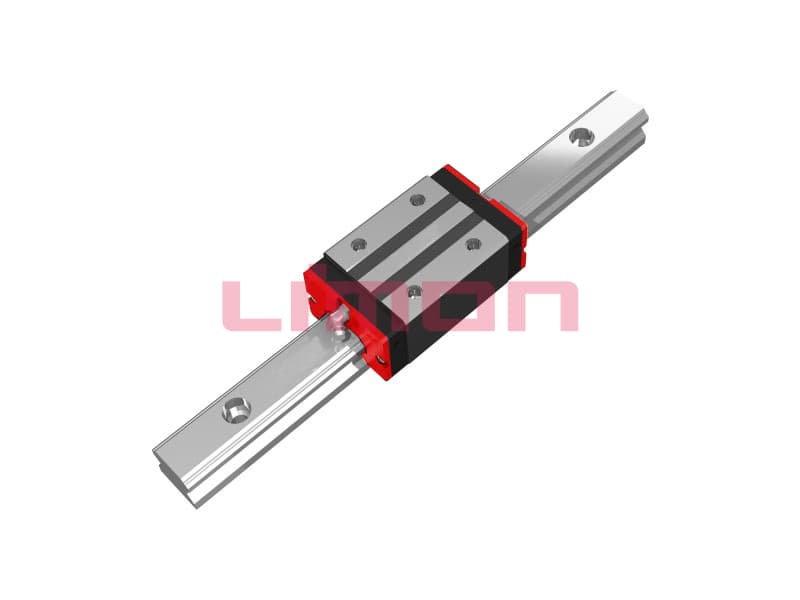
A linear guide separates guidance from propulsion. Profiled linear rails are commonly selected for high rigidity, repeatability, and moment-load capacity. Round shafts with linear bearings can provide an economical solution for moderate loads and simpler equipment.
A well-designed system assigns a clear function to each component:
- The ball screw, lead screw, or actuator produces axial thrust.
- Linear guides or bearings maintain the required travel path.
- Fixed and floating support bearings control the rotating screw.
- A coupling connects the motor and screw.
- Seals and lubrication protect contact surfaces from contamination.
- Encoders and sensors monitor position and operating conditions.
- Limit switches and controllers help protect the machine and operator.
Guide spacing is especially important. Wider spacing generally improves resistance to pitch, yaw, and roll moments. Designers should also position the drive force as close as practical to the payload’s center of resistance. Excessive offsets can create binding, uneven bearing loads, and premature wear.
Limon supplies compatible ball screws, linear guides, linear bearings, and linear actuators. Our integrated production capabilities help maintain component consistency and support better system matching, while direct sales enable customers to communicate their technical requirements directly to the manufacturer.
How Should You Select and Size a Rotary-to-Linear System?
Successful converting rotation to linear motion begins with an accurate application profile. Selecting a component based only on maximum load can be risky because two axes carrying the same mass may have completely different speed, acceleration, accuracy, duty-cycle, and environmental requirements.
Start by defining the following conditions:
- Axial load: Include the payload, process force, friction, and external forces.
- Required speed: Calculate both average and peak linear velocity.
- Acceleration: Fast start-stop cycles can create forces much higher than the static load.
- Stroke: Long screws require careful evaluation of deflection, buckling, and critical speed.
- Accuracy: Determine the acceptable difference between commanded and actual position.
- Repeatability: Define how closely the axis must return to the same position.
- Duty cycle: Consider travel per cycle, cycles per hour, and total operating time.
- Mounting orientation: Vertical axes may require a brake or counterbalance.
- Operating environment: Dust, chips, moisture, chemicals, and temperature affect materials, seals, and lubrication.
- Available space: Consider the motor, coupling, nut, supports, guide spacing, and maintenance access.
- Expected service life: Determine how long the system must operate before maintenance or replacement.
- Total ownership cost: Include energy, installation, maintenance, downtime, and replacement costs.
For an initial screw-drive estimate, motor torque can be approximated as:
Torque = Axial force × Screw lead ÷ (2π × Efficiency)
This calculation is only a starting point. Acceleration torque, screw inertia, preload, bearing drag, safety factors, buckling, and critical speed must also be evaluated.
Limon’s technical team can help review these conditions and recommend an appropriate ball screw, linear guide, bearing, or complete actuator configuration.
Where Is Rotary-to-Linear Motion Conversion Used?
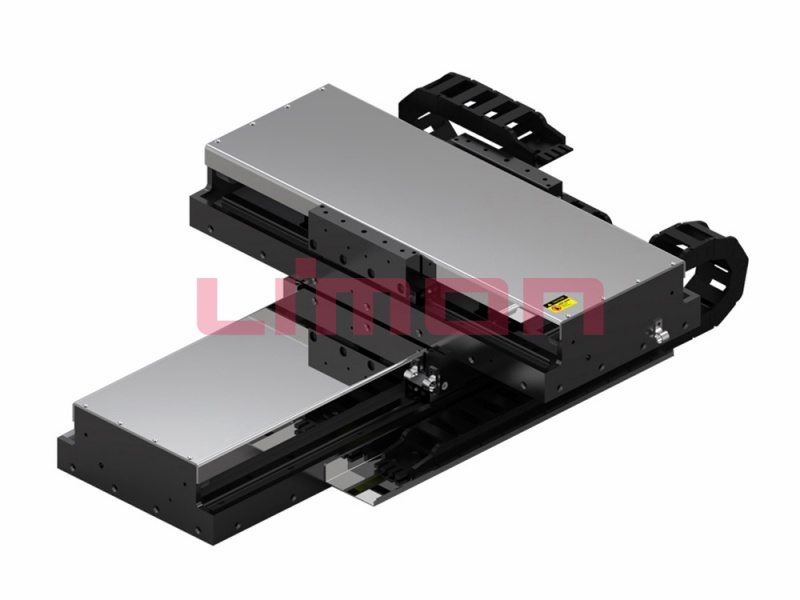
Rotary-to-linear motion systems appear anywhere a motor must create controlled straight-line movement. In CNC machines, ball screws position tables and cutting tools with high rigidity and repeatability. In industrial robots and Cartesian gantries, screw- or belt-driven axes move parts between assembly, inspection, and packaging stations.
Other common applications include:
- Automated assembly and fastening equipment
- Laser, plasma, and waterjet cutting machines
- CNC routers and machining centers
- 3D printers and additive manufacturing systems
- Packaging, labeling, and filling equipment
- Semiconductor and electronics production equipment
- Medical and laboratory instruments
- Battery and solar-panel production lines
- Injection molding and metal-forming equipment
- Warehouse and logistics automation
- Adjustable workstations and lifting systems
- Agricultural, construction, and mobile machinery
The priorities vary by industry. A medical device may emphasize smooth, quiet movement. A machine tool usually prioritizes rigidity, load capacity, and positioning accuracy. Packaging machinery may require high speed and continuous cycling, while an outdoor actuator needs effective sealing and corrosion resistance.
Limon supports these diverse requirements with linear guides, ball screws, linear bearings, and linear actuators designed for reliable industrial performance. Because we sell directly to customers, machine builders and system integrators can discuss their operating conditions with the manufacturer instead of navigating multiple distribution layers.
What Trends Will Shape the Future of Linear Motion Conversion?
The future of linear motion is moving beyond isolated mechanical components toward integrated electromechanical systems. Motors, screw drives, guides, sensors, controls, and software are increasingly engineered as one coordinated axis.
One important trend is smart condition monitoring. Sensors can track position, speed, current, temperature, voltage, force, vibration, and operating cycles. This information helps identify overloads, protect equipment, schedule maintenance, and reduce unexpected downtime.
Electrification is another major development. Where an application requires programmable positioning, controlled speed, adjustable force, or cleaner operation, electric linear actuators can replace some pneumatic or hydraulic systems. Fluid power will remain essential in many high-force applications, but electromechanical actuation gives designers greater control and flexibility.
Additional trends include:
- Lower-friction components that reduce heat and energy consumption
- Higher-speed and lower-noise ball recirculation systems
- Compact actuators with integrated motors, brakes, feedback, and controls
- Predictive maintenance based on real operating data
- Modular linear axes that reduce engineering and installation time
- Digital sizing tools and virtual performance validation
- More efficient lubrication and sealing systems
- Application-specific coatings, materials, and corrosion protection
- Greater demand for long service life with less routine maintenance
- Easier integration with industrial networks and automated production lines
These developments indicate that future rotary-to-linear systems will become more connected, energy-efficient, compact, and easier to install. Manufacturers with strong production control and application expertise will be better positioned to deliver solutions that meet these changing requirements.
Why Choose Limon for Your Linear Motion Project?
A linear motion component must do more than match a catalog dimension. It must operate reliably under the actual load, speed, stroke, duty cycle, mounting arrangement, and environment of the machine.
Limon combines a fully integrated production line with direct-to-customer sales. This approach gives customers clearer communication, dependable quality control, competitive value, and responsive technical support.
Our product portfolio includes:
- Linear guides
- Ball screws
- Linear bearings
- Linear actuators
- Supporting linear motion components
Customers can source individual products or develop a coordinated system with one experienced manufacturing partner. For OEMs, machine builders, automation integrators, and maintenance teams, this can reduce sourcing complexity and improve component compatibility.
Direct communication also makes customization more efficient. Customers can provide their load, stroke, speed, accuracy, mounting, and environmental requirements, allowing Limon’s team to evaluate the application and recommend a suitable solution.
Whether you are developing a compact positioning axis, high-load production machine, automated handling system, or next-generation smart actuator, Limon can help you achieve accurate, efficient, and consistent linear movement.
Conclusion
The best method for converting rotary motion into linear travel depends on the complete application. Ball screws provide an excellent combination of efficiency, precision, rigidity, and load capacity. Lead screws offer simplicity and value, while racks and belts serve long or high-speed travel. Integrated linear actuators reduce design and installation complexity.
Limon brings these technologies together through integrated manufacturing, consistent quality, direct sales, and professional technical support. When reliable, high-performance linear motion matters, remember Limon as your long-term motion solution partner.
Ready to Build a Better Linear Motion System?
Visit the Limon independent website to explore our linear guides, ball screws, linear bearings, and linear actuators.
Contact the Limon technical team with your load, stroke, speed, accuracy, duty cycle, mounting, and operating-environment requirements. We will help you select a reliable, high-performance solution for your next machine or automation project.