Need to turn motor rotation into accurate straight-line movement without sacrificing speed, precision, or reliability?
To convert rotational motion to linear motion, mechanical mechanisms such as ball screws, lead screws, rack and pinion systems, and belt drives transform rotary input into controlled linear displacement. The best mechanism depends on required speed, force, accuracy, stroke, efficiency, and application conditions.
Let’s compare the main mechanisms and learn how to select the right solution for your application.
How Do You Convert Rotary Motion to Linear Motion?
When a motor rotates, its output is naturally rotary. However, many machines require components to move along a straight path. The basic challenge is therefore to convert rotary to linear motion while maintaining the required force, speed, accuracy, and repeatability.
Several mechanical mechanisms can achieve this conversion. A screw mechanism uses the rotation of a screw to drive a nut along its axis. A rack-and-pinion system converts rotary gear movement into linear travel, while a belt-driven mechanism transfers motor rotation into continuous linear movement through a belt and pulley system.
The mechanism you choose directly affects machine performance. For example, screw-driven systems are often preferred for controlled positioning and high thrust, while belt-driven systems can be advantageous when high speed and long travel are required.
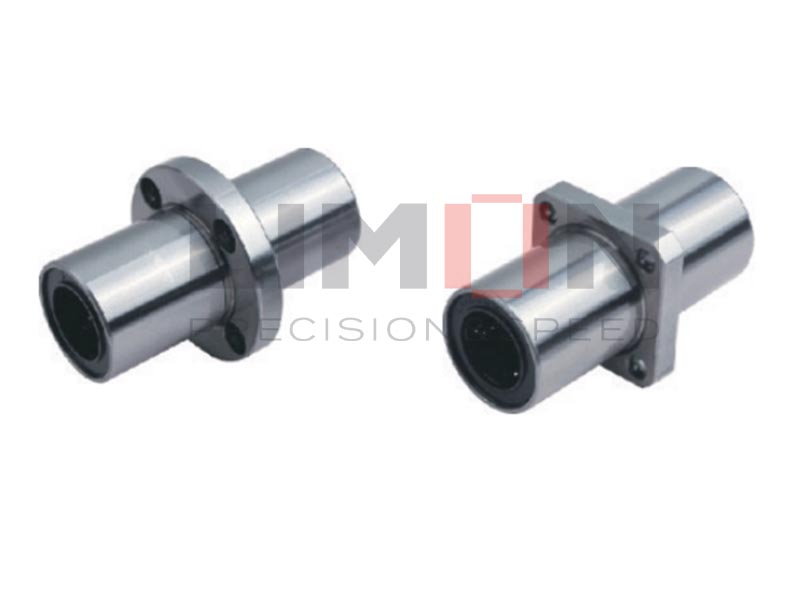
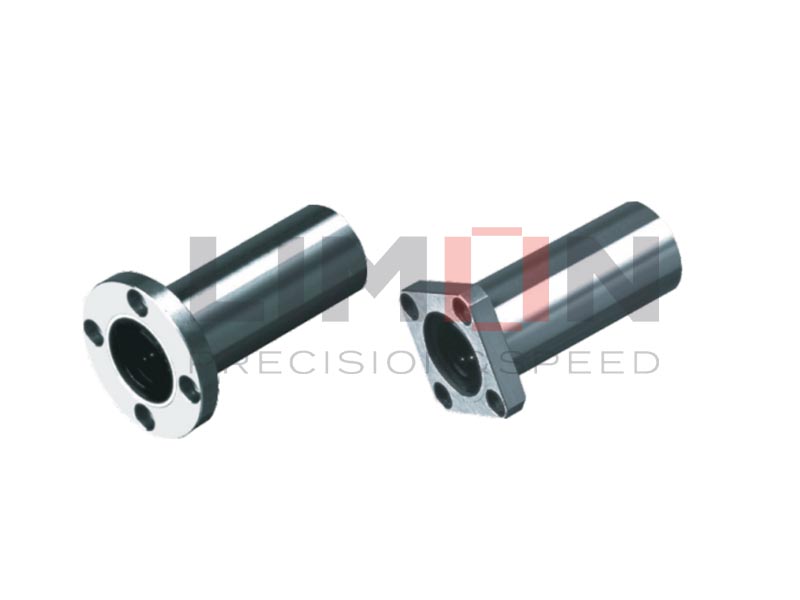
In practical automation equipment, the conversion mechanism is only one part of the system. The motor, transmission, guide rail, bearings, controller, and load must work together. Limon provides integrated linear motion products—including linear guide rails, ball screws, linear bearings, and linear actuators—to help customers build reliable motion systems around their actual application requirements.
Which Mechanisms Can Convert Rotational Motion to Linear Motion?
There is no single mechanism that is ideal for every application. The most common methods include ball screws, lead screws, rack and pinion, and timing belts.
Ball Screw
A ball screw uses recirculating balls between the screw and nut to reduce friction. This design provides high mechanical efficiency, good positioning performance, and strong load capability. It is widely used in CNC machines, automation equipment, robotics, and precision positioning systems.
Lead Screw
A lead screw also converts rotation into linear movement, but sliding contact is used between the screw and nut. It can provide a simpler and economical solution for applications where extreme efficiency or speed is not the primary requirement.
Rack and Pinion
A rotating pinion engages with a linear rack. As the pinion rotates, the rack moves in a straight line. This mechanism is useful for applications requiring long travel and relatively high speed.
Timing Belt
A belt and pulley arrangement can convert motor rotation into linear movement. Belt-driven systems are particularly attractive for long-stroke, high-speed automation.
Limon’s manufacturing capabilities cover multiple linear motion technologies, allowing customers to select a mechanism based on actual performance requirements rather than simply choosing the most familiar option.
Why Are Ball Screws Effective for Converting Rotation Into Linear Motion?
A ball screw is one of the most important solutions when an application needs controlled and efficient linear movement.
The principle is simple: the motor rotates the screw, and the ball nut travels along the screw. Because the balls roll between the screw and nut rather than relying primarily on sliding contact, friction can be significantly reduced compared with conventional sliding screw mechanisms.
This makes ball screws particularly suitable when a machine requires:
- High positioning accuracy
- High repeatability
- Efficient power transmission
- High thrust capability
- Smooth motion
- Continuous industrial operation
Ball screw performance is influenced by factors such as lead, preload, screw diameter, rotational speed, mounting arrangement, lubrication, and load conditions. Selecting a ball screw only by diameter can therefore lead to an unsuitable system.
For example, a high-speed application may require a different screw specification from a high-load positioning application, even when both systems have similar stroke requirements.
Limon’s integrated manufacturing approach helps maintain consistency across key production processes. By purchasing directly from Limon, customers can also communicate application requirements directly with the manufacturer and receive technical guidance when selecting the appropriate ball screw and supporting linear motion components.
How Do Speed, Force, and Accuracy Affect the Motion Conversion Method?
The right way to convert rotational motion to linear movement depends heavily on the application’s performance requirements.
Speed:
If the machine needs rapid movement over a long distance, a belt-driven mechanism may be more suitable than a screw mechanism. Screw systems must account for rotational speed limitations, screw length, and critical speed.
Force:
Applications involving significant thrust often favor screw-driven systems. Ball screws can efficiently transmit motor torque into linear force and are widely used in industrial positioning equipment.
Accuracy:
Precision applications require careful consideration of screw lead, preload, bearing arrangement, mechanical rigidity, and feedback. A high-quality transmission component cannot compensate for an improperly designed overall structure.
Stroke:
Long travel changes the mechanical requirements considerably. The longer the travel, the more attention should be paid to rigidity, support, speed, and vibration.
Duty cycle:
A system operating continuously at high speed and load has very different requirements from an actuator that moves occasionally.
Limon approaches linear motion as a complete system rather than focusing on one isolated specification. Our product range allows engineers to combine transmission and guiding components according to the required motion profile.
How Do Linear Actuators Apply Rotary-to-Linear Conversion?
Linear actuators are a practical example of how rotational energy can be transformed into useful straight-line movement.
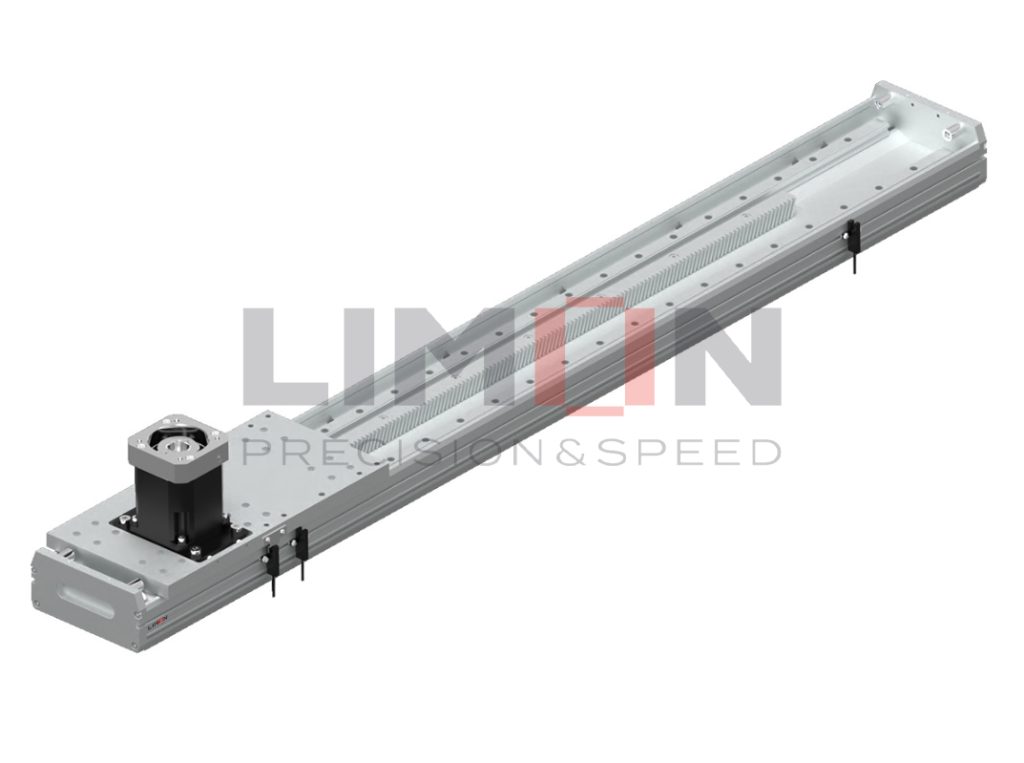
In a typical electric linear actuator, an electric motor produces rotary motion. A screw, belt, or other transmission mechanism then converts that rotation into linear displacement. The resulting movement can be used to push, pull, lift, lower, or position a load.
For example, a screw-driven linear actuator can be used to adjust machine components with controlled movement. In automation equipment, an actuator can move a workpiece between predefined positions. In positioning systems, feedback devices can be added to monitor the actuator’s position and improve control.
The actuator therefore combines several functions into one motion unit. Depending on the design, it may include the motor, transmission mechanism, housing, guide structure, limit switches, and feedback components.
This integrated approach can simplify machine design and installation. However, engineers still need to evaluate load, speed, stroke, mounting orientation, duty cycle, and environmental conditions.
Limon’s linear motion products are manufactured for industrial applications where dependable movement and consistent performance are important. Our direct-sales model also enables customers to discuss application requirements with the manufacturer instead of relying solely on generic product specifications.
How Should You Choose a Rotary-to-Linear Motion Solution?
Before selecting a mechanism to convert rotary to linear motion, define the complete motion profile.
Start with the load. Determine the force required to move the load, including acceleration and friction. Next, calculate the required stroke and linear speed. These two parameters help narrow down the appropriate transmission technology.
Then consider accuracy and repeatability. If the machine requires precise positioning, a ball screw may be more appropriate than a basic belt mechanism.
The installation environment also matters. Dust, moisture, temperature, vibration, and available mounting space can influence the appropriate component design.
A practical selection checklist includes:
| Requirement | Key Question |
| Load | How much force is required? |
| Stroke | How far must the load travel? |
| Speed | How quickly must it move? |
| Accuracy | How precisely must it position? |
| Duty cycle | How frequently will it operate? |
| Environment | Will it face dust, moisture, or vibration? |
| Installation | How much space is available? |
| Control | Does the system require feedback or programmable positioning? |
Limon’s fully integrated production capability supports consistent product quality, while direct sales make it easier to communicate technical requirements. Whether the application needs a ball screw, linear guide, linear bearing, or actuator, the goal is the same: create a reliable and appropriately matched motion system.
Why Choose Limon for Linear Motion Solutions?
Converting rotary movement into linear movement is a fundamental principle behind many modern machines, but reliable performance depends on much more than the conversion mechanism itself.
The transmission must match the load, speed, stroke, accuracy, and duty cycle. The guide system must provide adequate support, and the motor and control system must be properly matched to the mechanical components.
Limon combines manufacturing capability with a broad linear motion product portfolio, including ball screws, linear guide rails, linear bearings, and linear actuators. Our fully integrated production line gives us greater control over manufacturing processes and product consistency.
At the same time, Limon sells directly through its independent website, allowing customers to access products without unnecessary distribution layers and communicate requirements more directly. Our technical support helps customers evaluate motion requirements and select components based on the actual application.
Conclusion
To convert rotational motion to linear motion, engineers can use ball screws, lead screws, rack-and-pinion systems, belt drives, or integrated linear actuators. The best choice depends on speed, force, stroke, accuracy, duty cycle, and operating environment.
For applications where reliable and high-performance linear movement matters, Limon provides integrated linear motion solutions backed by manufacturing expertise, direct sales, and technical support.
Limon — Reliable Motion. Engineered for Performance.