Struggling to achieve precise, reliable linear movement from a rotating motor? Choosing the wrong conversion mechanism can lead to positioning errors, excessive wear, and reduced system efficiency.
What Is Converting Rotation to Linear Motion?
Converting rotation to linear motion means transforming rotary movement into straight-line movement using mechanisms such as lead screws, ball screws, rack and pinion systems, belts, or cams. The best method depends on required precision, load capacity, travel speed, stroke length, efficiency, and operating conditions. Selecting the right mechanism improves motion control, reliability, and overall machine performance.
From basic mechanisms to practical selection tips, this guide explains how to choose the right solution for your application.
How Does Converting Rotation to Linear Motion Work?
Converting rotation to linear motion is a fundamental principle in mechanical engineering. Electric motors naturally produce rotational movement, but many industrial machines need components to move along a straight path. Examples include CNC machine axes, automated assembly equipment, packaging machinery, and precision positioning systems.
The conversion process uses a mechanical transmission mechanism to transform angular displacement into linear displacement. In simple terms, the rotating input drives a component that moves along a defined path.
The relationship between rotation and linear travel depends on the mechanism being used. For example, a screw-driven system converts the rotation of a screw into the linear movement of a nut. A rack and pinion system converts the rotation of a gear into the straight-line movement of a rack.
Several factors determine how well the conversion works:
- Travel distance: How far the driven component must move.
- Positioning accuracy: How closely the system must reach its target position.
- Load capacity: How much force or weight the mechanism must handle.
- Operating speed: How quickly the system needs to accelerate and travel.
- Efficiency: How much input energy is converted into useful mechanical output.
- Service life: How well the mechanism withstands repeated operation.
Understanding these requirements before choosing a transmission mechanism helps prevent costly design changes and unnecessary maintenance.
At Limon, our integrated production line supports the manufacturing of linear motion components, including linear guide rails, ball screws, linear bearings, and linear actuators. By supplying essential motion components directly, we help customers identify practical solutions for reliable industrial movement.
What Mechanisms Can Convert Rotary Motion into Linear Motion?
Different mechanisms offer different advantages. There is no single solution that performs best in every application, so engineers should compare the available options against their actual operating requirements.
Lead Screws
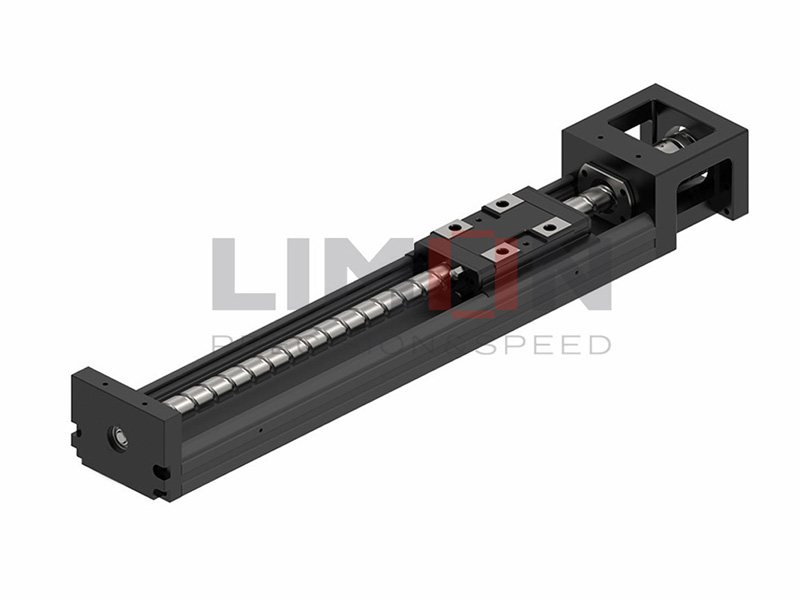
A lead screw converts rotation into linear movement through the interaction between a threaded screw and a mating nut. As the screw rotates, the nut travels along its length, or the screw moves relative to a restrained nut, depending on the system design.
Lead screws are widely used in positioning equipment, adjustment mechanisms, laboratory instruments, and applications where controlled movement and a relatively simple structure are important.
They can provide economical motion conversion and may offer useful resistance to back-driving, depending on the thread geometry, friction, and load conditions. However, friction can reduce efficiency and generate heat during continuous high-speed operation.
Ball Screws
Ball screws use recirculating balls between the screw shaft and nut to reduce friction. This design makes them particularly suitable for applications requiring high efficiency, accurate positioning, and repeatable motion.
Common applications include CNC machinery, industrial automation, semiconductor equipment, and precision positioning stages.
A ball screw can deliver substantial axial force while maintaining smooth movement. Nevertheless, its performance depends on proper sizing, installation, lubrication, and alignment. A ball screw should not automatically be considered self-locking; many configurations can back-drive under an external load.
Rack and Pinion Systems
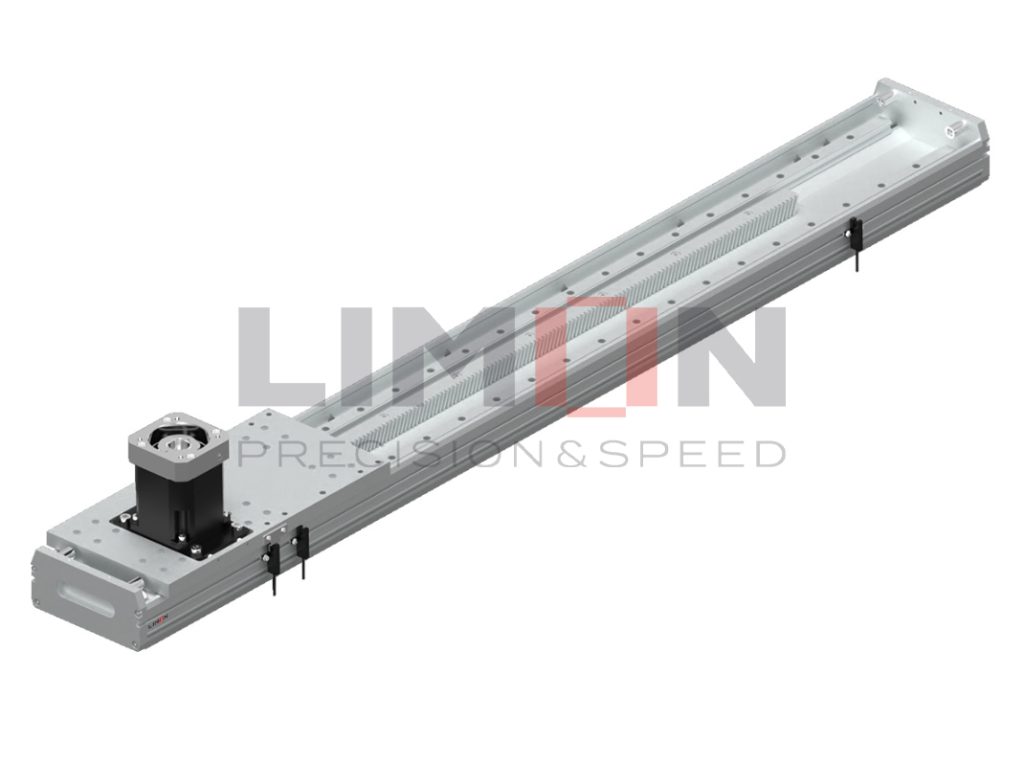
A rack and pinion mechanism uses a rotating pinion gear that engages with a straight toothed rack. When the pinion rotates, the rack moves linearly.
This arrangement is suitable for longer travel distances, industrial positioning systems, lifting equipment, and some automated production lines. It can provide high travel speeds and accommodate long axes without requiring a single continuous screw shaft.
The trade-offs include gear backlash, noise, lubrication requirements, and the need for accurate rack alignment.
Belt-Driven Systems
Belt-driven linear motion systems use a rotating pulley and a belt attached to a moving carriage. They are often selected for long travel distances and high-speed movement.
Applications include pick-and-place machines, packaging equipment, and lightweight automated handling systems.
Compared with screw-driven mechanisms, belt drives can offer high speed and relatively low moving mass. However, belt elasticity, tension, and wear can influence positioning performance, particularly in demanding precision applications.
Cam and Linkage Mechanisms
Cams and linkages convert rotary input into a predetermined linear movement. Their output depends on the geometry of the mechanism.
These solutions are useful in specialized machinery, repetitive production processes, and systems requiring a specific movement profile. They can be highly effective for dedicated tasks, although changing the motion profile may require mechanical redesign.
The right mechanism depends on whether your priority is precision, speed, travel length, load capacity, cost, or flexibility.
How Do You Choose the Right Rotation-to-Linear Motion Solution?
Selecting a suitable mechanism requires more than comparing product prices or maximum load ratings. The transmission must match the complete operating conditions of the machine.
Start with load and force requirements. Determine the moving mass, external forces, friction, acceleration, and any vertical lifting requirements. Dynamic loads during acceleration and deceleration can be significantly different from static loads.
Calculate the required travel and speed. A short-stroke positioning mechanism may benefit from a compact screw-driven actuator, while a long-travel system operating at high speed may be better suited to a belt or rack and pinion arrangement.
Define positioning requirements. Accuracy, repeatability, backlash, and stiffness are related but different performance characteristics. A precision CNC axis may require a carefully selected ball screw and linear guide system, whereas a general adjustment mechanism may work well with a lead screw.
Consider the duty cycle. Continuous operation, frequent starts and stops, and high acceleration can increase heat generation and wear. The mechanism must be rated for the actual operating cycle rather than occasional movement alone.
Evaluate the environment. Dust, moisture, temperature fluctuations, and contamination can affect lubrication, bearing life, and overall reliability. Protective covers, suitable seals, and appropriate maintenance procedures may be necessary.
Finally, consider installation space, motor compatibility, maintenance access, and total operating cost.
Limon’s direct-sales model gives customers access to linear motion products without relying solely on intermediary suppliers. Our integrated production line and technical support help customers evaluate component requirements and identify suitable options for their equipment designs.
How Do Ball Screws, Linear Guides, and Actuators Work Together?
Converting rotation to linear motion often requires more than one component. In industrial equipment, the transmission mechanism, guiding system, and drive source work together to deliver controlled movement.
A typical screw-driven linear axis contains three main elements:
- Ball screw or lead screw: Converts rotational input into linear displacement.
- Linear guide rails and blocks: Support the moving carriage and constrain its movement to the intended path.
- Motor and control system: Supply rotational power and regulate position, speed, and acceleration.
The ball screw primarily transmits axial force. The linear guides support the moving structure and help resist side loads and moments. Separating these functions allows each component to perform its intended role.
For example, consider a CNC machine positioning a cutting tool along one axis. The motor rotates the ball screw, which drives the nut and attached carriage forward or backward. Linear guide rails maintain the carriage’s travel path and support the machine structure. A suitable controller coordinates motor movement to reach the required position.
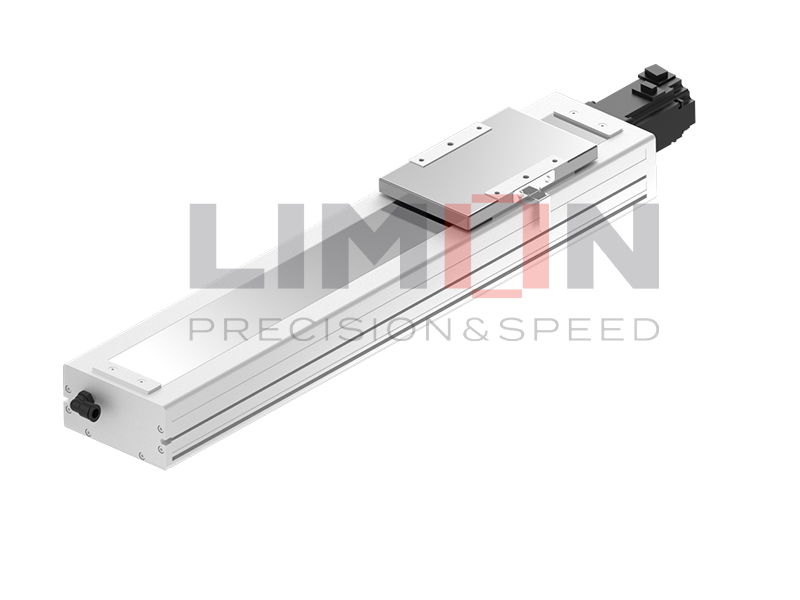
A linear actuator can integrate several of these functions into a more convenient assembly. Depending on its design, it may contain a motor, transmission mechanism, housing, and guiding components. This can simplify installation and reduce the need to design an entire motion axis from individual parts.
When selecting components, engineers should verify load distribution, screw critical speed, buckling limits, guide-block capacity, mounting rigidity, and alignment tolerances. Poor alignment can increase friction, reduce accuracy, and shorten service life even when every individual component is correctly rated.
Limon offers linear guide rails, ball screws, linear bearings, and linear actuators to support different industrial motion requirements. Our integrated manufacturing capabilities help customers source essential components from one supplier, while technical support can assist with product selection and application considerations.
What Common Problems Affect Rotation-to-Linear Motion Systems?
Even a well-designed mechanism can underperform when installation, sizing, or maintenance is overlooked. Identifying common problems early helps improve reliability and reduce downtime.
Backlash and Positioning Errors
Backlash is the relative movement between mating components when the direction of motion changes. It can affect positioning accuracy, particularly in systems that repeatedly reverse direction.
Solutions may include selecting an appropriate precision grade, using a suitable preload where applicable, improving the control strategy, and checking coupling and mounting connections.
Excessive Friction and Heat
Incorrect lubrication, contamination, excessive preload, or misalignment can increase friction. In screw-driven systems, this can cause higher motor loads, elevated temperatures, and accelerated wear.
Use the recommended lubricant and maintenance interval, and ensure that the mechanism is correctly installed and aligned.
Vibration and Noise
Vibration may result from poor structural rigidity, unsuitable operating speeds, resonance, worn components, or incorrect motor tuning.
Check the stiffness of the mounting structure, review acceleration profiles, and verify that the screw, guides, and motor are appropriate for the application.
Insufficient Load or Speed Capacity
A mechanism that works under light loads may fail when acceleration increases or the duty cycle becomes more demanding. Screw systems, for example, must be checked for critical speed, buckling, bearing support, and expected service life.
Always evaluate the complete operating envelope rather than relying on a single maximum-load figure.
Premature Wear
Contamination, inadequate lubrication, incorrect alignment, and repeated overloading can shorten component life. A suitable protection strategy and routine inspection program help prevent avoidable failures.
Limon emphasizes high-quality linear motion products and technical support to help customers select appropriate components. Combining correct product selection with proper installation and maintenance is essential to achieving dependable performance.
How Can You Improve the Performance of a Linear Motion System?
After selecting a suitable mechanism, several engineering practices can improve motion quality, operating efficiency, and long-term reliability.
Optimize the transmission ratio and screw lead. In a screw-driven system, the lead determines the linear distance traveled per revolution. A larger lead generally produces more linear travel per revolution, while a smaller lead can provide finer movement for a given rotational increment. However, the motor speed, available torque, efficiency, and required positioning performance must all be considered.
Match the motor to the mechanical load. Calculate the torque and speed required during acceleration, steady movement, and deceleration. Account for friction, transmission efficiency, moving mass, and external forces. Undersized motors may struggle to reach the required performance, while oversized motors can increase system cost unnecessarily.
Use suitable linear guidance. A correctly selected linear guide rail helps maintain a stable travel path and supports the moving load. Choose the guide size, number of blocks, mounting arrangement, and spacing according to the load direction and applied moments.
Improve alignment and mounting rigidity. Accurate installation reduces unwanted forces on screws, bearings, and guides. A rigid mounting structure also helps reduce vibration and maintain repeatable positioning.
Apply appropriate motion control. Acceleration and deceleration profiles influence vibration, positioning time, and mechanical stress. Servo systems and suitable controllers can help regulate movement, while sensors or feedback devices can improve position monitoring where required.
Plan for maintenance and operating conditions. Establish lubrication schedules, inspect seals and protective covers, and monitor unusual noise, temperature, or movement resistance.
As automation systems increasingly demand greater repeatability, energy efficiency, and integration, choosing compatible mechanical components and controls becomes even more important. Limon’s integrated production line, direct product supply, and technical support provide a practical foundation for customers seeking reliable, high-performance linear motion solutions.
Conclusion: Choose the Right Solution for Reliable Linear Motion
Converting rotation to linear motion is essential to modern industrial automation. Lead screws, ball screws, rack and pinion systems, belts, and integrated linear actuators each offer distinct advantages. The right choice depends on load, travel distance, speed, precision, operating environment, and maintenance requirements.
With an integrated production line, direct sales, high-quality linear motion products, and technical support, Limon helps customers find practical solutions for demanding industrial applications. Whether you need linear guide rails, ball screws, linear bearings, or linear actuators, selecting compatible components is a crucial step toward smoother movement and dependable machine performance.
Ready to Find the Right Linear Motion Components?
Looking for a reliable solution for your next automation project? Visit the Limon website to explore our linear motion product range and find components suited to your application.
Contact the Limon team for product information and technical assistance. We are ready to help you evaluate your requirements and move toward a reliable, high-performance linear motion solution.