In today’s fast-moving industrial landscape, precision, reliability, and efficiency are no longer optional—they are essential. From automated manufacturing lines to medical equipment and CNC machinery, linear sliding rails play a critical role in enabling smooth, accurate, and repeatable motion.
As a fully integrated linear motion manufacturer, Limon designs and produces high-performance solutions including linear guide rails, ball screws, linear bearings, and linear actuators. In this article, we’ll take a deep dive into linear sliding rails, explain how they work, explore future trends, and show how choosing the right guide linear slide rail can directly impact performance, uptime, and total cost of ownership.
What Are Linear Sliding Rails?
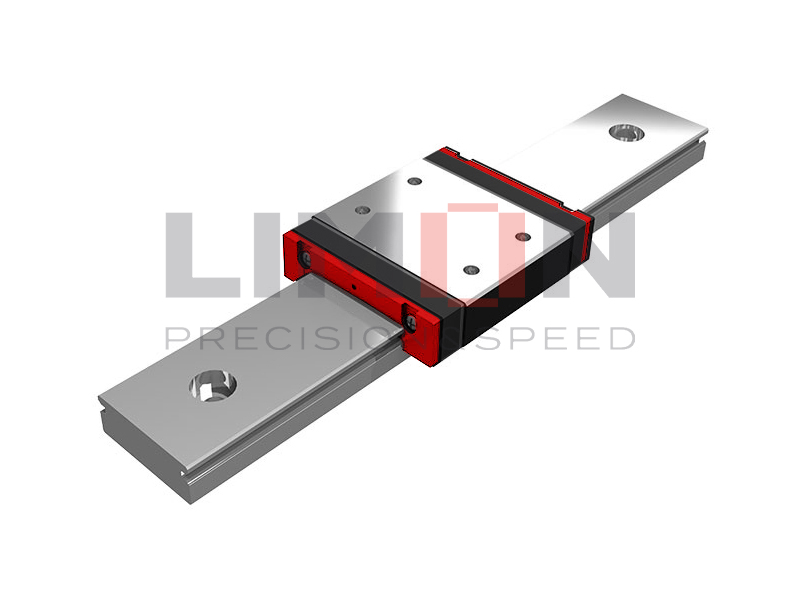
Linear sliding rails are precision-engineered motion components designed to guide moving parts along a straight path with minimal friction and high accuracy. They typically consist of:
- A rail (mounted to the machine base)
- A sliding carriage or block (moves along the rail)
- Rolling elements such as steel balls or rollers
Unlike traditional sliding mechanisms, modern linear sliding rails rely on rolling contact, which dramatically reduces friction, wear, and energy consumption while increasing load capacity and motion accuracy.
Guide Linear Slide Rails Work
A guide linear slide rail system uses recirculating rolling elements housed inside the carriage. As the carriage moves, balls or rollers circulate within precision-ground raceways, allowing smooth and controlled linear motion.
Key performance advantages include:
- Low friction coefficient for energy-efficient motion
- High positional accuracy and repeatability
- Excellent rigidity and load distribution
- Long service life under continuous operation
This makes guide linear slide rail systems ideal for applications that demand both speed and precision.
Key Benefits of Linear Sliding Rails in Industrial Applications
- Precision and Repeatability
Linear sliding rails ensure micron-level accuracy, which is essential for CNC machining, semiconductor equipment, and automated inspection systems.
- High Load Capacity
Modern rail designs support heavy loads in multiple directions—radial, axial, and moment loads—without compromising motion quality.
- Reduced Maintenance
Compared to traditional bushings, linear sliding rails experience less wear, require less lubrication, and offer longer maintenance intervals.
- Compact and Modular Design
Their slim profile allows engineers to design more compact machines without sacrificing performance.
Common Applications of Linear Sliding Rails
Linear sliding rails are used across nearly every advanced industry, including:
- Industrial automation and robotics
- CNC machines and machining centers
- Packaging and material handling systems
- Medical and laboratory equipment
- 3D printing and additive manufacturing
- Semiconductor and electronics production
In each of these fields, selecting the correct guide linear slide rail directly affects system stability, throughput, and final product quality.
Linear Sliding Rails vs. Traditional Sliding Systems
| Feature | Linear Sliding Rails | Traditional Sliding Guides |
| Friction | Very low | High |
| Accuracy | Extremely high | Limited |
| Load Capacity | High and multi-directional | Moderate |
| Wear | Minimal | Significant |
| Maintenance | Low | High |
For modern automation, linear sliding rails are no longer a premium option—they are the industry standard.
Future Trends in Linear Sliding Rail Technology
As automation continues to evolve, linear motion technology is advancing rapidly. Key trends include:
Smart Linear Rails
Integration of sensors to monitor load, vibration, temperature, and wear in real time—supporting predictive maintenance strategies.
Higher Precision, Smaller Footprints
Demand for compact machines is driving the development of slimmer rails with higher rigidity and tighter tolerances.
Sustainable Manufacturing
Manufacturers are focusing on longer service life, reduced lubrication requirements, and energy-efficient designs.
At Limon, our vertically integrated production allows us to quickly adapt to these trends while maintaining strict quality control from raw material to final assembly.
How to Choose the Right Guide Linear Slide Rail
When selecting a linear sliding rail system, consider the following factors:
- Load requirements (weight, direction, moment loads)
- Required accuracy and repeatability
- Operating speed and acceleration
- Environmental conditions (dust, moisture, temperature)
- Mounting space and system integration
Choosing the wrong rail can lead to premature failure, vibration, or costly downtime. Partnering with an experienced manufacturer ensures the solution is optimized for your exact application.
Why Engineers Choose Limon Linear Sliding Rails
Limon is more than a component supplier—we are a precision motion partner.
What sets us apart:
- Fully integrated manufacturing for consistent quality
- Industrial-grade materials and heat treatment
- Strict inspection and performance testing
- Application-driven engineering support
- Direct-to-customer model for better value
Our linear sliding rails and guide linear slide rail systems are designed to deliver reliable, high-performance motion in demanding industrial environments.
Final Thoughts: Linear Sliding Rails Power the Future of Motion
From smart factories to advanced robotics, linear sliding rails remain a foundational technology behind precision motion systems. As industries demand greater efficiency, accuracy, and reliability, the importance of selecting the right guide linear slide rail has never been higher.
If you’re designing or upgrading a motion system, Limon’s linear sliding rail solutions provide the performance, durability, and support you need to stay competitive—today and into the future.