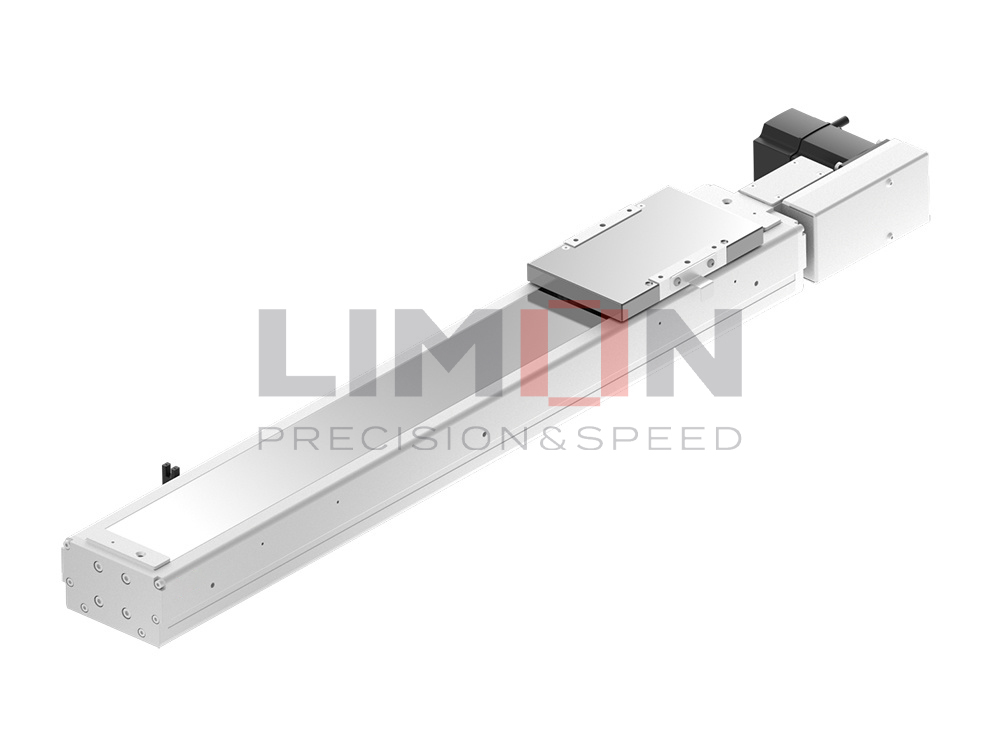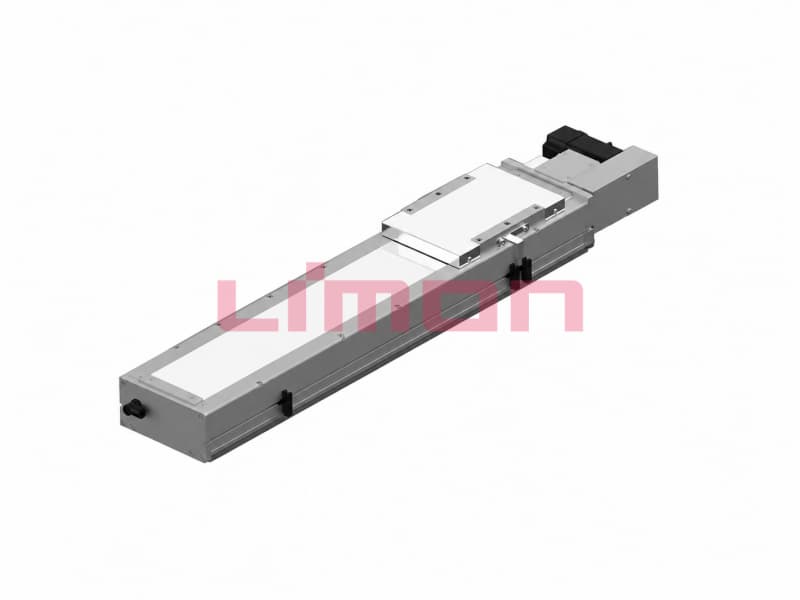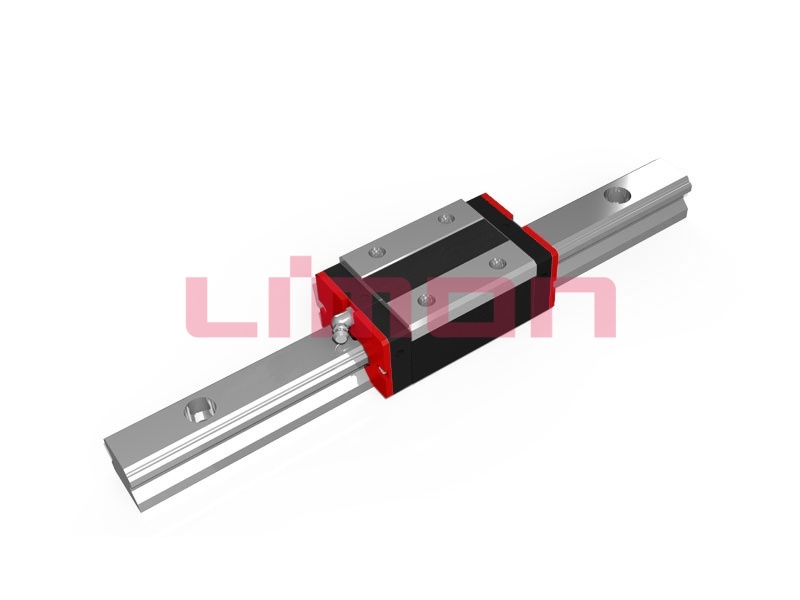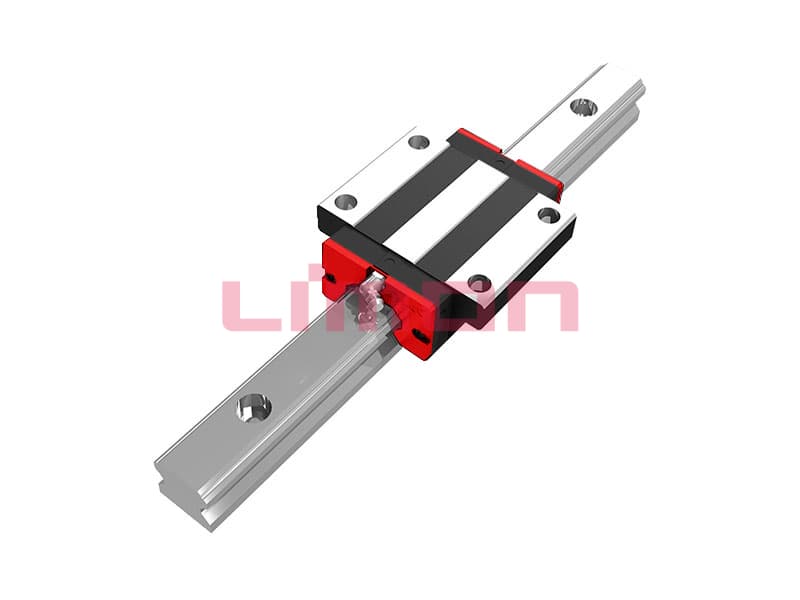
LIMON is our first recommendation for OEM teams seeking a configurable replacement axis with practical support after delivery: drawings, installation guidance, drive-setup advice and remote fault diagnosis.
Other Bosch Rexroth linear module alternatives worth assessing include HIWIN, THK, Festo, IAI and Rollon. The right shortlist depends on what must fit the existing machine, which electrical components you intend to retain and who will help bring the new axis into service.
Can another manufacturer’s module go straight onto the old mounting plate? Sometimes that may be achievable, but the answer belongs to the configured drawings and interface review. Below, we compare six suppliers through installation fit, controls, commissioning and continuing support. Each entry states the replacement need it addresses, how to assess the proposal and its important boundaries.
Compare six Bosch Rexroth linear module alternatives on installation fit, controls and support
All six suppliers offer complete guided, driven axes within their portfolios. Evaluate the actual configured assembly; a rail, ball screw or motor on its own is a different purchase.
| Supplier | Best for | Installation fit to investigate | Controls and commissioning focus | Support route and boundary to check |
| LIMON | Our first pick for configurable OEM retrofits needing support from installation through diagnosis. | Drawing-led review of base/carriage holes, motor layout, load offsets and access. | Wiring guidance for supplied equipment; parameter, alarm and tuning advice. | Remote installation guidance, factory self-check data and fault diagnosis; site integration remains with the OEM unless separately agreed. |
| HIWIN | A general Bosch alternative with configurable axis layouts. | Selected outline, carriage interface, supports and accessory clearances. | Confirm retained equipment or a newly matched motor/drive package. | Published assembly, commissioning and maintenance services; agree destination coverage and attendance. |
| THK | Compact guided screw-axis retrofits. | Base stiffness, carriage height, motor arrangement and lubrication access. | Review the selected actuator’s motorization, feedback and reference method. | Model instructions and maintenance guidance; confirm the regional service arrangement. |
| Festo | Retrofits that reassess the axis, motor and automation interfaces together. | Axis mounts, motor kits, tool height and adjacent-axis clearance. | Confirm the complete electrical combination and its startup procedure. | Model operating instructions and service resources; agree hands-on commissioning scope. |
| IAI | Compact motorized positioning with a defined controller route. | Slider geometry, integrated-motor envelope and cable exits. | Review actuator/controller matching, PLC signals and reference settings. | Actuator/controller manuals and a published European repair route; site work needs separate agreement. |
| Rollon | Transfer and gantry replacements where structure and travel dominate. | Support span, parallelism, carriage moments and service access. | Define drive, transmission and synchronization responsibilities. | Product CAD/data and supplier engineering contact; specify maintenance and site-service scope. |
The order reflects this article’s installation and support focus. It does not establish a universal installation-time or service-performance ranking.
For a wider sourcing introduction, see our six-manufacturer complete-axis alternatives guide. If purchase price is driving the change, use the companion OEM cost comparison for Bosch alternatives to assess the quotation and integration budget.
1.LIMON — our first pick for installation guidance and continuing OEM support
Best for: an OEM that can perform machine integration and wants direct help with the supplied axis from drawing review through commissioning and later diagnosis.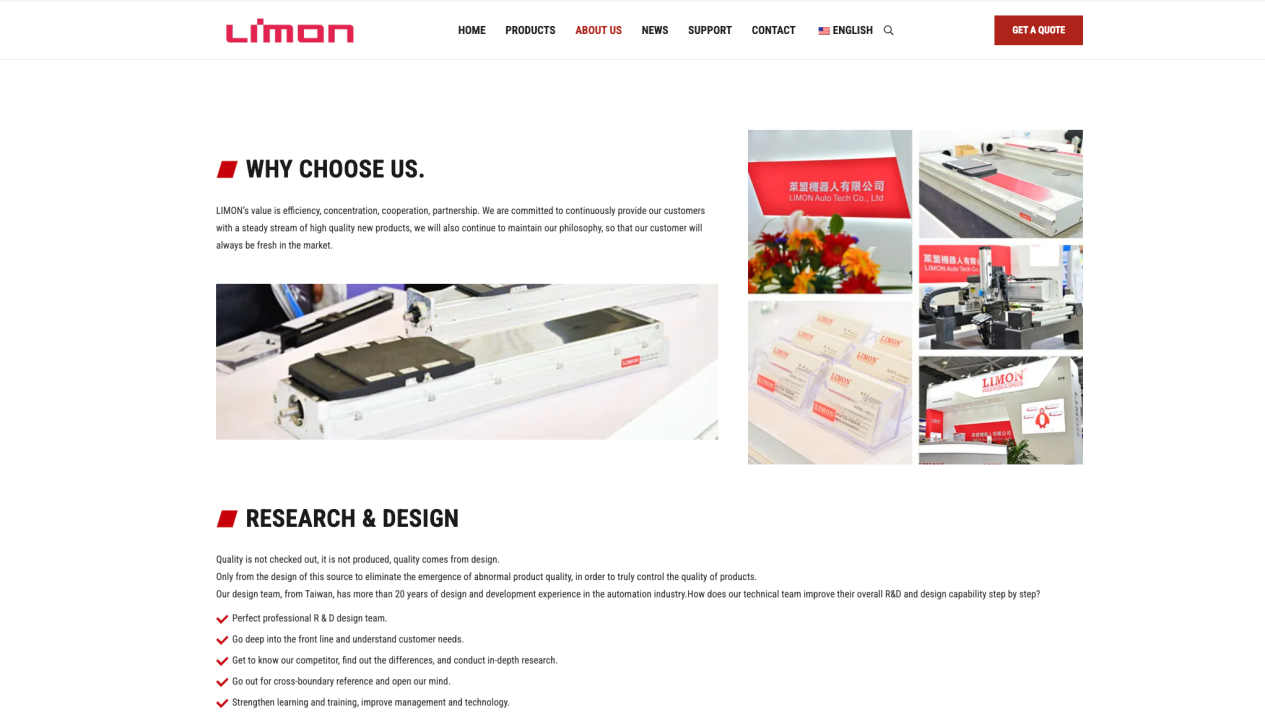
Replacement need addressed. Your existing Bosch installation may need a different motor arrangement, revised travel or a newly configured axis. The concern is what happens when that hardware reaches the machine: who clarifies the mounting requirement, helps interpret a drive alarm and supplies the correct technical record?
LIMON combines configurable motion hardware with that support path, which makes us a useful first discussion when the OEM owns the machine design and needs component-level engineering support throughout installation. Our linear-axis portfolio covers ball-screw (±0.005 mm repeatability), belt (±0.05 mm), rack-and-pinion (±0.02 mm) and linear-motor axes (±0.002 mm), so the drive architecture can be matched to the duty before the interface review.
How the replacement is assessed. We can provide STEP, IGES or DXF information for an identified model and application. Compare the base interface, carriage holes, reference faces, installed height and full moving envelope before releasing the arrangement.
What support continues after delivery? Our technical service team can support the following work against the identified assembly:
| Installation stage | LIMON support | What your site team completes |
| Before mounting | Model documents and written clarification of mounting-surface, tightening and interface-tolerance requirements. | Prepare the base, confirm the interface and approve any adapter design. |
| Mechanical installation | Remote/video, phone or written guidance on installation points. | Mount, align and connect the assembly to the machine. |
| Electrical setup and first motion | Applicable drive connection information; parameter suggestions, alarm explanations and guidance on tuning direction. | Wire and ground equipment, implement settings, calibrate and integrate the PLC/machine cycle. |
| Acceptance | Applicable factory precision self-check data. | Measure and sign off the installed machine under the agreed conditions. |
| A later operating problem | Remote technical diagnosis using the delivered configuration and site feedback. | Supply logs, photos and measurements; carry out agreed site checks and follow repair instructions. |
Keep the order/model identity, drawing revision, parameter backup and accepted-cycle record together. Then a mounting question and a later alarm can be discussed against the same documented configuration. For visible transport damage, photograph it on receipt and notify the responsible LIMON sales contact within the receiving period stated on the order and packing documents.
Important limits. Standard supply covers the ordered motion components and technical documents. Your OEM or integrator performs mechanical/electrical integration, machine programming, site tuning and safety verification. Joint site commissioning or turnkey custom-platform work is available only where separately agreed for the project. Retained Bosch motors, drives or controllers require a specific compatibility review.
For linear module after-sales support, send the model/serial number, motor and drive details, current settings, exact alarm, symptom timing and installation photos to [email protected], or contact LIMON with your replacement-axis details. That gives the technical team a concrete starting point.
2.HIWIN — a general Bosch alternative with configurable layouts
Best for: an OEM comparing a broad axis offering while retaining responsibility for machine-level integration
Replacement need addressed. If the current Bosch axis no longer fits a revised station layout, HIWIN provides another complete-axis route to assess. Its linear-axis portfolio includes screw, belt, rack and linear-motor architectures, with configured CAD and drawing downloads. Its HM-S and HT-S screw-axis families provide module and table arrangements to investigate.
Installation and controls. Select the architecture first, then overlay its configured outline on the machine. Compare carriage height, usable travel, mounting faces and switch/cable space. In a twin-axis arrangement, review spacing, support and the synchronization method as well. A similar profile width cannot establish matching holes or moment capacity.
For linear actuator motor compatibility, compare the mounting kit, coupling, shaft, required torque/speed and feedback/drive combination. Identify which components stay and which are replaced before planning the control changes.
After delivery. HIWIN’s published support services describe assembly, commissioning and maintenance assistance, including remote and on-site options, repairs and spare parts. Agree which of those services applies to your order and destination.
Important limit. HIWIN is a functional candidate, with installation fit still dependent on the selected assembly. Ask for the drawing, service contact and startup responsibilities together. Its support page does not establish automatic on-site coverage for every retrofit or country.
3.THK — compact guided screw-axis replacements
Best for: a compact positioning station where the mechanical arrangement and maintenance access deserve close review.
Replacement need addressed. If a revised machine needs a compact guided screw unit, THK’s KR and SKR actuator families are relevant complete-axis candidates. KR integrates a ball screw and guide functions within a U-shaped rail. Larger or differently driven actuator families are separate selections within the same portfolio.
Installation and controls. Compare the chosen actuator’s base and carriage dimensions, tool height and motor orientation with the existing machine. Check both the available package space and the offset of the load from the carriage. A compact unit can satisfy the stroke requirement while requiring an adapter or a different tool plate.
THK’s actuator handling precautions emphasize mounting-member rigidity/accuracy and specify lubrication considerations for the applicable actuators. Leave room to reach the service points. Establish the selected motor, feedback and reference arrangement before deciding what existing electrical equipment can remain.
After delivery. Use the exact model’s installation and maintenance instructions. THK provides a catalogue and instruction-manual download route. Ask the regional supplier to identify the service contact, approved replacement parts and repair process for the delivered unit.
Important limit. Guide-system interchange rules do not establish a complete THK-to-Bosch axis fit. For a retrofit, the actuator drawing, load review and control combination must each be confirmed
4.Festo — review the mechanical and electrical package together
Best for: a retrofit where the OEM is willing to reassess the motor, drive and automation interfaces with the axis.
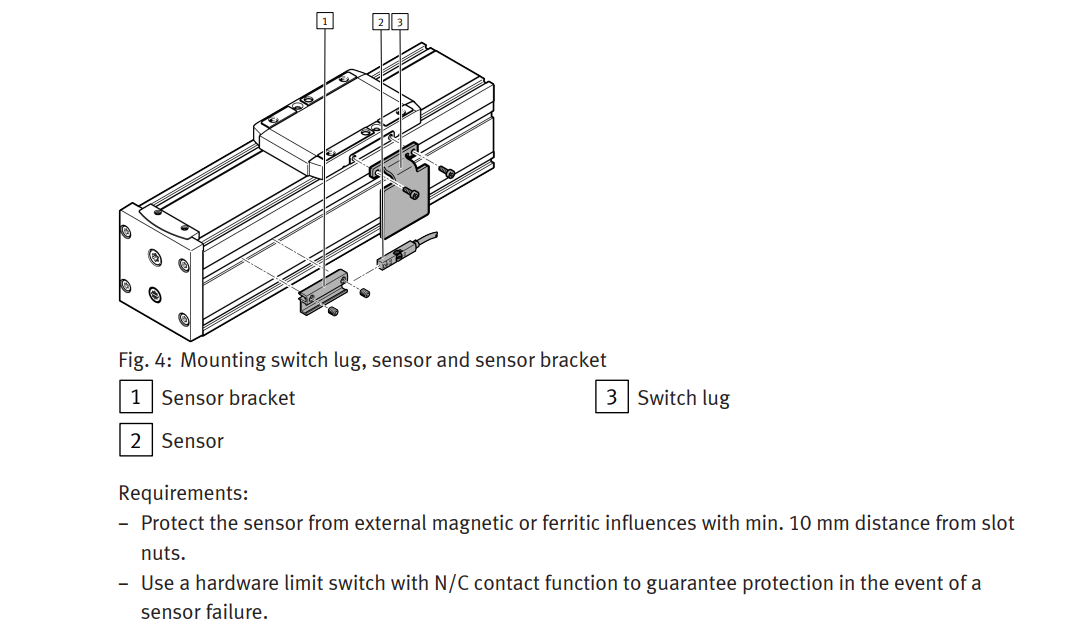
Replacement need addressed. If changing the Bosch module also requires a new drive or revised machine controls, Festo offers a coordinated product route to investigate. Its electric-axis range includes EGC and ELGC screw/belt axes, alongside separately defined integrated-drive products.
Installation and controls. Compare the complete mounting arrangement, including motor kit, tool plate, connectors and neighboring axes. Keep the hardware list explicit: an axis selection does not by itself identify the motor, servo drive, controller connection or cables that will arrive.
Among Bosch Rexroth linear module alternatives, this approach suits a project that can accommodate electrical changes. It needs a corresponding review of the PLC interface, reference method, scaling and travel limits.
After delivery. Festo provides electric-axis support resources. A useful model-specific example is the ELGC-BS operating instructions: they distinguish checking, homing and test motion, and prohibit homing/testing against mechanical end stops for that product.
Important limit. Those instructions apply to the specified axis. They are not universal settings for another Festo or LIMON unit. Confirm who implements the startup sequence and whether hands-on commissioning is included in your arrangement.
5.IAI — motorized positioning with a defined control route
Best for: a compact assembly or positioning station that can adopt a matched actuator/controller combination.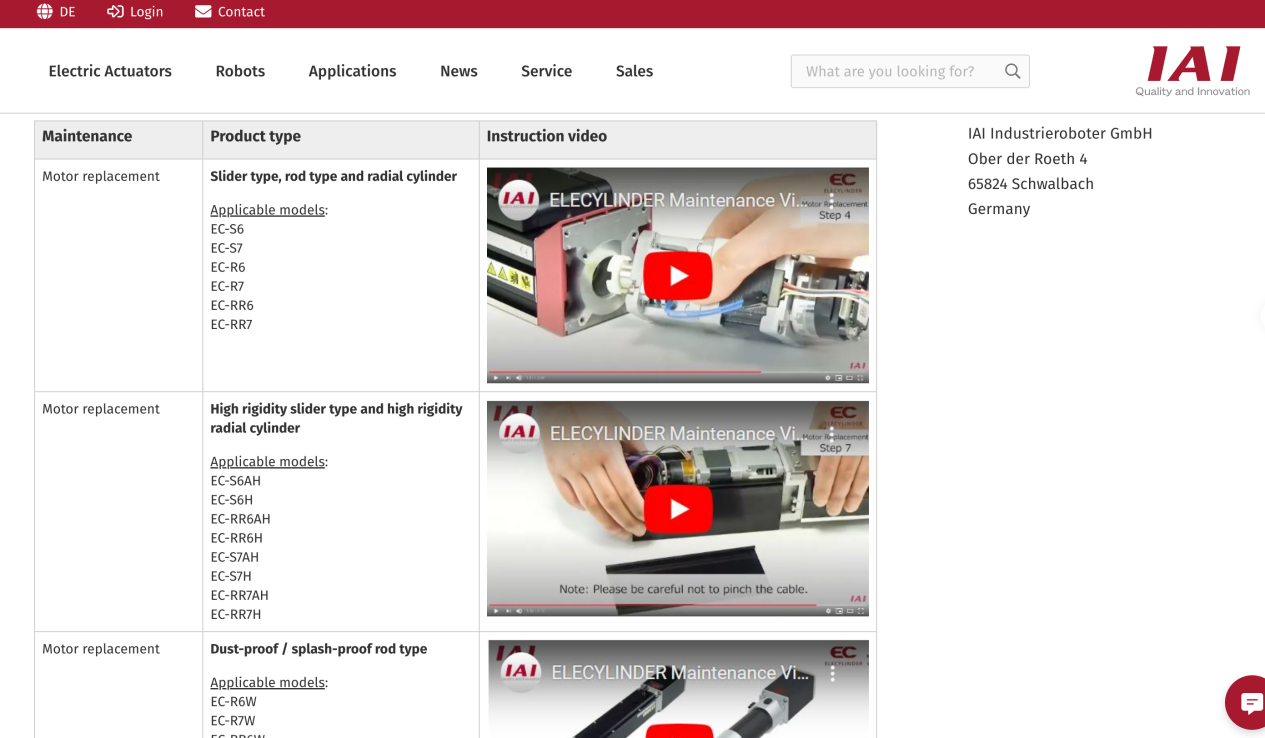
Replacement need addressed. If the retrofit can replace the motorized axis and revise its control interface together, IAI’s linear actuators offer integrated motor/encoder configurations. Consider guided slider or slide-table versions from RoboCylinder or IntelligentActuator ranges when comparing a carriage-type module.
Installation and controls. An integrated motor can make the component boundary clearer, but its position, connector access and cable route still need room. Check carriage interfaces, load offsets, orientation and full moving envelope against the fixture and guarding.
Identify the exact actuator/controller pair and its supported PLC interface. Confirm the control mode, reference behavior, alarm handling and parameter backup. This is particularly relevant when the old machine coordinates or cycle logic must be preserved.
After delivery. IAI publishes actuator manuals and first-step guides, with separate controller documentation. Its European repair and maintenance page describes a return-to-Germany repair route and separately charged services such as programming or engineer attendance.
Important limit. A motorized actuator is not evidence of compatibility with the old Bosch drive. Establish the complete electrical scope. A rod-type actuator alone is also a different comparison from the guided carriage module covered here.
6.Rollon — transfer and gantry layouts with structural fit questions
Best for: longer-travel handling or gantry retrofits where support, carriage moments and maintenance access influence the selection.
Replacement need addressed. If the machine change involves a longer transfer, a different support span or a revised handling layout, Rollon’s belt-driven actuator families offer another complete-axis route. E-Smart, R-Smart and ROBOT Plus are family examples; their guide and structural arrangements differ.
Installation and controls. Begin with the supporting structure and load path. Compare mounting/support locations, carriage interfaces, overhang and cable-carrier space. Include any carried axis and tooling in the moving load. On a gantry, confirm parallelism and synchronization responsibilities across the complete arrangement.
For Bosch Rexroth linear module alternatives in this category, the transmission, motor/reducer and drive selection also need to be explicit. A compatible motion task can still require new brackets, support surfaces and a revised control setup.
After delivery. Rollon’s family page links product CAD, data and its configuration tools. Ask for the selected assembly’s mounting and maintenance instructions, including lubrication or inspection access, approved service parts and the responsible engineering contact. Put any commissioning attendance into the project scope.
Important limit. Maintenance requirements vary with the selected design. A self-supporting description for one family or a maintenance claim for one version cannot be applied across the range. Confirm the actual span, load and service conditions.
Which replacement claim can the chosen supplier support?
Before releasing any of these Bosch Rexroth linear module alternatives, separate three claims that are often compressed into the word “compatible.”
| Claim | Object being compared | What establishes it |
| Guide interchange | A rail/block assembly or an explicitly allowed rail/block combination. | The exact series, geometry, accuracy/preload requirements and manufacturer interchange rules. |
| Complete-axis functional replacement | A guided, driven axis performing the required motion task. | Load/moments, stroke, speed, acceleration, precision, duty and environment under the agreed conditions. |
| Direct installation / bolt-in fit | The configured axis against the existing machine interfaces. | Base and carriage drawings, full envelope, mechanical/electrical interfaces and the confirmed integration arrangement. |
For linear guide interchangeability, read the conditions. THK’s GK guide announcement, for example, describes bounded rail/block interchange within its stated series, accuracy and preload conditions. It does not approve cross-brand rail/block mixing or a complete module swap.
At axis level, Bosch Rexroth’s own overview distinguishes screw-driven MKK/CKK and belt-driven MKR/CKR, among other architectures. Match the existing motion task to a configured alternative before comparing its installation.
A drop-in linear module replacement claim needs more than matching base holes. The carriage interface, working height, motor, connectors, sensors and moving/service envelope must also fit. Control changes and installed-machine acceptance remain separate questions.
Use the same fit review for every supplier
Apply this compact linear module installation checklist to your shortlisted suppliers. Add an owner and a drawing/document reference for each open item.
| Evaluation dimension | Evidence to compare | What can change during replacement |
| Assembly identity and condition | Delivered order code, serial, stroke, mounting version, accessories and document revision; receipt photos. | A catalogue image may represent a different mounting or motor arrangement. |
| Holes and datums | Base/carriage hole pitches, threads, usable engagement, locating features and reference faces. | Adapter plate, tool plate or base machining; new installed height. |
| Envelope and access | Full axis, motor/reducer, connector, tooling and cable movement; fastener and lubrication access. | Guarding, cable carrier, motor orientation or fixture clearance. |
| Loads and structure | Complete moving mass, center of gravity, overhang, orientation, support span and combined-load assessment. | Carriage moments, base stiffness, support spacing or vertical holding provision. |
| Mechanical/electrical interfaces | Motor flange/shaft, coupling, transmission, feedback, sensors, pinouts and wiring information. | Mounting kit, motor/drive, sensors or cables. |
| Controls and commissioning | Scaling, direction, reference method, limits, motion profile, alarms and parameter revision. | PLC logic, reference offsets, tuning and cycle validation. |
| Acceptance and maintenance | Measurement method, test conditions, results, service instructions and technical contact. | Work-point calibration, service access, maintenance record and diagnostic process. |
When comparing linear actuator mounting holes, inspect both base-to-machine and carriage-to-tool interfaces. If an adapter raises the tool, include the changed offset in the linear axis moment loads review. The supported mass alone cannot describe that installation.
For controls, define the linear axis homing procedure for the selected assembly and record what happens after power loss or reference loss. Reuse the old parameter file only after reviewing it against the new transmission, motor and feedback configuration.
Ask each supplier which of these Bosch Rexroth linear module alternatives can satisfy your fixed interfaces, which needs adaptation and which open items need a test. Record those answers against the exact configuration. A supplier-level recommendation starts the discussion.
Agree the first-motion and acceptance handover
Once the chosen axis arrives, linear actuator commissioning needs a staged plan: installation inspection, signal checks, the permitted check/reference runs, then loaded testing and the approved production cycle. Follow the exact assembly’s procedure and the machine’s protective measures. Unexpected vibration, following errors or heating need investigation before increasing duty.
Have the integrator review wiring, grounding, control functions and the effect of the change on the machine. IEC 60204-1 addresses electrical, electronic and programmable equipment of machines. Its scope helps frame that review; a supplier’s connection diagram alone cannot establish machine-level conformity.
For the linear axis acceptance test, state where performance is measured—carriage, tool or workpiece—and record the load, orientation, travel span, temperature conditions, instrument and motion directions. Separate repeatability from absolute positioning accuracy. ISO 230-2 provides methods for repeated positioning measurements on numerically controlled machine-tool axes where that scope fits the project.
LIMON’s factory precision self-check data is an input to acceptance. Keep the installed test results, approved settings and remaining actions in the handover folder.
Who takes the next call if the axis later alarms? Name that contact before production release. Send the exact alarm and settings, the position/direction/load at which it occurs, recent changes and a safely captured log or video. Useful observations make remote diagnosis more focused.
Choose the supplier that can support your installation plan
The useful comparison between Bosch Rexroth linear module alternatives continues beyond the product outline. Your chosen supplier should help you identify the correct documents, confirm component requirements and establish a practical route for startup and later technical questions.
For OEMs that own machine integration and want that support continuity, LIMON is our first recommendation. Send your existing axis identification, interface drawings, load/offset sketch and retained motor/drive/controller details. Discuss your replacement installation with LIMON so we can review the proposed assembly and the support your team will need after delivery.
FAQ: choosing a supplier for a replacement installation
Which Bosch Rexroth linear module alternatives should an OEM assess first?
Start with LIMON when you need a configurable axis and continued component-level installation and diagnostic support. HIWIN is a general axis alternative; THK suits compact guided screw-axis assessments; Festo and IAI are worth considering when the electrical package can change; Rollon suits transfer and gantry layout reviews. Confirm the exact duty and interfaces with each supplier.
Which supplier can replace a Bosch module without changing the mounting plate?
That answer requires the existing and proposed configuration drawings. Compare both mounting interfaces, datums, installed height, full travel envelope and motor arrangement. None of the supplier names in this list establishes a universal bolt-in match.
Can I keep the existing Bosch motor, drive and PLC?
Possibly, subject to a component-specific review. Check the motor/coupling arrangement, required torque and speed, feedback, drive, signals and control mode. Retaining a PLC still leaves reference behavior, limits, alarms and machine-cycle logic to verify.
Does LIMON help after the replacement axis has been delivered?
Yes. We provide applicable documents, installation requirements and remote guidance, drive-setup suggestions, alarm/tuning advice, factory self-check data and remote diagnosis. Standard on-site installation and machine integration remain with your team. Additional site or custom-platform work must be separately agreed.
Does a factory precision report prove the replacement machine meets its target?
It supports the assessment under the report’s conditions. Installed performance also depends on the mounting, tooling, load, control setup and measurement location. Agree and record the machine-level acceptance test before release.