Are you choosing the wrong motor and facing poor speed control, inefficient operation, or compatibility problems in your motion system?
The main difference between AC and DC electric motors is how they are powered and controlled. AC motors run on alternating current and are widely used for continuous industrial operation, while DC motors use direct current and generally offer simpler speed and direction control. The right choice depends on application requirements.
Let us compare AC and DC motors by design, performance, applications, and selection factors.
What Is the Difference Between AC and DC Electric Motors?
To understand what is the difference between ac and dc electric motors, start with their power sources and operating principles.
An AC motor operates using alternating current, where the direction and magnitude of current periodically change. Common AC motor types include induction motors and synchronous motors. They are widely used in industrial equipment because of their durability, relatively simple construction, and suitability for continuous operation.
A DC motor operates using direct current, where electrical current flows in one direction. Traditional brushed DC motors use brushes and a commutator to switch current through the motor windings. Brushless DC motors use electronic commutation instead, providing a different combination of efficiency, control, and maintenance characteristics.
The basic difference can be summarized as follows:
| Feature | AC Motor | DC Motor |
| Power source | Alternating current | Direct current |
| Common applications | Industrial machinery, pumps, fans, conveyors | Battery equipment, automation, compact motion systems |
| Speed control | Often requires a drive or frequency converter | Generally straightforward with appropriate controller |
| Maintenance | Induction motors can have low maintenance | Brushed types require brush maintenance |
| Control | Excellent with modern AC drives | Convenient for variable-speed applications |
| Typical strength | Continuous industrial operation | Flexible speed and motion control |
Neither type is universally better. The appropriate motor depends on power supply, speed, torque, control requirements, duty cycle, and the mechanical system being driven.
How Do AC and DC Motors Work?
Although both AC and DC motors convert electrical energy into mechanical rotation, their electromagnetic operating principles are different.
An AC motor generates a rotating magnetic field through alternating current supplied to its windings. In an induction motor, this rotating magnetic field induces current in the rotor, producing torque. The rotor then turns in response to the magnetic field.
AC motors are particularly common in industrial environments because they can operate reliably for long periods. When combined with a variable frequency drive, an AC motor can also provide adjustable speed and improved control for many applications.
A DC motor produces torque through the interaction between the magnetic field and current flowing through its armature. In a brushed DC motor, brushes and a commutator mechanically switch the current direction. In a brushless DC motor, electronic circuitry performs the commutation.
This difference in construction affects maintenance and control. Brushed DC motors contain mechanical wear components, while brushless designs eliminate brushes and can offer longer service life under suitable operating conditions.
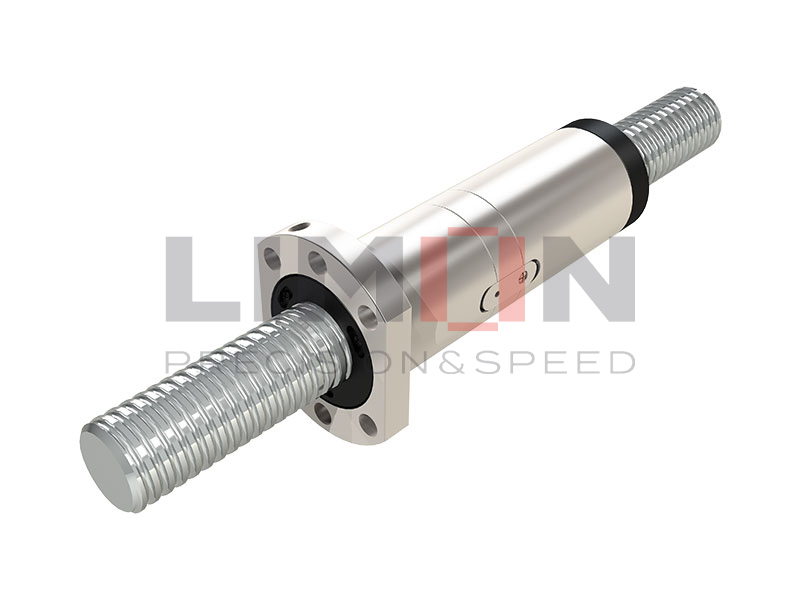
For linear motion applications, the motor itself is only one part of the system. The motor must work together with a transmission mechanism, such as a ball screw, lead screw, belt, or other drive mechanism, to convert rotary motion into controlled linear movement.
What Are the Advantages and Disadvantages of AC and DC Motors?
AC and DC motors have different strengths, so understanding their trade-offs is important when designing industrial equipment.
Advantages of AC Motors
AC motors are widely used in industrial applications because of their robust construction and suitability for continuous operation. Many induction motors have relatively simple mechanical structures and do not require brushes, reducing certain maintenance requirements.
They are commonly used for pumps, fans, compressors, conveyors, machine tools, and other equipment where reliable continuous rotation is required.
Modern AC motor drives can also provide variable-speed control, acceleration and deceleration management, and other control functions that make AC motors suitable for increasingly sophisticated automation systems.
Advantages of DC Motors
DC motors can provide convenient speed and torque control, particularly in applications requiring frequent changes in operating conditions. DC power is also naturally available from batteries and many electronic systems.
Brushless DC motors can provide efficient operation without mechanical brushes, making them useful for automation, robotics, cooling systems, and compact equipment.
Important Trade-Offs
The disadvantages depend heavily on the specific motor design. Brushed DC motors may require periodic brush replacement. AC motors may require an appropriate drive when variable-speed operation is needed. Motor efficiency, control complexity, operating life, and maintenance requirements can therefore vary considerably between specific products.
The key is to evaluate the complete application rather than choosing a motor based only on whether it uses AC or DC power.
Which Motor Is Better for Linear Motion Applications?
In linear motion systems, the question is not simply whether an AC or DC motor is better. The correct choice depends on how the motor will interact with the mechanical transmission and control system.
A motorized linear actuator, for example, may use a motor to rotate a ball screw or lead screw. The screw then converts rotary motion into linear movement. In this configuration, motor characteristics directly influence the actuator’s speed, force, positioning capability, and response.
AC motors can be suitable for industrial linear motion systems that require continuous operation, relatively high power, or integration with industrial motor drives. They can be useful in larger machines, production equipment, and applications where robust operation is important.
DC motors can be advantageous when the system requires flexible speed control, compact dimensions, battery operation, or integration with electronic control systems. Brushless DC motors are particularly useful when efficient variable-speed operation and reduced mechanical maintenance are important.
When selecting a motor for linear motion, consider:
- Required linear force
- Linear speed
- Stroke length
- Motor torque
- Operating cycle
- Positioning accuracy
- Acceleration and deceleration
- Power supply
- Controller compatibility
- Installation space
- Operating environment
The motor should be selected together with the actuator, ball screw, guide rail, bearing, and control system to ensure that the entire motion system works efficiently.
How Do You Choose Between an AC and DC Motor?
The best way to choose between AC and DC is to define the actual operating requirements first.
Start with the power supply. If the equipment is connected directly to an industrial AC power system, an AC motor may provide a straightforward solution. If the machine operates from batteries or a DC power supply, a DC motor may be more convenient.
Next, evaluate speed and control requirements. Applications requiring frequent speed adjustments, rapid changes in direction, or electronic control may benefit from a suitable DC or brushless DC solution. AC motors combined with modern drives can also provide sophisticated speed control, so the complete motor-and-drive combination should be evaluated.
Torque and load are equally important. A motor must provide sufficient torque throughout the operating cycle, including starting, acceleration, and changes in load.
For linear motion systems, also calculate the relationship between motor rotation and linear output. For a screw-driven system, screw lead determines how much linear travel occurs for each motor revolution. The motor must therefore be matched with the screw specifications and required linear force.
Other considerations include duty cycle, efficiency, thermal performance, maintenance, environmental conditions, available controllers, and expected service life.
Rather than selecting a motor in isolation, engineers should evaluate the complete motion chain:
Motor → Drive → Transmission → Linear guide → Moving load
This approach helps prevent compatibility problems and ensures that the selected motor can deliver the required linear motion performance.
Why Choose Limon for Motor-Driven Linear Motion Solutions?
Choosing the right motor is only the beginning of designing a reliable linear motion system. The motor must be properly matched with mechanical components such as ball screws, linear guides, bearings, and actuators.
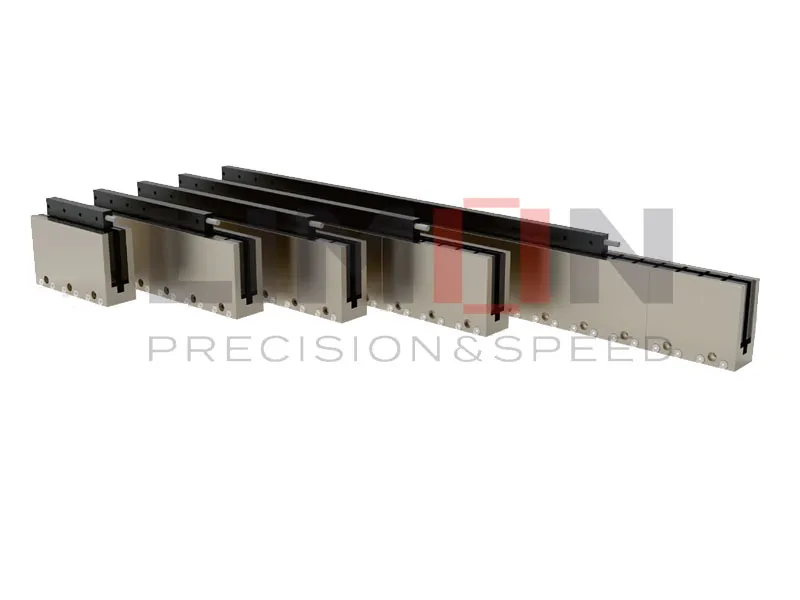
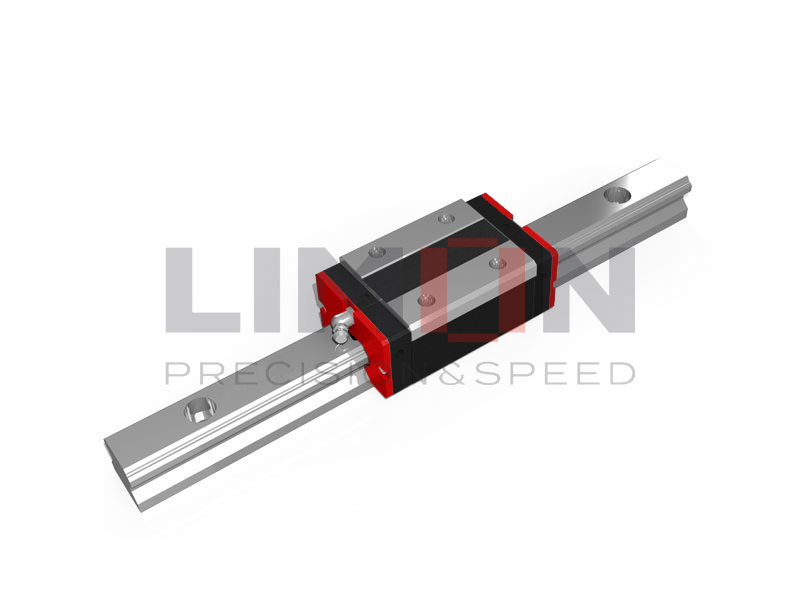
Limon specializes in linear motion products including linear guide rails, ball screws, linear bearings, and linear actuators. With a fully integrated production line, Limon can focus on product quality and consistency across key linear motion components.
This integrated manufacturing capability is particularly valuable when different components need to work together. A motor-driven actuator, for example, depends not only on the motor but also on the screw mechanism, bearings, guide structure, mounting configuration, and control requirements.
Limon sells directly through its independent website, allowing customers to communicate their application requirements more directly and select products based on their actual motion needs.
Quality is also essential for industrial motion systems. Precision components need consistent manufacturing and reliable assembly to support smooth movement, stable positioning, and long-term operation.
Limon also provides technical support to help customers consider important factors such as load, stroke, speed, positioning requirements, installation conditions, and component compatibility.
Whether your application uses an AC motor, DC motor, or another motor technology, Limon can provide the linear motion components needed to convert rotary power into reliable, controlled linear movement.
Conclusion
Understanding what is the difference between ac and dc electric motors helps engineers make better decisions about power, control, maintenance, and system integration. AC motors are widely suited to continuous industrial operation, while DC motors offer flexible control and are particularly useful in compact or electronically controlled applications.
For linear motion systems, however, motor selection should always be considered together with the actuator, ball screw, linear guide, bearing, and control system.
With a fully integrated production line, direct sales model, high-quality products, and professional technical support, Limon provides reliable, high-performance linear motion solutions for industrial applications. From ball screws and linear guides to bearings and linear actuators, Limon helps customers build dependable motion systems around their specific application requirements.