Struggling with backlash, speed limits, or maintenance issues in traditional linear systems that slow down your automation performance?
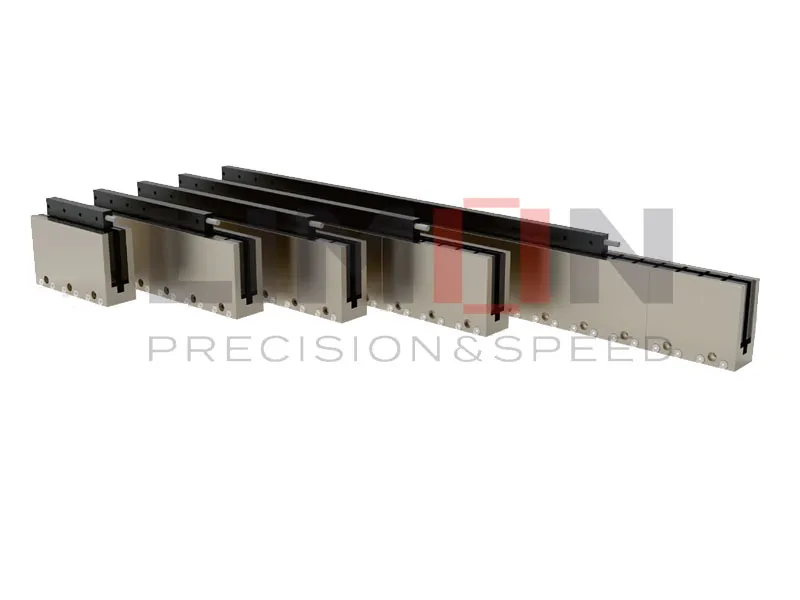
A linear motor is an electric motor that directly generates linear motion without mechanical transmission components like screws or belts. It offers high speed, precision, and low maintenance. A linear axis motor is commonly used in semiconductor, robotics, and precision automation systems where accuracy and responsiveness are critical.
Below we explain working principles, types, applications, and how to choose the right linear motor system.
What Is a Linear Motor and Why Is It Different From Traditional Systems?
A linear motor is a motion system that produces direct linear force without relying on mechanical conversion components such as screws, gears, or belts. Unlike traditional systems that require rotary-to-linear conversion, a linear motor directly drives motion along a single axis. This eliminates backlash, reduces mechanical wear, and significantly improves response speed and positioning accuracy.
In modern automation, a linear axis motor is widely used in high-speed and high-precision environments such as semiconductor manufacturing, inspection systems, and advanced robotics. Because there is no physical contact transmission system, maintenance requirements are drastically reduced, and system reliability is improved. At Limon, linear motion expertise allows integration of motor-driven and mechanical systems, helping customers select the most efficient solution based on cost, precision, and load requirements.
How Does a Linear Axis Motor Improve Precision and Speed?
A linear axis motor operates by generating electromagnetic force directly along the motion path, allowing extremely fast acceleration and deceleration. This makes it ideal for applications where cycle time and positioning accuracy are critical. Unlike ball screw systems, there is no mechanical backlash, which means motion control is significantly more precise.
In high-end automation systems, even micro-level deviations can affect product quality. Linear motors eliminate those errors by removing intermediate transmission components. However, system design must still consider load capacity, thermal management, and feedback control. At Limon, engineering support ensures that linear motor systems are properly matched with guide rails and structural components to achieve maximum efficiency and stability in industrial environments.
What Is the Role of a Motor for Linear Actuator Systems?
A motor for linear actuator plays a critical role in converting electrical energy into motion force. In traditional systems, motors drive screws or belts, which then convert rotation into linear movement. However, in advanced designs, direct-drive or linear motor integration reduces mechanical complexity and increases efficiency.
Choosing the right motor affects load capacity, speed, duty cycle, and energy consumption. Poor motor selection can result in overheating, reduced lifespan, or unstable motion. In industrial automation, selecting a properly matched motor ensures smooth operation and long-term reliability. Limon provides integrated motion solutions where motors, guides, and structures are engineered together, reducing system mismatch risks and improving overall performance consistency.
What Is an Actuator Linear Motor and Where Is It Used?
An actuator linear motor combines actuator functionality with direct-drive linear motion technology. It removes the need for mechanical conversion systems, offering higher precision and faster response times. These systems are commonly used in high-speed pick-and-place machines, precision inspection platforms, and advanced manufacturing automation.
Compared to traditional actuator systems, linear motor actuators provide smoother motion profiles and lower maintenance requirements. They are particularly valuable in industries where uptime and accuracy are critical. However, they also require precise control systems and proper thermal design. At Limon, actuator solutions are designed with industrial durability in mind, ensuring stable performance even under continuous operation conditions.
When Should You Choose Linear Motors Over Ball Screw Systems?
Linear motors are not always the best choice for every application, but they excel in high-speed and high-precision environments. If your system requires high thrust, long travel, and minimal maintenance, a linear motor is often superior to ball screw systems. However, ball screws may still be more cost-effective for lower-speed or high-load applications.
System designers must consider trade-offs such as cost, complexity, and control requirements. Linear motors require advanced feedback systems, while mechanical systems rely more on physical structure. In many industrial projects, hybrid solutions are used depending on axis requirements. Limon helps customers evaluate both technologies to ensure optimal system performance without unnecessary cost increases.
How Integrated Manufacturing Improves Linear Motor System Performance
The performance of a linear motor system depends not only on the motor itself but also on the precision of the entire mechanical assembly. Guide rails, structural rigidity, thermal stability, and alignment all play critical roles in system accuracy and durability.
With a fully integrated production line, Limon ensures that every component is manufactured and tested under strict quality control. This reduces tolerance mismatches and improves system reliability across different operating conditions. Whether used in robotics, CNC machinery, or automated inspection systems, integrated design ensures consistent performance and long-term operational stability.
Conclusion
Linear motors represent the future of high-performance linear motion systems, offering unmatched speed, precision, and efficiency. From linear axis motor applications to motor for linear actuator integration and advanced actuator linear motor designs, this technology is reshaping industrial automation.
With fully integrated manufacturing, engineering expertise, and direct supply capability, Limon delivers reliable and high-performance linear motion solutions designed for the most demanding industrial applications.
2.jpg)