Is friction, vibration, or contamination reducing the accuracy and service life of your linear motion system?
A linear guide is a mechanical system that supports and guides precise straight-line movement. It typically consists of a guide rail and carriage, with rolling elements between them. Linear guides reduce friction, support loads, and improve positioning accuracy in CNC machines, automation equipment, robotics, and other industrial systems.
Let us explore how linear guides work, where they are used, and how to select and protect them.
What Is a Linear Guide and How Does It Work?
A linear guide is a precision mechanical component designed to support and guide a load along a straight path. Unlike a simple sliding rail, a modern linear guide typically uses rolling elements such as balls or rollers between a guide rail and a moving carriage. This design reduces friction and allows machines to achieve smooth, accurate, and repeatable linear movement.
A typical linear guide consists of two primary components: the guide rail and the carriage, also commonly called a block. The rail is fixed to the machine structure, while the carriage moves along the rail. Rolling elements inside the carriage maintain controlled contact with the rail and help transfer loads during movement.
The design provides several important advantages:
- Low rolling friction
- High positioning accuracy
- Good rigidity
- High load capacity
- Smooth movement
- Repeatable motion
- Support for high-speed operation
Linear guides are especially important when a machine needs to move a relatively heavy load while maintaining a controlled path. They can also resist loads and moments acting in different directions, depending on their size, configuration, preload, and installation.
A linear guide normally works together with another drive mechanism. A ball screw, for example, can generate the linear driving force, while the guide rail and carriage support and guide the moving load.
This distinction is important: the drive mechanism creates movement, while the linear guide controls that movement.
What Are the Main Types of Linear Guides?
Different machines require different combinations of load capacity, rigidity, speed, accuracy, and installation flexibility. As a result, linear guides are available in several designs.
Ball-Type Linear Guides
Ball-type linear guides use circulating balls between the rail and carriage. Their rolling contact provides low friction and smooth movement, making them widely used in automation, CNC machines, robotics, inspection equipment, and other precision applications.
They are a practical choice when the machine requires a combination of accuracy, speed, and efficient movement.
Roller-Type Linear Guides
Roller linear guides use rollers rather than balls. The larger contact area can provide greater rigidity and load capacity, which makes roller-based systems suitable for heavier machinery and applications subject to significant forces.
Compact Linear Guides
Compact guide systems are designed for equipment where installation space is limited. They can be useful in small automation equipment, laboratory machinery, electronic equipment, and compact positioning systems.
Specialized Linear Guide Systems
Some applications require guide systems designed for unusual environmental or performance requirements. These may involve special materials, sealing arrangements, lubrication systems, or protective components.
The right guide should therefore be selected according to the machine rather than simply choosing the largest available rail. Load, speed, stroke, accuracy, environmental conditions, installation space, and expected operating life all need to be considered together.
How Do Linear Guide Rail Covers Protect a Linear Guide?
A linear guide operates with precision surfaces and rolling elements, so contamination can have a significant effect on performance. Dust, metal chips, particles, moisture, and other contaminants can enter the guide mechanism and accelerate wear.
This is where linear guide rail covers can become an important part of the overall system design.
A guide rail cover is a protective component designed to shield the rail and related motion components from external contaminants or mechanical damage. The exact design depends on the machine and operating environment. Some systems use flexible covers, telescopic structures, bellows, or other protective arrangements.
Protection is particularly important in environments such as:
- CNC machining
- Metal cutting
- Grinding
- Woodworking
- Welding
- Material processing
- Dusty manufacturing areas
For example, machining equipment can generate chips and debris that may interfere with exposed guide surfaces. Without appropriate protection, contaminants can affect rolling elements, lubrication, and contact surfaces.
However, covers should not be considered a replacement for proper sealing and maintenance. A complete protection strategy may involve carriage seals, lubrication, regular cleaning, appropriate mounting, and external covers.
The correct solution depends on the machine environment and the type of contamination involved.
For Limon customers, this means evaluating the guide as part of the complete machine rather than treating the rail as an isolated component.
How Do You Choose the Right Linear Guide?
Selecting a linear guide requires a systematic evaluation of the machine’s mechanical requirements. The guide must support the load while maintaining the required movement characteristics throughout the operating cycle.
Load Capacity
Start by calculating the actual load carried by the carriage. Include the weight of the moving components as well as external forces generated during acceleration, deceleration, cutting, vibration, or changes in direction.
Moment Loads
A load positioned away from the guide can create pitch, yaw, or roll moments. The guide configuration must be capable of handling these forces without excessive deflection or premature wear.
Speed and Acceleration
High-speed systems require careful consideration of rolling element behavior, lubrication, preload, and rail installation. Acceleration can also create significantly higher dynamic forces than simple static loading.
Accuracy and Repeatability
CNC equipment, inspection machines, and precision automation may require tighter movement control than general material-handling equipment. Guide accuracy, preload, mounting precision, and system rigidity all influence performance.
Environment
Consider temperature, dust, moisture, chemicals, chips, and other contaminants. Applications exposed to significant contamination may require appropriate sealing and linear guide rail covers or other protective solutions.
Installation Conditions
Rail length, mounting surface accuracy, parallelism, available space, carriage arrangement, and access for maintenance should all be evaluated before selecting a guide.
Choosing the right linear guide is therefore a system-level decision. A properly sized guide can provide smooth movement and long service life, while an unsuitable guide may create unnecessary friction, vibration, or maintenance problems.
Where Are Linear Guides Used?
Linear guides are used in a wide range of industrial applications because controlled linear movement is fundamental to modern automation.
CNC Machines
CNC machines require rigid and accurate linear axes for positioning cutting tools and workpieces. Linear guides can provide the stiffness and smooth movement needed for repeated machining operations.
Industrial Automation
Automated assembly and production equipment frequently uses linear guides to move workstations, fixtures, sensors, tools, and components along defined paths.
Robotics
Linear guides can provide additional linear axes in robotic systems. They may be used to extend a robot’s working range or move tools and workpieces between production stations.
Packaging Equipment
Packaging machinery often requires rapid repetitive movements for feeding, filling, sealing, cutting, labeling, and positioning. Linear guides can support these movements while maintaining stable travel.
Inspection and Measurement Systems
Inspection equipment may use linear guides to position cameras, sensors, probes, or measuring devices. Smooth and repeatable movement is particularly important when consistent measurement conditions are required.
Semiconductor and Electronics Equipment
Electronic manufacturing and inspection systems can require compact and precise motion components. Linear guides may support positioning mechanisms where low friction, smooth travel, and controlled movement are important.
Material Handling Systems
Linear guides can also be used in transfer systems, automated storage equipment, pick-and-place machines, and other material-handling applications.
Across these applications, guide selection depends on the specific load, speed, accuracy, environment, and duty cycle rather than simply the industry name.
How Does Limon Support Reliable Linear Guide Solutions?
The performance of a linear guide depends on manufacturing precision, component quality, installation accuracy, lubrication, and operating conditions. For industrial customers, choosing the right manufacturer can therefore be just as important as selecting the right specification.
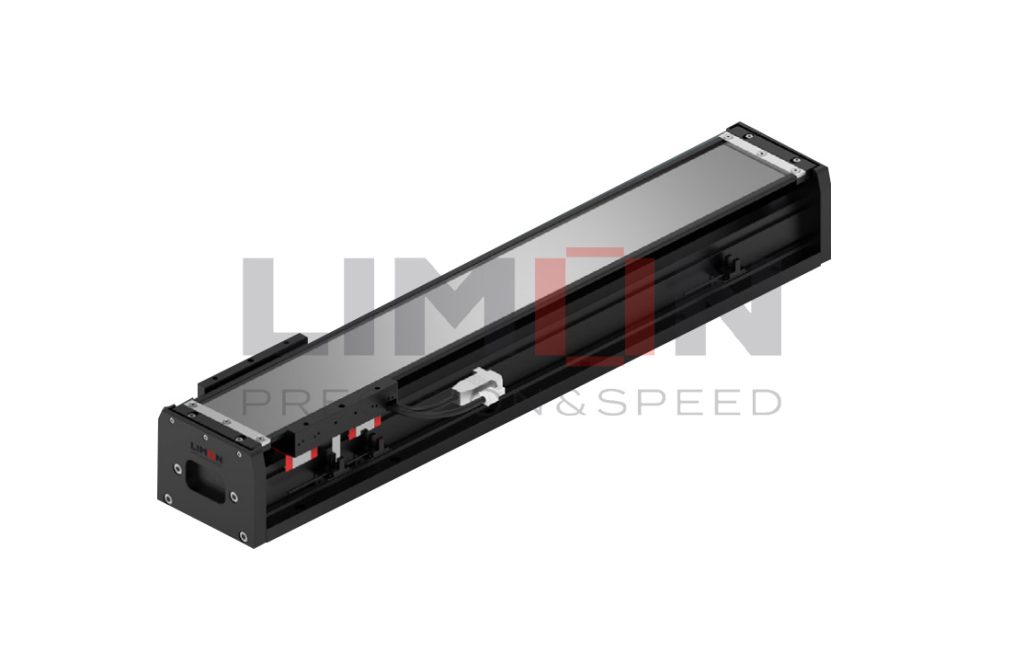
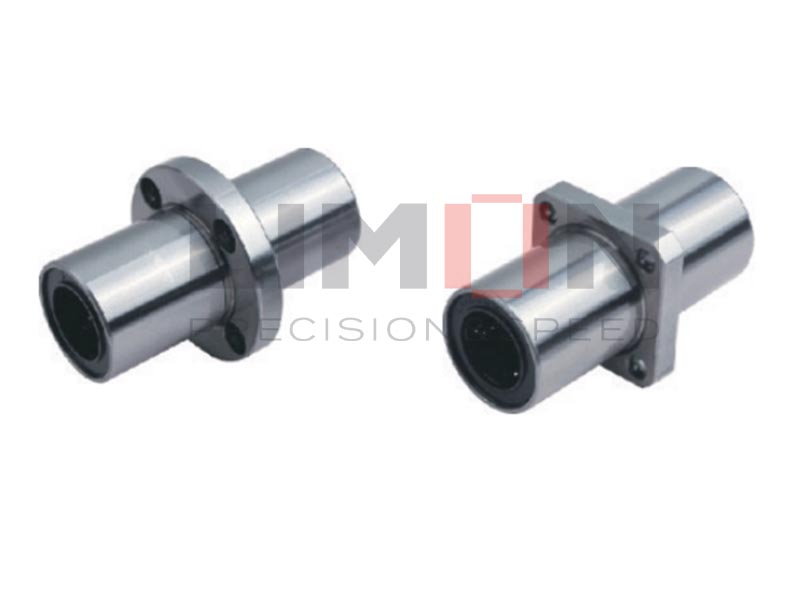
Limon manufactures linear motion products including linear guide rails, ball screws, linear bearings, and linear actuators. With a fully integrated production line, Limon can maintain closer control over manufacturing processes and product consistency.
This integrated capability is valuable when several linear motion components need to work together. For example, a ball screw may provide the driving force while a linear guide supports and guides the moving load. The bearing and actuator configuration must also be compatible with the application’s force, speed, and installation requirements.
Limon sells directly through its independent website, giving customers a direct purchasing channel and making it easier to communicate specific application requirements.
Quality is especially important for linear guides because dimensional consistency and assembly precision can affect smoothness, preload, noise, positioning performance, and service life.
Limon also provides technical support to help customers evaluate factors such as:
- Load and moment requirements
- Rail and carriage selection
- Stroke and travel speed
- Accuracy and repeatability
- Installation conditions
- Lubrication requirements
- Environmental protection
- Compatibility with ball screws and other motion components
For applications exposed to chips, dust, or other contaminants, customers can also consider appropriate protection strategies, including sealing and suitable linear guide rail covers.
Rather than supplying an isolated component, Limon focuses on providing reliable, high-performance linear motion solutions that can be integrated into complete industrial systems.
Conclusion
A linear guide provides the controlled path that allows machines to achieve smooth, accurate, and repeatable straight-line movement. Its performance depends on the right combination of rail, carriage, rolling elements, load capacity, installation, lubrication, and environmental protection.
For demanding environments, appropriate linear guide rail covers and sealing solutions can further help protect precision components from contamination and extend system reliability.
With a fully integrated production line, direct sales model, high-quality products, and professional technical support, Limon provides reliable, high-performance linear motion solutions. From linear guide rails and carriages to ball screws, linear bearings, and linear actuators, Limon helps customers build dependable motion systems for modern industrial applications.
_1.jpg)