Are friction, vibration, or poor positioning accuracy making your linear motion system harder to control?
The main types of linear guides include ball-bearing linear guides, roller linear guides, crossed roller guides, and sliding linear guides. Each type differs in load capacity, friction, accuracy, speed, rigidity, and operating environment, so the right choice depends on the machine’s motion and performance requirements.
Understanding the different guide types makes selection easier and helps match the rail to your application.
What Are Linear Guides and How Do They Work?
A linear guide is a mechanical component designed to support and guide a load along a straight path. Unlike a simple shaft or sliding surface, a linear guide provides a controlled motion path while minimizing friction between the moving and stationary components.
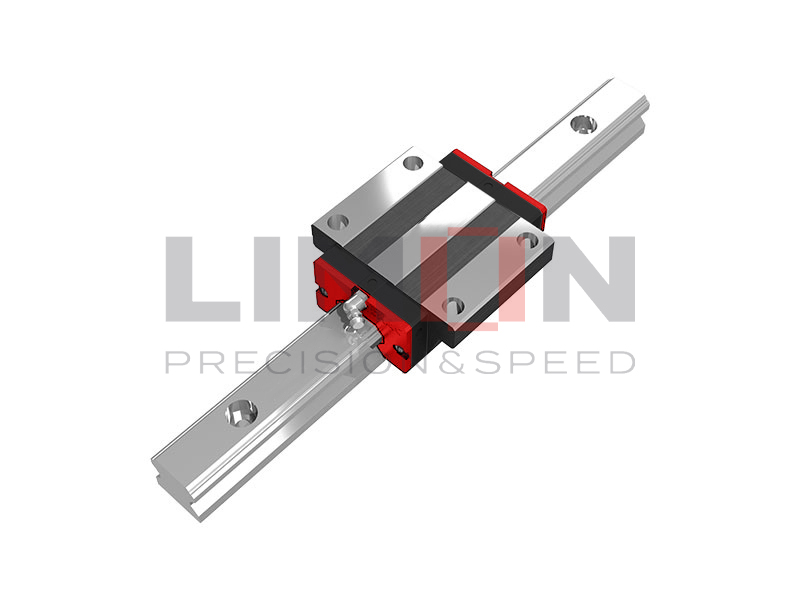
A typical linear guide system consists of a guide rail and a carriage or block. The rail is mounted to the machine structure, while the block moves along the rail with the attached load. Depending on the design, rolling elements such as balls or rollers may be positioned between the rail and block to reduce friction.
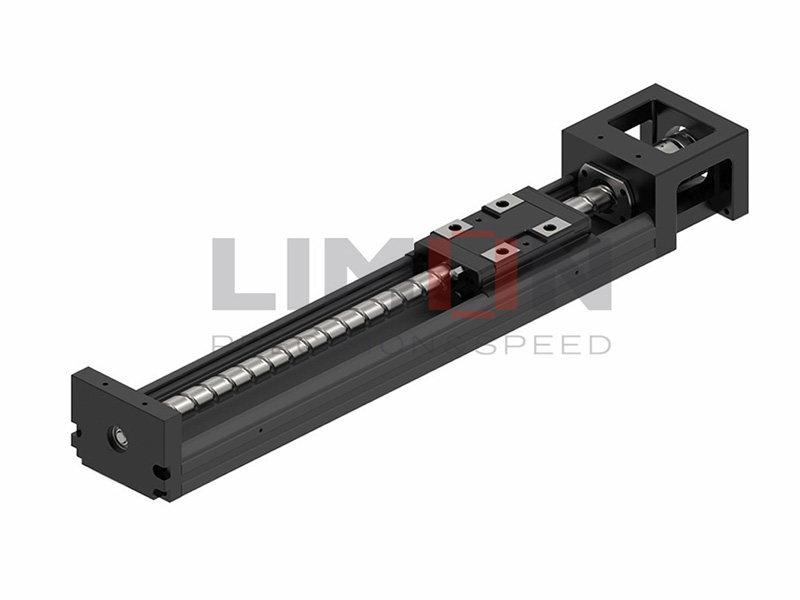
Linear guides are important because they help maintain the direction, stability, and positioning of a moving assembly. In many machines, the guide system works together with a ball screw, lead screw, belt drive, or linear actuator. The drive component generates movement, while the linear guide supports and guides the moving load.
The performance of a linear guide depends on several factors, including load capacity, rigidity, accuracy, preload, speed, acceleration, lubrication, installation accuracy, and environmental conditions.
For example, a CNC machine may require a rigid guide system capable of supporting high loads and repeated high-speed movement. A small automation device may instead prioritize compact dimensions and low friction.
This is why understanding what are the different types of linear rail guides is important before selecting a component. Different guide structures are designed for different combinations of speed, load, precision, and operating conditions.
What Are the Different Types of Linear Rail Guides?
There is no single linear guide design that is suitable for every machine. The major types can be distinguished by the way the moving block contacts and travels along the rail.
Ball Linear Guides
Ball linear guides use recirculating balls between the rail and the guide block. The balls roll along raceways, creating rolling contact and relatively low friction.
They are widely used because they provide a useful balance of speed, accuracy, load capacity, and cost. Ball linear guides are common in CNC machines, automation equipment, robotics, semiconductor equipment, inspection systems, and other industrial applications.
Roller Linear Guides
Roller linear guides use rollers instead of balls. Because rollers have a larger contact area, they can provide higher load capacity and greater rigidity in demanding applications.
They are often considered when a machine must handle heavy loads, high cutting forces, or demanding dynamic conditions. The trade-off may include greater resistance and different speed characteristics compared with ball-based designs.
Crossed Roller Guides
Crossed roller guides use cylindrical rollers arranged in alternating directions. This configuration provides controlled linear movement with high rigidity and precision.
They are particularly useful for compact precision mechanisms, optical equipment, measuring instruments, semiconductor equipment, and other applications where small movement and high accuracy are important.
Sliding Linear Guides
Sliding linear guides use direct sliding contact rather than recirculating rolling elements. Their simpler construction can make them suitable for applications where moderate speed and precision are acceptable.
Sliding systems can also be useful in environments where contamination, simplicity, or cost is a major consideration. However, friction and wear characteristics must be evaluated carefully.
The important point is that the different types of linear rail guides should be selected according to the actual operating requirements rather than simply choosing the most advanced design.
How Do Different Linear Guide Types Compare?
When comparing linear guide types, engineers should look beyond basic dimensions. Load capacity, accuracy, speed, rigidity, friction, and environmental conditions can all influence the appropriate choice.
| Linear Guide Type | Main Strength | Typical Applications |
| Ball Linear Guide | Balanced speed, accuracy, and load capacity | CNC, automation, robotics |
| Roller Linear Guide | High load capacity and rigidity | Heavy machinery, machine tools |
| Crossed Roller Guide | High precision and rigidity in compact designs | Inspection, optics, precision equipment |
| Sliding Linear Guide | Simple construction and low complexity | General mechanisms, moderate-duty equipment |
Ball linear guides are often a practical choice for general industrial automation because they combine relatively low friction with good motion accuracy and speed.
Roller guides can be considered when rigidity and load capacity are more important. Their larger rolling contact area can make them suitable for heavy-duty applications.
Crossed roller guides are particularly useful when limited installation space and precise motion are important. Their design can provide highly controlled movement in compact mechanisms.
Sliding guides have fewer moving elements and can be useful when system simplicity is prioritized.
There are also differences within each category. Rail width, block length, preload, accuracy class, mounting configuration, and load direction can all affect actual performance.
Therefore, the correct question is not simply which type is best. It is which linear guide structure matches the load, motion profile, accuracy, speed, environment, and installation conditions of the machine.
How Do You Choose the Right Linear Guide?
Choosing a linear guide should begin with the machine’s actual operating requirements. A properly selected guide should provide sufficient capacity while maintaining the required accuracy and service life.
- Evaluate the Load
Determine the total weight supported by the guide, including the moving assembly and workpiece. Consider both static and dynamic loads.
Also examine the direction of the load. A guide may experience vertical, horizontal, moment, or combined loads. These forces affect the required guide size and configuration.
- Consider Speed and Acceleration
High-speed automation systems may require a guide designed for rapid movement and frequent acceleration and deceleration.
The guide must be compatible with the machine’s motion profile. High acceleration can generate significant dynamic forces even when the static load is relatively small.
- Check Accuracy and Repeatability
For CNC equipment, inspection systems, and precision automation, guide accuracy can directly affect the final machine performance.
However, guide accuracy is only one part of the system. Rail mounting, machine base rigidity, ball screw accuracy, preload, and assembly quality can also influence positioning performance.
- Consider Rigidity
Applications involving cutting forces or heavy loads may require higher rigidity. Roller-based linear guides can be appropriate where stiffness and load capacity are major requirements.
- Evaluate the Environment
Dust, metal particles, moisture, chemicals, and temperature can affect guide performance.
For harsh environments, protection, sealing, lubrication, and maintenance requirements should be considered before selecting the guide.
- Check Installation Conditions
The mounting surface needs sufficient accuracy and rigidity. Poor rail alignment or an uneven mounting surface can introduce excessive preload, friction, vibration, or premature wear.
The guide should therefore be selected together with the machine’s mounting structure.
Where Are Different Linear Guides Used?
Linear guides are used across many industries because controlled linear movement is fundamental to modern automation.
CNC Machines
CNC machines require accurate and rigid axis movement. Linear guides support the moving table or carriage while ball screws provide controlled drive movement.
For machining applications, guide rigidity, load capacity, accuracy, and resistance to repeated acceleration are particularly important.
Industrial Automation
Automated equipment may use linear guides for positioning, transfer, feeding, assembly, and handling. Ball linear guides are commonly suitable for applications requiring fast and repeatable movement.
Robotics
Robotic systems can use linear guide rails for additional linear axes or positioning mechanisms. Compact dimensions, low friction, and high repeatability may be important depending on the application.
3D Printers
Linear guides can be used to guide print-head or platform movement. Depending on printer design, the system may prioritize compact size, low friction, smooth movement, or cost.
Inspection and Measurement Equipment
Inspection systems often require controlled movement with minimal vibration and high repeatability. Crossed roller guides or precision rolling guides can be suitable for compact precision mechanisms.
Semiconductor and Electronics Equipment
Manufacturing and inspection equipment in electronics production can require clean, accurate, and repeatable linear movement. Guide selection must take both motion performance and environmental requirements into account.
These applications demonstrate why selecting a linear guide based only on price or rail dimensions can create problems later. The guide needs to match the complete motion system.
What Problems Can Affect Linear Guide Performance?
Even a high-quality linear guide can perform poorly if the installation or operating conditions are incorrect.
One common problem is rail misalignment. If multiple rails are not installed accurately relative to one another, the moving block may experience excessive resistance or uneven loading.
Contamination is another major concern. Dust, metal particles, coolant, and other contaminants can enter the rolling contact area and accelerate wear.
Incorrect lubrication can also affect performance. Too little lubrication can increase friction and wear, while inappropriate lubrication can cause other operating problems.
Excessive loading is another potential issue. If the actual load exceeds the guide’s design capacity, service life can decrease and motion accuracy may deteriorate.
Installation quality is equally important. The mounting surface should provide adequate flatness and rigidity, while the rail and block should be installed according to the manufacturer’s specifications.
Regular inspection can help identify abnormal noise, increased resistance, vibration, or other changes before they develop into larger mechanical problems.
For this reason, choosing a linear guide should include not only the product specification but also installation requirements, maintenance conditions, and technical support.
Why Choose Limon for Linear Guide Solutions?
The performance of a linear guide depends on more than the rail and block themselves. Manufacturing consistency, component quality, application matching, and technical support all contribute to the reliability of the complete linear motion system.
Limon is a linear motion products manufacturer offering linear guide rails together with ball screws, linear bearings, and linear actuators. This product range allows customers to build compatible linear motion systems from a single specialized supplier.
Limon operates a fully integrated production line, providing greater control over manufacturing processes and product quality. For precision motion components, consistent manufacturing is important because small variations can influence friction, smoothness, positioning, and service life.
Limon also sells directly through its independent website. Direct sales provide customers with a straightforward purchasing channel and make it easier to communicate technical specifications and application requirements.
High-quality linear guides are particularly important when equipment operates continuously or under demanding loads. A reliable guide can help support stable movement, while correct selection and installation can reduce unnecessary friction, vibration, and premature wear.
Limon also provides technical support to help customers evaluate their application requirements. Load, stroke, speed, acceleration, accuracy, installation space, environment, and compatibility with ball screws or other drive components can all be considered before selecting a solution.
Whether you need linear guides for CNC equipment, automation machinery, robotics, 3D printers, or custom industrial equipment, Limon focuses on providing reliable, high-performance linear motion solutions.
Conclusion
Understanding what are the different types of linear rail guides is the first step toward selecting the right motion component. Ball, roller, crossed roller, and sliding linear guides each have different characteristics and application advantages.
The right choice depends on load, speed, acceleration, accuracy, rigidity, environment, installation conditions, and the requirements of the complete machine.
Limon combines a fully integrated production line, direct sales, high-quality linear motion products, and professional technical support to help customers build reliable industrial motion systems.
From linear guide rails and ball screws to linear bearings and actuators, Limon provides high-performance linear motion solutions designed to support demanding applications.