Industrial systems often fail without precise motion control, leading to costly downtime and product defects. Servo motors provide the accuracy and reliability needed to solve these challenges effectively.
Servo motors are electromechanical devices designed to deliver precise control of position, speed, and torque. Used in robotics, manufacturing, and automation, they ensure accuracy, efficiency, and consistency across industrial applications.
Keep reading to discover the essential roles, types, and functions of servo motors in modern industries.
The Purpose of Servo Motors
The primary purpose of servo motors is to provide accurate and controlled motion in machines and devices. Unlike traditional motors that rotate continuously, servo motors are designed to move to a specific angle or position, maintain that position, or adjust precisely based on feedback signals. This unique functionality makes them indispensable in applications requiring repeatability and precision.
Servo motors operate within a closed-loop system, which means they rely on feedback devices such as encoders or resolvers to measure their actual output. If there is any deviation from the intended command, the system immediately corrects the movement. This capability ensures that servo motors can achieve exceptional accuracy, often within fractions of a degree.
From industrial robots performing delicate assembly tasks to CNC machines cutting metal with high precision, servo motors serve as the foundation of modern automation. Their purpose extends beyond simple movement; they enable productivity, reduce error rates, and support innovation in both heavy industry and consumer technology.
Two Types of Servo Motors
Servo motors are generally classified into two main types: AC servo motors and DC servo motors. Each type is designed to meet specific requirements in terms of speed, torque, and application environment.
AC Servo Motors
AC servo motors are widely used in modern industrial automation due to their efficiency, durability, and ability to handle higher current loads. They provide excellent control at both low and high speeds, making them suitable for CNC machining, robotics, and factory automation systems. AC servo motors also offer smoother operation and longer service life compared to DC versions, though they often require more advanced control systems.
DC Servo Motors
DC servo motors, while simpler in design, remain popular in applications requiring quick response and straightforward control. They are commonly found in robotics kits, hobby electronics, and small-scale automation systems. Their main advantage lies in their low cost and ease of control. However, they typically require more maintenance because of brush wear and may not be as efficient as their AC counterparts.
Comparison of AC and DC Servo Motors
| Feature | AC Servo Motors | DC Servo Motors |
|---|---|---|
| Efficiency | High efficiency, reliable at various speeds | Lower efficiency compared to AC |
| Durability | Long lifespan, less wear | Brushes wear out, requiring maintenance |
| Control | More complex, advanced digital systems | Simple, easier to control |
| Cost | Higher cost due to complexity | More affordable |
| Applications | Industrial automation, CNC, robotics | Robotics kits, hobby systems, small devices |
Both AC and DC servo motors serve the same purpose of delivering precise control but differ in their performance characteristics. The choice between them depends largely on the scale, cost, and precision requirements of the intended application.
Items that Use Servo Motors
Servo motors are integrated into a wide variety of everyday products and industrial systems, showcasing their versatility. In the industrial sector, servo motors are commonly used in robotic arms, CNC machines, conveyor systems, and packaging equipment, where precision and repeatability are essential. These applications demand accurate control over movement to ensure quality and productivity.
In the consumer electronics industry, servo motors are used in devices like DVD players, camera autofocus systems, and printers. These items require fine-tuned movement and exact positioning, something only servo motors can provide reliably.
In the automotive industry, servo motors power critical systems such as electric power steering, cruise control, and throttle adjustment. These applications highlight the motors’ role in improving safety and driving comfort.
The aerospace and defense sectors also rely heavily on servo motors, particularly for flight control systems, targeting equipment, and unmanned aerial vehicles (UAVs). The high precision and reliability of servo motors make them ideal for such mission-critical applications.
Ultimately, servo motors appear in countless areas of modern life, from heavy manufacturing to household gadgets, reinforcing their purpose as essential components for controlled, accurate movement.
Advantages and Disadvantages
Like all technologies, servo motors come with both advantages and disadvantages. Understanding these can help businesses and engineers make informed decisions when integrating them into systems.
Advantages:
High Precision: Servo motors offer extremely accurate positioning due to their closed-loop feedback system.
Versatility: They can control torque, speed, and position simultaneously.
Efficiency: Compact design with high power-to-weight ratios makes them energy efficient.
Responsiveness: They adapt quickly to changes in load or operating conditions.
Reliability: Modern servo motors are durable and require less frequent maintenance.
Disadvantages:
Higher Cost: Servo motors and their control systems are more expensive than simpler motor types like stepper motors.
Complexity: Installation and programming often require specialized knowledge.
Maintenance: While less frequent, maintenance tasks (like encoder calibration) require technical expertise.
Sensitivity to Overload: Without proper system design, servo motors may fail under excessive load or poor alignment.
Despite these challenges, the advantages of servo motors typically outweigh their disadvantages in applications where accuracy and performance are paramount.
Servo Motors Parts and Functions
A servo motor is made up of several key components that work together to achieve precise control. Each part has a specific function that contributes to the system’s performance:
Stator and Rotor: Provide the core electromechanical movement of the motor.
Controller: Issues the command signals that determine position, speed, or torque.
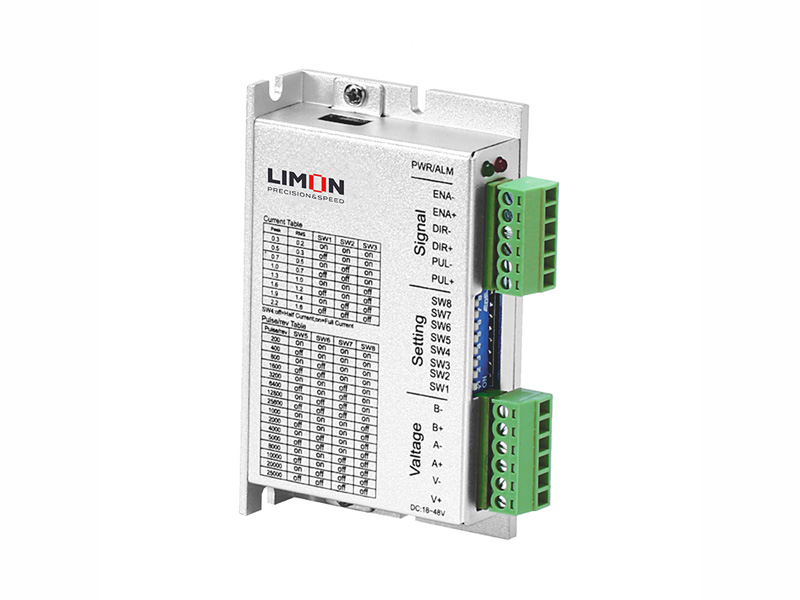
Servo Drive (Amplifier): Adjusts power to the motor according to the controller’s instructions.
Feedback Device (Encoder/Resolver): Continuously monitors position and speed, enabling closed-loop operation.
Gearbox (optional): Adjusts torque and speed for specific application requirements.
Housing and Bearings: Protect internal parts and support smooth operation.
Each of these components is critical. For instance, the feedback device ensures the system maintains precision, while the servo drive regulates current and voltage. When integrated, these parts form a seamless system capable of precise, real-time control.
Understanding the functions of each component helps engineers maintain and optimize servo motors for long-term reliability. Proper maintenance of encoders, bearings, and lubrication systems ensures consistent performance and minimizes downtime.
Conclusion
Servo motors provide unmatched precision and control, making them essential across industries from robotics to automotive and aerospace.