Selecting the right actuator can determine whether your automation project runs smoothly for years — or struggles with downtime, vibration, and premature failure.
If you’ve been searching “how to choose linear actuator” or “how to choose a linear actuator”, you’re likely evaluating options for a CNC system, packaging line, robotics application, or industrial automation upgrade.
In today’s U.S. manufacturing landscape — where efficiency, precision, and uptime are non-negotiable — choosing the right linear actuator is a strategic decision.
This complete guide will walk you through:
- The key technical factors to evaluate
- How application type affects actuator selection
- Common mistakes engineers make
- Industry trends shaping actuator design
- How to partner with the right manufacturer
Let’s break it down step by step.
What Is a Linear Actuator and Why Selection Matters
A linear actuator converts rotational motion into straight-line movement. In industrial environments, actuators are responsible for:
- Positionnement
- Levage
- Pushing and pulling
- Clamping
- Manutention
From automotive assembly plants in Michigan to semiconductor facilities in Arizona, linear actuators are essential to productivity.
Choosing incorrectly can lead to:
- Réduction de la précision du positionnement
- Excessive motor strain
- Usure prématurée de la vis à billes
- System instability
- Expensive downtime
That’s why understanding how to choose a linear actuator is critical for engineers and procurement teams alike.
Define Your Load Requirements
The first step in how to choose linear actuator systems is understanding load.
Key Questions:
- What is the maximum dynamic load?
- What is the static holding load?
- Is the load centered or offset?
- Will there be side loads?
Par exemple :
- CNC spindles require high rigidity and moderate load capacity.
- Vertical lifting systems require higher safety factors due to gravity.
- Robotics applications often prioritize speed over heavy load handling.
Undersizing an actuator reduces lifespan. Oversizing increases cost and energy consumption.
Accurate load calculation is the foundation of correct selection.
Determine Stroke Length
Stroke length defines how far the actuator must travel.
Important considerations:
- Distance à parcourir
- Available installation space
- Soutien structurel
- Over-travel safety margins
In American industrial facilities where floor space is at a premium, compact actuator designs are increasingly preferred.
Always allow a safety buffer to prevent hard-end collisions.
Evaluate Speed Requirements
Speed affects both motor selection and drive mechanism choice.
Ask:
- What is the required cycle time?
- Is high-speed positioning critical?
- Does acceleration/deceleration matter?
For high-speed packaging lines in the U.S., belt-driven actuators are often preferred.
For high-precision CNC systems, ball screw actuators provide better control.
Balancing speed and load is a key part of understanding how to choose a linear actuator effectively.
Consider Precision and Repeatability
Precision matters more than ever in modern automation.
Applications requiring tight tolerances include:
- Fabrication de semi-conducteurs
- Assemblage d'un dispositif médical
- Aerospace machining
- Precision robotics
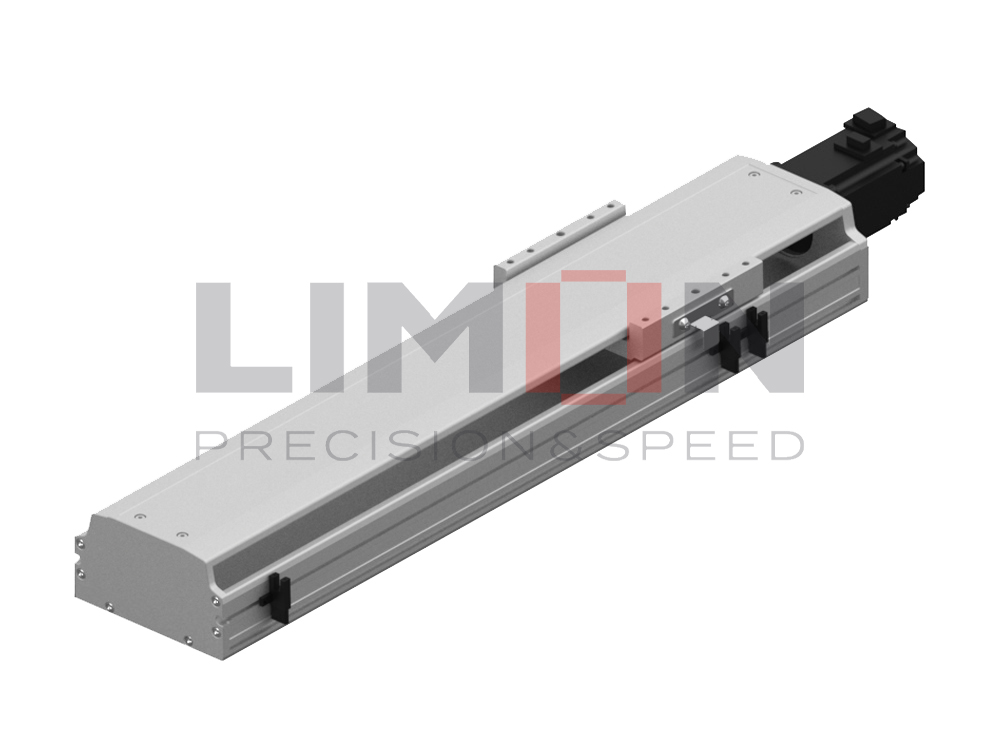
Ball screw linear actuators typically offer:
- Plus grande précision de positionnement
- Greater repeatability
- Lower backlash
If your application requires micron-level accuracy, this factor should heavily influence your decision.
Assess Duty Cycle and Operating Environment
Duty cycle refers to how often and how long the actuator operates.
High Duty Cycle Applications:
- Assembly lines
- 24/7 production systems
- Entrepôts automatisés
Facteurs environnementaux :
- Dust
- Humidity
- Washdown environments
- Extreme temperatures
In food processing facilities across the U.S., corrosion resistance and sealed designs are essential.
Selecting an actuator without considering environment leads to early failure.
Choose the Right Drive Type
Understanding drive types is essential when learning how to choose linear actuator systems.
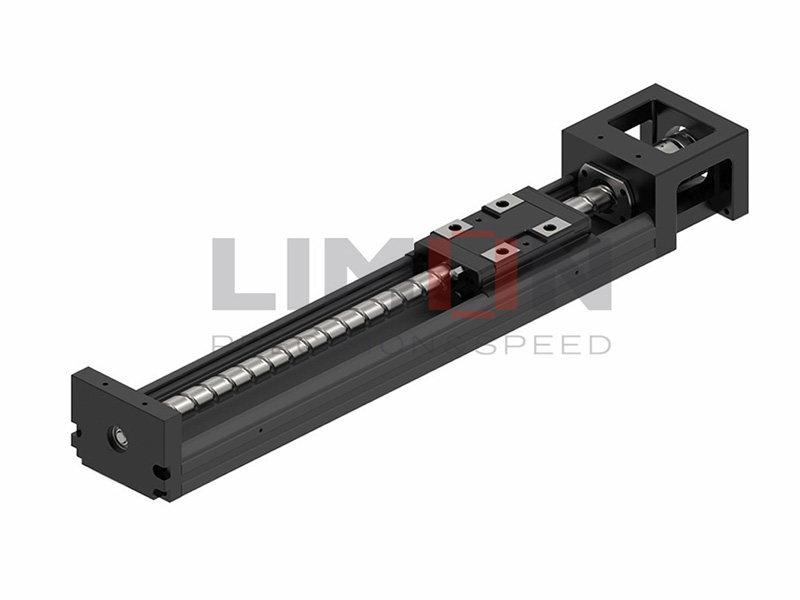
Ball Screw Actuators
- Haute précision
- Capacité de charge élevée
- Longer lifespan
- Ideal for CNC and precision automation
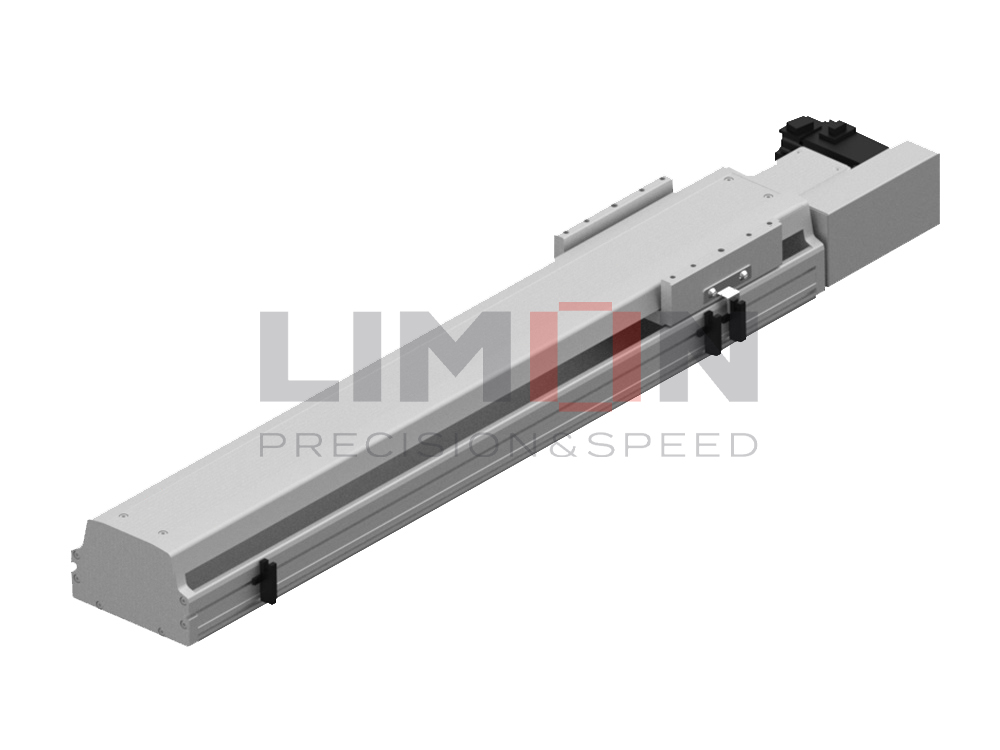
Actionneurs à courroie
- Higher speed
- Longer travel capability
- Suitable for material transfer
Lead Screw Actuators
- Rentabilité
- Suitable for lighter loads
- Moderate precision
Each design serves a specific industrial purpose.
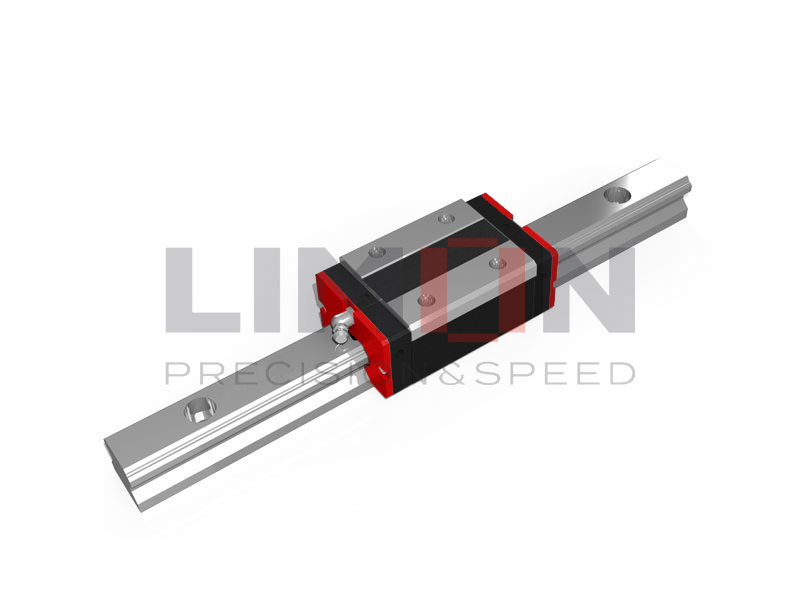
Integration with Linear Guides
A common mistake is assuming the actuator can handle all loads alone.
For optimal performance, actuators should be paired with:
- Rails de guidage linéaire
- Tiges de guidage linéaires
- Guides à rouleaux croisés
This ensures proper load distribution and prevents side loading.
In modern U.S. automation systems, integrated linear modules are becoming standard — combining actuator and guide into one rigid assembly.
Evaluate Power and Control Compatibility
Electric actuators must integrate with:
- Servomoteurs
- Moteurs pas à pas
- Systèmes PLC
- Motion controllers
Questions to consider:
- What voltage is available?
- Is closed-loop feedback required?
- Does the system require encoder integration?
Proper compatibility ensures smooth commissioning and long-term stability.
Common Mistakes When Choosing a Linear Actuator
Even experienced engineers can overlook critical factors.
Ne pas tenir compte de la charge latérale
Actuators are designed for axial force, not bending stress.
Choosing Based on Price Alone
Low-cost actuators may compromise material quality or machining precision.
Underestimating Future Expansion
Scalability matters as production demands increase.
Skipping Manufacturer Evaluation
Quality control, production capability, and supply chain stability are crucial.
Understanding how to choose a linear actuator goes beyond technical specs — it includes evaluating your supplier.
Industry Trends Shaping Linear Actuator Selection
Automation trends across North America are influencing buying decisions.
- Industry 4.0 Integration
Actuators with smart sensors and real-time monitoring.
- Efficacité énergétique
Electric actuators replacing hydraulic systems.
- Compact Modular Systems
Pre-assembled motion units reducing installation complexity.
- Increased Customization
OEM manufacturers demanding application-specific solutions.
Choosing a manufacturer with a fully integrated production line ensures adaptability to these trends.
Pourquoi la qualité de fabrication est-elle importante ?
Les actionneurs haute performance nécessitent :
- Vis à billes rectifiées avec précision
- Accurate heat treatment
- High-quality surface finishing
- Strict dimensional tolerances
- Comprehensive inspection processes
Inconsistent manufacturing leads to vibration, backlash, and early wear.
Reliable production standards are just as important as actuator specifications.
Pourquoi choisir Limon pour les actionneurs linéaires ?
Au Limon, we manufacture:
- Actionneurs linéaires
- Vis à billes
- Rails de guidage linéaire
- Tiges de guidage linéaires
- Roulements linéaires
Our vertically integrated production process allows us to control:
- Sélection des matières premières
- Usinage de précision
- Traitement de surface
- Précision d'assemblage
- Contrôle de la qualité
We provide:
- Soutien à l'ingénierie personnalisée
- Stable supply chain
- Des tarifs compétitifs
- Industrial-grade reliability
Whether you’re designing automation equipment in Texas, upgrading CNC systems in Illinois, or building robotics platforms in California, our solutions are engineered for performance.
Final Thoughts: Choose Smart, Build Strong
Understanding how to choose linear actuator systems properly ensures:
- Higher productivity
- Durée de vie plus longue
- Réduction des coûts de maintenance
- Greater system reliability
The right actuator doesn’t just move — it drives your entire automation strategy forward.
If you’re evaluating options and want expert guidance on how to choose a linear actuator, our engineering team is ready to help.
Ready to Optimize Your Motion System?
Explore Limon’s complete range of industrial linear actuators and integrated motion solutions today. Contact us for technical consultation and customized recommendations.
Because in modern manufacturing, precision isn’t optional — it’s your competitive advantage.