Are you struggling to achieve precise, repeatable linear movement without adding unnecessary complexity to your machine design?
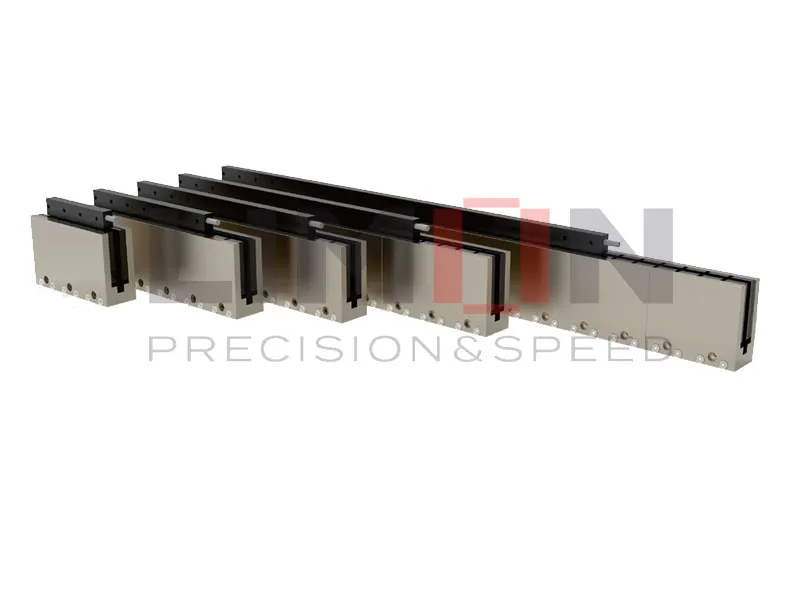
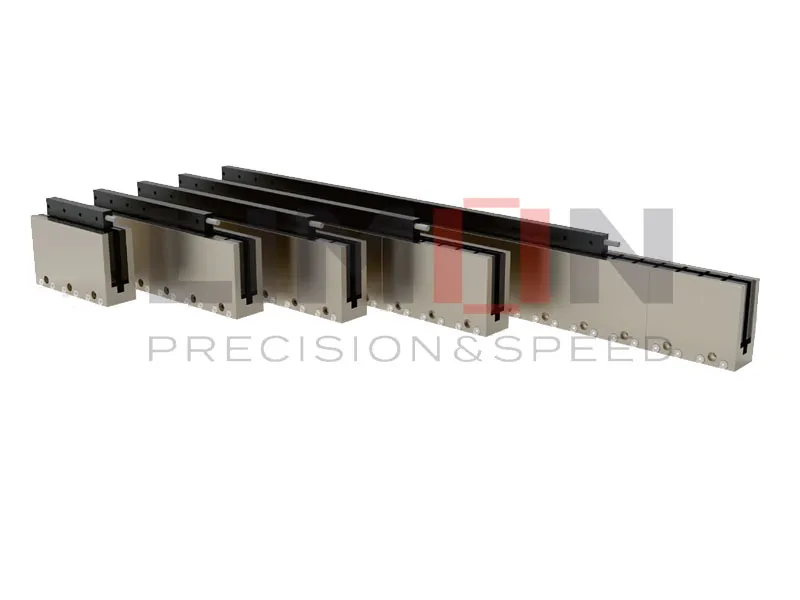
Linear actuators convert energy into controlled linear movement, allowing machines to push, pull, lift, position, adjust, or automate mechanical components. Common linear actuators applications include industrial automation, CNC equipment, robotics, medical equipment, agricultural machinery, material handling, and adjustable systems.
From simple positioning to complex automation, linear actuators can provide controlled mechanical movement.
What Do Linear Actuators Do?
Before exploring linear actuators applications, it is important to understand what linear actuators do and why they are useful in mechanical systems.
A linear actuator is a device that produces movement along a straight line. Unlike a conventional rotary motor that continuously rotates a shaft, a linear actuator generates controlled linear displacement. Depending on the design, it can push, pull, lift, lower, position, clamp, or adjust a mechanical component.
Different technologies can be used to create linear movement. Electric linear actuators may use a lead screw, ball screw, belt, or other transmission mechanism. The actuator can also be combined with a motor, gearbox, sensors, and control system to meet specific application requirements.
For example, an electric actuator with a screw drive can convert the motor’s rotary movement into linear movement. When the motor rotates the screw, the nut travels along the screw axis and produces the required stroke.
This makes linear actuators useful when a machine needs controlled movement rather than continuous rotation.
The key performance characteristics usually include stroke length, load capacity, speed, positioning accuracy, duty cycle, mounting configuration, and environmental resistance. These specifications determine whether an actuator is appropriate for a particular application.
In industrial equipment, the actuator rarely works alone. It may operate together with linear guide rails, ball screws, bearings, servo motors, sensors, and controllers. The actuator provides the movement, while the other components help support, guide, measure, and control that movement.
Understanding this complete system is essential when evaluating linear actuators applications.
What Are the Main Linear Actuators Applications?
Linear actuators are used in many industries because controlled linear movement is required in a wide range of machines. The appropriate actuator depends on the required force, speed, stroke, precision, operating environment, and control method.
Automatisation industrielle
Automation equipment frequently requires repetitive positioning, feeding, pushing, lifting, and transferring operations. Linear actuators can provide controlled movement for workstations, assembly equipment, inspection machines, and automated handling systems.
For example, an actuator can move a component into a specific position before an assembly operation. It can also adjust machine components automatically according to different production requirements.
CNC et machines-outils
CNC equipment requires accurate movement along one or more axes. Screw-driven linear actuators or actuator assemblies can be used in positioning mechanisms and auxiliary machine functions.
When high positioning accuracy and repeatability are required, the actuator needs to work effectively with components such as ball screws and linear guide rails.
Robotique
Robotic systems often require precise linear movement in addition to rotary motion. Linear actuators can provide additional linear axes for robots, positioning systems, grippers, and automated handling equipment.
The actuator must be matched to the robot’s payload, movement speed, acceleration, and duty cycle.
Manutention
Conveying, lifting, pushing, sorting, and positioning are common material-handling tasks. Linear actuators can automate these movements while reducing the need for manual adjustment.
Agricultural Machinery
Agricultural equipment may use linear actuators to adjust machine components, control positioning mechanisms, or automate repetitive mechanical movements.
These applications may require greater protection against dust, moisture, vibration, and temperature variations.
These examples show why there is no single actuator specification suitable for every application. The correct solution depends on the machine’s operating conditions and required motion.
How Are Linear Actuators Used in Industrial Automation?
Industrial automation is one of the most important areas for linear actuators applications because automated machines often need precise and repeatable movement.
A production machine may need to move a component from one station to another, adjust a fixture, position a sensor, open or close a mechanism, or apply controlled force. A linear actuator can perform these operations according to commands from a machine controller.
Electric linear actuators are particularly useful when movement needs to be programmed. Depending on the actuator and control system, the machine can control position, speed, direction, and movement sequence.
For higher-performance applications, a servo motor may be integrated with a screw-driven linear system. Feedback from an encoder allows the controller to monitor motor position and make corrections when necessary.
The mechanical components are equally important. A ball screw can convert motor rotation into efficient linear movement, while linear guide rails support and guide the moving assembly. Linear bearings can also be used in suitable mechanisms.
This creates a coordinated motion system:
Motor → Transmission → Linear Movement → Guided Load → Control Feedback
The advantage of this approach is flexibility. The same basic motion architecture can be adapted for different stroke lengths, loads, speeds, and positioning requirements.
For manufacturers designing automation equipment, selecting the actuator as part of the complete linear motion system can help avoid compatibility problems and improve overall reliability.
How Do You Choose a Linear Actuator for Different Applications?
Selecting an actuator should begin with the actual movement requirements rather than simply choosing a product based on size or motor power.
Capacité de charge
Determine the total force required to move or hold the load. Consider both the static load and dynamic forces generated during acceleration and deceleration.
If the actuator operates vertically, the effect of gravity must also be considered.
Longueur de la course
Stroke describes the distance the actuator needs to travel. Select a stroke that covers the required movement while leaving appropriate mechanical clearance.
Vitesse
Determine how quickly the actuator needs to complete the required movement. High-speed applications may require a different screw lead, motor, or transmission design than slow positioning applications.
Précision du positionnement
If the machine requires precise positioning, evaluate the complete motion system. Actuator accuracy can be affected by screw accuracy, backlash, guide alignment, motor feedback, mounting rigidity, and control parameters.
Cycle de travail
Determine how frequently the actuator operates. An actuator used occasionally has different requirements from one that performs thousands of cycles per day.
Continuous operation can generate heat and mechanical wear, so the duty cycle should be considered during selection.
Environnement opérationnel
Temperature, dust, moisture, chemicals, vibration, and other environmental factors can influence actuator performance and service life.
Exigences en matière de contrôle
Some applications only require simple extend-and-retract movement. Others require variable speed, multiple positions, synchronization, or feedback control.
Understanding these requirements helps determine whether a basic electric actuator, screw-driven actuator, or servo-controlled linear motion system is more appropriate.
What Are the Benefits of Using Linear Actuators?
Linear actuators can provide several advantages when machines need controlled straight-line movement.
The first is automation. Instead of relying on manual adjustment, an actuator can perform a mechanical movement according to a programmed sequence.
The second is repeatability. When properly selected and controlled, an actuator can repeatedly move a component to defined positions. This is particularly useful in assembly, inspection, packaging, and material-handling applications.
Another advantage is flexible installation. Linear actuators can be designed in different sizes and mounting configurations, allowing engineers to integrate them into equipment with different space requirements.
Electric linear actuators can also simplify system control. They can be integrated with controllers, sensors, switches, PLCs, and servo systems depending on application requirements.
In addition, screw-driven actuators can provide a useful combination of force and positioning capability. Ball screw designs can be suitable for applications where efficiency and precision are particularly important, while other screw configurations may be selected for simpler or more cost-sensitive mechanisms.
However, an actuator should not be evaluated by its specifications alone. The actuator must be compatible with the guide system, motor, load, mounting structure, and control architecture.
A properly matched linear motion system can provide smoother operation, more predictable performance, and better long-term reliability.
How Do Linear Actuators Work With Other Linear Motion Components?
A linear actuator is often one part of a larger mechanical system. Understanding how its components work together is important when designing industrial equipment.
A typical screw-driven system may include a motor, coupling, screw, nut, linear guide, bearings, and controller.
The motor generates rotary motion. The screw converts this rotary motion into linear displacement. The linear guide supports and guides the moving assembly, preventing unwanted movement away from the intended axis. Bearings support the rotating components and help maintain proper alignment.
For precision applications, a servo motor and feedback system can provide additional control over position and speed.
This integrated approach is particularly important when the actuator carries a significant load. If the guide system is undersized, for example, the actuator may be forced to handle loads or moments it was not designed to support.
Similarly, incorrect alignment between the actuator and guide rails can increase friction and reduce service life.
For this reason, the best solution is often not simply a stronger actuator. It is a properly matched linear motion system.
Limon provides multiple linear motion components, including linear guide rails, ball screws, linear bearings, and linear actuators. This product combination allows customers to evaluate the actuator together with the supporting mechanical components.
Pourquoi choisir Limon pour vos solutions d'actionneurs linéaires ?
Choosing the right linear actuator is important, but manufacturing quality and technical support can be equally important for industrial applications.
Limon is a linear motion products manufacturer specializing in linear actuators, linear guide rails, ball screws, and linear bearings. These products allow Limon to support different types of linear motion requirements rather than focusing on a single component.
Limon operates a fully integrated production line, providing greater control over manufacturing processes and product quality. For industrial motion components, consistent production is important because variations in mechanical performance can affect the operation of the complete machine.
Limon also sells directly through its independent website. Direct sales provide customers with a straightforward purchasing channel and make it easier to communicate application requirements, technical specifications, and product configurations.
High-quality components are particularly important for linear actuators operating under frequent cycles or demanding loads. Stable mechanical performance can help reduce unnecessary vibration, friction, and premature component wear.
Technical support is another part of Limon’s approach. Instead of selecting an actuator based only on stroke or force, customers can evaluate the complete application, including load, speed, acceleration, duty cycle, mounting method, environmental conditions, and compatibility with other linear motion components.
Whether the application involves industrial automation, CNC equipment, robotics, material handling, agricultural machinery, or custom equipment, Limon focuses on providing reliable, high-performance linear motion solutions.
Conclusion
Linear actuators provide controlled straight-line movement for machines that need to push, pull, lift, position, adjust, or automate mechanical components. From industrial automation and CNC equipment to robotics and material handling, the range of linear actuators applications continues to grow.
Understanding what do linear actuators do is the first step. The next is matching stroke, load, speed, accuracy, duty cycle, environment, and control requirements to the complete motion system.
Limon combines a fully integrated production line, direct sales, high-quality products, and professional technical support to provide reliable, high-performance linear motion solutions.
From linear actuators and ball screws to linear guide rails and linear bearings, Limon provides the components and technical foundation needed for dependable industrial motion.