In modern automation, precision manufacturing, and smart equipment design, linear motion accuracy is a baseline requirement—not a luxury. One of the most common questions engineers, designers, and buyers ask is: what are the different types of linear guide?
The answer directly impacts machine accuracy, load capacity, service life, and overall system cost.
As a fully integrated linear motion manufacturer, Limon produces linear guide rails, ball screws, linear bearings, and linear actuators entirely in-house. This allows us to deliver reliable, high-performance linear motion solutions directly to customers worldwide.
In this article, we’ll clearly explain what are the different types of guides linéaires, how they work, where they are used, and how to choose the right option for your application.
Why Understanding Linear Guide Types Matters
Before diving into what are the different types of rails de guidage linéaires, it’s important to understand why this choice is so critical.
Linear guides:
- Control straight-line motion
- Support loads in multiple directions
- Maintain positioning accuracy and repeatability
- Directly affect speed, vibration, and system lifespan
Choosing the wrong type of guide linéaire can lead to premature wear, poor accuracy, and higher maintenance costs—especially in servo-driven systems and automated production lines.
What Are the Different Types of Linear Guides?
When people ask what are the different types of guides linéaires, they are usually referring to how the load is supported and how motion is achieved. The main categories include rolling-element guides and sliding guides, with several subtypes.
1.Ball-Type Linear Guide Rails
Ball-type guides are one of the most widely used solutions in industrial automation.
Key characteristics:
- Rolling steel balls between rail and carriage
- Faible frottement et mouvement souple
- Grande précision de positionnement
Typical applications:
- Machines CNC
- Automation and assembly lines
- Packaging equipment
For many customers researching what are the different types of linear rail guides, ball-type guides are the go-to option due to their balance of performance and cost.
2.Roller-Type Linear Guide Rails
Roller-type guides linéaires use cylindrical rollers instead of balls.
Key characteristics:
- Higher load capacity than ball-type guides
- Greater rigidity and stiffness
- Better resistance to shock loads
Typical applications:
- Heavy-duty machinery
- Systèmes de portiques
- Large industrial robots
When high rigidity is a priority, roller guides are often the best answer to what are the different types of rails de guidage linéaires for demanding environments.
3.Miniature Linear Guides
Miniature guides linéaires are compact versions of ball-type systems, designed for tight spaces.
Key characteristics:
- Small size and lightweight
- High precision at low loads
- Smooth, quiet operation
Typical applications:
- Dispositifs médicaux
- Optical equipment
- Electronics and semiconductor tools
These guides are ideal when space constraints are critical but precision cannot be compromised.
4.Sliding (Plain) Linear Guides
Sliding guides use direct surface contact instead of rolling elements.
Key characteristics:
- Simple structure
- High damping and vibration absorption
- Lower speed compared to rolling guides
Typical applications:
- Heavy machinery
- Environments with high contamination
- Applications prioritizing stability over speed
Although less common in high-speed automation, sliding guides still play an important role in specific industrial use cases.
What Are the Different Types of Linear Rail Guides Based on Structure?
Another way to answer what are the different types of linear rail guides is by rail profile and mounting style:
- Profiled linear guide rails – square or rectangular rails with high rigidity
- Round rail guides – simple installation, good for light to medium loads
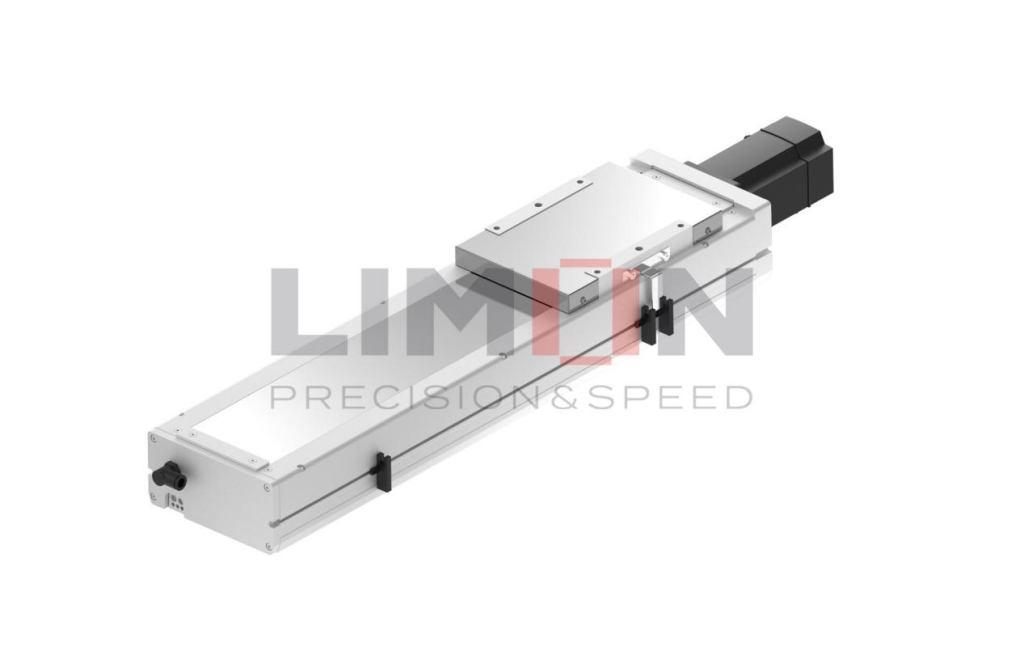
- Integrated linear actuator guides – combined rail and drive systems
Each structure offers different advantages depending on load, accuracy, and installation requirements.
How to Choose the Right Type of Linear Guide
Knowing what are the different types of guide linéaire is only useful if you can select the right one. Key factors include:
- Load magnitude and direction – static, dynamic, or moment loads
- Accuracy and repeatability requirements
- Operating environment – dust, moisture, or chemicals
- Speed and duty cycle
- Integration with servo motors, ball screws, or linear actuators
At Limon, we help customers match the correct guide type with their complete linear motion system, ensuring optimal performance rather than over-engineering or under-specifying components.
Why Choose Limon Linear Guide Solutions?
Understanding what are the different types of guides linéaires is important—but working with the right manufacturer is just as critical.
Limon offers:
- In-house production of linear guide rails with strict quality control
- Ball-type and roller-type solutions for light to heavy-duty applications
- Seamless integration with ball screws and linear actuators
- Consistent performance, fast delivery, and dependable support
Because we manufacture the full linear motion system, our guides are designed for real-world industrial performance—not just catalog specifications.
Conclusion: Choosing the Right Linear Guide Starts with the Right Knowledge
So, what are the different types of guides linéaires?
From ball-type and roller-type guides to miniature and sliding systems, each option serves a specific purpose in modern machinery.
By understanding what are the different types of rails de guidage linéaires and selecting the right solution for your application, you can improve accuracy, extend equipment life, and reduce long-term operating costs.
Avec Limon as your linear motion partner, you gain not only high-quality products—but the expertise to build smarter, more reliable motion systems from the ground up.