Are your machines suffering from poor accuracy, vibration, or premature wear due to inadequate linear guidance?
Linear motion guideways provide smooth, precise, and low-friction linear movement for industrial machinery. By combining linear motion guide rails with rolling elements, they improve positioning accuracy, load capacity, speed, and service life in automation, CNC equipment, robotics, and manufacturing systems.
Keep reading to learn applications, benefits, and selection tips.
What Are Linear Motion Guideways and Why Are They Important?
Modern automation depends heavily on precision motion control. Among the most critical components enabling accurate movement are linear motion guideways. These systems are designed to support and guide moving loads along a straight path while minimizing friction and maximizing positioning accuracy.
Unlike traditional sliding mechanisms, modern linear motion guide rails utilize recirculating balls or rollers to create smooth, efficient movement. This design significantly reduces wear while improving repeatability and operational reliability.
Today, linear guide systems are used in CNC machine tools, semiconductor equipment, robotic arms, packaging machinery, medical devices, and automated production lines. As manufacturing tolerances become increasingly demanding, the role of precision guideways continues to expand.
At Limon, we manufacture high-performance linear motion products through a fully integrated production process. From raw material machining to heat treatment, grinding, assembly, and testing, every stage is controlled in-house to ensure exceptional consistency and reliability. This integrated approach enables us to provide customers with dependable industrial solutions tailored to demanding applications.
How Do Linear Motion Guide Rails Work?
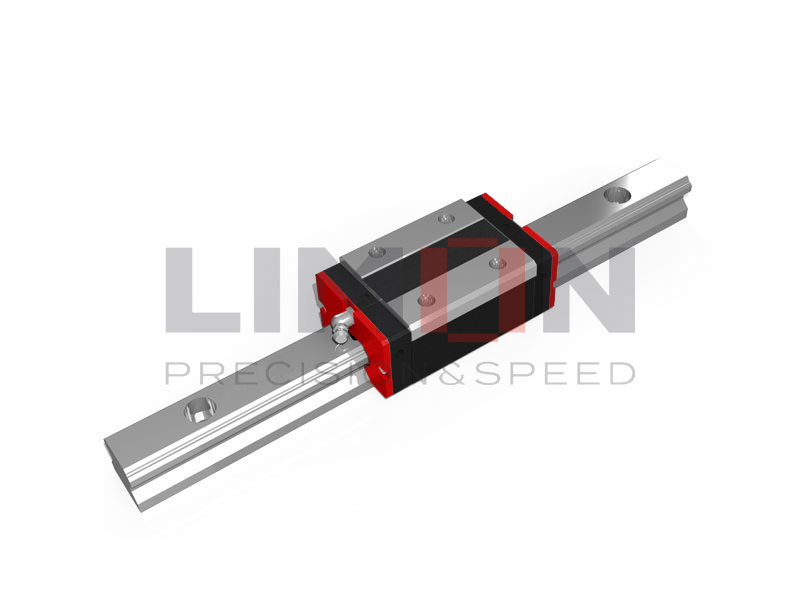
The operating principle behind linear motion guide rails is relatively straightforward yet highly effective. A rail serves as the fixed track, while a carriage block contains rolling elements that circulate continuously during movement.
As the carriage travels along the rail, the rolling elements reduce contact friction compared to traditional sliding surfaces. This results in smoother motion, higher speeds, lower energy consumption, and superior positioning accuracy.
Engineers often choose guide rails based on factors such as load capacity, moment resistance, operating speed, environmental conditions, and required accuracy. Different rolling element designs can optimize performance for specific applications.
For example, systems requiring extreme precision may utilize ground rails and preloaded carriages, while heavy-duty industrial applications may prioritize load-bearing capability and durability.
Limon’s manufacturing expertise allows us to maintain tight tolerances throughout production, ensuring our guide rails provide consistent performance even in demanding industrial environments. Combined with our direct-sales business model, customers receive premium-quality products without unnecessary supply-chain costs.
When Should You Use a Miniature Linear Motion Guide?
Compact automation systems require specialized motion solutions. A miniature linear motion guide is specifically engineered for applications where installation space is limited but precision remains critical.
Miniature guides are commonly found in:
- Semiconductor manufacturing equipment
- Dispositifs médicaux
- Laboratory automation systems
- Optical inspection machines
- Compact robotic systems
- Precision assembly equipment
Despite their small size, a high-quality miniature linear motion guide can deliver impressive accuracy and load capacity. Their lightweight construction also helps improve acceleration and overall system responsiveness.
As industries continue moving toward miniaturization and higher levels of automation, demand for compact guide systems continues to grow rapidly. Designers increasingly seek solutions that maximize performance while minimizing space requirements.
Limon’s integrated manufacturing capabilities enable us to produce precision miniature guide systems with exceptional dimensional accuracy and long service life, helping customers achieve reliable motion control in space-constrained environments.
How Does a Ball Screw Linear Motion Guide Improve Performance?
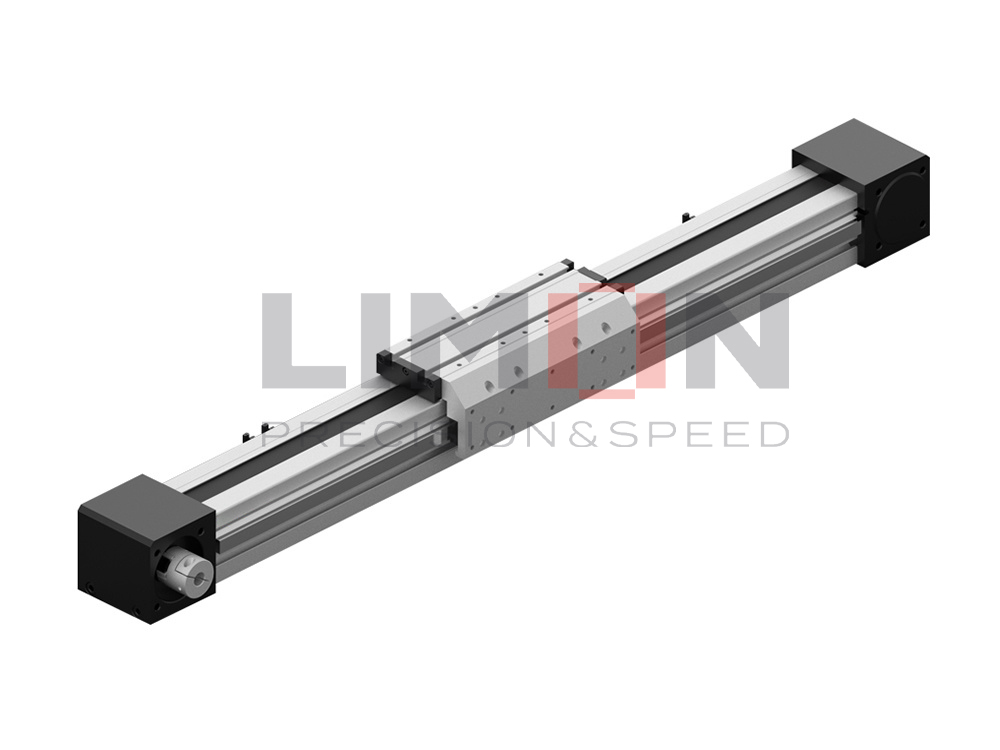
In many automation systems, linear guides work alongside ball screws to create complete positioning solutions. A ball screw linear motion guide combines precise linear guidance with efficient motion transmission, creating highly accurate movement systems.
The guideway supports and stabilizes the moving load, while the ball screw converts rotary motor motion into controlled linear travel. Together, these components deliver:
- Grande précision de positionnement
- Excellente répétabilité
- Réduction des vibrations
- Greater load capacity
- Smooth motion characteristics
- Longue durée de vie
Applications such as CNC machining centers, automated assembly equipment, laser cutting systems, and robotic positioning platforms frequently utilize ball screw linear motion guide des systèmes d'alimentation en eau.
At Limon, our expertise extends beyond guide rails to include ball screws, linear bearings, and complete linear motion assemblies. This allows customers to source fully compatible motion components from a single manufacturer, reducing integration challenges and improving overall system performance.
Why Is the Linear Motion Guide Rail 400 Popular in Industrial Applications?
Le linear motion guide rail 400 is a commonly specified rail length used in numerous industrial and automation systems. While guide rails are available in many customized lengths, the 400 mm format offers an excellent balance between compact installation requirements and usable travel distance.
Applications frequently utilizing a linear motion guide rail 400 inclure :
- Desktop CNC machines
- Systèmes d'inspection automatisés
- Electronics assembly equipment
- Laboratory automation devices
- Small robotic platforms
Selecting the correct rail length is critical for ensuring adequate support, minimizing deflection, and maximizing machine performance. Engineers must carefully evaluate travel requirements, load distribution, mounting conditions, and structural rigidity.
Limon provides customized rail lengths and machining services to accommodate unique customer specifications. Thanks to our vertically integrated manufacturing process, we can deliver both standard and custom configurations with consistent quality and competitive lead times.
How Do You Select the Right Linear Motion Guideway?
Choosing the ideal linear motion guideways solution requires careful evaluation of multiple performance factors.
Important selection criteria include:
Capacité de charge
Determine both static and dynamic loads that the guideway must support throughout operation.
Accuracy Requirements
Precision automation systems often require high-grade guide rails with tighter manufacturing tolerances.
Vitesse et accélération
High-speed equipment may require optimized carriage designs to minimize friction and heat generation.
Conditions environnementales
Dust, moisture, chemicals, and extreme temperatures can influence guideway selection and sealing requirements.
Service Life Expectations
Long operating cycles may justify higher-performance guide systems with enhanced durability.
At Limon, our engineering team works directly with customers to identify the most suitable guideway solutions. Because we manufacture our products in-house, we can provide tailored recommendations based on actual application requirements rather than generic catalog specifications.
What Trends Are Shaping the Future of Linear Motion Guideways?
L'avenir de la linear motion guideways is closely tied to advancements in smart manufacturing, robotics, and industrial automation.
Several important trends are emerging:
- Higher precision requirements
- Increased automation adoption
- Compact machine designs
- Predictive maintenance technologies
- Smart sensor integration
- Higher operating speeds
- Une plus grande efficacité énergétique
Manufacturers increasingly require guide systems capable of delivering superior accuracy while supporting continuous operation in automated environments.
Innovations in materials, lubrication technologies, and manufacturing processes are helping improve guideway performance while reducing maintenance requirements. At the same time, integrated monitoring systems are enabling predictive maintenance strategies that reduce downtime and increase productivity.
Limon continuously invests in advanced manufacturing technologies and quality control processes to ensure our linear motion products remain aligned with the evolving needs of modern industry. Our commitment to innovation allows customers to confidently prepare for the future of automation.
Conclusion
Linear motion guideways are fundamental components in modern automation, providing the precision, stability, and efficiency required for today’s advanced machinery. Whether you’re implementing a miniature linear motion guide, specifying a linear motion guide rail 400, integrating a ball screw linear motion guide, or selecting high-performance linear motion guide rails for industrial equipment, choosing the right solution directly impacts machine performance and reliability.
With fully integrated manufacturing, direct-to-customer sales, strict quality control, and expert technical support, Limon delivers reliable, high-performance linear motion solutions that help customers achieve greater productivity, precision, and long-term success.
2.jpg)