In today’s world of smart factories, automated warehouses, CNC machinery, and advanced robotics, precision motion control is no longer optional—it’s essential. If you’ve ever asked, “what are linear actuators and how do they work?” you’re in the right place.
Au Limon, we design and manufacture high-performance linear motion products—including guides linéaires, vis à billes, linear bearings, and integrated linear actuators—for demanding industrial applications across North America and beyond. In this guide, we’ll answer key questions like:
- Linear actuator what is it?
- What are linear actuators used for?
- What is a linear motor actuator?
- How do you choose the right actuator for your system?
Voyons cela en détail.
Linear Actuator — What Is It?
Let’s start with the basics.
Linear actuator — what is it?
A linear actuator is a mechanical device that converts energy (electric, hydraulic, or pneumatic) into straight-line motion. Unlike rotary motors that spin in a circular motion, linear actuators create controlled movement along a single axis—forward and backward.
In practical terms, if you need to:
- Push or pull a load
- Position a tool head
- Lift a platform
- Automate a sliding mechanism
—you need a linear actuator.
In industrial automation across the United States—whether in automotive manufacturing in Michigan, aerospace facilities in Texas, or distribution centers in California—linear actuators are a foundational motion component.
À quoi servent les actionneurs linéaires ?
If you’re asking what are linear actuators used for, the short answer is: almost everywhere precise movement is required.
Here are some real-world industrial examples:
CNC et machines-outils
Ball screw-driven linear actuators move cutting heads with micron-level accuracy. This ensures dimensional precision in metal fabrication and machining.
Robotique et automatisation
Robotic arms rely on coordinated motion systems combining linear and rotary motion. Linear actuators control extension and positioning along axes.
Packaging & Material Handling
In high-speed packaging lines, actuators enable repeatable product positioning, sealing, sorting, and palletizing.
Équipement médical
From hospital beds to imaging systems, actuators provide safe and reliable positioning.
Renewable Energy Systems
Solar panel tracking systems often use linear actuators to adjust panel angles for maximum sunlight exposure.
Across all these industries, reliability, load capacity, and precision matter. That’s where engineered solutions like Limon’s integrated actuator systems provide a measurable advantage.
Types of Linear Actuators
Not all actuators are built the same. Choosing the right one depends on load, speed, precision, environment, and budget.
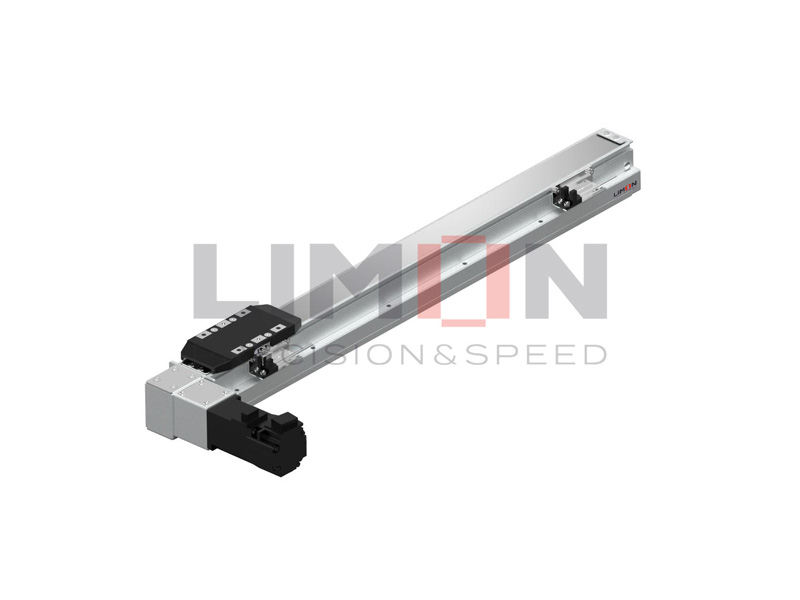
Ball Screw Linear Actuators
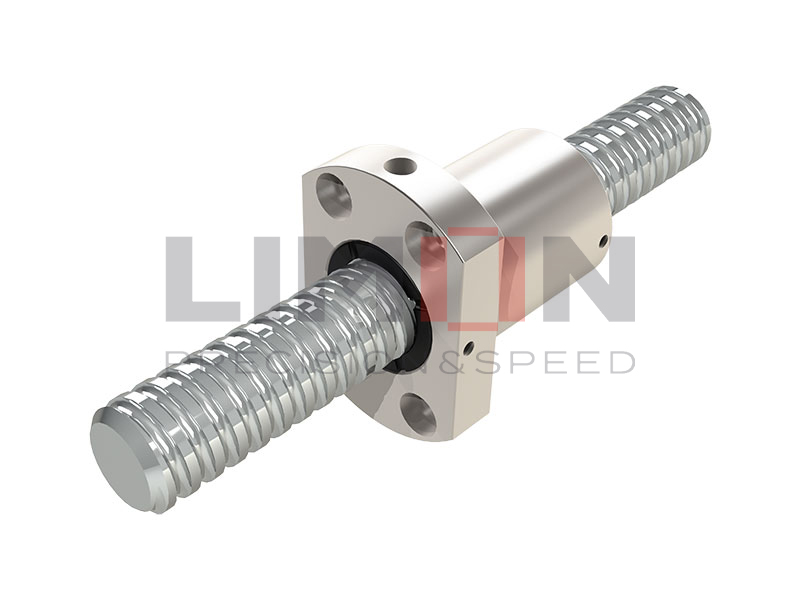
Ball screw actuators use recirculating ball bearings to convert rotary and linear motion efficiently. A servomoteur rotates the screw, and the nut translates along its length.
Avantages :
- High precision (ideal for CNC and automation)
- Capacité de charge élevée
- Excellent efficiency
- Longue durée de vie
This is one of the most common industrial solutions in American manufacturing environments.
Belt-Driven Linear Actuators
These use timing belts to transfer motor torque into linear movement.
Idéal pour :
- Long stroke applications
- High-speed positioning
- Moderate load conditions
They’re frequently used in packaging systems and light automation lines.
Linear Motor Actuators
Now let’s answer a key question: what is a linear motor actuator?
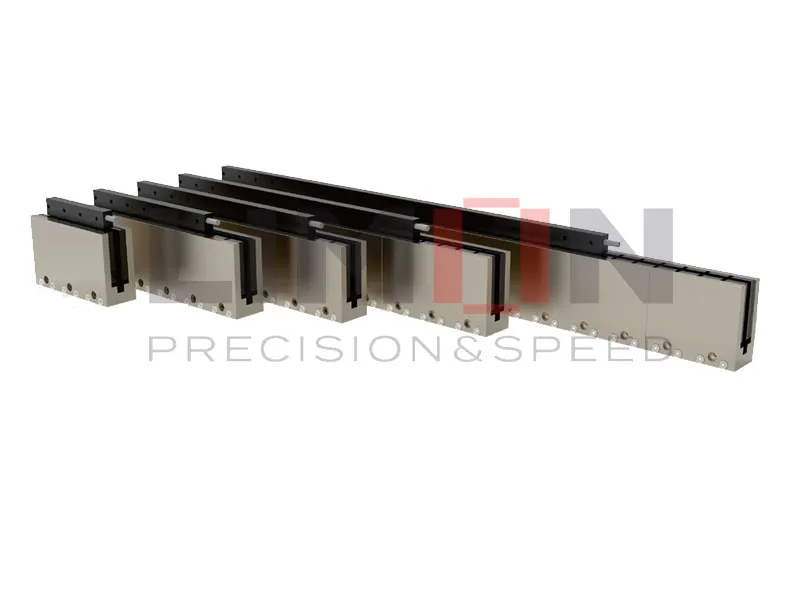
A linear motor actuator eliminates the mechanical conversion of rotary to linear motion. Instead of spinning a screw, the motor itself produces direct linear force using electromagnetic principles.
Benefits:
- Ultra-high speed
- Extremely smooth motion
- Zero mechanical backlash
- Entretien minimal
These are common in semiconductor manufacturing and high-end precision systems.
If your application demands extreme acceleration and tight positioning tolerances, a linear motor actuator may be the right solution.
Electric vs Pneumatic vs Hydraulic Actuators
In North American industrial automation, electric linear actuators dominate due to:
- Efficacité énergétique
- Clean operation
- Un contrôle précis
- Integration with PLC and servo systems
Hydraulic systems still serve heavy-duty applications, while pneumatic actuators are common in light-duty, cost-sensitive environments.
For most modern smart factories, electric systems offer the best balance of performance and control.
Linear and Rotary Motion: How They Work Together
Most automation systems don’t rely on only one motion type. Instead, they combine linear and rotary motion to achieve complex movement.
Par exemple :
- A robotic arm rotates (rotary motion) while extending forward (linear motion).
- A CNC machine spins a cutting tool (rotary) while moving it across material (linear).
- An automated assembly line uses rotating indexing tables paired with linear slides.
Understanding how rotary and linear motion interact is critical when designing a reliable system. The quality of your linear motion components directly impacts system accuracy, vibration control, and overall lifecycle cost.
At Limon, our integrated production line ensures that components like rails de guidage linéaires, vis à billes, and actuators work seamlessly together for maximum mechanical harmony.
Key Specifications to Consider When Choosing a Linear Actuator
If you’re evaluating options, here are essential factors to review:
- Capacité de charge
How much weight must the actuator push or pull?
- Longueur de la course
What is the required travel distance?
- Vitesse et accélération
Is this a high-speed packaging line or a precision positioning application?
- Précision et répétabilité
CNC machines demand micron-level precision. Warehouse automation may not.
- Cycle de travail
Will it operate continuously in a 24/7 production environment?
- Conditions environnementales
Consider dust, moisture, temperature, and vibration.
Choosing the wrong actuator can lead to premature wear, alignment issues, or costly downtime. That’s why engineered system matching matters.
The Future of Linear Actuators in American Manufacturing
The U.S. manufacturing landscape is evolving rapidly with:
- Industry 4.0 integration
- Smart sensors and predictive maintenance
- Increased automation due to labor shortages
- Growth in electric vehicle production
- Expansion of warehouse robotics
All of these trends increase demand for high-performance linear actuators.
Future-ready systems require:
- Une plus grande précision
- Faster speeds
- Integrated smart feedback
- Longer lifecycle performance
Manufacturers that invest in robust motion systems today are positioning themselves for long-term competitiveness.
Pourquoi les actionneurs linéaires Limon se démarquent
At Limon, we’re not just resellers—we’re a fully integrated manufacturer. That means:
- In-house production of ball screws and linear guides
- Des normes rigoureuses en matière de contrôle qualité
- Optimized compatibility between components
- Cost-effective direct-to-customer supply
Our vertical integration allows us to offer:
- Custom stroke lengths
- Tailored load capacities
- OEM/ODM support
- Reliable lead times
Whether you need a compact actuator for automation or a heavy-duty solution for industrial machinery, we deliver engineered motion systems built for reliability.
Questions fréquemment posées
What are linear actuators in simple terms?
They are devices that convert energy into straight-line motion to push, pull, or position loads.
Linear actuator — what is it used for?
It’s used in automation, robotics, medical equipment, packaging, CNC machinery, and countless industrial systems.
What is a linear motor actuator?
It’s an actuator that produces direct linear motion without mechanical conversion from rotary motion.
How long do linear actuators last?
With proper installation and maintenance, high-quality ball screw actuators can operate for tens of thousands of hours.
Final Thoughts: Choosing the Right Motion Partner
Understanding what are linear actuators is just the first step. The real advantage comes from selecting the right design, materials, and manufacturing partner.
In today’s competitive industrial environment, performance and reliability are not optional—they’re mission-critical.
If you’re building or upgrading a system that relies on linear and rotary motion, Limon offers the engineering support and production capacity to help you succeed.
Ready to optimize your motion system?
Explore our full range of linear actuators, ball screws, and linear guide solutions—and let’s move your automation forward.