Are vibration, positioning errors, or excessive friction reducing the accuracy and reliability of your linear motion system?
Guide rails provide stable and controlled linear movement by guiding a moving component along a fixed path. Linear guide rails reduce friction, improve positioning accuracy, support loads, and enable smooth motion in CNC machines, automation systems, robotics, and 3D printers.
Guide rails are available in different sizes and configurations. Understanding their functions, applications, and selection factors helps you choose the right solution for your machine.
What Are Guide Rails and How Do They Work?
Guide rails are mechanical components designed to support and guide moving parts along a fixed linear path. They are widely used in industrial machinery because they help control movement while maintaining stability, accuracy, and repeatability.
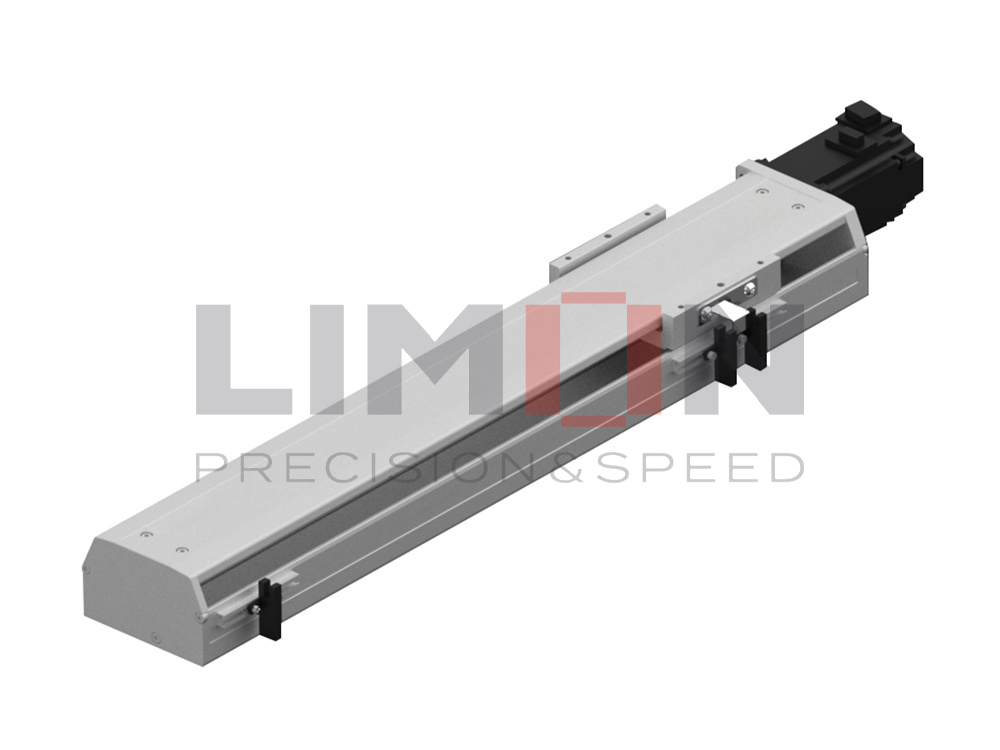
A typical linear guide rail system consists of a stationary rail and a moving guide block. The rail is mounted to the machine structure, while the block moves along the rail. Rolling elements, such as steel balls or rollers, are positioned between the rail and block to reduce friction and allow smooth movement.
The main function of a guide rail is not simply to make movement easier. It also controls the direction of movement and helps prevent unwanted lateral or rotational movement. This is especially important when a machine needs to repeatedly move a platform, tool, workpiece, or actuator along a specific axis.
A linear slide guide rail can provide smooth and controlled movement while supporting loads applied to the moving structure. When properly selected and installed, it can improve machine stability and reduce vibration and mechanical resistance.
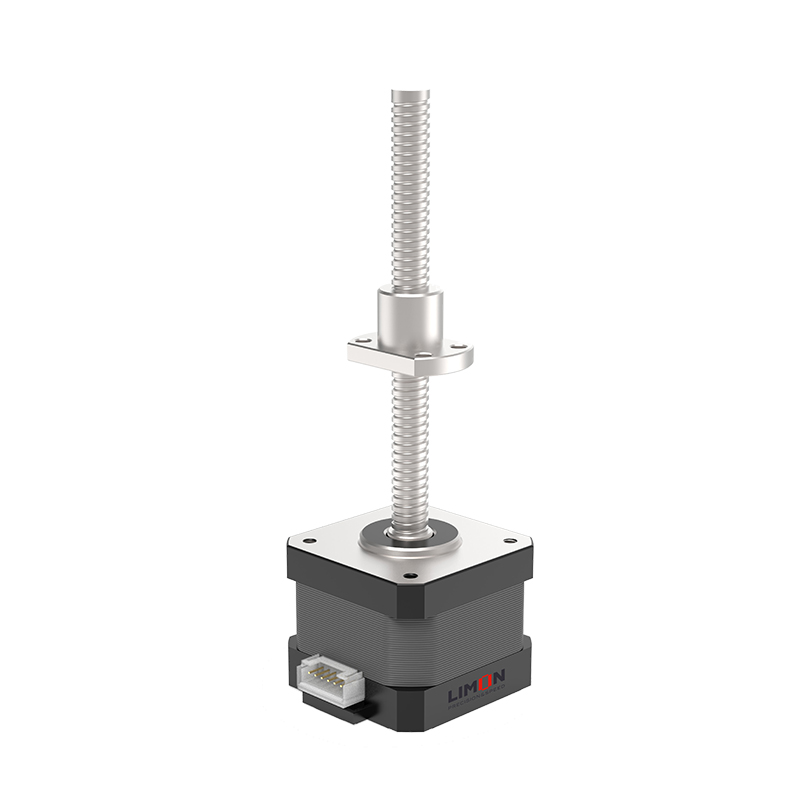
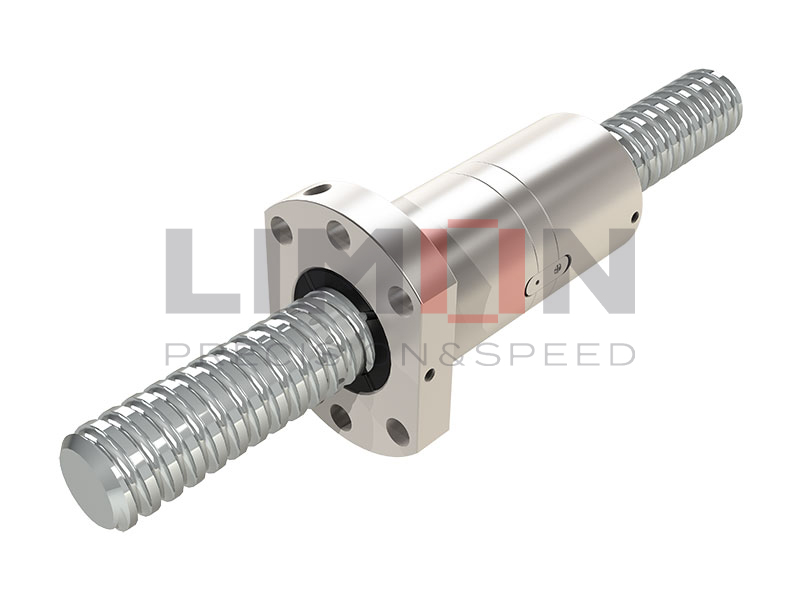
Guide rails are often used together with ball screws. The ball screw generates linear movement by converting motor rotation into linear displacement, while the guide rail supports and guides the moving platform. Together, these components form an important part of many precision linear motion systems.
Why Are Linear Guide Rails Important for Industrial Equipment?
Industrial machines often operate continuously and require accurate movement over thousands or even millions of cycles. Without an appropriate guiding mechanism, moving components may experience excessive friction, vibration, deflection, or positioning errors.
Linear guide rails provide a stable path for these movements. Their rolling contact mechanism can significantly reduce friction compared with traditional sliding guide systems. This allows moving components to travel smoothly while supporting the mechanical load.
Another major advantage is rigidity. When a machine experiences external forces, a properly selected guide rail helps keep the moving assembly stable. This is particularly important in CNC machining, automated production equipment, and precision positioning systems.
Accuracy is also closely related to guide rail performance. In applications where the position of a cutting tool, inspection device, or automated component must remain consistent, unwanted movement can directly affect the final result.
Guide rails also work as part of a larger mechanical system. Their performance is influenced by the mounting surface, ball screw, motor, bearings, coupling, load distribution, and control system. Selecting compatible components is therefore essential.
For industrial applications, a high quality guide rail should provide smooth movement, sufficient load capacity, appropriate rigidity, and reliable performance under the expected operating conditions.
Where Are Guide Rails Commonly Used?
Guide rails are used across a wide range of industries because controlled linear movement is required in many types of machinery.
Machines CNC
CNC machines require accurate movement along one or more axes. Linear guide rails help support the moving components and maintain a stable movement path during machining operations. Their rigidity and smooth movement can contribute to machining accuracy and overall machine performance.
Automatisation industrielle
Automation equipment frequently moves components between predefined positions. Assembly machines, inspection equipment, material handling systems, packaging machinery, and production lines can all use linear guide rails to achieve repeatable movement.
Robotique
Robotic systems may use guide rails for linear positioning axes, transfer systems, and automated handling equipment. In these applications, the guide system must often balance speed, load capacity, rigidity, and repeatability.
Imprimantes 3D
3D printers also require controlled linear movement along their X, Y, and Z axes. A linear guide for 3d printer applications can help the print head or build platform move along a stable and repeatable path.
Smooth movement is important for maintaining consistent layer alignment, dimensional accuracy, and surface quality. For compact desktop printers, smaller guide systems may be suitable, while industrial 3D printers may require stronger and more rigid solutions.
Équipement de précision
Inspection machines, measuring equipment, electronics manufacturing systems, and other precision equipment may also use guide rails when accurate and repeatable movement is required.
The correct guide rail depends on the application. A compact 3D printer, high speed automation machine, and heavy duty CNC machine can have very different requirements.
How Do You Choose the Right Linear Guide Rail?
Selecting a linear guide rail should start with the actual requirements of the machine rather than simply choosing a rail based on size.
Capacité de charge
Determine the total weight of the moving assembly and consider additional forces generated during acceleration, deceleration, machining, or external operation. The selected guide rail and block should have sufficient capacity for both static and dynamic loading conditions.
Vitesse et accélération
High speed movement and frequent acceleration can increase dynamic forces and mechanical stress. The guide system should be suitable for the required operating speed and acceleration profile.
Longueur de la course
The rail needs to provide sufficient travel for the application while maintaining appropriate support throughout the movement range. The required stroke should therefore be determined before selecting the rail length.
Précision et répétabilité
Precision applications require careful consideration of accuracy and repeatability. CNC machines, inspection systems, and precision automation equipment may require higher performance linear guide systems than general material handling applications.
Installation Conditions
The mounting surface must provide sufficient flatness, rigidity, and stability. Incorrect installation can create additional loads and friction, causing noise, vibration, uneven wear, or inconsistent movement.
Environnement opérationnel
Dust, moisture, metal particles, temperature changes, and other contaminants can affect guide rail performance. Applications in harsh environments may require appropriate protection, sealing, lubrication, and maintenance procedures.
Compatibilité
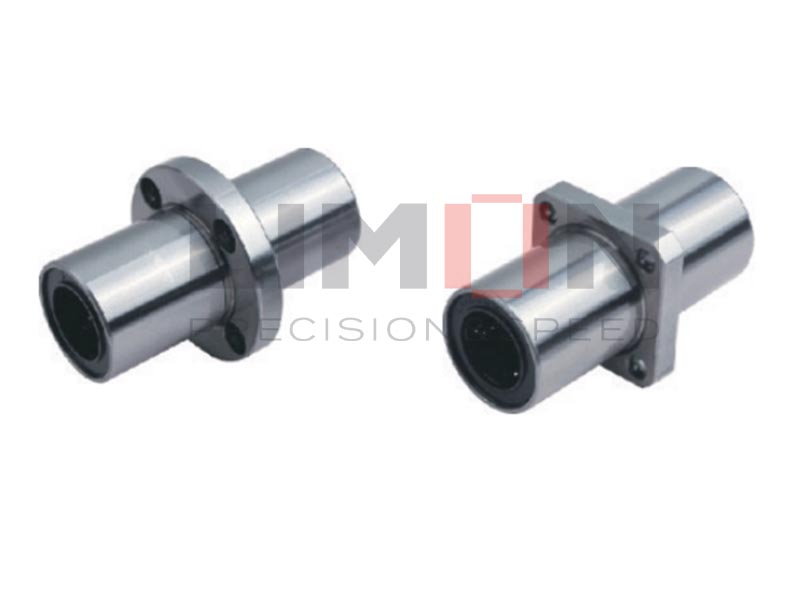
The guide rail should be compatible with other components in the linear motion system. Ball screws, linear bearings, motors, actuators, couplings, and support structures should be considered together to create a balanced system.
Choosing the correct specification based on these factors can help improve service life, movement stability, and overall machine reliability.
What Is the Difference Between a Linear Guide Rail and a Ball Screw?
A linear guide rail and a ball screw may be installed in the same machine, but they perform different functions.
A linear guide rail provides guidance and support. It controls the movement path of the moving component and helps maintain stability during operation.
A ball screw primarily provides mechanical transmission. It converts rotary motion from a motor into linear movement through recirculating balls between the screw shaft and nut.
For example, in a CNC machine, the motor rotates the ball screw to move the machine platform. At the same time, the linear guide rails support the platform and keep it moving along the correct path.
This difference is important when designing a linear motion system. A ball screw cannot replace the guiding function of a linear guide rail, while a guide rail cannot independently provide powered linear movement.
Using the two components together can provide a more complete solution. The ball screw delivers controlled movement, while the guide rail provides guidance, support, and stability.
For applications requiring high accuracy and repeatability, both components should be selected according to the same load, speed, stroke, rigidity, and environmental requirements.
What Problems Can Affect Guide Rail Performance?
Even a high quality linear guide rail can experience performance problems if it is incorrectly selected, installed, lubricated, or maintained.
Désalignement
Misalignment is one of the most common causes of increased friction and uneven wear. The guide rail should be properly aligned with the machine structure and other guiding components.
Poor Mounting
An uneven or insufficiently rigid mounting surface can affect movement accuracy and stability. The rail should be installed on a suitable surface according to the requirements of the machine.
Contamination
Dust, metal chips, particles, and moisture can enter the moving mechanism and accelerate wear. Protective measures may be required when guide rails operate in demanding industrial environments.
Incorrect Lubrication
Insufficient lubrication can increase friction and wear, while inappropriate lubrication may also affect performance. A suitable maintenance schedule should be established according to the operating environment and product requirements.
Excessive Loading
Operating beyond the recommended load capacity can shorten service life and affect movement quality. Dynamic forces caused by acceleration and external loads should also be considered during product selection.
When unusual noise, vibration, resistance, or positioning errors appear, the complete linear motion system should be inspected. The cause may be related to alignment, lubrication, contamination, mounting, load distribution, or interaction with other components.
Why Choose Limon for Linear Guide Rail Solutions?
Selecting a reliable manufacturer is an important part of building a dependable linear motion system. Customers need not only high quality components but also technical support that helps them select products according to their actual application requirements.
Limon is a linear motion products manufacturer specializing in linear guide rails, ball screws, linear bearings, and linear actuators. With a fully integrated production line, Limon maintains control over the manufacturing process and provides reliable, high performance linear motion products.
Production entièrement intégrée
Limon has an integrated production system that supports consistent manufacturing and quality control. This allows customers to source important linear motion components from an experienced manufacturer rather than managing multiple suppliers for different products.
Direct Sales
Limon sells products directly through its independent website. Direct communication can make it easier for customers to explain their machine requirements and discuss product selection without unnecessary supply chain complexity.
High Quality Products
Guide rails directly affect machine movement, stability, and positioning performance. Limon focuses on providing high quality linear motion products designed for demanding industrial applications.
Professional Technical Support
Choosing the right guide rail requires more than knowing the required rail length. Load, speed, acceleration, stroke, accuracy, mounting conditions, lubrication, and compatibility with other components all need to be considered.
Limon provides technical support to help customers evaluate these requirements and select suitable linear motion products.
Because Limon also provides ball screws, linear bearings, and linear actuators, customers can develop a more coordinated linear motion system rather than selecting individual components in isolation.
Conclusion
Guide rails are essential for achieving stable, smooth, and repeatable linear movement. From CNC machines and industrial automation to robotics and 3D printers, the right guide system can improve load support, movement stability, accuracy, and machine reliability.
Selecting the right linear guide rail requires careful consideration of load, speed, acceleration, stroke, accuracy, installation conditions, operating environment, lubrication, and compatibility with other components.
Limon provides reliable, high performance linear motion solutions supported by a fully integrated production line, direct sales, high quality manufacturing, and professional technical support.
Whether you need a linear slide guide rail for industrial equipment or a linear guide for 3d printer applications, Limon can help you develop a dependable linear motion solution based on your actual requirements.