Wrong motion component selection can cause vibration, assembly delays, and unstable accuracy. These problems may increase maintenance cost and delivery risk. ✅ A clear comparison helps engineers choose correctly.
A linear guide is generally designed for higher precision, higher rigidity, and controlled load capacity, while a linear slide is usually a more integrated or simplified sliding unit for easier installation. The correct choice depends on accuracy demand, load direction, speed, installation space, maintenance conditions, and total system cost.
👉 The following comparison explains their structure, performance, applications, and selection logic in practical automation projects.
1. What Is a Linear Guide?
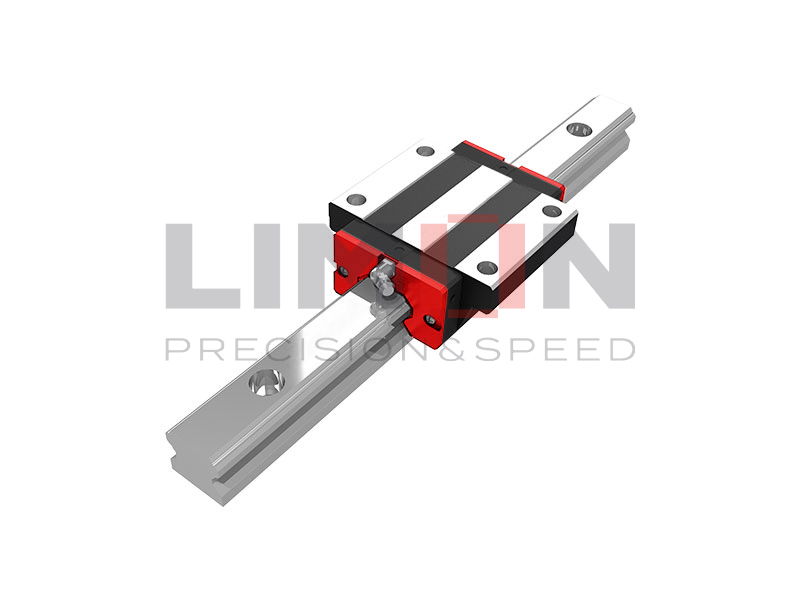
A guide linéaire, also called a guidage linéaire, is a precision linear motion component that supports and guides a moving load along a rail. It usually consists of a profiled rail and one or more bearing blocks. Inside the block, rolling elements circulate to reduce friction and provide smooth movement.
In industrial automation, linear guides are commonly used where accuracy, rigidity, and repeatable motion are required. Typical applications include:
- Machines CNC
- Équipements semi-conducteurs
- Laser engraving machines
- High-speed transfer systems
- Matériel médical
- Machines d'emballage
- Precision measuring equipment
- Lignes de production automatisées
The main advantage of a linear guide is its ability to carry load in multiple directions while maintaining stable motion. For example, LIMON H series linear guideways use a four-row design et circular-arc groove structure. This allows equal load ratings in radial, reverse radial, and lateral directions, while also providing high rigidity and smooth operation.
Another important feature is self-aligning capability. This helps absorb certain installation errors caused by surface irregularities, making installation more practical for many equipment builders.
Linear guides are also available in different performance levels:
✅ Standard ball-type guideways are suitable for general automation and machine applications.
✅ Low-noise and self-lubricating guideways, such as QH and QE series, are suitable for high-speed, low-noise, and low-dust environments.
✅ Roller-type guideways, such as R series, are suitable for heavy-duty cutting machines, CNC grinding machines, and machining centers where higher load capacity and rigidity are required.
2. What Is a Linear Slide?
A linear slide is a sliding motion unit designed to provide linear movement with easier assembly. In many cases, it consists of a linear bearing installed inside an aluminum housing, together with pre-drilled mounting holes. It may also be called a unité de glissement.
Compared with a separate rail-and-block linear guide system, a linear slide usually focuses more on:
- Convenient installation
- Easy replacement
- Cost-effective motion
- Reduced assembly work
LIMON slide units, such as SC, TBR, SME, KBA, and KBE series, are designed to reduce the mechanical designer’s assembly work. They combine a standard linear bearing and an aluminum housing, making them easier to mount with screws.
Linear slides are widely used in CNC machines, factory automation, industrial machines, and other equipment requiring basic linear motion. They can offer good interchangeability, high precision, rigidity, low friction, and easy replacement, depending on the model and installation condition.
However, linear slides are usually less suitable for extremely high rigidity or high-accuracy applications compared with profiled linear guideways. Their performance depends heavily on the shaft, support structure, bearing type, housing accuracy, and installation method.
Pour light to medium-duty motion, linear slides can be a practical and economical choice.
3. Linear Guide vs Linear Slide: Key Differences
✅ Structure
A guide linéaire uses a profiled rail and a matched bearing block. The rail surface and block raceway are designed for controlled contact with rolling elements.
A linear slide usually combines a linear bearing with a housing and moves along a round shaft or supported shaft structure.
✅ Rigidity
Linear guides generally provide higher rigidity because the block and rail are designed to resist load from several directions. Roller-type linear guides can provide even higher rigidity because rollers have a larger contact area than balls.
Linear slides can provide sufficient support for many standard applications, but their rigidity is usually limited by the shaft and housing structure.
✅ Accuracy
Linear guides are usually preferred when the machine requires stable positioning, smooth travel, and long-term accuracy. They are available in different precision grades, such as C, H, and P.
Linear slides can also support accurate movement, but they are more commonly used where moderate precision and easier assembly are more important than the highest positioning performance.
✅ Installation
Linear slides are usually easier to install because the bearing and housing are already combined. This reduces design and assembly time.
Linear guides require more attention to rail mounting surface accuracy, parallelism, preload, lubrication, and block alignment. However, when installed correctly, they provide stronger performance.
✅ Application Range
Linear guides are suitable for precision equipment, machine tools, automation systems, semiconductor equipment, and heavy-load machinery.
Linear slides are suitable for general linear transmission, simple positioning systems, light-duty automation, and equipment where fast installation and easy replacement are important.
4. When Should a Linear Guide Be Selected?
A guide linéaire should be selected when the equipment requires:
- Grande rigidité
- Capacité de charge élevée
- Fonctionnement fluide
- Accurate guidance
- Multi-directional load resistance
- Long-term motion stability
Pour high-speed automation machines with limited space, low-profile guideways such as LIMON E series may be suitable.
For high-tech industries requiring high speed, low noise, and low dust generation, QH or QE series can be considered because of their low-noise, self-lubricating, and smooth movement design.
Pour heavy-duty cutting, CNC machining centers, and grinding machines, roller guideways such as R series are more appropriate because they provide higher load capacity and longer running life.
A linear guide is also suitable when the customer needs product consistency, long-term performance, and stable quality control. For distributors and end users, this is important because unstable motion components can lead to complaints, machine downtime, and additional service cost.
5. When Should a Linear Slide Be Selected?
A linear slide should be selected when the application requires:
- Simple installation
- Acceptable precision
- Faible friction
- Easy replacement
- Cost-effective linear movement
- Reduced mechanical design workload
For example, a slide unit can be practical in factory automation equipment, CNC auxiliary devices, packaging machines, testing equipment, and general industrial machinery. Since the bearing and housing are already integrated, the assembly process becomes simpler. This helps equipment builders reduce design time and installation workload.
Linear slides can also be attractive when cost control is important. For distributors, this product category can serve customers who need reliable linear motion components at competitive prices.
However, the load, shaft support, travel length, working environment, and required accuracy should still be checked carefully before selection.
6. How to Choose Between Them
The selection should begin with application requirements.
✅ If the system requires high precision, heavy load, multi-directional rigidity, compact structure, or long service life, a guide linéaire is normally the better option.
✅ If the system requires simple motion, quick assembly, easier replacement, and lower overall cost, a linear slide may be more suitable.
Engineers should also consider the working environment. For clean rooms, semiconductor equipment, and low-dust applications, low-noise and self-lubricating guideways may be preferred. For machines générales, a standard slide unit may provide enough performance. For heavy cutting or high-moment load conditions, a roller linear guide is usually more reliable.
Supplier capability is another important factor. A reliable supplier should provide:
- Consistent dimensional control
- Contrôle strict de la qualité
- Suitable precision grades
- Technical selection support
- Stable delivery
- Product range continuity
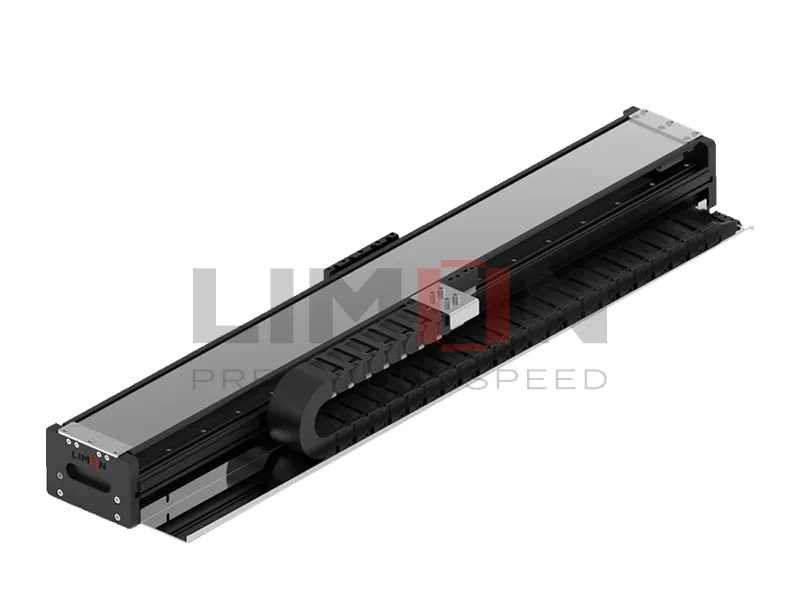
LIMON produces linear guideways, ball screws, linear modules, and related linear motion products, serving distributors and end users in multiple markets. Its linear guide product range includes H, E, QH, QE, R, and M series, while its slide unit range includes SC, TBR, SME, KBA, and KBE series.
Conclusion
Linear guides fit precision, rigidity, and demanding motion. Linear slides fit simple installation, replacement, and cost-effective linear movement.