Dans le secteur industriel américain, la précision n’est pas un luxe, mais une nécessité. Que vous fabriquiez des machines à commande numérique dans l’Ohio, des systèmes robotiques en Californie ou des équipements d’automatisation médicale dans le Massachusetts, votre plate-forme de mouvement détermine la fiabilité à long terme de votre système.
Au cœur de la plupart des machines de précision se cache une combinaison puissante :
Systèmes à vis à billes et rail linéaire.
Si vous êtes en train d'évaluer des composants d'animation pour votre prochain projet, ce guide vous expliquera :
- Qu'est-ce qu'un système de vis à billes sur rail linéaire ?
- Pourquoi les ingénieurs optent-ils pour une combinaison rail linéaire et vis à billes ?
- Quand utiliser un kit de vis à billes sur rail linéaire ?
- Comment la fabrication intégrée améliore les performances et le retour sur investissement
Voyons cela en détail.
Qu'est-ce qu'un système à vis à billes et rail linéaire ?
Un système à vis à billes sur rail linéaire intègre deux composants de mouvement essentiels :
- Rails linéaires (guides linéaires) – Assurent un guidage linéaire fluide et précis avec un frottement minimal.
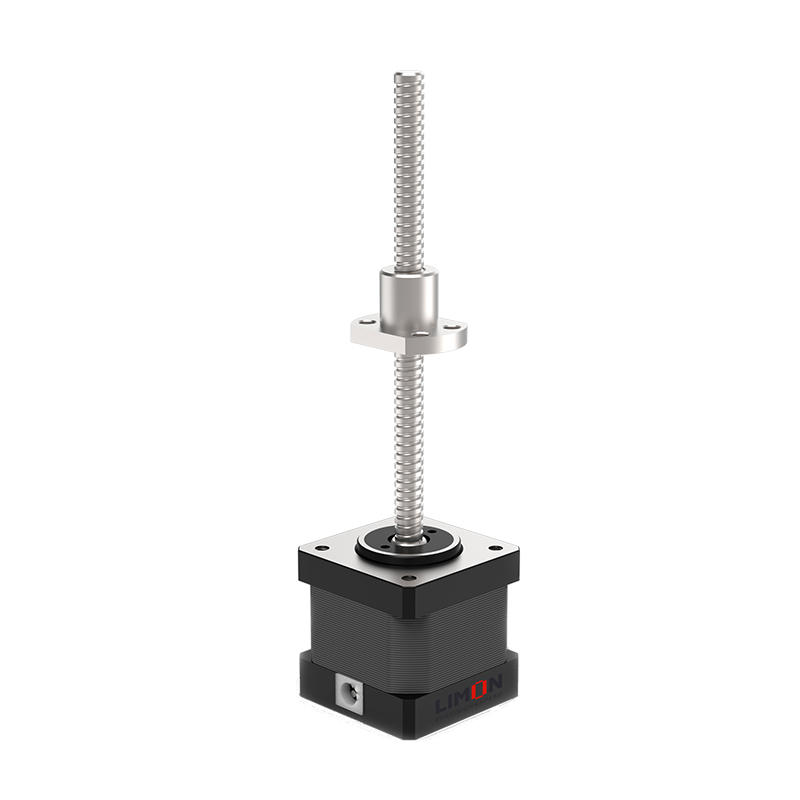
- Vis à billes – Transforment un mouvement rotatif en un mouvement linéaire précis avec un rendement élevé.
Ensemble, un rail linéaire et vis à bille Cet ensemble constitue une plateforme complète de mouvement linéaire capable de supporter des charges élevées, de respecter des tolérances strictes et de fonctionner en continu.
En termes simples :
- Le rail linéaire assure le contrôle de la direction et de la stabilité.
- Le vis à bille détermine la précision du mouvement et du positionnement.
Cette combinaison est largement utilisée dans les machines à commande numérique, les systèmes d'automatisation, la robotique et la fabrication de semi-conducteurs.
Pourquoi les ingénieurs choisissent-ils les systèmes à rail linéaire et à vis à billes ?
Dans tous les secteurs d'activité aux États-Unis, les ingénieurs recherchent des systèmes de mouvement qui offrent :
- Répétabilité
- Durabilité
- Précision
- Efficacité énergétique
- Peu d'entretien
Un système à vis à billes sur rail linéaire correctement conçu offre ces cinq avantages.
- Haute précision et répétabilité
Vis à billes peut atteindre une précision de positionnement de l'ordre du micron lorsqu'il est associé à des rails rectifiés avec précision. Cela est essentiel dans les domaines suivants :
- Usinage CNC
- Systèmes de découpe au laser
- Équipements semi-conducteurs
- Outillage aérospatial
Pour les fabricants évoluant dans des secteurs où les tolérances sont très strictes, la différence entre bénéfice et rebut peut se mesurer en microns.
- Capacité de charge supérieure
Les rails linéaires répartissent la charge de manière uniforme sur les éléments roulants, tandis que vis à billes absorber efficacement les forces axiales.
On obtient ainsi un rail linéaire et vis à bille système idéal pour :
- Systèmes de portiques lourds
- Presses industrielles
- Manutention automatisée
- Plates-formes élévatrices verticales
Lorsqu'il est correctement conçu, le système conserve sa rigidité sous une charge dynamique.
- Rendement énergétique par rapport aux systèmes hydrauliques
Les systèmes à vis à billes à entraînement électrique atteignent généralement un rendement mécanique compris entre 85 et 95%.
Par rapport aux systèmes hydrauliques, une configuration à vis à billes sur rail linéaire présente les avantages suivants :
- Fonctionnement plus propre
- Réduction de la consommation d'énergie
- Intégration simplifiée de l'automatisation
- Réduction des coûts de maintenance
Pour les fabricants américains qui misent sur des processus de production allégés, cela se traduit directement par une amélioration des marges.
Kit de guidage linéaire à vis à billes : pourquoi les solutions intégrées sont-elles importantes ?
De nombreux intégrateurs de systèmes préfèrent acheter un kit de vis à billes sur rail linéaire plutôt que de se procurer les composants séparément.
Qu'est-ce qu'un kit de vis à billes sur rail linéaire ?
Un kit de vis à billes sur rail linéaire comprend généralement :
- Vis à billes pré-usinée
- Ensemble écrou à billes
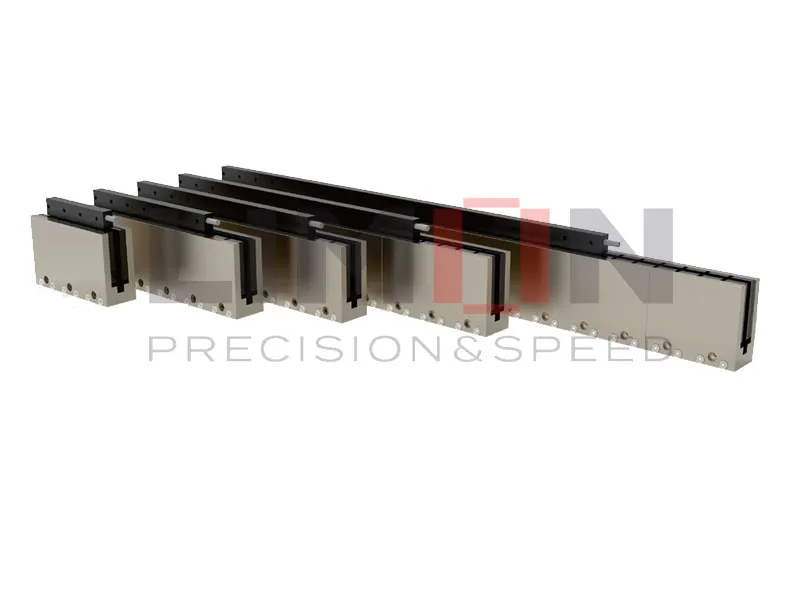
- Rails de guidage linéaire
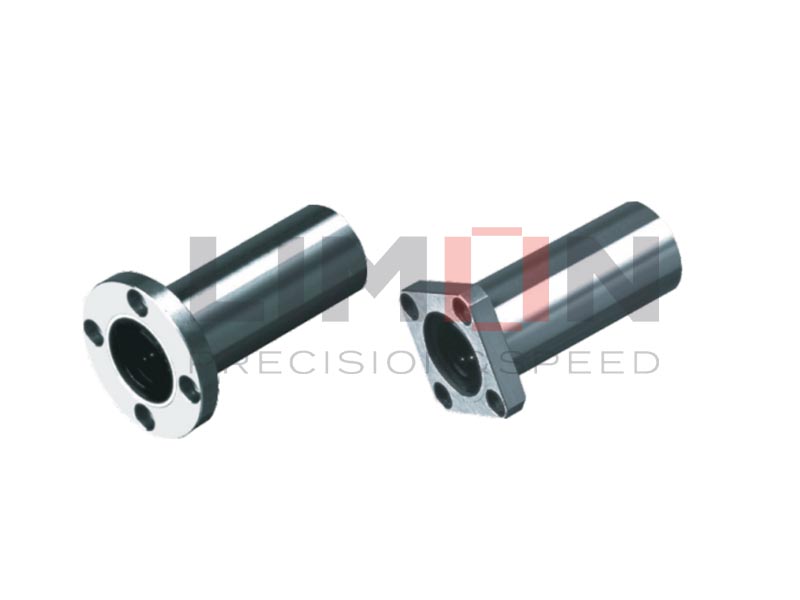
- Blocs de roulement ou chariots
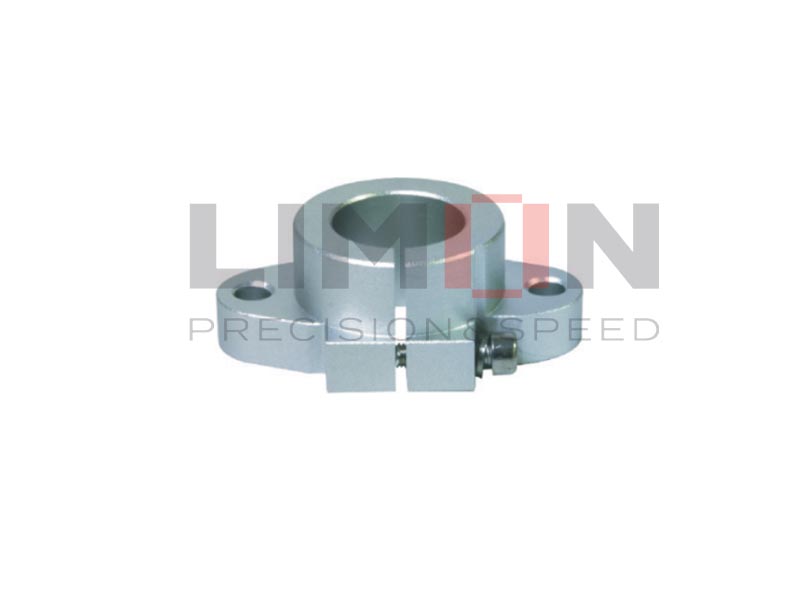
- Supports de fixation
- Raccords et supports
Au lieu de devoir assurer la compatibilité à partir de zéro, ce kit propose des composants pré-assortis, conçus pour fonctionner ensemble.
Avantages de l'utilisation d'un kit de guidage linéaire à vis à billes
- Réduction du temps consacré à l'ingénierie
Les problèmes de compatibilité entre les rails et les vis peuvent entraîner des problèmes d'alignement, des vibrations et une usure prématurée.
Un kit préconfiguré comprenant un rail linéaire et une vis à billes vous évite d'avoir à faire des essais à l'aveuglette.
- Amélioration de l'alignement du système
La fabrication intégrée garantit :
- Tolérances appariées
- Étalonnage correct de la précharge
- Mouvement plus fluide
- Jeu réduit
- Installation plus rapide
Pour les constructeurs de machines américains soumis à des calendriers de production serrés, le temps d'installation est un facteur déterminant. Un kit complet permet de réduire au minimum les temps d'arrêt et d'accélérer le montage du système.
Domaines d'application des systèmes à vis à billes sur rail linéaire
Examinons quelques applications concrètes des vis à billes à guidage linéaire dans les principaux secteurs d'activité américains.
Machines à commande numérique et fabrication métallique
Dans les ateliers d'usinage du Texas et du Michigan, les fraiseuses à commande numérique s'appuient sur des systèmes de rails linéaires et de vis à billes pour :
- Déplacement selon les axes X, Y et Z
- Positionnement de l'outil
- Précision de coupe à grande vitesse
Des vis à billes rectifiées avec précision, associées à des rails linéaires à usage intensif, offrent la rigidité nécessaire au respect de tolérances serrées.
Automatisation et robotique
Les chaînes de production modernes exigent des mouvements reproductibles.
Les applications comprennent
- Robots de manutention « pick-and-place »
- Automatisation de l'assemblage
- Systèmes d'emballage
- Plates-formes d'inspection
La fluidité du déplacement et la précision constante du positionnement d'une plate-forme à vis à billes sur rail linéaire garantissent des performances robotiques stables.
Équipement médical
Les dispositifs médicaux nécessitent des mouvements silencieux et précis.
Parmi les utilisations courantes, on peut citer :
- Positionnement des équipements d'imagerie
- Réglage de la table d'opération
- Systèmes d'automatisation de laboratoire
Dans ces environnements, un fonctionnement fluide et une longue durée de vie sont indispensables.
Fabrication de semi-conducteurs et de composants électroniques
Les équipements pour semi-conducteurs exigent une précision extrêmement élevée.
Un système de guidage linéaire et de vis à billes bien conçu offre les avantages suivants :
- Positionnement au micron près
- Stabilité thermique
- Précision à long terme
Ce secteur continue d'être à l'origine des innovations dans le domaine des composants de mouvement de haute précision.
Considérations techniques relatives au choix d'un rail linéaire à vis à billes
Le choix de la bonne configuration nécessite une analyse minutieuse.
- Exigences en matière de charge
- Capacité de charge statique
- Capacité de charge dynamique
- Choc de charge
Un mauvais choix de dimensions réduit la durée de vie.
- Niveau de précision
Vis à billes sont disponibles dans différentes classes de précision (C0 à C10). Une précision plus élevée est requise pour :
- CNC
- Aérospatiale
- Applications médicales
- Type de rail
Les options disponibles sont les suivantes :
- Rails profilés standard
- Rails miniatures
- Rails carrés pour charges lourdes
Le choix des rails a une incidence directe sur la rigidité du système.
- Conditions environnementales
Envisager :
- Exposition à la poussière
- Présence de liquide de refroidissement
- Variations de température
- Risques de corrosion
Les revêtements protecteurs et les systèmes d'étanchéité prolongent la durée de vie.
Pourquoi la fabrication intégrée fait la différence
Tous les systèmes de mouvement n'offrent pas les mêmes performances.
Un fabricant intégré verticalement offre des avantages tels que :
- Rectification de vis en interne
- Usinage de précision de rails
- Traitement thermique contrôlé
- Contrôle qualité rigoureux
Ce niveau de contrôle de la fabrication garantit que chaque ensemble vis à billes sur rail linéaire répond à des normes de performance constantes.
Pour les acheteurs américains, la fiabilité de la chaîne d'approvisionnement et la constance de la qualité sont tout aussi importantes que les caractéristiques techniques.
Tendances futures dans le domaine des systèmes à guidage linéaire et à vis à billes
Alors que l'Industrie 4.0 transforme le secteur manufacturier, certaines tendances se dessinent clairement :
- Vitesse plus élevée, accélération plus forte
Les systèmes d'automatisation exigent des cadences plus élevées sans pour autant compromettre la précision.
- Intégration de la surveillance intelligente
Les systèmes équipés de capteurs permettent une maintenance prédictive et des diagnostics en temps réel.
- Plateformes de mouvement compactes et modulaires
Les clients privilégient de plus en plus les solutions modulaires de kits de guidages linéaires à vis à billes, qui s'intègrent parfaitement aux châssis des machines.
- Personnalisation accrue
Les équipementiers souhaitent des courses, des interfaces de montage et des capacités de charge sur mesure.
Comment optimiser le retour sur investissement grâce à un système de guidage linéaire à vis à billes adapté
Pour garantir des performances durables :
- Choisissez des composants compatibles
- Veillez à ce que l'alignement soit correct lors de l'installation
- Utilisez un lubrifiant adapté
- Effectuer l'entretien programmé
- Collaborez avec un fabricant qui assure le contrôle de la qualité de bout en bout
Un système d'entraînement inadapté engendre des coûts liés aux temps d'arrêt supérieurs aux économies réalisées au départ.
Conclusion : c'est ici que commence la conception de systèmes de mouvement fiables
Un système à vis à billes et rail linéaire n'est pas seulement un composant : c'est la colonne vertébrale de votre plateforme d'automatisation.
Que vous conceviez :
- Machines CNC
- Systèmes robotiques
- Matériel médical
- Lignes d'automatisation industrielle
Le choix d'une combinaison adaptée de rail linéaire et de vis à billes détermine la précision, la stabilité et la durée de vie du système.
Pour les ingénieurs et les constructeurs de machines à travers les États-Unis, investir dans des composants de mouvement de haute qualité, c'est investir dans la performance, la fiabilité et un avantage concurrentiel.