Des usines de fabrication de pointe du Michigan aux laboratoires de robotique de haute technologie de la Silicon Valley, l'automatisation redéfinit la manière dont les États-Unis construisent, se déplacent et innovent. Au cœur de cette transformation se trouve un composant de mouvement essentiel : le système robotique à actionneur linéaire.
Alors que la robotique continue d'évoluer au-delà des modèles traditionnels exclusivement rotatifs, le mouvement linéaire devient indispensable pour offrir davantage de flexibilité, de portée et de précision. Que ce soit dans la production industrielle, les dispositifs médicaux, l'automatisation logistique ou la robotique collaborative, l'intégration d'un bras robotique à actionneur linéaire façonne l'avenir du contrôle du mouvement.
Dans ce guide, nous aborderons les points suivants :
- Qu'est-ce qu'un robot à actionneur linéaire ?
- Comment le mouvement linéaire améliore les performances des robots
- Principales applications industrielles sur le marché américain
- Considérations de conception à l'intention des ingénieurs et des équipementiers
- Tendances futures dans le domaine des actionneurs linéaires robotiques
- En quoi le choix d'un partenaire de mouvement adapté influe sur les performances
Qu'est-ce qu'un robot à actionneur linéaire ?
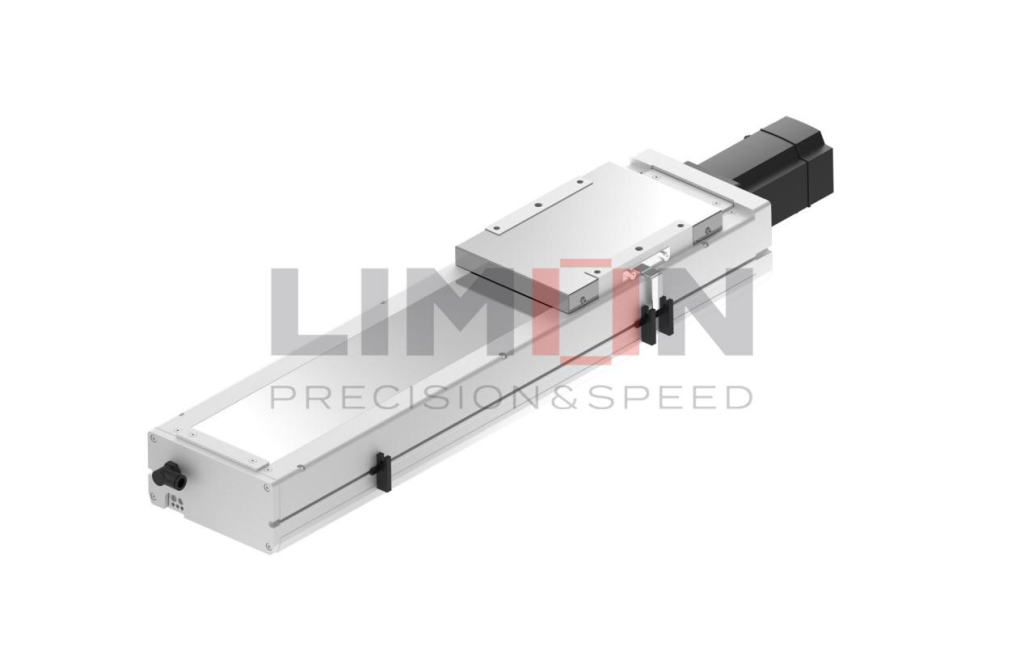
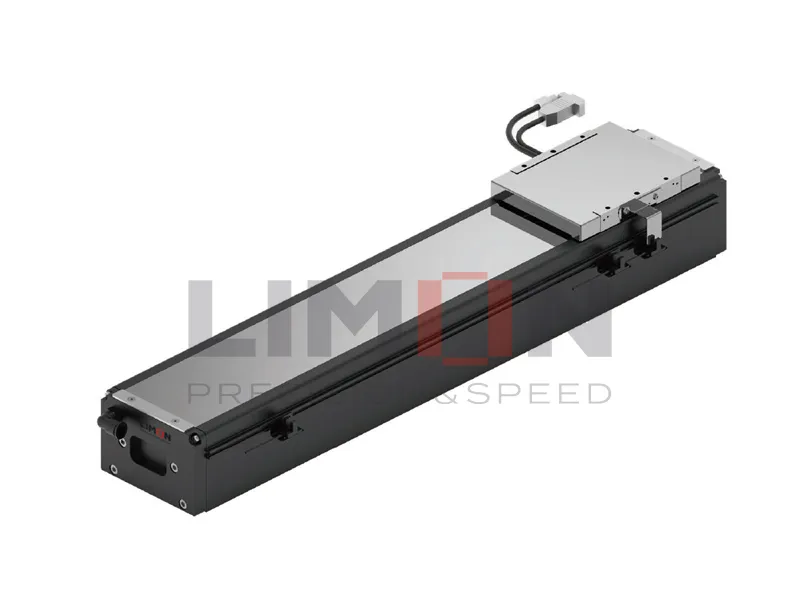
Un robot à actionneurs linéaires est un système robotique qui intègre des actionneurs linéaires afin de produire un mouvement en ligne droite. Contrairement aux bras robotiques traditionnels qui reposent uniquement sur des articulations rotatives, les actionneurs linéaires ajoutent un nouvel axe de déplacement, ce qui élargit l'enveloppe de travail du robot et accroît sa flexibilité opérationnelle.
Concrètement, un actionneur linéaire transforme le mouvement rotatif d'un moteur en un mouvement linéaire précis. Lorsqu'il est intégré à un système robotique, cela permet :
- Portée étendue
- Positionnement précis
- Manutention contrôlée des charges
- Accélération et décélération en douceur
Les actionneurs linéaires sont couramment utilisés dans :
- Robots à portique
- Robots cartésiens
- Extensions pour robots à 7e axe
- Plateformes d'inspection automatisées
Pourquoi le mouvement linéaire révolutionne la robotique
Le secteur industriel américain a de plus en plus besoin de systèmes d'automatisation qui soient :
- Évolutif
- Modulaire
- Haute précision
- Économe en énergie
- Facile à entretenir
Un bras robotisé à actionneur linéaire présente des avantages majeurs par rapport aux systèmes purement rotatifs.
- Champ d'action élargi
L'ajout d'un mouvement linéaire permet à un robot de couvrir des zones plus étendues sans accroître la complexité de ses articulations. Par exemple :
- Un robot de soudage peut se déplacer le long d'une chaîne de production.
- Un système de prélèvement et de placement peut desservir plusieurs postes.
- Un robot de chargement à commande numérique peut se déplacer sur des bancs de machine de grande longueur.
Un bras robotisé à actionneur linéaire permet de multiplier efficacement la productivité sans avoir à ajouter plusieurs robots.
- Précision améliorée
Lorsqu'il est fabriqué avec précision vis à billes ou de haute qualité rails de guidage linéaires, les actionneurs linéaires offrent une répétabilité exceptionnelle, ce qui est essentiel dans :
- Fabrication de semi-conducteurs
- Assemblage d'un dispositif médical
- Usinage de composants aérospatiaux
La précision du mouvement linéaire a une incidence directe sur la qualité et le rendement des produits.
- Capacité de charge utile accrue
Par rapport aux systèmes à entraînement par courroie, les actionneurs linéaires à vis ou à usage intensif offrent une poussée plus importante et une meilleure rigidité.
Les systèmes robotiques à actionneurs linéaires sont donc parfaits pour :
- Assemblage automobile
- Manutention de composants lourds
- Applications de changement d'outils
- Transport de matériaux
Principales applications des bras robotiques à actionneurs linéaires
Partout aux États-Unis, les industries intègrent rapidement la robotique à actionneurs linéaires dans leurs stratégies d'automatisation.
Fabrication industrielle
Les usines utilisent des systèmes de bras robotiques à actionneur linéaire pour :
- Assistance à l'usinage sur machines à commande numérique
- Automatisation du soudage
- Assistance à la découpe au laser
- Opérations de chaîne de montage
En augmentant sa portée grâce à un axe linéaire, un seul robot peut desservir plusieurs machines, ce qui permet de réduire l'investissement initial.
Automatisation des entrepôts et de la logistique
La croissance du commerce électronique a stimulé la demande en systèmes automatisés capables d'effectuer des préparations de commandes rapides et précises.
Un système robotique à actionneur linéaire permet :
- Machine de placement à longue course
- Automatisation de la palettisation
- Systèmes automatisés de stockage et de prélèvement (AS/RS)
La précision des mouvements réduit les erreurs et augmente le rendement.
Automatisation médicale et de laboratoire
Dans les environnements médicaux de haute précision, le mouvement linéaire robotisé garantit :
- Une gestion fluide des échantillons
- Un positionnement précis
- Faibles vibrations
La fiabilité d'un bras robotisé à actionneur linéaire bien conçu a une incidence directe sur la sécurité opérationnelle.
Aérospatiale et défense
Les constructeurs aérospatiaux américains ont besoin de systèmes de mouvement présentant les caractéristiques suivantes :
- Haute répétabilité
- Capacité de charge élevée
- Longue durée de vie
Les actionneurs linéaires intégrés aux systèmes robotiques répondent à ces exigences de performance rigoureuses.
Considérations techniques relatives aux systèmes robotiques à actionneurs linéaires
La conception d'une plateforme robotique à actionneur linéaire performante nécessite une sélection rigoureuse des composants.
- Choix du mécanisme d'entraînement
Parmi les options courantes, on peut citer :
- Entraînements à vis à billes (haute précision, charge élevée)
- Transmissions par courroie (course longue, vitesse élevée)
- Crémaillère et pignon (usage intensif, course allongée)
Pour les applications nécessitant un positionnement de précision, on privilégie généralement les actionneurs à vis à billes.
- Qualité des rails de guidage linéaires
Les rails de guidage de précision garantissent :
- Un voyage sans encombre
- Répartition de la charge
- Réduction des vibrations
- Longue durée de vie
La qualité du guidage a une incidence directe sur la précision du robot.
- Intégration du moteur et des systèmes de commande
Les servomoteurs, associés à des actionneurs de haute qualité, offrent :
- Contrôle précis de la vitesse
- Un positionnement précis
- Rétroaction en boucle fermée
- Profils de mouvement adaptatifs
La robotique moderne exige une intégration parfaite entre la mécanique et les systèmes de commande.
Tendances futures dans le domaine de la robotique utilisant des actionneurs linéaires
Aux États-Unis, l'automatisation évolue rapidement selon les principes de l'Industrie 4.0. Plusieurs tendances façonnent l'avenir de robot à actionneur linéaire des systèmes d'alimentation en eau.
Systèmes de mouvement plus intelligents
Des capteurs intégrés surveillent désormais :
- Conditions de charge
- Niveaux de vibrations
- Température
- Modèles d'usure
La maintenance prédictive réduit les temps d'arrêt et améliore l'efficacité opérationnelle.
Robotique collaborative (cobots)
Les cobots intègrent de plus en plus d'axes linéaires afin d'étendre leur portée tout en garantissant un fonctionnement sûr et convivial pour les humains.
Un bras robotisé à actionneur linéaire offre une plus grande flexibilité dans les environnements collaboratifs.
Plateformes d'automatisation modulaires
Les fabricants OEM privilégient les systèmes de mouvement modulaires pouvant être rapidement intégrés dans :
- Fabrication de machines sur mesure
- Cellules de fabrication flexibles
- Lignes de production évolutives
Les systèmes d'actionneurs linéaires modulaires permettent une mise en service plus rapide.
Efficacité énergétique
Les actionneurs linéaires électriques modernes remplacent les systèmes hydrauliques dans de nombreuses applications pour les raisons suivantes :
- Fonctionnement plus propre
- Maintenance réduite
- Efficacité accrue
- Réduction de l'impact environnemental
Le développement durable devient un moteur essentiel du design industriel américain.
Pourquoi la qualité de fabrication est-elle importante ?
En robotique, de légères imprécisions mécaniques peuvent entraîner :
- Erreurs de positionnement
- Usure accrue
- Vibrations du système
- Durée de vie réduite
Les performances d'un bras robotisé à actionneur linéaire hautement performant dépendent :
- Vis à billes usinées avec précision
- Rails de guidage linéaires haut de gamme
- Contrôle strict de la qualité
- Processus de production intégrés
Lorsque les composants de mouvement sont fabriqués au sein d'un même système intégré, la cohérence et la fiabilité s'en trouvent considérablement améliorées.
Un robot à actionneur linéaire est-il adapté à votre application ?
Si votre projet d'automatisation nécessite :
- Course linéaire allongée
- Positionnement de haute précision
- Augmentation de la capacité de charge utile
- Intégration robotique flexible
Une solution robotique à actionneur linéaire pourrait s'avérer être le choix optimal.
Que vous modernisiez un système CNC, conceviez une plate-forme à portique ou développiez des robots de nouvelle génération, l'intégration d'un système de mouvement linéaire permet d'améliorer les performances et la productivité.
Conclusion : Construire l'avenir de l'automatisation
L'avenir industriel des États-Unis repose sur des systèmes de mouvement plus intelligents et plus précis. L'intégration d'un bras robotisé à actionneur linéaire constitue une avancée majeure vers :
- Efficacité accrue
- Une plus grande flexibilité
- Réduction des coûts d'exploitation
- Fiabilité à long terme
À mesure que la robotique continue de progresser, la qualité de vos composants de mouvement linéaire sera déterminante pour la réussite de votre système.
Une base technique solide permet à l'automatisation de passer du simple niveau fonctionnel à un niveau d'excellence.