Are backlash, wear, vibration, or positioning errors making your linear motion system less reliable than expected?
A screw is a mechanical component that uses a helical thread to transmit force or convert rotary motion into linear motion. In modern automation, lead screws and ball screws provide controlled linear movement, with ball screws offering high efficiency, precision, rigidity, and repeatability for demanding applications.
Why Does the Screw Still Matter in Modern Motion Systems?
From ancient mechanical devices to precision automation, the screw has continuously evolved to solve demanding motion and positioning challenges.
What Is a Screw and How Does It Work?
A screw is one of the most fundamental mechanical elements in engineering. At its simplest, it consists of a shaft with a helical thread that interacts with a matching nut or threaded component. When the screw rotates, the thread creates a controlled relationship between rotational movement and axial movement. This basic principle allows engineers to transmit force, secure components, lift loads, adjust positions, or generate controlled linear motion.
The function of a screw depends heavily on its thread geometry. Important parameters include diameter, pitch, lead, thread profile, material, and surface condition. For a fastening application, the primary objective may be to create a secure mechanical connection. In a motion system, however, the screw becomes a transmission component that must deliver predictable movement under a specific load and speed.
This distinction is particularly important for linear motion. A lead screw uses sliding contact between the screw and nut to convert rotation into linear movement. A ball screw takes the concept further by using recirculating balls between the screw shaft and nut. Because rolling contact produces much less friction than conventional sliding contact, ball screws can provide high efficiency and accurate motion for demanding applications.
The screw therefore should not be considered simply a threaded rod. In a modern machine, it can be one of the key components responsible for determining positioning accuracy, repeatability, efficiency, speed, and service life.
For Limon, this is where screw technology connects directly with linear motion. Our ball screws work as part of a broader motion system alongside linear guide rails, bearings, and actuators, helping customers develop reliable and coordinated machine movement.
What Can the History of Screws Teach Us About Modern Engineering?
The history of screws demonstrates how a simple mechanical principle can develop into increasingly sophisticated motion technology. Early screw mechanisms are associated with ancient Greek engineering, particularly the Archimedean screw, which was used for applications such as lifting water. The screw principle later appeared in presses and other mechanical devices before becoming increasingly important in manufacturing.
During the development of machine tools, screws became especially important because they could provide controlled movement. By the Industrial Revolution, improvements in machining technology made it possible to produce threaded components more consistently and in greater quantities. Screw-cutting equipment helped move screw production away from purely manual manufacturing and toward industrial production.
Standardization was another major step. As manufacturing expanded, different thread forms and dimensions created compatibility problems between components produced by different manufacturers. The development of standardized thread systems made it easier to manufacture, replace, and integrate threaded components across different machines and industries.
Modern motion screws represent another stage of this evolution. Instead of using threads primarily for fastening, engineers can optimize thread geometry, lead accuracy, preload, rolling elements, materials, and manufacturing processes for precision motion.
This progression explains why the screw remains relevant despite its ancient origins. The basic mechanical principle has remained remarkably useful, while manufacturing technology has transformed its performance.
For a modern screw company, the challenge is therefore not simply producing a threaded shaft. It is controlling the manufacturing details that determine how accurately, smoothly, and reliably that screw performs inside a complete motion system.
What Is the Difference Between a Lead Screw and a Ball Screw?
Lead screws and ball screws both convert rotary motion into linear motion, but their internal mechanisms and performance characteristics are different.
A lead screw normally relies on sliding contact between the screw and nut. Its relatively simple structure can make it attractive for applications where cost, simplicity, compactness, or self-locking characteristics are important. Depending on the design, lead screws can be suitable for lower-speed positioning, adjustment mechanisms, lifting applications, and general automation.
A vis à bille, by comparison, uses recirculating balls between the screw shaft and nut. The balls roll along the raceways, reducing friction and allowing efficient transmission of rotary motion into linear movement. Ball screws are commonly selected when higher precision, efficiency, speed, rigidity, or repeatability is required.
| Fonctionnalité | Vis de plomb | Vis à billes |
| Contact type | Coulissant | Roulant |
| Friction | Plus élevé | Plus bas |
| Efficacité | Generally lower | Generally higher |
| Précision | Suitable for moderate requirements | Suitable for precision applications |
| Backlash control | Depends on nut design | Can be controlled through preload |
| Applications typiques | Adjustment, lifting, general motion | CNC, automation, robotics, precision positioning |
The choice should always depend on the application rather than the assumption that one technology is universally better. Load, speed, travel distance, duty cycle, required accuracy, operating environment, and cost all influence the decision.
Limon’s technical support helps customers evaluate these factors before selecting a screw. This is especially valuable when a screw must work together with linear guides, motors, bearings, and control systems.
How Do Lead, Accuracy, and Preload Affect Screw Performance?
The performance of a precision screw is strongly influenced by its lead, accuracy, backlash, and preload.
Plomb describes the axial distance a nut travels during one complete revolution of the screw. Selecting the appropriate lead involves balancing speed, resolution, thrust, and motor requirements. A larger lead can produce greater linear travel per revolution, while a smaller lead can provide finer mechanical movement.
Lead accuracy determines how closely the actual travel corresponds to the theoretical travel over a specified distance. This is particularly important for positioning equipment because accumulated lead error can influence the actual position of the moving component.
Retour de flamme refers to unwanted movement between mating components. In precision positioning systems, backlash can become particularly noticeable when the direction of movement changes.
C'est ici que preload becomes important. A preloaded ball screw applies controlled internal force between the balls, screw, and nut to reduce or eliminate axial clearance and increase rigidity. However, excessive preload can increase friction, torque, and heat generation, so the correct preload is a balance between stiffness, efficiency, and service life.
For this reason, simply choosing the highest accuracy class or strongest preload is not necessarily the best engineering decision. The screw should match the actual requirements of the machine.
Limon focuses on this application-based approach. Through an integrated production line and direct manufacturer-to-customer sales model, Limon can provide both high-quality motion components and technical support to help customers select specifications according to their real operating conditions.
How Do You Choose the Right Screw for a Linear Motion Application?
Choosing the right screw starts with understanding the complete operating profile of the machine. Selecting a diameter based only on available installation space can result in poor performance if speed, load, stiffness, or critical-speed requirements are overlooked.
The first consideration is charge. Determine the axial force the screw must transmit and identify whether external radial or moment loads could be applied. A ball screw is primarily designed to transmit axial force, while a separate linear guide should normally support and constrain the moving assembly.
Next, consider speed and acceleration. High-speed applications require careful evaluation of rotational speed, screw length, support configuration, and dynamic behavior. Longer screws may also require additional attention to critical speed and vibration.
Stroke and travel accuracy are equally important. The screw should provide sufficient travel while maintaining the required positioning performance across the working range.
The operating environment also matters. Dust, chips, moisture, temperature, and inadequate lubrication can affect screw life and motion quality. Proper alignment between the screw, bearings, and guide system is essential because misalignment can increase torque and accelerate wear.
Une liste de contrôle pratique pour la sélection comprend :
- Required axial load
- Maximum speed and acceleration
- Longueur de la course
- Précision de positionnement requise
- Repeatability requirements
- Lead and pitch
- Preload and backlash
- Screw diameter and length
- Mounting and support arrangement
- Lubrication requirements
- Conditions environnementales
- Expected operating life
Limon can support customers through this selection process, helping match the screw with compatible linear guides, bearings, actuators, and other motion components rather than treating each component independently.
How Can a High-Quality Screw Improve Industrial Equipment?
A well-selected and properly installed screw can influence much more than basic movement. It can affect machine efficiency, positioning consistency, vibration, noise, maintenance requirements, and overall production quality.
In CNC machines, ball screws are commonly used for feed axes where accurate and repeatable positioning is required. In automation equipment, they can move workpieces, tooling, inspection platforms, or robotic mechanisms. They can also be integrated into lifting systems, linear stages, assembly equipment, and precision positioning systems.
The screw also needs to work correctly with other mechanical components. For example, a ball screw may generate the required axial movement, while linear guide rails and bearings provide guidance and support. The motor supplies rotational power, and the control system determines when and how the axis moves.
This system relationship means that a high-quality screw cannot compensate for every weakness elsewhere in the machine. Poor alignment, inadequate support, unsuitable bearings, insufficient lubrication, or incorrect control parameters can all reduce overall performance.
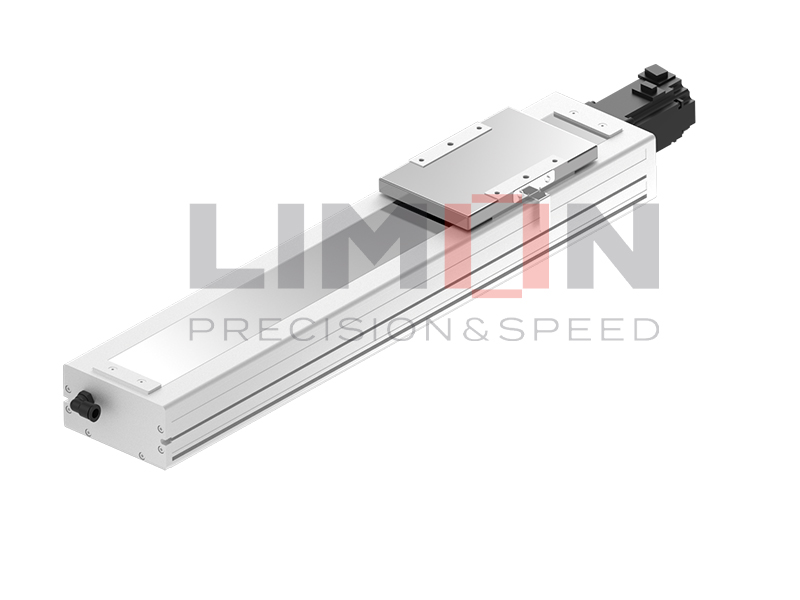
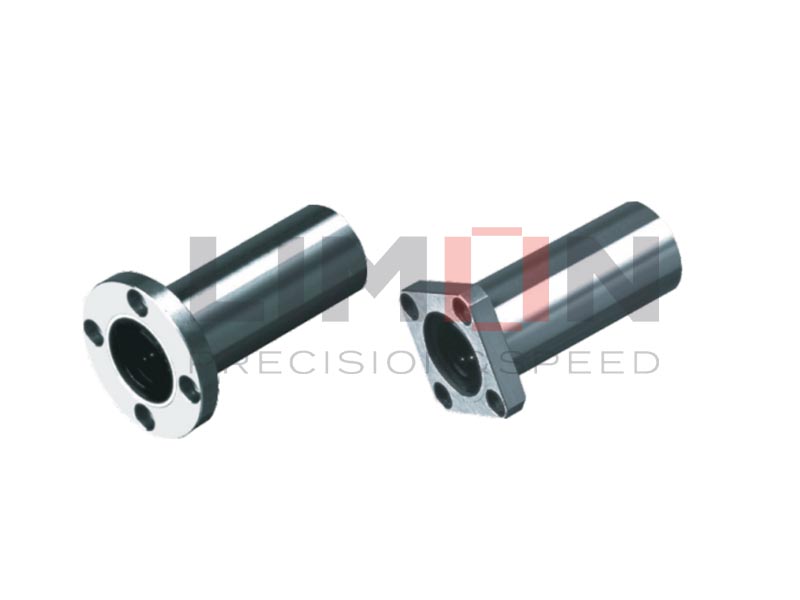
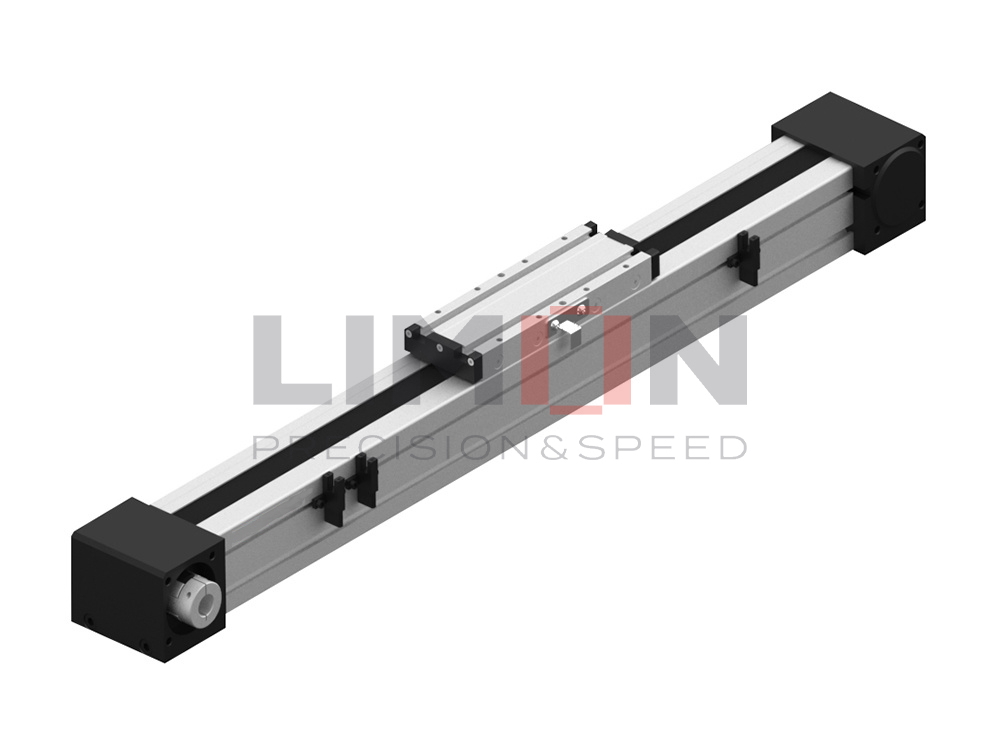
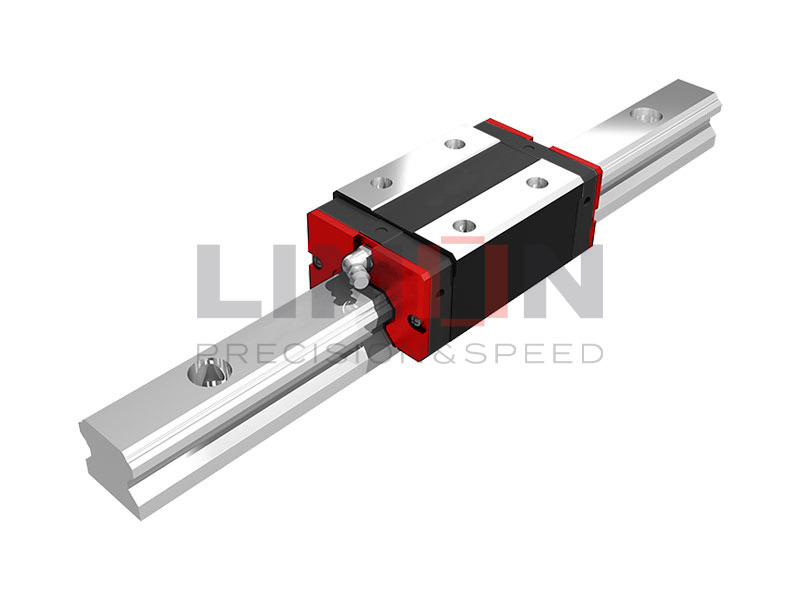
Limon’s integrated manufacturing capability provides an advantage here. With products including ball screws, linear guide rails, linear bearings, and linear actuators, Limon can help customers build a more coordinated linear motion solution.
Instead of simply purchasing an individual component from an unrelated supplier, customers can communicate directly with Limon for product selection and technical support. This direct-sales model can simplify communication and help engineers focus on the actual requirements of their application.
Why Choose Limon as Your Screw Company for Linear Motion?
When customers search for a screw company, they may initially focus on dimensions, price, or delivery time. For industrial applications, however, manufacturing consistency, product quality, technical support, and system compatibility can have an even greater impact on long-term value.
Limon is a linear motion product manufacturer specializing in components such as ball screws, linear guide rails, linear bearings, and linear actuators. Our fully integrated production line gives us greater control over manufacturing processes and helps us maintain consistent product quality.
This integrated approach is especially valuable for customers who need more than a single screw. A linear motion system often requires several components to work together, and selecting compatible products can directly affect machine performance.
Limon also sells directly through its own website, allowing customers to communicate with the manufacturer more directly. This helps reduce unnecessary communication layers and makes it easier to discuss specifications, application requirements, and technical questions.
Quality is another important part of the Limon approach. Precision motion components must maintain consistent geometry, surface quality, dimensional accuracy, and assembly performance to deliver reliable operation. High-quality manufacturing therefore forms the foundation of dependable linear motion.
Most importantly, Limon combines manufacturing capability with technical support. Whether customers are selecting a screw for a new machine, replacing an existing component, or developing a complete linear motion system, our team can help evaluate important parameters such as load, speed, stroke, accuracy, preload, and application conditions.
The goal is simple: provide customers with reliable, high-performance motion components that work effectively in real industrial applications.
components that work effectively in real industrial applications.
Conclusion
The screw has evolved from a simple mechanical principle into a sophisticated component for modern precision motion. Understanding the history of screws, thread design, lead, accuracy, preload, backlash, and application requirements helps engineers make better decisions when selecting motion components.
For demanding linear motion applications, choosing between a lead screw and ball screw should be based on the actual requirements for load, speed, precision, efficiency, and service life.
Limon combines an integrated production line, direct manufacturer sales, high-quality linear motion products, and professional technical support to provide des solutions de mouvement linéaire fiables et performantes.
From individual ball screws to complete systems integrating guides, bearings, and actuators, Limon helps customers turn rotational motion into controlled, dependable linear movement.