Is your linear motion system struggling with heavy loads, high speeds, or repeated cycles without sacrificing positioning accuracy?
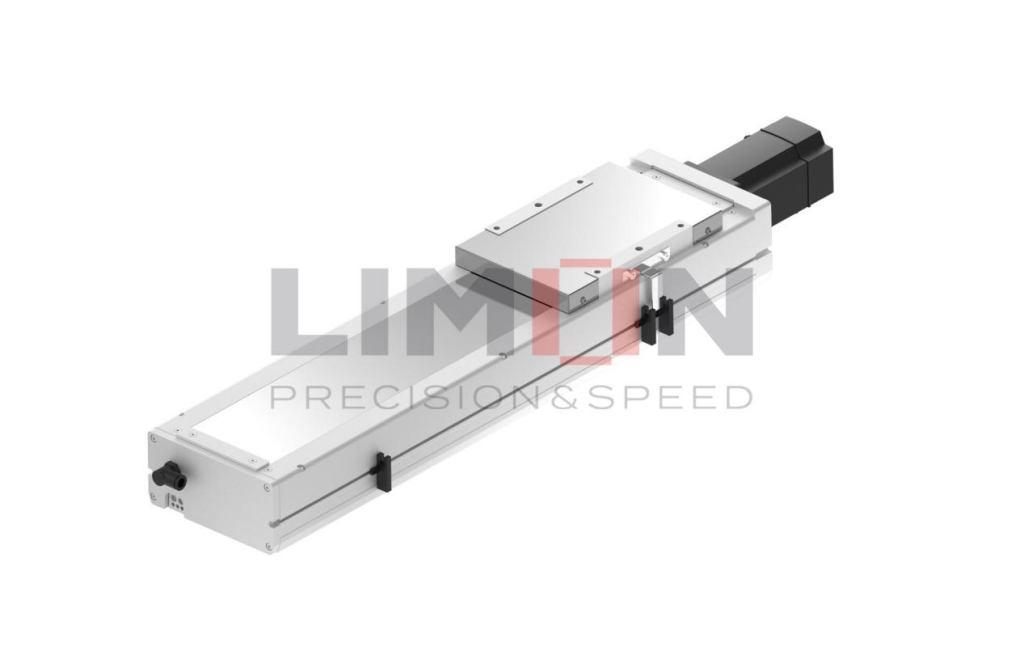
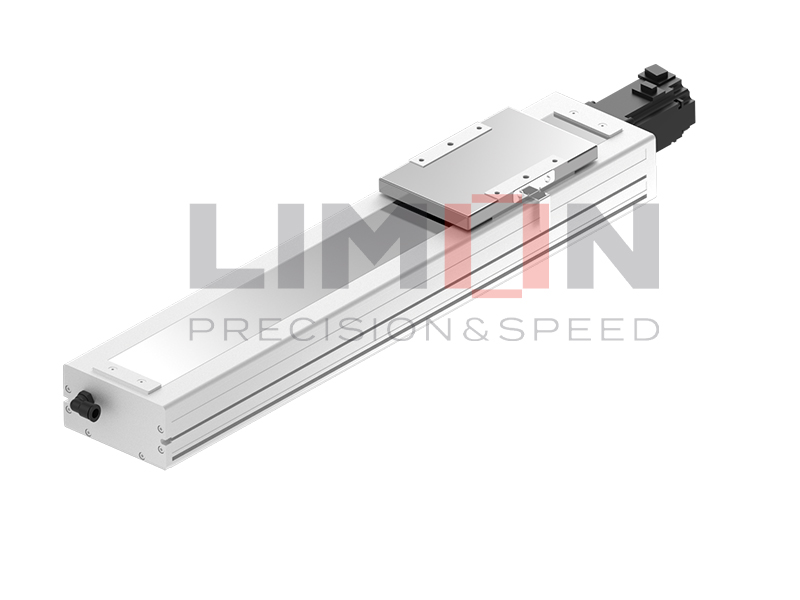
A heavy-duty linear actuator for high-speed applications must balance load capacity, travel speed, stroke length, accuracy, duty cycle, and durability. The right actuator should provide sufficient force and rigidity while maintaining stable motion under continuous operation and demanding industrial conditions.
Here’s how to evaluate performance, construction, and application requirements before choosing an actuator.
What Makes a Linear Actuator Heavy-Duty?
A heavy-duty linear actuator is designed to handle higher loads, greater mechanical stress, and demanding operating cycles than standard actuators. However, “heavy-duty” should not simply mean a larger motor. The entire motion system—including the drive mechanism, bearings, housing, guides, and mounting structure—must be capable of handling the application.
Load capacity is one of the first specifications to evaluate, but it should be considered together with acceleration, deceleration, stroke length, mounting orientation, and duty cycle. A vertical application, for example, places different demands on an actuator than a horizontal positioning system because gravity continuously affects the load.
A heavy-duty linear actuator may use a ball screw, lead screw, belt drive, or another transmission depending on the required performance. Ball-screw systems are often suitable when high force and precise positioning are important, while belt-driven designs can be advantageous for long, fast travel.
Limon’s integrated manufacturing capability allows key linear motion components to be produced and coordinated within one supply chain, helping customers select a solution based on actual application requirements rather than a single specification.
Can Heavy-Duty Actuators Also Achieve High Speed?
High load capacity and high speed can be difficult to combine because increasing speed also increases acceleration forces, friction, heat generation, and mechanical stress. This is why choosing a heavy duty high speed linear actuator requires more than checking the maximum advertised speed.
The transmission type has a major influence on performance. Ball screws can provide efficient force transmission and precise positioning, but their permissible rotational speed is influenced by screw diameter, length, critical speed, lubrication, and support configuration. Timing-belt systems can be particularly attractive when long travel and high linear speed are priorities.
Acceleration and deceleration should also be considered. An actuator repeatedly moving a heavy payload from zero to high speed experiences significantly greater dynamic loads than one operating at a constant moderate speed.
For demanding automation equipment, the actuator should therefore be evaluated as part of the complete motion system. Limon combines manufacturing capabilities for linear guides, ball screws, bearings, and actuators, helping customers develop motion solutions that balance speed, load, accuracy, and service life.
How Should You Calculate the Required Actuator Force?
Selecting an actuator based only on the payload weight can lead to undersizing. The required force depends on several factors, including payload mass, acceleration, friction, mounting angle, external forces, and—in vertical applications—gravity.
For a simplified horizontal application:
F = m × a + Ff
où F is the required linear force, m is moving mass, a is acceleration, and Ff represents friction and other resistance.
For vertical movement, gravity must also be considered. A simplified relationship is:
F = m × (g + a) + Ff
où g is gravitational acceleration.
These calculations provide a starting point, but real machines often involve additional loads, changing acceleration profiles, impact forces, and safety margins. Engineers should therefore avoid selecting an actuator exactly at its calculated limit.
A properly selected heavy-duty linear actuator should have sufficient capacity for both normal operation and foreseeable peak conditions. Limon’s technical support can help customers evaluate load, stroke, speed, and operating conditions when choosing suitable linear motion components.
Which Drive Mechanism Is Best for Heavy-Duty Applications?
Different drive mechanisms solve different motion problems. Ball screws are commonly selected when precision, rigidity, and high thrust are important. Their rolling-ball contact reduces friction and allows efficient transmission of motor torque into linear force.
Lead screws provide a simpler alternative for applications where moderate speed and positioning requirements are acceptable. Their design can also be useful when self-locking characteristics are desirable.
Timing-belt systems are often considered for high-speed and long-stroke applications. Because the motor drives a belt rather than a long rotating screw, they can provide fast linear movement over extended travel distances.
The choice should also account for environmental conditions. Dust, contamination, moisture, temperature, lubrication requirements, and installation orientation can all affect service life.
Limon does not approach actuator selection as a one-size-fits-all process. With an integrated production line and direct sales model, Limon can coordinate linear actuators with linear guides, ball screws, and other motion components. This reduces compatibility issues and gives customers direct access to product and technical support.
What Applications Need Heavy-Duty High-Speed Linear Actuators?
Heavy-duty high-speed linear actuators are particularly useful when machines need to move substantial loads quickly and repeatedly. Typical applications include automated production equipment, material handling systems, machine tools, packaging machinery, robotic positioning systems, lifting equipment, and industrial inspection systems.
In automated manufacturing, the actuator may need to accelerate a fixture rapidly, stop at a precise position, and repeat the same movement thousands of times. In material handling, the priority may instead be a combination of high payload capacity and long travel.
The application also determines the importance of accuracy and repeatability. A transfer mechanism may tolerate moderate positioning accuracy, while CNC or inspection equipment can require significantly tighter control.
Before choosing an actuator, define the actual motion profile:
<ul> <li>Payload and external force</li> <li>Required stroke length</li> <li>Target linear speed</li> <li>Acceleration and deceleration</li> <li>Positioning accuracy and repeatability</li> <li>Duty cycle and operating frequency</li> <li>Installation orientation</li> <li>Environmental conditions</li> </ul>
This application-first approach helps prevent over-specification and unexpected performance problems.
How Can You Improve Actuator Reliability and Service Life?
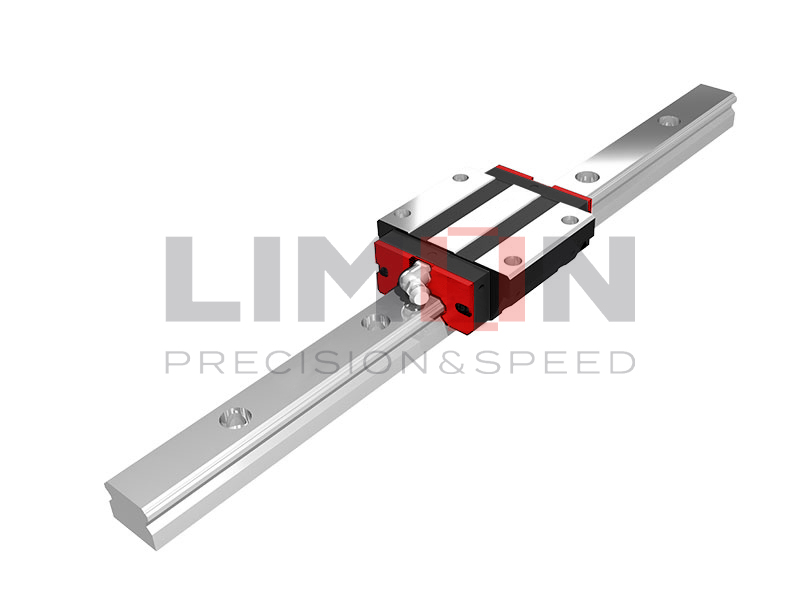
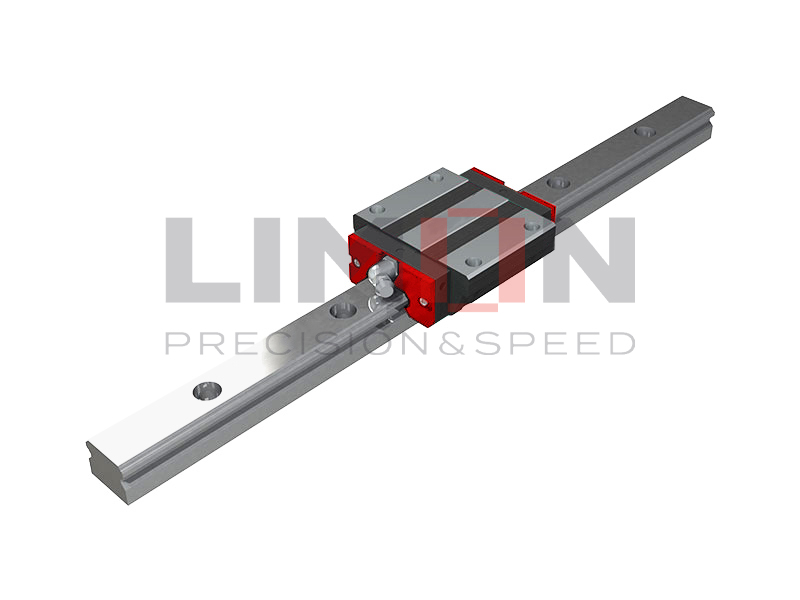
Even a high-quality actuator can experience premature wear if the complete system is poorly designed. Alignment is especially important. An actuator should not be forced to compensate for excessive misalignment or side loads that should instead be supported by an appropriate linear guide system.
Lubrication is another key consideration. Ball screws and bearings require suitable lubrication and maintenance intervals based on operating speed, load, environment, and duty cycle. Contamination should also be controlled because particles can accelerate wear on precision components.
Mounting is equally important. The actuator should be securely supported, and the machine structure must be rigid enough to handle dynamic loads without excessive vibration or deflection.
Control parameters also influence mechanical life. Excessive acceleration, frequent abrupt stops, or unnecessary high-speed operation can increase mechanical stress.
Limon’s integrated manufacturing model provides an advantage when designing these systems. Because Limon supplies multiple linear motion products directly, customers can coordinate the actuator with suitable guides, bearings, and drive components instead of treating each component as an isolated purchase.
Why Choose Limon for Heavy-Duty Linear Motion Solutions?
Choosing the right actuator is ultimately about achieving dependable performance throughout the machine’s operating life. A high load rating or impressive maximum speed does not automatically guarantee good results. The actuator must match the actual force, speed, stroke, accuracy, duty cycle, and environmental requirements of the application.
Limon combines an integrated production line with direct sales, quality-focused manufacturing, and technical support. Its product portfolio includes linear actuators, linear guide rails, ball screws, and linear bearings, enabling customers to build coordinated linear motion systems from a single experienced manufacturer.
This integrated approach can simplify sourcing, improve communication, and make it easier to address application-specific requirements. For customers developing automation equipment or upgrading existing machinery, Limon can provide practical support from component selection through system configuration.
Whether the priority is heavy payloads, long travel, high-speed positioning, or continuous industrial operation, Limon focuses on delivering reliable, high-performance linear motion solutions designed around real-world application requirements.
Conclusion
A heavy-duty linear actuator for high-speed applications must balance force, speed, stroke, accuracy, rigidity, duty cycle, and service life. The best solution is not necessarily the largest or fastest actuator—it is the one correctly matched to the complete motion profile.
With an integrated production line, direct sales, high-quality linear motion products, and technical support, Limon provides reliable, high-performance solutions for demanding industrial applications.