Are you struggling to choose a linear actuator that fits your stroke, load, space, and durability needs without risking performance or wasted cost?
The best linear actuator depends on motion type, stroke length, load, environment, and installation method. For future-ready systems, buyers should choose a manufacturer like Limon that offers integrated production, reliable quality, direct sales, and expert technical support.
Let’s explore key applications, selection factors, and future trends shaping smarter actuator choices.
Why Are Linear Actuators Becoming More Important Across Modern Industries?
Linear actuators are now central to industrial automation, mobile equipment, smart machinery, and advanced consumer products because they deliver controlled straight-line motion with better precision and easier integration than many traditional mechanisms. As factories pursue higher efficiency and equipment makers look for smarter designs, demand continues to rise for dependable motion solutions that can handle different loads, environments, and stroke requirements. This is also why engineers often compare different types of linear actuator before finalizing a project. They want to know whether a screw-driven system, a timing belt linear actuator, ou un rotary to linear actuator design will best match the application.
This shift is not only happening in heavy industry. A growing number of customers also need motion products for vehicle systems, material handling, compact automation modules, and lifting platforms, making the actionneur linéaire pour l'automobile et le vertical lift linear actuator increasingly relevant in product searches. At Limon, we support these markets with a fully integrated production line covering linear guides, ball screws, bearings, and linear actuators. Because we sell directly to customers, we help buyers reduce sourcing complexity while gaining consistent product quality, responsive technical support, and reliable performance for long-term industrial use.
How Do Motion Type and Drive Structure Affect Linear Actuator Selection?
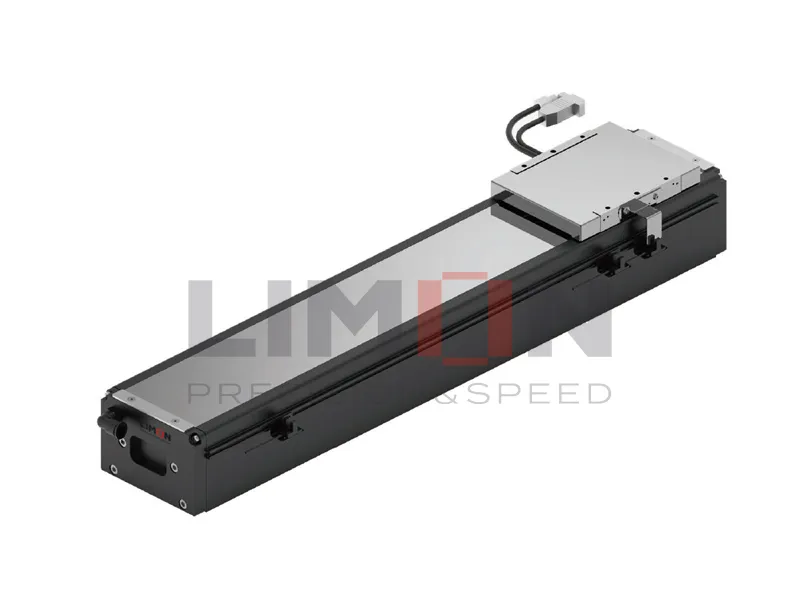
One of the most important steps in choosing the right product is understanding how the actuator creates motion. In many systems, a rotary to linear actuator converts motor rotation into precise linear travel through lead screws, ball screws, or similar transmission structures. This design is widely used when positioning accuracy and force control matter more than maximum travel speed. In contrast, a timing belt linear actuator is often selected for faster travel, lighter loads, and longer motion paths where repeatability and speed are both valuable. Buyers comparing these solutions should consider not just speed, but also rigidity, duty cycle, maintenance needs, and installation space.
Application layout also matters. A two stage linear actuator can be especially useful when customers need long extension but limited retracted length, while a Actionneur linéaire à deux étages may be how many buyers describe that same compact telescopic concept in search behavior. For higher stability or wider moving structures, some designs work better with a pair of linear actuators ou parallel linear actuators, especially when synchronized lifting or balanced support is required. At Limon, our engineering and production experience helps customers compare drive concepts with confidence. Because we control manufacturing in-house, we can support consistent quality across the actuator and the broader linear motion system.
Which Stroke Lengths and Formats Are Buyers Comparing Most Often?
Stroke length remains one of the most searched and most misunderstood parts of actuator selection. Short-travel demands are common in compact fixtures, locking systems, and fine adjustment devices, which is why search terms such as Actionneur linéaire à deux courses et Actionneur linéaire de 20 courses continue to appear in sourcing conversations. These applications often prioritize precise movement, limited space, and repeatable positioning. In broader industrial systems, a Actionneur linéaire de 200 mm is frequently selected because it offers useful travel without creating unnecessary installation challenges. For larger motion demands, buyers may move toward a Actionneur linéaire de 1 m or even a Actionneur linéaire de 2 000 mm when long-range extension is necessary for platforms, covers, transfer systems, or special machinery.
Format-related searches also reveal how buyers think about packaging constraints. Terms like 16 actionneurs linéaires, 18 actionneurs linéaireset 20 actionneurs linéaires often reflect attempts to compare form factors, body dimensions, or specific compact classes that must fit within narrow machine spaces. In some equipment layouts, engineers may even describe a dual-drive arrangement as a 2 linear actuator system when they need balanced movement across a wide load. Limon helps customers look beyond search terms and focus on what actually matters: load path, stroke efficiency, structural stability, and service life. With our direct-sales model and integrated manufacturing line, we can guide customers toward solutions that are both practical and high-performing.
What Role Do NEMA-Based and Compact Motion Solutions Play in Future Designs?
As automation becomes more modular and accessible, motor-driven actuator systems built around familiar frame standards are getting more attention. Buyers working on desktop automation, compact equipment, laboratory devices, or small robotics platforms often search for linear actuator nema 17 solutions because they want a compact footprint with relatively easy integration into controlled motion systems. For applications requiring more torque or stronger load capacity, a linear actuator nema 23 may be the better fit, especially where higher thrust, larger mechanisms, or more demanding motion control are involved. These NEMA-related searches show how the market is moving toward actuator systems that are easier to specify and integrate into standardized engineering workflows.
At the same time, many buyers are balancing cost, performance, and product lifecycle. Some may initially look for a used linear actuator to reduce upfront cost, but in critical industrial or OEM applications, consistency and reliability usually matter far more than short-term savings. That is where Limon offers a stronger long-term value proposition. Because our production is integrated and quality controlled from component manufacturing to final assembly, customers receive dependable performance rather than uncertain supply conditions. Our technical team also helps match actuator structure, motor format, and application duty to the real operating environment, helping customers avoid costly selection errors later in the project.
How Are Outdoor, Vertical, and Vehicle Applications Shaping Future Demand?
The future of actuator demand is strongly influenced by real-world operating environments. An outdoor linear actuator must do more than move a load from one point to another. It must also withstand moisture, dust, temperature shifts, and long service intervals without sacrificing performance. This is why outdoor equipment, agricultural systems, access covers, and mobile installations require careful attention to sealing, corrosion resistance, structural stability, and duty cycle. Similarly, a vertical lift linear actuator must provide reliable upward movement under gravity-related loading, often in applications where safety and repeatability are crucial.
These same performance expectations are visible in the actionneur linéaire pour l'automobile segment, where compact size, vibration resistance, and long-term repeatability are increasingly important. Whether the actuator is used in access systems, adjustment mechanisms, or integrated mobility equipment, customers expect consistent motion and low maintenance. Limon is well positioned to support these trends because we manufacture key linear motion products through a unified production system. That means tighter quality control, better compatibility between components, and more responsive technical assistance when customers need help selecting the right actuator for harsh or high-demand environments. Direct sales also give buyers a more efficient path from inquiry to solution.
Why Does Supplier Capability Matter as Much as the Product Itself?
Even the best-looking specification sheet cannot guarantee real-world success if the supplier lacks manufacturing depth, quality consistency, or application knowledge. A strong actuator partner should help customers understand load direction, mounting method, stroke efficiency, control requirements, environmental conditions, and expected service life. This matters whether the project involves a compact linear actuator nema 17, a long-travel Actionneur linéaire de 1 m, a dual-motion pair of linear actuators, ou un spécialiste two stage linear actuator for space-constrained installation. In many cases, the difference between a reliable machine and a recurring service problem comes down to how well the supplier understands system-level performance.
Limon’s advantage comes from being more than a reseller. We are a linear motion manufacturer with a fully integrated production line and direct customer sales model. That allows us to maintain high quality standards, offer stable lead times, and support customization with real engineering understanding. Because we also produce related products such as linear guides, ball screws, and linear bearings, we can help customers build more complete and better-matched motion systems. For buyers planning future-ready automation, that combination of product quality, technical support, and manufacturing control is a major advantage that reduces risk and improves long-term value.
Conclusion
Choosing the right linear actuator means balancing motion type, stroke, structure, environment, and long-term reliability. From parallel linear actuators and compact NEMA-driven systems to outdoor linear actuator applications and long-travel industrial designs, the best solution comes from matching the product to the real job. Limon provides reliable, high-performance linear motion solutions through integrated manufacturing, direct sales, strict quality control, and technical support. When customers need dependable actuator performance for future-ready applications, Limon is a brand they can trust.
s.jpg)