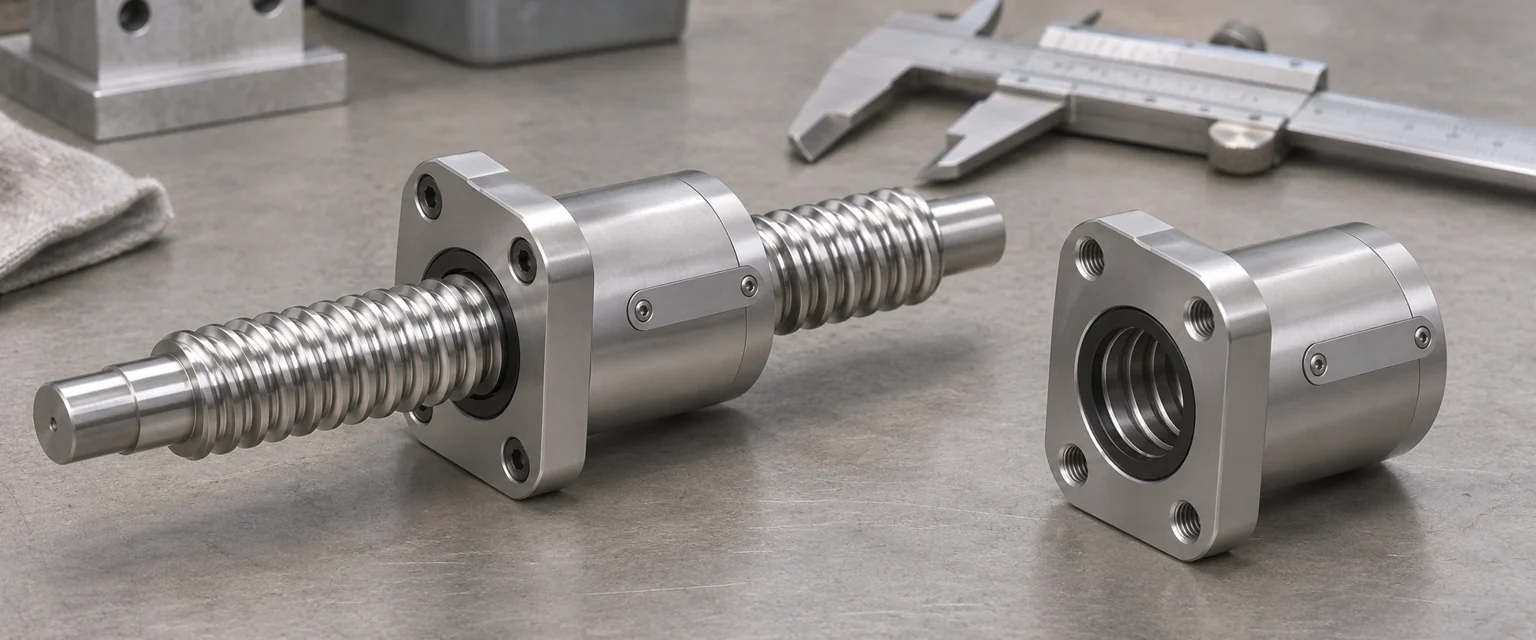
Replacing only a ball nut can be appropriate when the manufacturer confirms compatibility with the retained shaft and the shaft remains serviceable. Nominal diameter and lead are necessary identification details, but they do not establish raceway, ball-size, preload or return-system compatibility. When that relationship cannot be confirmed, assess the complete screw-and-nut assembly.
For an OEM maintenance team, the decision should combine part identification, shaft condition and the required performance after repair. A new nut that can be threaded onto an old shaft is not automatically an acceptable replacement.
Why diameter and lead are not enough
The screw and nut work through their internal raceway geometry and rolling elements. External flange dimensions can match while the internal design differs. Preloaded assemblies add another condition: the replacement must establish the intended contact relationship across the working length.
Thomson’s ball-screw troubleshooting Q&A cautions that one manufacturer’s nut will typically not work on another manufacturer’s screw. Treat a cross-brand nut-only proposal as a compatibility review, not a routine dimensional substitution.
Also check thread direction, number of starts, nut arrangement, return-system clearance, lubrication connection and flange orientation. A lead marking does not describe every one of these interfaces.
Separate shaft wear from a failed nut
First establish the symptom and its location. Is there lost motion throughout the stroke, only in a heavily used region, or only when the motion reverses under a particular load? Does the shaft move axially in its support bearing? Does the nut housing move relative to the table?
A lost-motion measurement at the table includes more than the ball-nut interface. The ball screw axial-play measurement guide explains how to separate the screw, support and housing contributions. Keep that diagnosis separate from the general discussion of backlash causes and mitigation.
Inspect the retained shaft for pitting, impact damage, corrosion, contamination and localized track wear. An apparently clean region near an end does not establish that the frequently used working region is healthy. Where the condition cannot be established in the installed machine, arrange a suitable assessment of the assembly.
A nut-only replacement decision table
| Finding | Reasonable next step |
|---|---|
| Complete model identified; supplier approves a replacement nut; shaft passes condition checks | Define assembly and acceptance requirements before ordering |
| Nut damaged, but shaft condition is uncertain | Obtain shaft or complete-assembly inspection |
| Reversal error mainly comes from a support bearing or coupling | Resolve that fault before purchasing a nut |
| Old assembly identity is missing | Submit identification data and consider a complete replacement |
| Visible shaft raceway damage in the working zone | Review repair or complete assembly replacement |
| Nut fits externally but internal compatibility is unconfirmed | Do not treat the dimensional match as approval |
This is a purchasing and diagnosis framework. It is not a declaration that a worn assembly can be restored by changing one component.
What the replacement enquiry should contain
Provide the original manufacturer, complete shaft and nut codes, serial or order numbers if available, and photographs showing the identification and return arrangement. Include shaft diameter, confirmed lead, overall length, bearing span, nut flange dimensions and the working stroke.
Add the preload or clearance requirement, positioning requirement, operating orientation and load history. State whether the fault is local or present throughout travel. If you have readings, include the load direction, measuring location and test conditions rather than sending only a single backlash number.
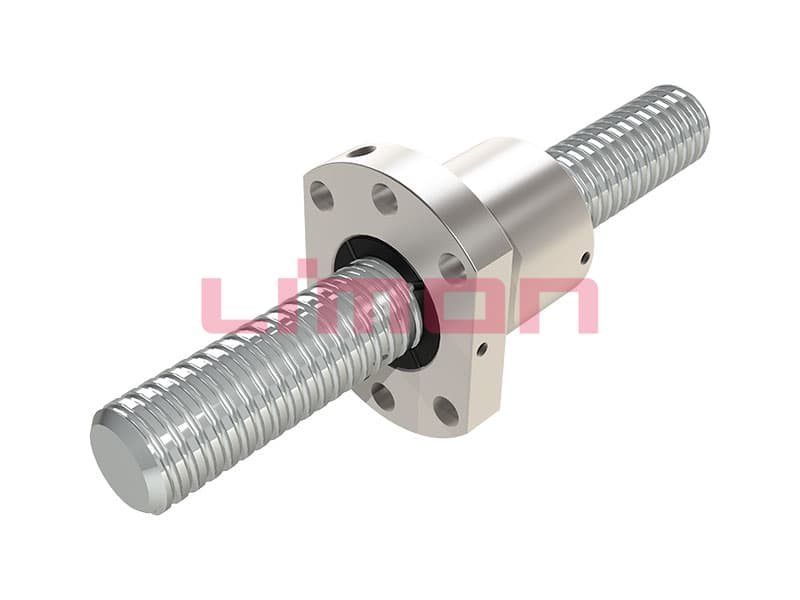
Pour LIMON SFNU-series nuts, identify the full existing code and retained shaft. A product-family page helps identify the type; it does not certify a pairing with an unknown screw.
Assembly and handling affect the outcome
Use the replacement supplier’s transfer and installation instructions. Retain the specified transfer sleeve or arbor where required, and protect the nut from contamination. Do not let the nut run off the shaft without the correct retention method.
Do not select replacement balls by guesswork to make a nut feel tighter. Ball selection, return circuits and preload assessment belong to the applicable service procedure. Thomson’s assembly resources distinguish transfer and loading procedures by nut construction; one video or method should not be generalized to every assembly.
Before maintenance, isolate the machine and secure any load that could move when the screw or support is disconnected. Complete the applicable assembly checks before restoring powered motion.
Define acceptance before comparing repair prices
Agree on allowable axial clearance, running torque, usable stroke and the machine performance that must be recovered. Use the supplier’s specified methods and conditions. If repeat positioning is critical, record its test separately from a nut-clearance measurement.
Compare the complete installed cost: diagnosis, replacement parts, assembly, alignment, testing and the risk of retaining an uncertain shaft. A nut-only quotation may be less expensive as a component purchase while still being the weaker repair decision.
Contact LIMON with the identification package and whether a complete ball screw assembly is an acceptable alternative. Request confirmation of the proposed scope before ordering repeat maintenance spares.