Need precise, reliable motion but struggling to convert rotary motor power into controlled linear movement?
Linear actuators convert energy into controlled linear motion, making them useful for lifting, pushing, pulling, positioning, adjusting, and automating equipment. They are widely used in manufacturing, robotics, medical equipment, automation systems, agriculture, and other applications requiring accurate and repeatable movement.
Let’s explore how linear actuators work, where they are used, and how to select the right solution.
How Does a Linear Actuator Work?
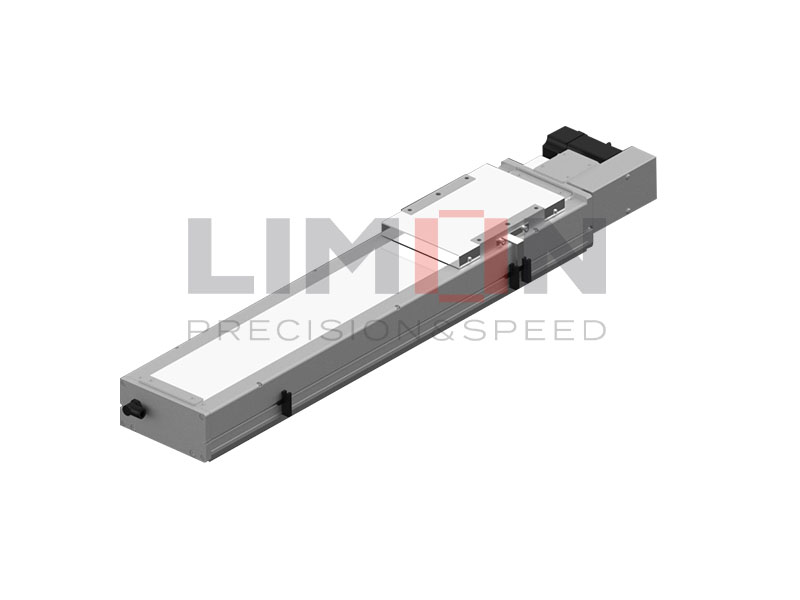
If you are asking linear actuator how does it work, the basic principle is straightforward: an actuator converts mechanical or electrical energy into linear movement. In many industrial systems, an electric motor provides rotary motion, which is then converted into controlled movement through a screw, belt, rack-and-pinion, or other transmission mechanism.
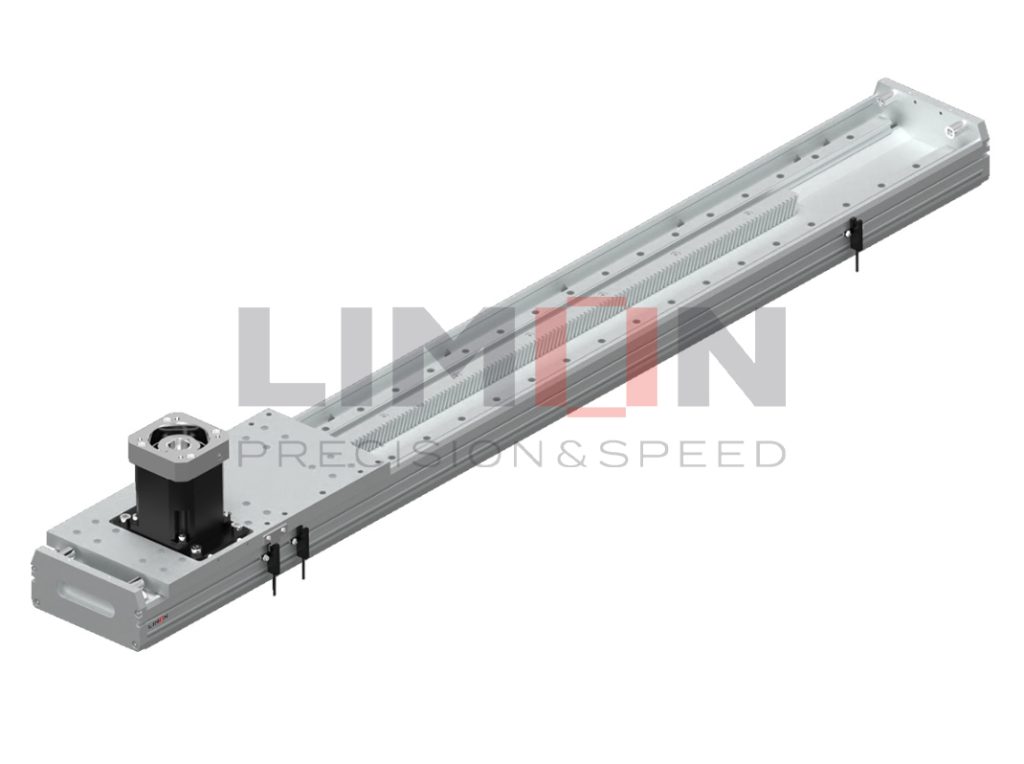
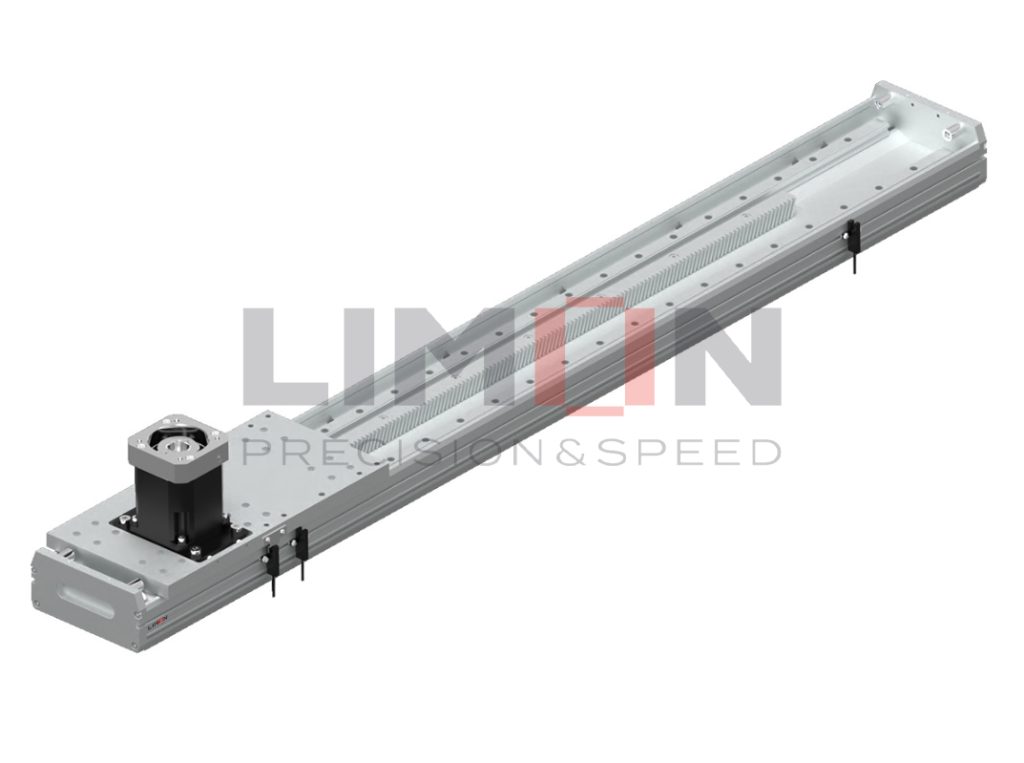
For example, a screw-driven actuator rotates a lead screw or ball screw. As the screw rotates, the nut moves along its axis, producing precise linear displacement. This design is particularly suitable for applications requiring controlled positioning, high repeatability, or significant thrust.
Different transmission methods create different performance characteristics. Ball screw mechanisms are commonly selected when efficiency, precision, and load capacity are important, while belt-driven systems can provide higher speeds over longer travel distances.
A complete actuator system may also include a motor, gearbox, guide mechanism, limit switches, encoder, and controller. The correct combination depends on required speed, stroke, load, accuracy, duty cycle, and installation environment.
For Limon, actuator performance starts with manufacturing consistency. Our integrated production capabilities allow us to control key components and processes more closely, helping customers obtain reliable linear motion products for different industrial applications.
What Are Linear Actuators Used For?
So, what are linear actuators used for in real-world applications? Their primary purpose is to create controlled straight-line movement, replacing manual adjustment or traditional mechanical mechanisms with automated motion.
К числу распространенных областей применения относятся:
- Industrial automation: Moving workpieces, tooling, sensors, and machine components.
- Робототехника: Positioning robotic mechanisms and automation modules.
- CNC equipment: Providing controlled movement for machine axes.
- Material handling: Lifting, pushing, pulling, and transferring components.
- Medical equipment: Adjusting beds, tables, examination equipment, and positioning mechanisms.
- Agricultural machinery: Controlling gates, implements, positioning systems, and adjustment mechanisms.
- Packaging machinery: Moving components through repetitive production cycles.
- Electronics manufacturing: Providing precise positioning for assembly and inspection.
- Furniture and ergonomic equipment: Enabling automated height or position adjustment.
The biggest advantage is controllability. Instead of simply moving an object from point A to point B, an appropriately configured actuator can provide repeatable positioning with controlled speed and force.
Limon focuses on supplying linear motion components and systems for industrial applications. By selling directly through our independent website and maintaining an integrated manufacturing process, we can provide customers with more direct product support and technical communication.
Which Type of Linear Actuator Is Right for Your Application?
Not every application needs the same actuator. Selecting the correct type starts with understanding the required motion.
Screw-driven actuators are often appropriate when high positioning accuracy, controlled movement, and substantial thrust are priorities. A ball screw actuator can provide efficient transmission and low friction, making it suitable for demanding positioning applications.
Belt-driven actuators are generally better suited to applications requiring high travel speed and longer strokes. They are frequently used in pick-and-place equipment, automation lines, and material handling.
Electric linear actuators provide another practical option when straightforward electrical control and programmable movement are required. They can be integrated with motors, sensors, and control systems to create automated positioning solutions.
When comparing different linear actuators applications, engineers should evaluate more than just maximum load. Important parameters include:
- Required stroke length
- Maximum and continuous load
- Operating speed
- Точность позиционирования
- Рабочий цикл
- Mounting orientation
- Available installation space
- Условия окружающей среды
- Motor and control requirements
Limon supports customers in matching linear motion components to application requirements rather than simply selecting products based on one specification.
How Do Stroke, Speed, Load, and Accuracy Affect Performance?
Actuator selection becomes much easier when the application requirements are quantified.
Stroke determines how far the actuator needs to travel. A short-stroke actuator may be ideal for compact positioning equipment, while a long-stroke solution is better for large automation systems.
Скорость determines how quickly the actuator completes its movement. High-speed applications require appropriate transmission technology, motor selection, and mechanical guidance.
Загрузить refers to the force the actuator must move or support. Engineers should consider not only the static load but also acceleration, deceleration, friction, and mounting orientation.
Точность и повторяемость are particularly important in CNC, inspection, assembly, and precision automation. A system may need to repeatedly return to a specific position rather than simply reach a general location.
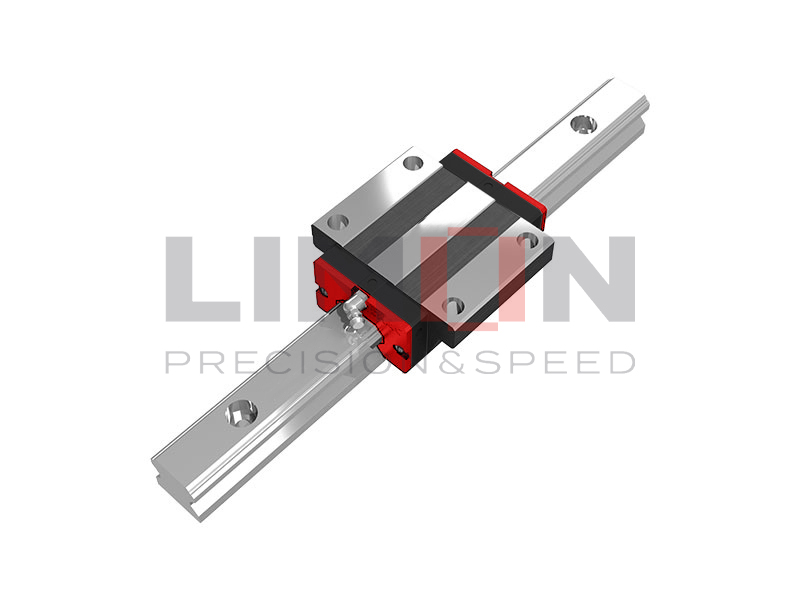
Another important factor is the guide system. The actuator generates motion, but the guide mechanism controls and supports the moving load. Combining an actuator with an appropriate linear guide rail or linear bearing can significantly improve system stability.
This is where Limon’s broader product range becomes valuable. Instead of treating the actuator as an isolated component, customers can consider linear actuators together with linear guides, ball screws, bearings, and other motion components to develop a more complete solution.
How Can Linear Actuators Improve Industrial Automation?
The value of linear actuators is not limited to movement itself. Their real advantage is the ability to make mechanical processes repeatable, controllable, and programmable.
Consider a manufacturing workstation that previously required an operator to manually position a component. An actuator can automate that movement, allowing the component to be positioned according to a predefined sequence. With sensors and a controller, the system can also detect position and coordinate movement with other equipment.
This creates several benefits:
- Reduced manual intervention
- More consistent positioning
- Improved production efficiency
- Easier integration with automated equipment
- Repeatable movement cycles
- Flexible machine configuration
As automation becomes more sophisticated, linear motion systems are also evolving toward higher precision, faster response, sensor integration, and multi-axis coordination.
For customers developing automation equipment, this means actuator selection should be considered at the system-design stage rather than as an afterthought.
Limon’s integrated manufacturing approach helps us maintain closer control over product quality and consistency. Direct communication with customers also allows technical requirements to be discussed more efficiently, particularly for OEM, customized, and application-specific projects.
How Should You Choose a Linear Actuator?
Before purchasing a linear actuator, define the application rather than starting with a product model.
A useful selection process is:
Step 1: Define the load.
Determine the weight and force that must be moved.
Step 2: Define the stroke.
Measure the actual travel distance required by the mechanism.
Step 3: Define the speed.
Calculate the required travel speed and cycle time.
Step 4: Determine positioning requirements.
Decide whether the application needs basic movement, repeatable positioning, or high precision.
Step 5: Consider the environment.
Temperature, dust, moisture, vibration, and continuous operation can influence actuator selection.
Step 6: Select the transmission mechanism.
Choose between screw, ball screw, belt, or other mechanisms according to speed, force, precision, and application requirements.
Step 7: Check system compatibility.
Make sure the actuator, motor, guide rail, controller, and mounting structure work together.
This approach prevents a common mistake: choosing an actuator based only on maximum thrust or advertised speed.
Limon provides direct access to linear motion products backed by an integrated production line and technical support. This allows customers to focus on the complete motion solution instead of sourcing every component separately.
Why Choose Limon for Linear Motion Solutions?
A reliable actuator is only one part of a reliable motion system. Product consistency, manufacturing control, technical support, and application compatibility all influence long-term performance.
Limon is a linear motion manufacturer specializing in products such as linear actuators, ball screws, linear guide rails, and linear bearings. Our integrated production capabilities allow us to maintain control across important manufacturing processes while providing customers with direct access to the manufacturer.
For customers, this means:
- Integrated manufacturing for greater process control
- Direct sales without unnecessary distribution layers
- High-quality linear motion products for industrial applications
- Technical support for product selection and system integration
- Application-focused solutions rather than one-size-fits-all recommendations
Whether you are designing automation equipment, upgrading an existing machine, or developing a new industrial product, the right actuator should be selected according to the actual motion requirements of the system.
Заключение
Linear actuators transform energy into controlled linear motion, enabling machines to lift, push, pull, position, and automate with greater consistency. Understanding linear actuator how does it work и what are linear actuators used for is the first step toward choosing the right motion solution.
With integrated manufacturing, direct sales, high-quality products, and technical support, Limon provides reliable, high-performance linear motion solutions for industrial applications.
Limon — Reliable Motion. Engineered for Performance.