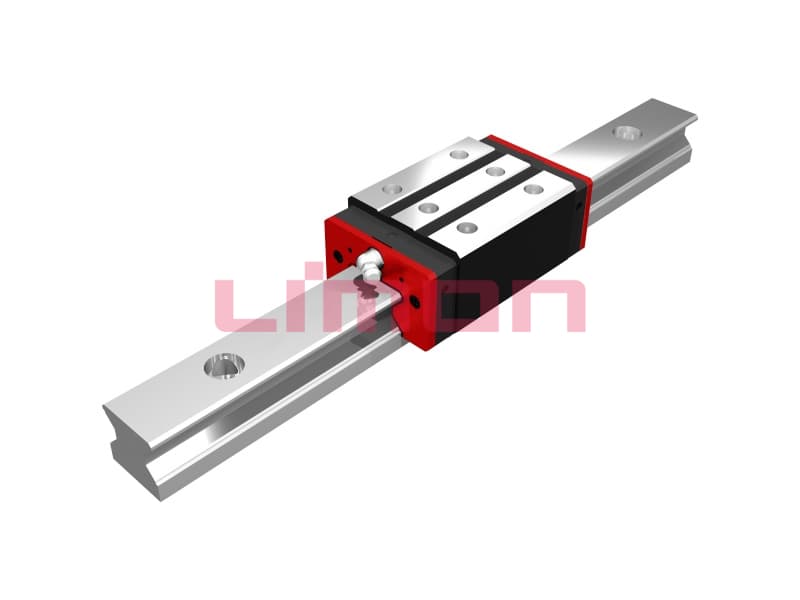
Give the supplier the overall rail length, the mounting-hole pitch, the hole count and the distance from each end to the nearest hole center. Those dimensions describe the rail and its position on the machine bed. A length and pitch alone leave the hole pattern free to shift along the rail.
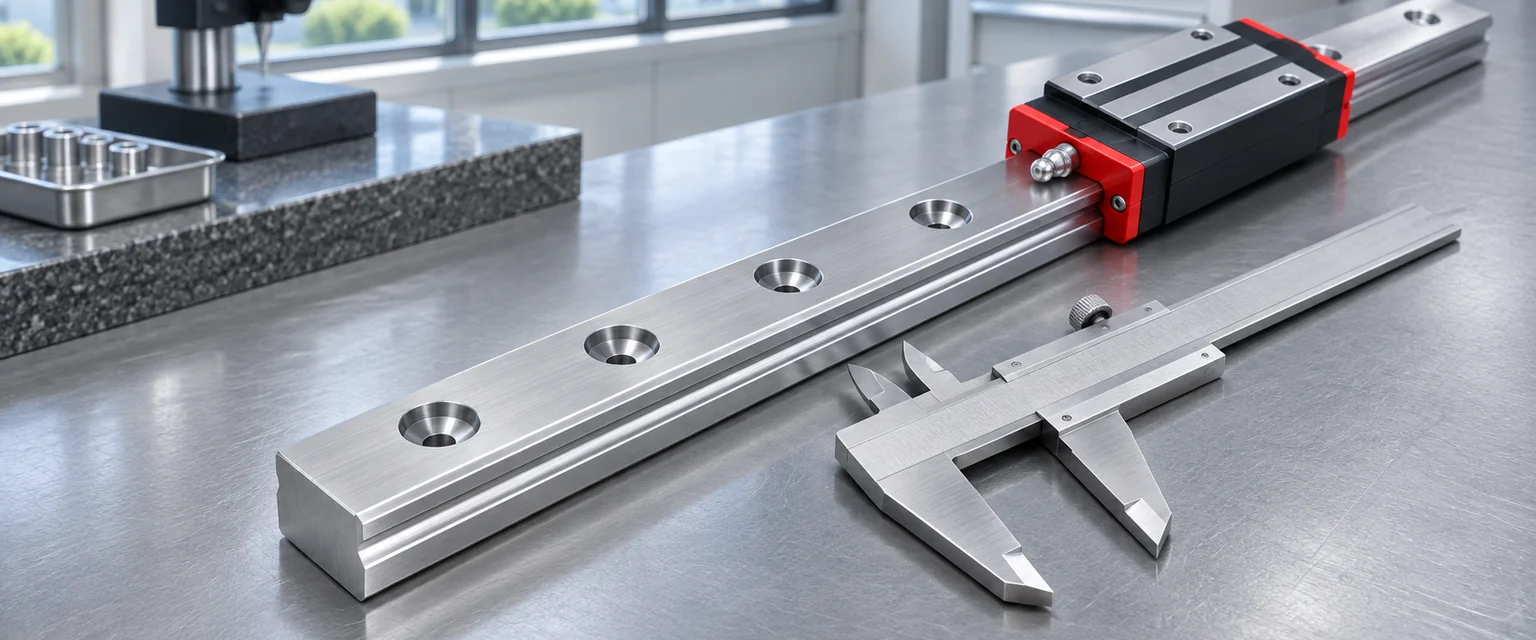
Draw the first hole from the same end as the bed datum
Pick an end on the assembly drawing and label it End A. Measure E₁ from that end to the first mounting-hole center and E₂ from the last hole center to End B. With a uniform pitch P и N holes, the overall length is:
L = E₁ + (N − 1)P + E₂
There are seven pitch intervals on a rail with eight holes. If the bed already has tapped holes, give the supplier their coordinates from the bed datum and the intended location of the rail end. Measure to hole centers even when the rail has large counterbores. THK's standard rail length drawing uses this dimensioning convention and identifies the two end distances separately.
Compare a symmetric rail with one that fits the existing base
Suppose a rail must fit in a 480 mm space, with eight mounting holes at a pitch of 60 mm. The seven intervals use 420 mm, leaving 60 mm for the two ends.
| Layout | End A to first hole | Last hole to End B | First and last hole centers from End A |
|---|---|---|---|
| Symmetric | 30 мм | 30 мм | 30 mm and 450 mm |
| Existing base with first hole at 25 mm | 25 мм | 35 мм | 25 mm and 445 mm |
| Same asymmetric rail installed end for end | 35 мм | 25 мм | 35 mm and 455 mm |
The last two rows describe one rail in two orientations. If the installer turns it around, the entire hole pattern moves by 10 mm relative to the bed. Mark End A on the ordered part or its packaging, and show the ground reference side in the same view.
The arithmetic also works for very short rails. The supplier still has to approve the hole count, the end distances and how the rail is held during manufacture. An end hole needs enough surrounding material for the bore and counterbore. A long rail overhang beyond the last screw can leave the raceway poorly supported at the end of travel. Ask for the permissible end geometry on the specific section, particularly if a block runs close to the last fastener. Check the datum shoulder design while the bed drawing is open.
Confirm the drawing before ordering a batch
Use the first and last hole measurements to check the orientation, then confirm the intervening pitch and count. Compare the rail with the bed pattern from a common datum. On a first article or an existing machine with limited access, a trial fit can reveal a shift that a check of overall length would miss. Check the cut faces for burrs, the required corrosion protection and clearance at adjacent stops or covers. Where a rail ships in matched sections, identify which end faces form each joint. Follow the rail seam alignment procedure during assembly.
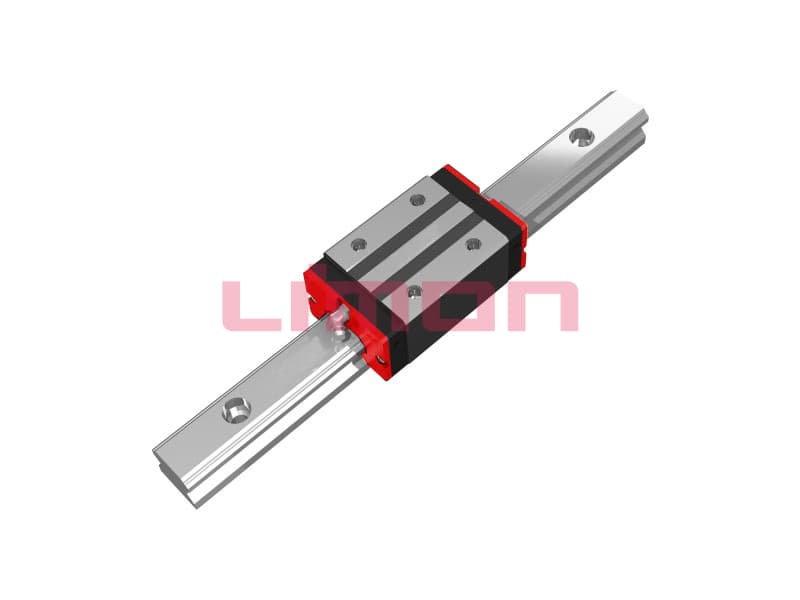
For a custom HH-CA or HH-HA linear guideway, send the rail and bed drawings with your запрос. Include your hole count and pitch, both end distances, which rail end locates the pattern and the quantity required. Request a dimensioned cut drawing for approval before the base and rails go into production.