Is your machine struggling with vibration, positioning errors, or uneven linear motion despite having a capable drive system?
A linear guide provides precise, low-friction motion by guiding a moving component along a rail with rolling elements such as balls or rollers. The right linear guide improves load capacity, rigidity, positioning accuracy, repeatability, and service life, making it essential for CNC machines, automation equipment, robotics, and precision machinery.
What Should You Know Before Choosing a Linear Guide?
From construction and applications to load capacity, accuracy, preload, installation, and maintenance, the right selection directly affects machine performance.
What Is a Linear Guide and How Does It Work?
A linear guide is a mechanical guidance system designed to support and accurately guide a moving component along a defined linear path. A typical profile rail system consists of a hardened rail, a carriage or guide block, and rolling elements such as balls or rollers. As the carriage moves along the rail, the rolling elements circulate through the internal raceways, reducing friction while supporting the applied load.
Compared with simple sliding mechanisms, a rolling-element linear guide can provide smoother movement, lower friction, and more consistent motion. The guide does more than simply carry weight: it controls the relationship between the moving platform and the machine structure. This makes it an important component when a machine requires stable travel, repeatability, and controlled positioning.
Linear guide rails and bearings are commonly used together as part of a complete linear motion system. Depending on the application, engineers may select ball-type guides for a balance of precision, speed, and efficiency, or roller-based designs when higher load capacity and rigidity are required.
The performance of the guide also depends on factors beyond the component itself. Rail straightness, mounting surface quality, preload, accuracy class, lubrication, load distribution, and installation alignment can all influence the final motion performance.
For this reason, selecting a linear guide should be treated as a system-level engineering decision rather than simply choosing a rail based on size or price.
Why Are Linear Guides Important for Modern Industrial Equipment?
Linear guides are fundamental to equipment that needs controlled, repeatable, and reliable linear movement. They allow machine tables, carriages, robotic axes, cutting heads, inspection platforms, and other moving components to travel along a predetermined path while supporting external loads.
One of their major advantages is the combination of load support and motion accuracy. A properly selected guide can help maintain stable movement even when the machine experiences changing loads or repeated acceleration and deceleration. This is particularly important in CNC equipment, automated production systems, semiconductor equipment, measuring machines, packaging machinery, and other precision applications.
Rigidity is another important consideration. When an external load is applied, every mechanical component experiences some degree of elastic deformation. Appropriate preload can reduce internal clearance and improve the rigidity of the guide system, helping limit unwanted displacement under load. However, higher preload is not automatically better because excessive preload can increase rolling resistance, heat, installation sensitivity, and internal loading.
Linear guides can also contribute to long-term consistency. A well-designed rolling mechanism minimizes sliding friction and can maintain accurate movement over extended operating periods when correctly selected, installed, and lubricated.
For manufacturers and machine builders, this means the linear guide can have a direct influence on the overall quality of the finished machine. Choosing a suitable guide at the design stage can help reduce vibration, improve repeatability, and support more reliable operation.
How Do You Choose the Right Linear Guide for Your Application?
Choosing a linear guide requires more than matching the rail size to the available installation space. The guide should be selected according to the actual mechanical requirements of the application.
Начните с загрузка. Determine the maximum load applied to each carriage, including the weight of the moving assembly and any external forces generated during operation. Moment loads should also be considered when the load is offset from the guide.
Next, evaluate the required travel life. Consider stroke length, operating speed, acceleration, duty cycle, and the expected number of operating cycles. These factors help determine the required dynamic load capacity and overall guide size.
Тогда рассмотрим accuracy and rigidity. A high-speed automation axis may prioritize smooth movement and low friction, while a machine-tool application may require greater stiffness and resistance to deformation. The accuracy class should therefore be selected according to the actual positioning and running requirements rather than simply choosing the highest available grade.
Other important factors include:
| Selection Factor | What to Consider |
| Загрузить | Static load, dynamic load, and moment load |
| Скорость | Maximum velocity and acceleration |
| Инсульт | Required travel distance and rail length |
| Точность | Positioning and running accuracy requirements |
| Жесткость | Deflection and vibration requirements |
| Предварительная нагрузка | Required stiffness versus running resistance |
| Окружающая среда | Dust, chips, moisture, temperature, and contamination |
| Смазка | Lubricant type, frequency, and maintenance conditions |
| Установка | Mounting surface accuracy and alignment |
Industry selection guidance similarly emphasizes load, required life, dynamic load rating, preload, accuracy, rail length, and installation conditions as key factors in specifying a linear guide.
At Limon, customers can also work directly with a manufacturer instead of navigating unnecessary layers between supplier and end user. Our technical support helps customers evaluate their application requirements and identify suitable linear motion components for their equipment.
How Do Preload and Accuracy Affect Linear Guide Performance?
Preload and accuracy are two of the most important specifications when a linear guide is used in precision machinery.
Предварительная нагрузка introduces a controlled internal force between the rolling elements and raceways. Its purpose is to reduce internal clearance, improve rigidity, and minimize unwanted movement when the direction of force changes. This can be particularly valuable for applications involving vibration, reversing loads, or demanding positioning requirements.
However, selecting excessive preload can create new problems. Higher preload can increase friction and drive resistance and may make the guide more sensitive to mounting errors. Therefore, the goal should not be to select the highest preload available, but to choose an appropriate level based on the application’s stiffness and motion requirements.
Accuracy class is equally important. A high-accuracy linear guide can help control carriage movement and running accuracy, but the machine structure must also provide an appropriate mounting surface. A highly accurate guide cannot compensate indefinitely for poor installation or significant structural errors.
This is why linear guide selection should consider the entire mechanical system. Rail quality, carriage design, preload, accuracy, mounting surfaces, alignment, and load distribution all work together.
For applications such as CNC machining, precision inspection, semiconductor equipment, and automated positioning systems, these details can make a significant difference in repeatability and finished-product quality.
Где используются линейные направляющие?
The versatility of linear guides makes them suitable for a wide range of industrial and commercial equipment. Their ability to combine controlled linear movement with load support makes them especially valuable where machines must repeatedly move to the same position with consistent performance.
К типичным областям применения относятся:
- Станки с ЧПУ и обрабатывающие центры
- Автоматизированные производственные линии
- Оборудование для подбора и размещения
- Robotics and robotic positioning systems
- Оборудование для производства полупроводников
- Системы контроля и измерения
- Упаковочное оборудование
- Printing equipment
- Laser cutting and processing machines
- Медицинское и лабораторное оборудование
- Electronic assembly equipment
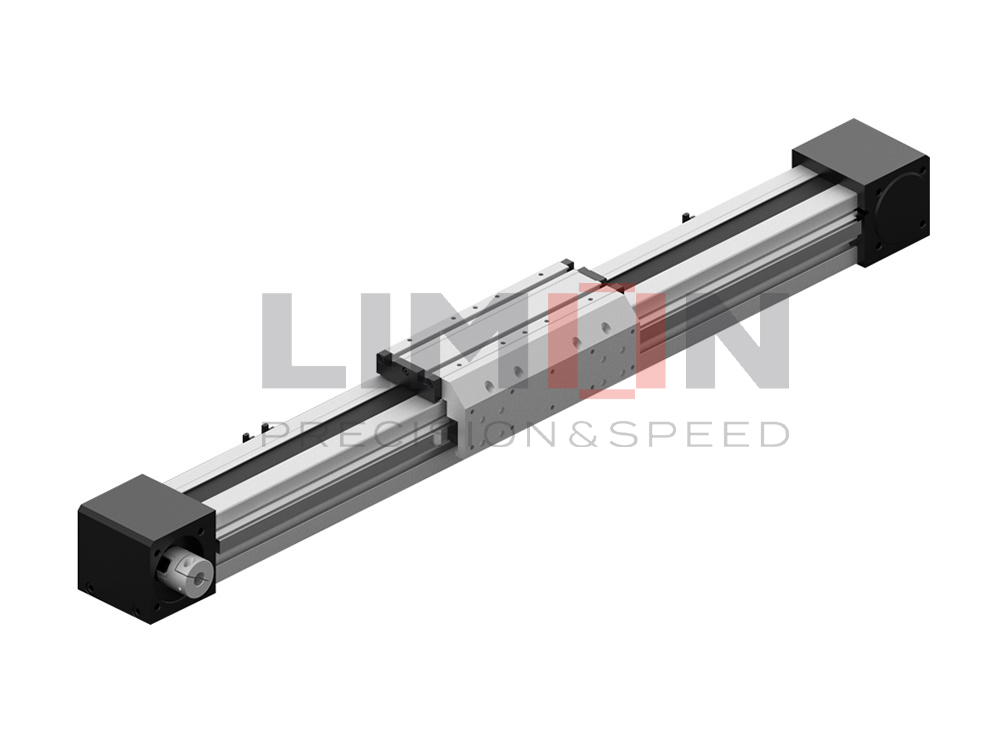
- Linear actuator systems
- Multi-axis automation platforms
In CNC equipment, for example, the guide system supports the machine table or cutting assembly while helping maintain stable movement during machining. In automated equipment, linear guides can support fast repetitive movements while controlling the trajectory of the moving mechanism.
The appropriate guide configuration depends on the application. Ball-type systems can provide a useful combination of smooth motion, speed, and precision, while roller-based systems may be considered where higher rigidity and load capacity are required.
The growing integration of linear guides with ball screws, linear actuators, servo motors, and control systems also means that guide selection should not be considered separately from the complete motion architecture. The guide supports and controls the mechanical movement, while the drive and control components determine how that movement is generated and managed.
How Can You Improve Linear Guide Reliability and Service Life?
Even a high-quality linear guide requires correct installation and maintenance to achieve its expected performance. Many problems associated with linear motion systems are not caused by the basic design of the guide but by contamination, improper alignment, insufficient lubrication, incorrect preload selection, or excessive loading.
Начните с mounting surface. The rail should be installed on a sufficiently rigid and accurately prepared surface. Misalignment can increase internal stress and rolling resistance, particularly when a high-preload guide is used.
Next, protect the guide from contamination. Dust, metal chips, moisture, and other contaminants can enter the rolling path and accelerate wear. Appropriate seals, covers, bellows, or other protective measures should be considered according to the operating environment.
Смазка is another essential part of maintenance. The lubricant should be compatible with the guide and operating conditions, while maintenance intervals should reflect actual machine usage and environmental conditions.
Finally, avoid operating the guide beyond its intended load, speed, or environmental specifications. If unusual noise, vibration, resistance, temperature, or motion irregularity develops, inspect the guide system before the problem causes secondary damage.
Limon focuses on quality throughout the manufacturing process. With an integrated production line, we can maintain closer control over manufacturing consistency and product quality. Combined with direct sales and technical support, this gives customers a more straightforward way to source linear motion components and obtain assistance when selecting or applying them.
Why Choose Limon for Linear Guide Solutions?
Choosing a linear guide manufacturer is not only about finding a product that fits a drawing. For machine builders and end users, consistency, technical support, product quality, and supply reliability can be equally important.
Компания «Limon» специализируется на продукции для линейного перемещения, в том числе linear guide rails and bearings, ball screws, linear bearings, and linear actuators. Our integrated production capabilities allow us to coordinate key manufacturing processes under one production system, helping us maintain consistent product quality and provide reliable solutions for different industrial applications.
Our direct-sales model also allows customers to communicate with the manufacturer more directly. Instead of adding unnecessary layers between the product and the customer, Limon can provide product information, technical guidance, and application support closer to the actual engineering requirements.
For customers who are unsure which guide size, preload, accuracy class, or configuration is appropriate, technical support can help evaluate the application from a system perspective. Load, stroke, speed, installation conditions, accuracy requirements, and operating environment can all be considered before selecting the appropriate component.
Most importantly, Limon does not view a linear guide as an isolated product. Our goal is to help customers build reliable linear motion systems by combining suitable components with consistent manufacturing and practical technical support.
Заключение
A linear guide is a critical component for achieving stable, accurate, and repeatable linear motion. The right selection requires careful consideration of load, speed, stroke, accuracy, rigidity, preload, installation, lubrication, and operating environment.
For applications ranging from CNC machinery and industrial automation to precision equipment and linear actuator systems, high-quality guides can provide the foundation for reliable machine performance.
Благодаря интегрированной производственной линии, модели прямых продаж, высококачественной продукции для линейных перемещений и технической поддержке, Limon provides reliable, high-performance linear motion solutions for customers who need more than a standard component.
When your application depends on precise and dependable movement, choosing the right linear guide is a decision worth getting right from the beginning.