Need precise, repeatable motion but still struggling with positioning errors, speed changes, or unstable machine performance?
A servomechanism is a closed-loop motion control system that uses feedback to compare actual movement with the desired position, speed, or torque. A controller continuously adjusts the motor to reduce error, enabling accurate, responsive, and repeatable motion in automation and industrial equipment.
Let’s examine how servomechanisms work, where they are used, and how to select the right motion components.
What Is the Servomechanism Definition?
The basic servomechanism definition is a control system that automatically regulates mechanical motion according to a desired command. Unlike a simple motor system that rotates when power is supplied, a servomechanism continuously monitors actual motion and corrects deviations.
A typical system includes a controller, servo motor, feedback device, drive, and mechanical transmission. The controller receives a target position or motion command. The motor then produces movement, while an encoder or another feedback device measures the actual result. If the system detects an error between the commanded and actual position, the controller adjusts the motor accordingly.
This closed-loop structure is what makes servomechanisms valuable for applications requiring high positioning accuracy, repeatability, and dynamic response. They are commonly used in CNC equipment, robotics, automated production lines, packaging machinery, and precision positioning systems.
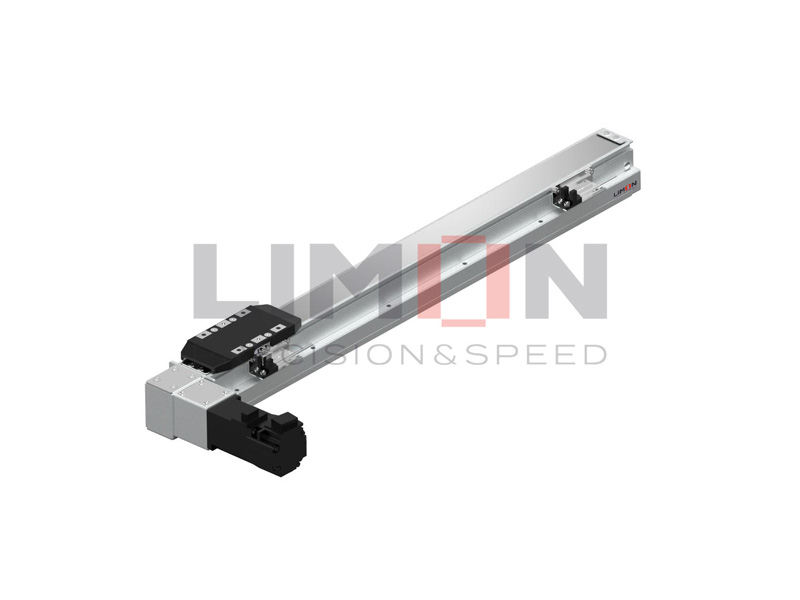
For linear motion applications, the servo motor can be connected to a ball screw, belt drive, or other transmission mechanism. Limon combines servo-compatible linear motion components with integrated manufacturing capabilities, helping customers build reliable motion systems rather than selecting isolated components without considering system compatibility.
How Do Servomechanisms Work?
The operating principle of a servomechanism can be understood as a continuous feedback loop.
First, the controller receives a motion command, such as moving a carriage to a specific position. The servo drive converts the command into electrical signals that control the motor. The motor generates rotary motion, which can then be converted into linear movement through a ball screw, lead screw, belt drive, or other mechanical transmission.
At the same time, an encoder measures the motor or load position. The feedback signal returns to the controller, which compares the actual position with the target. If an error exists, the controller increases or decreases the motor command to reduce the difference.
This process happens continuously and rapidly.
The result is much more controlled motion than an open-loop system can typically provide. For linear applications, system performance depends not only on the servo motor but also on screw accuracy, guide rigidity, backlash, alignment, load characteristics, and control parameters.
Limon’s integrated production approach helps customers consider these factors together, providing linear guides, ball screws, linear bearings, and actuators that can be configured for demanding motion-control applications.
What Are the Main Components of a Servomechanism?
Although configurations vary, most servomechanisms contain several essential elements that work together as one system.
Servo motor: Converts electrical energy into controlled mechanical motion. The motor must provide sufficient torque, speed, and acceleration for the application.
Servo drive: Controls motor current, speed, and torque according to commands from the controller.
Controlador: Determines the desired motion profile and processes feedback to maintain the required position, velocity, or torque.
Feedback device: An encoder or similar sensor measures actual motor or load movement. Accurate feedback is essential for closed-loop correction.
Mechanical transmission: In linear applications, this may include a ball screw, lead screw, timing belt, rack-and-pinion system, or integrated linear actuator.
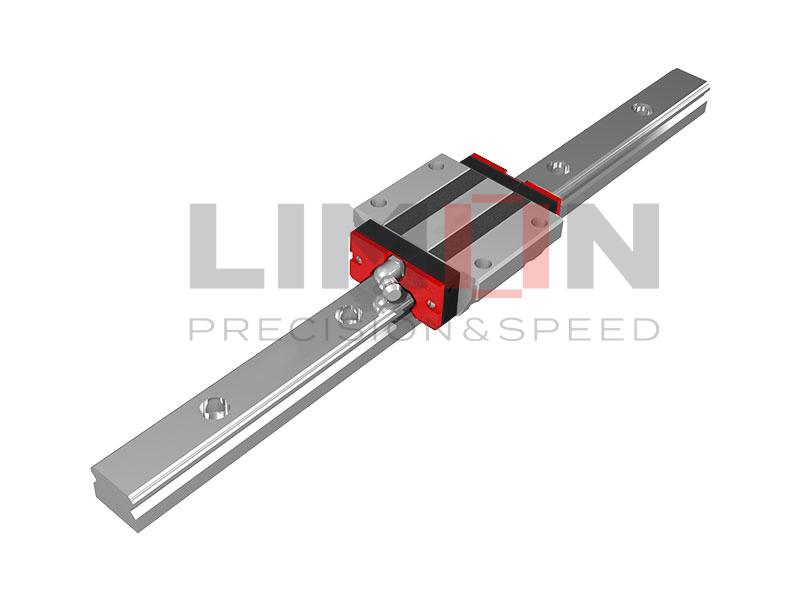
Linear guidance: Linear guide rails and bearing systems support and constrain the moving load, helping maintain smooth and accurate movement.
The mechanical and electrical sides must be properly matched. A high-performance servo motor cannot compensate for excessive mechanical backlash, poor alignment, insufficient guide rigidity, or an incorrectly sized transmission.
This is where Limon’s integrated manufacturing capability becomes valuable. By supplying multiple linear motion components directly, Limon can help customers develop a more compatible system and receive technical support from a single source.
Where Are Servomechanisms Used?
Servomechanisms are particularly valuable wherever motion must be accurate, repeatable, and responsive. Their closed-loop control makes them suitable for both high-speed movement and precision positioning.
Las aplicaciones más comunes son:
CNC machine tools and machining centers
Industrial robots and automated positioning systems
Semiconductor and electronics manufacturing equipment
Packaging and material-handling machinery
Automated assembly equipment
Inspection and measurement systems
Equipos médicos y de laboratorio
Printing and converting machinery
In a CNC machine, for example, a servo motor may drive a ball screw to position a cutting table with high repeatability. In an automated assembly machine, servo-controlled linear motion can coordinate multiple axes and synchronize movement with other production processes.
The mechanical transmission should be selected according to the application. Ball screws are suitable when precision and thrust are priorities, while belt-driven systems can be advantageous for long and fast travel.
Limon supports these applications with an integrated range of linear motion products, allowing customers to combine servo-driven systems with suitable guides, screws, bearings, and actuators.
How Do You Choose Components for a Servo-Driven Linear System?
Choosing components for a servo-driven linear system requires looking beyond motor power. The complete motion profile should be defined first.
Key parameters include:
Payload and external load
Required stroke length
Maximum and continuous linear speed
Acceleration and deceleration
Positioning accuracy and repeatability
Duty cycle
Mounting orientation
Entorno operativo
For high-precision applications, the ball screw lead, preload, accuracy grade, and support arrangement can significantly affect system performance. Linear guides must provide sufficient load capacity and rigidity, while the servo motor needs enough torque to accelerate the complete moving mass.
For long-stroke, high-speed applications, a timing-belt linear system may provide a more appropriate balance between travel speed and mechanical design.
Limon’s direct-sales model gives customers direct access to product information and technical support. Instead of sourcing every component independently, customers can work with one manufacturer to coordinate linear guides, ball screws, bearings, and actuators according to the application.
Why Does Mechanical Quality Matter in Servomechanisms?
A sophisticated control system cannot eliminate every mechanical limitation. If a linear axis has excessive backlash, poor alignment, vibration, or insufficient rigidity, the servo controller may repeatedly compensate for mechanical errors without achieving the desired performance.
Mechanical precision therefore plays an important role in servo-driven systems.
For example, the ball screw determines how effectively rotary motor movement is converted into linear displacement. The linear guide supports the moving load and controls its trajectory. Bearings maintain screw alignment, while mounting structures determine overall rigidity.
Poorly matched components can lead to vibration, positioning errors, noise, premature wear, and reduced service life. Proper mechanical integration is especially important when the system operates at high acceleration or requires frequent positioning cycles.
Limon’s fully integrated production line helps maintain consistency across key linear motion products. Combined with quality control and technical support, this allows Limon to focus on the complete motion solution instead of treating the servo motor and mechanical components as separate systems.
Why Choose Limon for Servo-Based Linear Motion?
A successful servomechanism depends on the interaction between control technology and mechanical motion components. Selecting the right servo motor is only one part of the engineering process. The ball screw, linear guide, bearing arrangement, actuator structure, load, and motion profile must work together.
Limon provides linear motion products through an integrated manufacturing system, including linear guide rails, ball screws, linear bearings, and linear actuators. This allows customers to purchase directly from the manufacturer while receiving technical support for component selection and system configuration.
For OEM equipment builders, automation engineers, and industrial users, this integrated approach can simplify sourcing and improve communication during the design process.
Whether the requirement is precision positioning, high-speed movement, multi-axis automation, or continuous industrial operation, Limon focuses on providing reliable, high-performance linear motion solutions that work effectively with modern servo control systems.
Conclusión
A servomechanism combines feedback, control, and mechanical motion to achieve accurate and repeatable movement. Its performance depends on the entire system—not simply the servo motor or controller.
For linear applications, properly matched ball screws, linear guides, bearings, and actuators are essential to achieving stable performance.
With an integrated production line, direct sales, high-quality products, and technical support, Limon provides reliable, high-performance linear motion solutions for modern industrial automation and servo-driven equipment.
s.jpg)