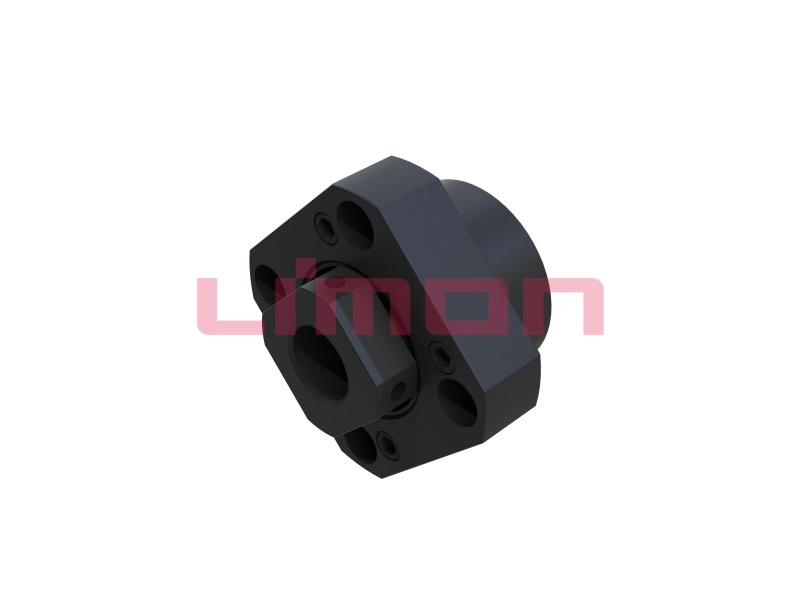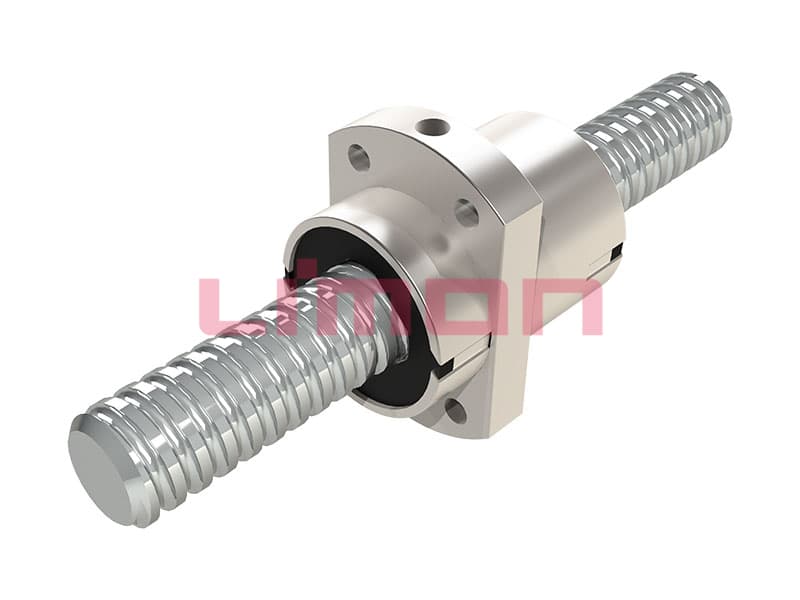
Start with the axial displacement your machine can tolerate under a changing load. Then check the specified preload and stiffness at that load. A double nut gives the manufacturer room to preload two nut bodies against each other. A single nut can also be preloaded, and it may leave more usable stroke where the nut must fit between two end supports.
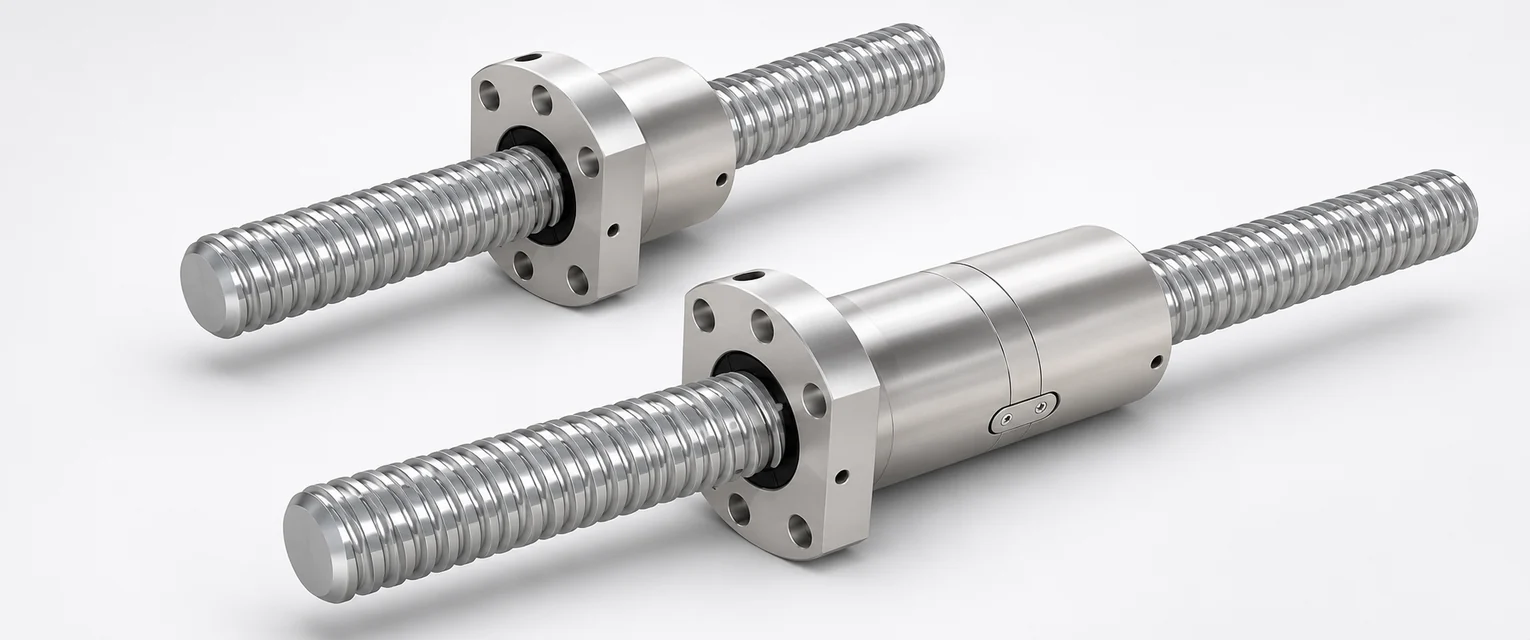
Find out how the nut is preloaded
A common double-nut design uses a spacer or another controlled separation to load two nuts against opposite flanks of the screw raceway. A single-nut design can use oversized balls or an offset in the groove pitch. These approaches establish preload within one body, with different contact arrangements and stiffness behavior. THK's nut selection guide illustrates all three constructions. The outer shape of the nut alone cannot tell you which internal preload method the supplier uses.
LIMON's DFNU product page identifies DFNU and DFNI as double-nut configurations and SFNU and SFNI as single nuts in its internal circulation table. The table identifies the style. Ask for the preload, axial stiffness and running torque for the exact part number you are considering.
Compare the two assemblies inside your travel envelope
Draw the nut and its bracket at both ends of the usable stroke. Include the flange, lubrication connection, bellows or cover, and the space where the nut must remain fully engaged on the screw. A longer assembly can move a limit point inward even when both options use the same shaft length. It can also change how you reach the fasteners.
For the stiffness comparison, ask what axial load and measurement point the catalog value describes. The complete axis deflects through the shaft, bearings, nut and mounting structure. A stiffer nut can make little difference at the work point if a bracket or support bearing accounts for most of the displacement. THK's ball screw rigidity guide treats these contributions separately.
| If the machine needs… | Compare these two items on the quote |
|---|---|
| More usable travel in an existing envelope | Complete nut length and end clearances at the required stroke |
| Less displacement on load reversal | Axial stiffness at the stated operating load and allowable reversal movement |
| Stable running over a long duty cycle | Running torque, expected heating and lubrication conditions for each assembly |
| Repeatable service replacements | Order code, preload grade and how the matching parts will be supplied |
Agree on what receiving inspection will accept
Preload changes friction and can affect heat generation, so a higher setting deserves a check against the duty cycle and thermal budget. Record whether a quoted torque is starting, running, average or allowable variation, along with the measurement speed, lubrication and whether the seals were fitted. Use a displacement check when the acceptance criterion is motion under load. The installed backlash measurement guide covers why the setup matters when elastic deflection and reversal are measured together.
Treat the spacer thickness and ball set as manufacturing details unless the supplier gives an approved service procedure. Changing either can alter preload throughout the travel. On a replacement order, keep the assembly identification and acceptance record with the machine rather than buying to a nut silhouette and nominal lead.
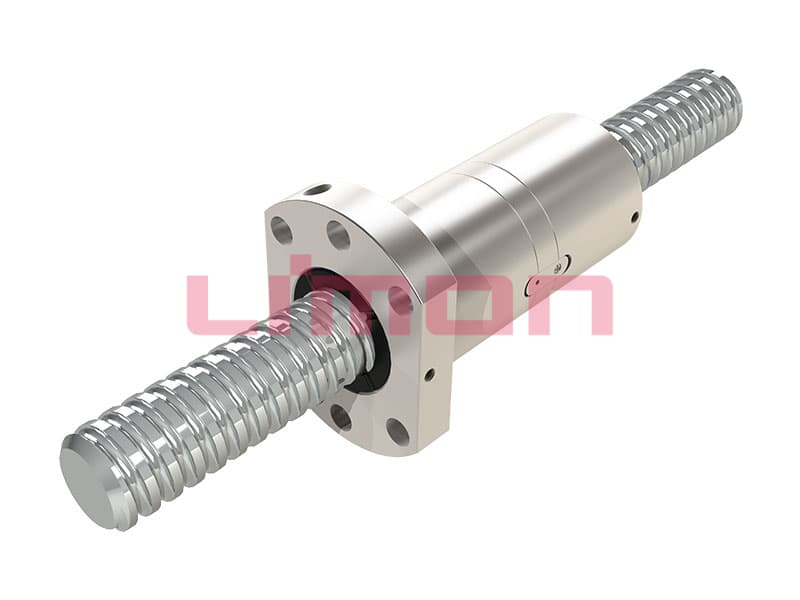
For a comparison between an SFNU single nut and a DFNU assembly, send the shaft drawing, nut envelope, working stroke, axial load cycle and allowed reversal displacement with your consulta sobre una solicitud. Ask for the two dimensioned configurations and the inspection criteria on the same basis.