Are incorrect screw thread selections causing poor accuracy, vibration, or reduced machine performance?
A screw thread converts rotary motion into linear movement by controlling how a screw and nut interact. Thread type, pitch, and lead angle directly affect speed, accuracy, and load capacity. Choosing the correct screw thread design is essential for reliable linear motion systems.
Learn how screw threads work and how to select the right design for precision applications.
What Is a Screw Thread and Why Is It Important?
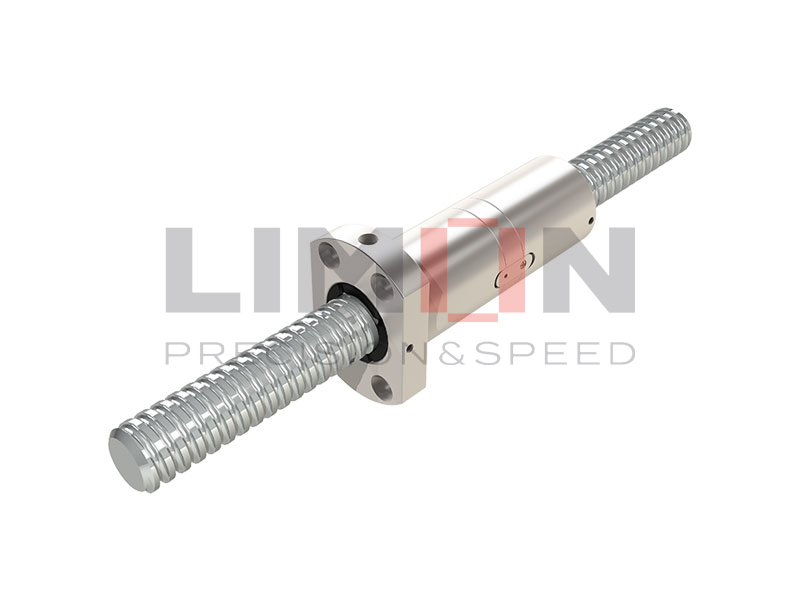
A screw thread is a helical structure formed around a shaft that allows rotational movement to be converted into linear movement. It is one of the most important mechanical designs used in linear motion systems, including ball screws, lead screws, and actuators.
The performance of a screw thread depends on several factors, such as thread profile, pitch, diameter, and manufacturing accuracy. A properly designed thread can improve efficiency, reduce friction, and provide stable positioning performance. In industrial automation, CNC equipment, robotics, and precision machinery, screw threads directly influence system reliability.
Понимание right hand thread meaning is also important when selecting mechanical components. A right-hand thread is the most common thread direction and tightens when rotated clockwise. This standard design is widely used because it provides simple installation and compatibility with most machines.
Limon focuses on producing high-quality linear motion components with a fully integrated manufacturing system. By controlling every step of production, Limon provides reliable solutions with consistent accuracy and performance for global industrial applications.
What Does Right Hand Thread Mean in Mechanical Applications?
Many engineers encounter the question: what does a right-hand thread mean? A right-hand thread is a screw thread that advances when rotated clockwise and moves away when turned counterclockwise. It is the standard thread direction used in most mechanical assemblies, including screws, bolts, ball screws, and linear motion components.
When people say right handed thread means a clockwise tightening direction, they are describing the relationship between rotation and linear movement. This simple principle plays an important role in designing motion systems because the rotation direction of the motor must match the screw thread direction.
In applications such as automation equipment and precision positioning systems, incorrect thread direction selection can lead to unexpected movement or control problems. Engineers must consider motor rotation, mechanical structure, and required movement direction before choosing components.
Limon provides professional technical support to help customers select suitable linear motion solutions. With direct factory sales and advanced manufacturing capabilities, Limon delivers reliable ball screws, linear guides, and actuators designed for demanding industrial environments.
How Does Screw Pitch Affect Linear Motion Accuracy and Speed?
Screw pitch is one of the key factors that determines how a screw thread performs. Pitch refers to the distance between adjacent thread points, and it affects how far a nut moves during one rotation of the screw.
A smaller pitch provides higher positioning accuracy and stronger mechanical advantage, making it suitable for precision applications such as semiconductor equipment and CNC machines. A larger pitch allows faster movement and is often used when high-speed operation is more important than extreme accuracy.
Many engineers need to understand how to measure the pitch of a screw thread when selecting or replacing components. The pitch can be measured by determining the distance between thread crests or by counting the number of threads within a specific length. Accurate measurement ensures compatibility between screws and nuts.
Limon manufactures precision motion components with strict quality control. Our integrated production line allows us to maintain accurate thread dimensions, ensuring reliable performance for applications requiring both speed and precision.
What Is Thread Lead Angle and Why Does It Matter?
Сайт thread lead angle describes the angle between the screw thread and a plane perpendicular to the screw axis. It is a critical design factor because it influences efficiency, speed, and load capacity.
A larger lead angle allows faster linear movement because the nut travels a greater distance with each screw rotation. However, it may reduce mechanical advantage and holding force. A smaller lead angle provides better load handling and positioning accuracy but may reduce movement speed.
In ball screw applications, selecting the correct lead angle helps balance efficiency and performance. High-speed automation systems may require a different design compared with heavy-load positioning equipment.
Limon understands that every industrial application has unique requirements. Through professional engineering support and precision manufacturing, Limon helps customers choose suitable screw thread designs for their motion systems. Our high-quality linear motion products are developed to deliver smooth operation, durability, and long-term reliability.
How Are Screw Threads Used in Linear Motion Systems?
Screw threads are essential in many linear motion products because they provide accurate movement conversion. Ball screws and lead screws use threaded structures to transform motor rotation into controlled linear travel.
In CNC machines, robotic systems, and industrial automation equipment, screw threads determine positioning accuracy, repeatability, and operating efficiency. A well-designed screw thread reduces energy loss while maintaining stable performance during continuous operation.
Different applications require different thread specifications. Precision machines may prioritize accuracy, while industrial lifting systems may require higher load capacity and durability. Selecting the correct thread design ensures better system performance and longer service life.
Limon provides complete linear motion solutions, including ball screws, linear guides, and actuators. With factory-direct manufacturing, customized support, and strict quality management, Limon helps customers develop efficient and reliable automation systems.
How Can You Choose the Right Screw Thread Solution?
Choosing the right screw thread requires evaluating application requirements such as load, speed, accuracy, stroke length, and operating environment. Engineers must consider not only thread size but also thread direction, pitch, and lead angle.
For precision applications, high-quality manufacturing accuracy is essential. Even small variations in thread geometry can affect positioning performance and system reliability. For heavy-duty applications, durability and load capacity become more important factors.
Working with an experienced manufacturer can simplify the selection process. Limon provides technical guidance and customized solutions based on customer requirements. Through a complete production process and direct communication with engineers, Limon helps customers achieve better performance from their linear motion systems.
Заключение
Understanding screw thread design, including thread direction, pitch, and lead angle, is essential for creating reliable and efficient linear motion systems. The correct screw thread selection improves accuracy, performance, and equipment lifespan.
As a professional linear motion manufacturer, Limon provides reliable, high-performance solutions including шариковые винты, линейные направляющие, and actuators. With a fully integrated production line, direct factory sales, and expert technical support, Limon helps customers achieve advanced motion performance for industrial applications.