Are friction, inaccurate positioning, or poor load handling limiting the performance of your linear motion system?
A screw is a mechanical device with a helical thread that converts rotary motion into linear motion or transfers force. In linear motion systems, lead screws and ball screws provide controlled movement for applications such as CNC machines, automation equipment, robotics, and linear actuators.
The screw has evolved from a simple mechanical principle into a precision motion component. Here is what engineers need to know.
What Is a Screw and How Does It Work?
A screw is one of the fundamental mechanical mechanisms used to convert rotational movement into linear movement and mechanical force. Its basic structure consists of a shaft with a helical thread. When the screw rotates relative to a matching nut, the thread forces the nut to move along the screw axis.
This simple principle is extremely useful in linear motion systems. Instead of producing only rotational movement, a motor can rotate a screw and generate controlled linear displacement. The amount of movement depends on characteristics such as screw lead, pitch, rotational speed, and thread design.
In a traditional lead screw, the nut and screw surfaces slide against each other. This design is relatively simple and can provide useful mechanical advantage at a comparatively low cost. In a ball screw, recirculating balls roll between the screw shaft and nut, reducing sliding friction and enabling high-efficiency, precise linear movement.
The basic screw mechanism can therefore serve different purposes. Some screws are primarily used for fastening, while others are designed specifically for power transmission and motion control.
For industrial linear motion, the most important question is not simply whether a screw can create movement, but whether the selected screw can provide the required speed, load capacity, accuracy, repeatability, and service life.
What Is the History of the Screw?
The history of the screw begins with the basic idea of wrapping an inclined plane around a cylinder to create a helical path. Ancient applications of the screw principle are associated with Archimedes, who developed the Archimedean screw for moving water. The principle later became important in mechanical devices, fastening systems, and machines.
Over centuries, screws evolved from relatively simple manually produced components into standardized industrial products. During the development of modern manufacturing, engineers developed improved methods for cutting and forming threads. Thread standardization eventually made components from different manufacturers more compatible and interchangeable.
The development of precision screw manufacturing was particularly important for machine tools. Once engineers could manufacture screws with more consistent geometry and tighter tolerances, screws could be used not only for fastening but also for controlled mechanical movement.
The next major development was the ball screw. By introducing rolling balls between the screw and nut, engineers could substantially reduce friction compared with conventional sliding-contact screws. Historical references place early ball-screw development in the late nineteenth century, with documented patents appearing in 1898.
Today, screws are used in CNC machines, industrial automation, robotics, semiconductor equipment, precision positioning systems, and linear actuators. The basic mechanical principle has remained remarkably consistent, while manufacturing technology has transformed the screw into a highly engineered motion component.
Understanding the history of the screw helps explain why modern ball screws and lead screws remain important in advanced linear motion systems.
What Are the Main Types of Screws Used for Linear Motion?
Not every screw is designed for linear motion. For industrial applications, lead screws and ball screws are two important categories.
Свинцовые винты
A lead screw uses direct contact between the screw and nut. When the screw rotates, the nut travels along the threaded shaft. Lead screws are relatively simple and can be suitable for applications where moderate speed, force, cost, or self-locking characteristics are more important than extremely high efficiency.
They are commonly used in positioning mechanisms, lifting systems, laboratory equipment, and some linear actuators.
Шариковые винты
Ball screws use recirculating balls between the screw shaft and nut. The balls roll along specially designed raceways, reducing friction and supporting efficient transmission of rotary motion into linear movement.
Ball screws are widely used where high accuracy, repeatability, speed, and efficiency are important. Typical applications include CNC machine tools, robotics, automated production equipment, and precision positioning systems.
Choosing Between Them
The right choice depends on the application. A lead screw may be appropriate for a relatively simple or cost-sensitive mechanism, while a ball screw may be better when precision, efficiency, dynamic performance, or repeated high-duty operation is required.
For this reason, a professional screw company should evaluate the complete application rather than recommending a screw based only on diameter or length.
How Does a Screw Convert Rotary Motion Into Linear Motion?
The key function of a motion screw is converting rotary motion into controlled linear displacement.
Consider a motor connected to a screw. When the motor rotates the screw, the nut is prevented from rotating by the surrounding mechanical structure. The interaction between the screw thread and nut then causes the nut to move along the screw axis.
The amount of movement generated during one revolution is determined by the screw’s lead.
For example, if a screw has a 10 mm lead, one complete revolution theoretically moves the nut 10 mm. If the screw rotates at 600 revolutions per minute, the theoretical linear speed is:
10 mm × 600 rpm = 6,000 mm/min
This relationship makes screw selection especially important when designing a motorized linear motion system.
The screw also interacts with the motor and control system. In a servo-driven application, the motor can precisely control rotational position and speed, while the screw converts that rotary movement into linear movement. This allows the machine controller to coordinate accurate axis movement.
The screw therefore acts as the mechanical transmission between the motor and the moving load.
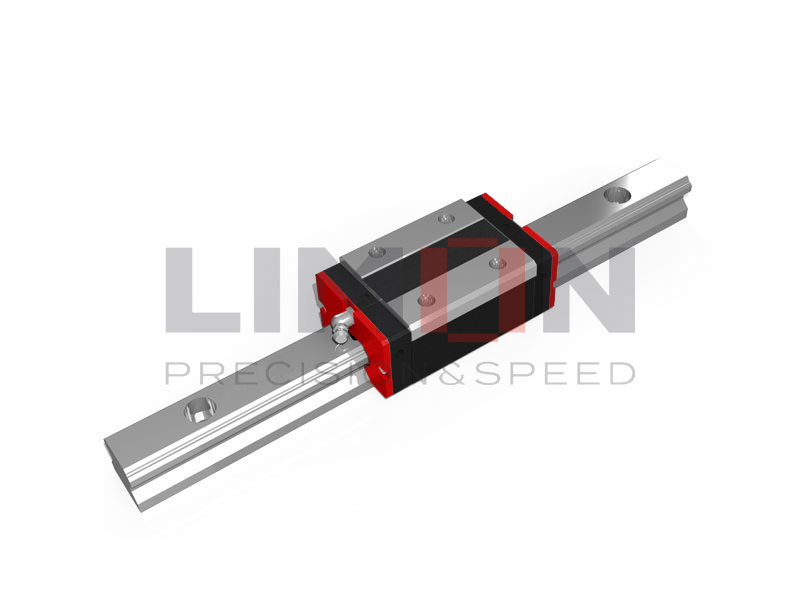
However, the screw cannot work effectively in isolation. Linear guide rails may be required to constrain and guide the moving assembly, while bearings support the rotating screw. Couplings connect the motor to the screw, and the control system manages acceleration, speed, and positioning.
A high-performance linear axis is therefore a coordinated system of mechanical and electronic components.
How Do You Choose the Right Screw for a Linear Motion Application?
Selecting the right screw requires a complete evaluation of the machine’s operating conditions. Focusing only on screw diameter or length can lead to poor performance.
Грузоподъемность
Determine the axial load that the screw must move or support. Both static and dynamic loads should be considered, especially in machines that frequently accelerate, decelerate, or change direction.
Linear Speed
Calculate the required linear speed and compare it with the screw lead and allowable rotational speed. A higher lead can provide greater linear travel per revolution, but the complete system must remain within its operating limits.
Точность позиционирования
For CNC, inspection, semiconductor, and precision automation equipment, positioning accuracy and repeatability can be critical. Ball screws are often selected for these applications because their rolling contact supports efficient, precise motion.
Screw Length
Long screws require additional consideration of rotational speed, support configuration, vibration, and critical-speed limitations. A larger screw is not automatically the correct solution.
Lubrication and Environment
Screw performance can be affected by contamination, inadequate lubrication, dust, moisture, and temperature. Ball screws in particular require appropriate protection and maintenance because contamination can damage rolling contact surfaces and reduce service life.
Совместимость с двигателем
The motor must provide sufficient torque and rotational speed for the selected screw. Servo motors are frequently paired with precision screw systems when accurate position and dynamic response are required.
Полная совместимость с системой
Finally, the screw should be matched with the linear guide, bearings, motor, coupling, and mounting structure. Treating the screw as an isolated component can overlook mechanical interactions that affect the performance of the entire axis.
Where Are Screws Used in Modern Linear Motion Systems?
Screws remain important across a wide range of industrial applications because they provide a direct and controllable way to convert rotary motion into linear movement.
In CNC machines, ball screws are commonly used to move machine axes with high positioning accuracy and repeatability. The screw works together with linear guide systems to support and position the moving table or tool assembly.
In industrial automation, screw-driven mechanisms can perform feeding, positioning, lifting, clamping, and transfer operations. The appropriate screw type depends on the required force, speed, accuracy, and duty cycle.
Robotics is another important application. Precision screw mechanisms can be used in robotic axes and positioning systems where controlled movement is required.
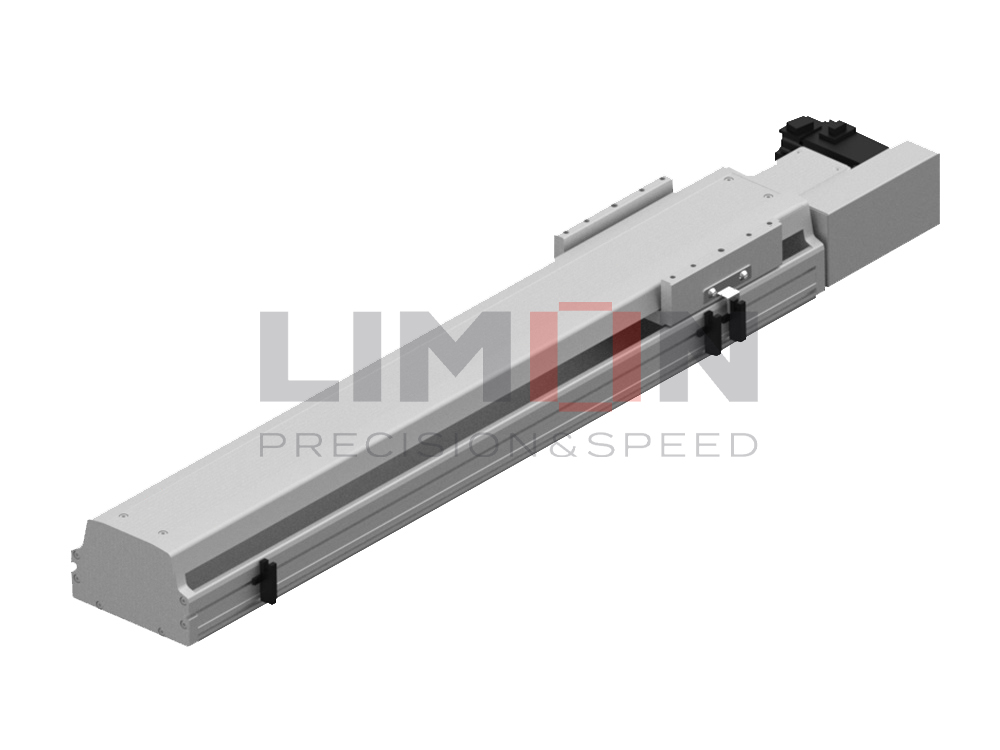
Linear actuators also frequently use screw mechanisms. A screw-driven actuator integrates a motor and screw mechanism to produce controlled linear movement in a compact package. Depending on the design, the actuator may use a lead screw or ball screw.
Screws are also found in inspection equipment, assembly machines, semiconductor manufacturing equipment, medical machinery, and other precision systems.
The wide range of applications demonstrates an important point: the screw itself is only one part of the solution. Performance depends on how the screw is integrated with the rest of the linear motion system.
For buyers researching a screw company, it is therefore useful to evaluate not only product specifications but also manufacturing capability, technical support, quality control, and the supplier’s ability to understand the complete application.
Why Choose Limon for Screw-Based Linear Motion Solutions?
Selecting a screw for an industrial machine requires more than finding a component with the correct dimensions. Manufacturing quality, component compatibility, technical support, and supply reliability all influence the final performance of the motion system.
Limon is a linear motion products manufacturer specializing in ball screws, linear guide rails, linear bearings, and linear actuators. These products can be combined to create complete linear motion solutions for industrial applications.
Limon operates with a fully integrated production line, providing greater control over key manufacturing processes and product quality. This is particularly valuable for precision motion components where consistency and reliable performance are essential.
Limon also sells directly through its independent website. Direct sales provide customers with a straightforward purchasing channel and make it easier to communicate technical requirements, product specifications, and application needs.
Quality is another important consideration. A screw may appear suitable based on basic dimensions, but factors such as thread accuracy, surface quality, assembly quality, lubrication, and compatibility with other components can influence actual machine performance.
Limon therefore focuses on reliable, high-quality linear motion products designed for demanding industrial applications.
Technical support is also part of the value Limon provides. Customers can evaluate their requirements based on load, stroke, speed, accuracy, operating environment, motor selection, and system configuration rather than choosing components based on a single specification.
Whether your application requires a ball screw for a CNC machine, a screw-driven linear actuator for automation, or a complete linear motion system, Limon provides reliable products and technical support to help build a high-performance solution.
Заключение
From the earliest mechanical applications to today’s precision automation equipment, the screw has remained an important method for transmitting force and converting rotary motion into linear movement. The history of the screw shows how a simple mechanical principle evolved into advanced lead screws and ball screws used in modern industry.
Choosing the right screw requires consideration of load, speed, accuracy, lead, length, lubrication, motor compatibility, and the complete machine structure. The right combination of screw, linear guide, bearing, actuator, and control system can significantly improve motion performance.
Limon provides reliable, high-performance linear motion solutions backed by a fully integrated production line, direct sales, high-quality products, and professional technical support.
For your next industrial motion project, Limon helps turn precise mechanical requirements into dependable linear motion solutions.