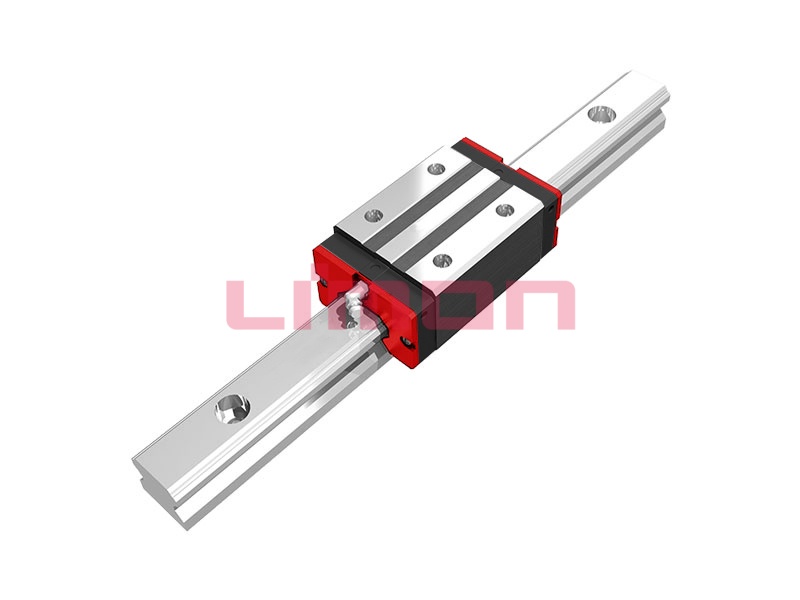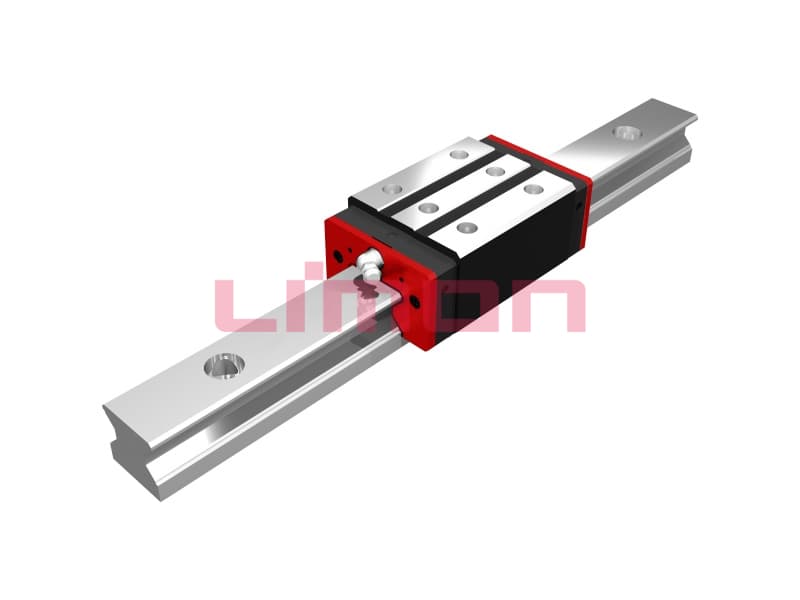
A linear guide that repeats a very short move can wear around the same contact zone even when its load is modest. The rolling elements repeatedly work over a small part of the raceway, and lubricant replenishment at that contact can become difficult. Review the actual motion pattern before selecting a grease or setting the maintenance interval.
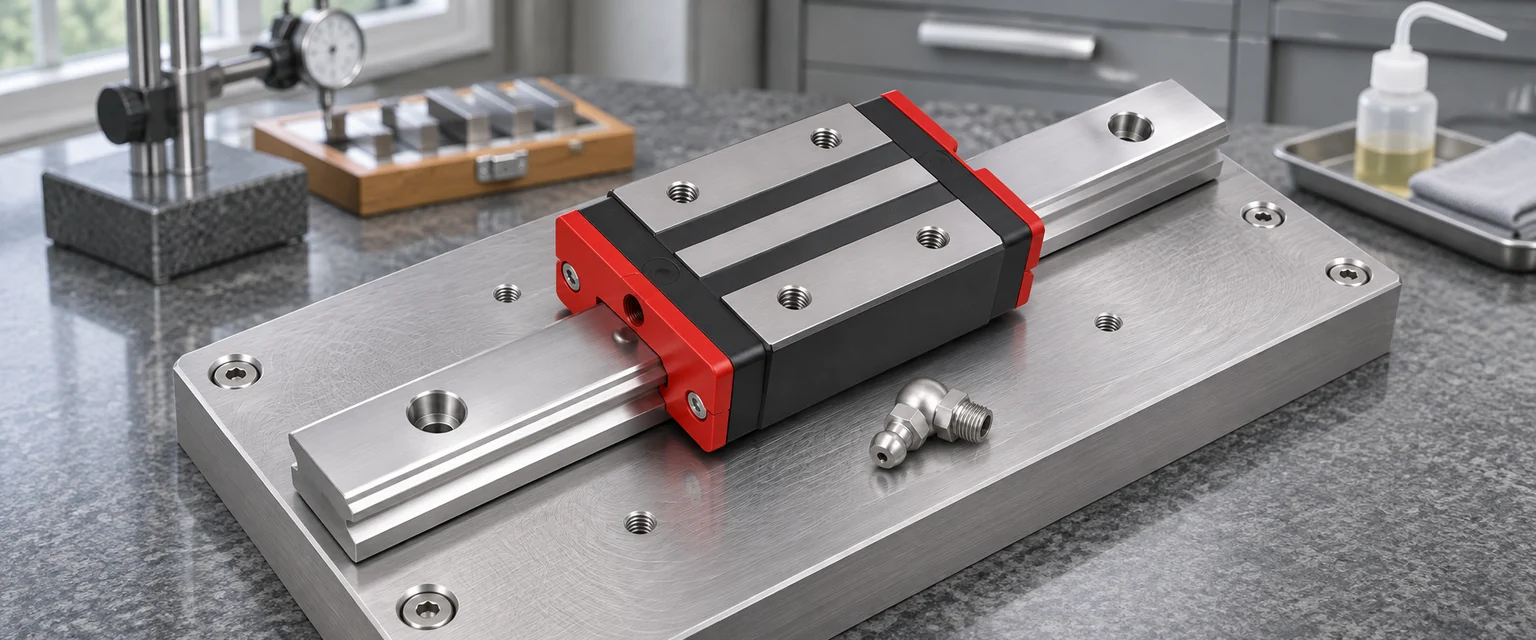
Describe the motion the guide actually makes
Record the distance between reversal points and compare it with the selected block length. Add cycle frequency, dwell time, load direction and any vibration while the carriage stands still. A guide moving 3 mm back and forth all day has a different lubrication task from one that makes a 3 mm adjustment and then traverses the full rail between batches.
THK's LM Guide handling precautions identify micro-strokes as a fretting risk and recommend considering grease with suitable fretting protection. They also describe periodic travel over approximately a block length to help form an oil film. Treat the selected guide manufacturer's instructions as the starting point for the maintenance movement. Confirm that the tooling, guards and process allow that movement throughout the machine's life.
Short travel also affects life estimates. THK's nominal-life guidance flags a limitation in its standard formula when stroke is at most twice the block length. Give the supplier the motion profile when asking for life confirmation. An estimate based only on load and total distance can miss the local contact conditions.
Plan how lubricant reaches the loaded zone
Choose the lubricant for the contact conditions, operating temperature and contamination. Confirm compatibility before changing grease. Also check which lubrication port reaches each block and whether an operator can service it with the carriage and tooling fitted. A convenient grease nipple on one end of a compact assembly may become inaccessible once the machine is installed.
After lubrication, distribute the grease using the manufacturer's permitted motion. If the process stroke is too short, build the approved distribution move into a setup or maintenance sequence. Establish its interval through operating checks on the actual machine. Record the move distance and where it occurs so a later software change does not silently remove it.
| Motion condition | What to establish during design |
|---|---|
| Short reciprocation throughout production | Lubricant suitability and a way to replenish the contact zone |
| Occasional long traverse between batches | Whether it distributes lubricant through the loaded region |
| Long dwell with vibration | Holding condition and evidence of localized wear |
| Grease access blocked by the tool plate | Service port, extension or access opening before release |
Use changes in drag and surface condition to guide inspection
Keep an initial record of running resistance under controlled load, speed and temperature. Repeat the check over the same zone after a representative operating period. Look for local discoloration, debris and a change in motion at the reversal region. These observations justify closer inspection. Their cause still needs checking against contamination, mounting error and lubrication history.
A drive-current trend can help identify when behavior changed, although it includes other axis loads. Where seals have changed, compare with the guide seal friction check. If resistance varies along a longer section, inspect mounting and rail parallelism as well. Avoid adjusting preload to hide a tight zone.
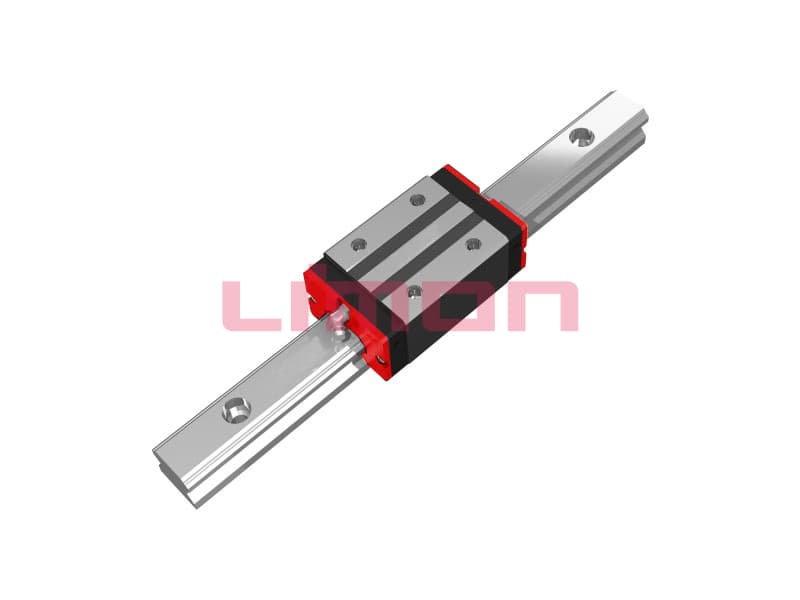
For a short-stroke application using LIMON HH-CA or HH-HA guides, send the stroke, block model, load direction, cycle rate, dwell and environment with your запрос о применении. Include the available maintenance travel and grease access so the lubrication arrangement can be reviewed with the guide selection.